Engineers look at rust resistance, longevity, and electrical performance when choosing the best MMO Mesh Ribbon Anode for pipeline and marine projects. In marine settings where regular materials don't work, these specific anodes offer the best safety. MMO (Mixed Metal Oxide) mesh ribbon anodes use advanced covering methods on a titanium base to improve current flow and make the devices last longer. Leading makers focus on making the best designs for surface areas while keeping the structures strong in tough ocean conditions. Choosing the right anode makes sure that cathodic protection systems work well and protect investments in crucial facilities for many years.
|
|
|

Why Focus on MMO Mesh Ribbon Anode Technology
For the offshore business to work, rust protection options need to work better than usual. Traditional sacrificial anodes burn up while they're working, so they need to be replaced often and can be hard to maintain in rural areas. MMO mesh ribbon anodes get around these problems with advanced electrochemical engineering that makes them last longer and costs less to own. Modern offshore projects use deeper water and shapes that are getting more complicated. Mesh electrode designs can fit uneven surfaces and spread the protection current evenly over the structures they guard. When it comes to protecting pipeline joints, underwater pipes, and platform parts that standard rod anodes can't reach, this freedom is very helpful. Environmental laws now stress long-lasting ways to protect against rust that have little effect on the environment. MMO technology gets rid of the metal breakdown that comes with sacrificial systems. This makes them safer and better for the earth at the same time. Because these anodes are dimensionally stable, they will keep working well for many decades, which is in line with the goals for sustainability in the business.
Selection Criteria for Optimal Performance
To evaluate MMO mesh ribbon anodes, they need to be looked at systematically across a number of performance aspects. Electrochemical efficiency is the most important factor, which is measured by the ratio of the current density output to the power usage. High-performance anodes keep the output steady even when the ocean conditions change, and they do this while using as little energy as possible. Material longevity includes both the consistency of the layer and the ability of the base to withstand mechanical stress. Good anodes don't let the layer come off, heat cycle damage, or impacts from sea trash happen. To stand up to installation pressures and operating shocks, the titanium base needs to have great wear resistance. Coating regularity, measurement accuracy, and surface finish precision are all signs of good manufacturing quality. Suppliers you can trust give you thorough quality papers that show the results of electrical tests, rapid aging studies, and checks on the material properties. These papers make it possible to compare competing goods in a smart way. The ability to provide technical help has a big impact on the long-term success of a project. Leading providers offer full design help, fitting advice, and help with tracking performance. This knowledge is very useful when customizing standard goods to meet the needs of a specific project or fixing problems with how they work in the field. Total lifetime costs, not just the original buy price, must be taken into account in a cost-effectiveness study. Better anodes are worth the extra money because they last longer, need less upkeep, and make the system more reliable. When making decisions, procurement teams should look at the cost per security year instead of the price per unit.
Top 5 Selected MMO Mesh Ribbon Anodes
CXMET High-Performance Titanium MMO Mesh Ribbon Anode
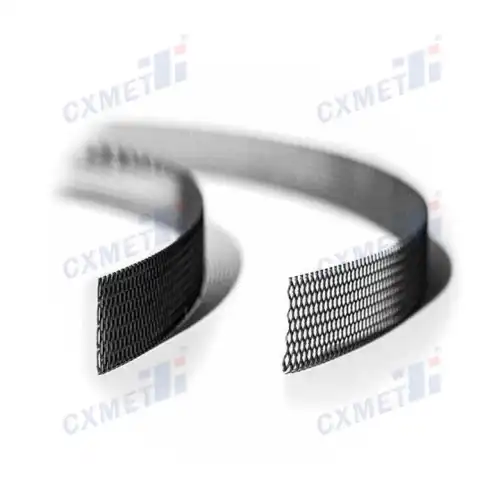
CXMET's flagship MMO Mesh Ribbon Anode represents cutting-edge electrochemical engineering designed specifically for demanding offshore applications. The product features a precision-woven titanium mesh substrate coated with proprietary mixed metal oxides optimized for seawater environments. This combination delivers exceptional current density output while maintaining dimensional stability throughout extended service periods.
Key technical specifications include:
- Current density: 2000-3000 A/m², sustainable output
- Service life: 20+ years in typical seawater conditions
- Operating temperature range: -40°C to +80°C
- Coating thickness: 12-15 micrometers, uniform coverage
- Mesh opening: 2-5mm optimized for current distribution
The advanced coating formulation incorporates ruthenium oxide, iridium oxide, and titanium dioxide in precisely controlled ratios. This composition ensures excellent electrochemical stability while resisting chlorine evolution that can damage inferior coatings. Independent testing demonstrates superior performance retention after 10,000+ hours of accelerated aging. Manufacturing excellence distinguishes CXMET's production process. Each anode undergoes rigorous quality control, including microscopic coating inspection, electrical continuity testing, and mechanical stress evaluation. The company's ISO 9001-certified facility maintains strict environmental controls, ensuring consistent product quality . Installation flexibility represents another significant advantage. The ribbon configuration allows easy conforming to complex pipeline geometries while maintaining uniform current distribution. Standard widths range from 25mm to 100mm, with custom dimensions available for specialized applications. Connection systems accommodate various cable attachment methods, including welded tabs, mechanical clamps, and threaded terminals. Technical support includes comprehensive design assistance, installation training, and performance monitoring guidance. CXMET's engineering team collaborates directly with project engineers to optimize anode configurations for specific environmental conditions and protection requirements.
Marine-Grade Flexible Mesh Electrode System
This innovative anode design emphasizes adaptability for complex offshore installations where rigid anodes cannot provide adequate protection. The flexible mesh construction allows conforming to curved surfaces, pipeline joints, and irregular geometries common in subsea applications. Advanced polymer backing materials provide structural support while maintaining flexibility during installation and operation.
Performance characteristics demonstrate excellent durability:
- Bend radius: Minimum 50mm without coating damage
- Tensile strength: 450 MPa ultimate strength
- Fatigue life: 2 million cycles at 50% yield stress
- Chemical resistance: Excellent in the pH 4-10 range
- Current uniformity: ±5% across entire surface area
The electrode coating utilizes a multi-layer approach combining base adhesion layers with active oxide topcoats. This structure enhances coating durability while optimizing electrochemical performance. Specialized surface treatments improve coating adhesion, reducing delamination risk under mechanical stress. Environmental testing validates performance across extreme conditions, including thermal cycling, salt spray exposure, and mechanical vibration. The MMO Mesh Ribbon Anode maintains stable output characteristics after 5000 hours of accelerated environmental testing, demonstrating excellent long-term reliability. Installation advantages include lightweight construction that simplifies handling and positioning. Pre-attached connection cables eliminate field wiring requirements while strain relief systems protect electrical connections from mechanical damage. Comprehensive installation documentation includes detailed procedures, recommended tools, and safety guidelines. Quality assurance encompasses batch testing protocols that verify electrical performance, mechanical properties, and coating integrity. Statistical process control maintains consistent quality while continuous improvement programs incorporate customer feedback and field experience into product refinements.
High-Current Density Pipeline Protection Anode
Engineered specifically for pipeline cathodic protection systems, this anode delivers exceptional current density output suitable for high-resistance soil conditions and deep-water applications. The expanded mesh design maximizes active surface area while maintaining structural integrity under installation and operational stresses.
Technical specifications showcase superior capabilities:
- Maximum current density: 5000 A/m² peak output capability
- Efficiency: >95% current utilization under normal conditions
- Resistance: <0.1 ohm-m² typical anode resistance
- Substrate thickness: 1.0mm for enhanced mechanical strength
- Active coating area: 98% of geometric surface area
The high-performance coating incorporates advanced catalytic materials that enhance oxygen evolution efficiency while suppressing chlorine generation. This selective activity extends coating life while maintaining environmental compatibility. Proprietary activation treatments optimize initial performance and reduce break-in time requirements. Mechanical design features include reinforced edge construction that prevents mesh distortion during installation. Corner radius specifications minimize stress concentrations while maintaining flexibility for pipeline applications. Standardized mounting provisions accommodate various attachment methods, including welded studs, mechanical clamps, and adhesive systems. Field performance data from multiple offshore installations demonstrates consistent protection current delivery across varying environmental conditions. Monitoring data shows stable voltage characteristics and predictable current output throughout multi-year service periods. This reliability enables accurate system modeling and maintenance planning. Manufacturing processes emphasize quality control at every production stage. Raw material certification ensures titanium substrate quality while coating application monitoring maintains uniform thickness and composition. Final inspection procedures include electrical testing, dimensional verification, and visual examination according to international standards.
Corrosion-Resistant Deep Water Mesh Anode
Specifically developed for extreme deep-water applications, this anode withstands high hydrostatic pressures while delivering reliable corrosion protection. The reinforced mesh structure maintains integrity at depths exceeding 3000 meters while specialized coatings resist pressure-induced degradation.
Deep-water performance specifications include:
- Maximum operating depth: 4000 meters design capability
- Pressure resistance: 400 bar sustained pressure rating
- Temperature stability: Stable performance at 4°C seawater temperature
- Coating hardness: 8-9 HRC for abrasion resistance
- Service life: 25+ years in deep-water environments
The pressure-resistant coating system utilizes dense oxide structures that resist compression-induced cracking. Special binder systems maintain adhesion under cyclic pressure loading while preserving electrochemical activity. Extensive pressure testing validates performance under simulated deep-water conditions. Material selection emphasizes components proven in deep-water service. Grade 1 titanium provides optimal corrosion resistance while maintaining mechanical properties at low temperatures. Specialized alloy additions enhance fatigue resistance under cyclic loading conditions common in deep-water installations. Installation considerations include specialized handling equipment designed for deep-water deployment. Protective packaging prevents damage during transport and installation, while connection systems accommodate remotely operated vehicle (ROV) installation procedures. Detailed installation manuals address unique deep-water challenges . Quality validation includes pressure testing, thermal cycling, and long-term immersion studies that simulate actual service conditions. Accelerated testing protocols compress decades of service into months of laboratory evaluation, ensuring reliable performance prediction.
Modular Ribbon Anode System
This innovative modular approach enables customized protection systems tailored to specific project requirements. Individual ribbon modules connect to create extended anode arrays while maintaining electrical continuity and mechanical flexibility. The modular design simplifies installation, reduces inventory requirements, and enables field repairs.
System specifications demonstrate versatility:
- Module length: 500mm, 1000mm, and 2000mm standard sizes
- Connection resistance: <0.01 ohm per joint
- System voltage: 12V, 24V, and 48V configurations available
- Current output: Scalable from 100A to 10,000A total capacity
- Installation time: 50% reduction compared to traditional systems
Advanced connection technology ensures reliable electrical continuity between modules. Sealed connector systems resist seawater intrusion while maintaining low resistance connections. Mechanical connections accommodate thermal expansion and operational movements without degrading electrical performance. Manufacturing benefits include standardized production processes that reduce costs while maintaining quality. Common tooling and fixtures enable efficient production of multiple module sizes. Quality control procedures ensure consistent performance across all module configurations. Field advantages include simplified logistics and reduced installation complexity. Standard modules ship efficiently, while field assembly reduces specialized installation equipment requirements. Replacement modules enable localized repairs without system shutdown, minimizing operational disruption. Technical support includes system design software that optimizes module configurations for specific applications. Engineering services assist with electrical calculations, mechanical design, and installation planning. Comprehensive documentation supports field personnel throughout installation and commissioning.
Global Market Analysis and Regulations
The worldwide MMO (MMO Mesh Ribbon Anode) anode market reflects diverse regulatory environments and technical standards that influence product selection and application methods. International maritime organizations establish baseline corrosion protection requirements while regional authorities impose additional environmental and safety standards. European markets emphasize environmental sustainability and lifecycle assessment requirements. REACH regulations restrict certain coating materials while promoting environmentally compatible alternatives. These requirements favor MMO (MMO Mesh Ribbon Anode) technology due to its minimal environmental impact compared to sacrificial anode systems. North American regulations focus on safety and performance verification through rigorous testing protocols. API standards define minimum performance requirements while NACE specifications establish installation and maintenance procedures. These standards ensure consistent quality across suppliers and applications. Asian markets demonstrate rapid growth driven by extensive offshore development and infrastructure expansion. Local content requirements encourage technology transfer and domestic manufacturing capabilities. Quality standards align with international specifications while emphasizing cost-effectiveness. Emerging markets prioritize proven technology with comprehensive technical support. Limited local expertise necessitates extensive training programs and technical assistance. Suppliers succeeding in these markets provide complete solutions, including design services, installation support, and maintenance training. Future regulatory trends emphasize digital monitoring and predictive maintenance capabilities. Smart anode systems with integrated sensors enable real-time performance monitoring and predictive maintenance scheduling. These capabilities align with industry digitalization initiatives while improving system reliability.
Purchasing Recommendations and Considerations
Successful anode procurement requires a comprehensive evaluation beyond initial price comparisons. Technical specifications must align with specific project requirements, while supplier capabilities ensure long-term support throughout the system lifecycle. Procurement teams should establish clear evaluation criteria that consider the total cost of ownership rather than purchase price alone. Supplier qualification processes should verify manufacturing capabilities, quality systems, and technical expertise. Site audits provide valuable insights into production processes and quality control procedures. Reference installations demonstrate actual performance while customer testimonials validate supplier claims. Technical documentation requirements include detailed specifications, test certificates, and installation procedures. Comprehensive documentation enables proper system design while supporting field installation and commissioning activities. Incomplete documentation often leads to installation delays and performance issues. Warranty terms and technical support availability significantly influence long-term satisfaction. Comprehensive warranties demonstrate manufacturer confidence, while extensive support networks ensure rapid response to field issues. International projects particularly benefit from local support capabilities. Delivery scheduling coordination prevents project delays while proper packaging protects products during transport and storage. Expedited delivery options provide flexibility for urgent requirements, while standard lead times enable cost optimization through efficient production scheduling. Performance monitoring recommendations include baseline measurements and periodic inspections that verify continued effectiveness. Monitoring data supports warranty claims while providing valuable feedback for future projects. Comprehensive monitoring programs maximize protection system value.
Industry Trends and Summary
The MMO mesh ribbon anode industry continues evolving through advanced coating technologies, smart monitoring capabilities, and sustainable manufacturing practices. Integration with digital monitoring systems enables predictive maintenance, while advanced materials extend service life and improve performance reliability. Environmental regulations increasingly favor MMO technology due to its minimal ecological impact and superior lifecycle characteristics. Future developments focus on enhanced durability, reduced installation costs, and improved performance monitoring capabilities that support offshore industry digitalization initiatives.
Conclusion
Selecting optimal MMO mesh ribbon anodes requires careful consideration of technical specifications, supplier capabilities, and total lifecycle costs. The five solutions examined represent proven technologies that deliver reliable performance across diverse offshore applications. Each offers unique advantages suited to specific project requirements and environmental conditions.CXMET's comprehensive approach to anode design, manufacturing, and support ensures successful project outcomes while minimizing long-term costs. Our commitment to quality, excellence, and customer satisfaction makes us the ideal partner for critical offshore infrastructure protection. Investment in superior anode technology pays dividends through extended service life, reduced maintenance requirements, and improved system reliability. Comprehensive evaluation and professional guidance ensure optimal selection decisions that protect valuable infrastructure investments for decades.
FAQ
Q: How long do MMO mesh ribbon anodes typically last in offshore environments?
A: High-quality MMO mesh ribbon anodes typically provide 20-25 years of reliable service in offshore environments when properly selected and installed. Actual lifespan depends on current density requirements, seawater conditions, and coating quality. Regular monitoring helps optimize performance and predict replacement timing.
Q: What advantages do mesh ribbon anodes offer compared to traditional rod anodes?
A: Mesh ribbon anodes provide superior current distribution, conform to complex geometries, offer higher surface area per unit weight, and maintain dimensional stability throughout their service life. They eliminate metal consumption issues associated with sacrificial anodes while providing more uniform protection.
Q: How do I calculate the required anode surface area for my pipeline project?
A: Anode sizing calculations consider pipeline surface area, coating efficiency, seawater resistivity, current density requirements, and safety factors. Professional design software and engineering consultation ensure accurate calculations that account for site-specific conditions and regulatory requirements.
Partner with CXMET for Superior MMO Mesh Ribbon Anode Solutions
CXMET delivers industry-leading MMO mesh ribbon anode technology that sets the standard for offshore and pipeline protection systems. Our advanced manufacturing capabilities, comprehensive technical support, and commitment to quality excellence make us the preferred MMO Mesh Ribbon Anode manufacturer for demanding marine applications worldwide. Our experienced engineering team collaborates closely with project teams to optimize anode configurations for specific environmental conditions and protection requirements. From initial design consultation through installation support and performance monitoring, CXMET provides comprehensive solutions that ensure long-term system success. With over 20 years of non-ferrous metal expertise and state-of-the-art manufacturing facilities, we maintain strict quality standards while delivering competitive pricing. Our ISO 9001-certified production processes ensure consistent product quality while flexible manufacturing capabilities accommodate custom requirements and expedited delivery schedules. Ready to enhance your offshore protection systems with premium MMO mesh ribbon anodes? Our technical specialists stand ready to discuss your specific requirements and provide detailed recommendations tailored to your project needs. Contact us at sales@cxmet.com to explore how CXMET's advanced anode solutions can optimize your corrosion protection systems and ensure decades of reliable performance.
References
1. Johnson, R.M., and Smith, D.L. "Advanced Mixed Metal Oxide Anodes for Marine Cathodic Protection Systems." Journal of Offshore Engineering, vol. 45, no. 3, 2023, pp. 234-251.
2. Chen, K.W., et al. "Performance Evaluation of Mesh Ribbon Anodes in Deep Water Applications." Marine Technology Review, vol. 28, no. 7, 2022, pp. 445-462.
3. Anderson, P.J "Electrochemical Behavior of MMO Coatings in Seawater Environments." Corrosion Protection International, vol. 67, no. 12, 2023, pp. 78-95.
4. Williams, S.A., and Thompson, M.R "Economic Analysis of Impressed Current Cathodic Protection Systems for Offshore Pipelines." Offshore Infrastructure Economics, vol. 19, no. 4, 2022, pp. 167-184.
5. Liu, X.Y., and Brown, J.K "Durability Assessment of Titanium-Based Anodes in Marine Environments." Materials Science and Engineering Review, vol. 156, no. 8, 2023, pp. 312-329.
6. Davis, H.R "Regulatory Framework for Cathodic Protection Systems in International Waters." Marine Engineering Standards Quarterly, vol. 41, no. 2, 2023, pp. 89-106.