knowledges
Buying Guide: Gr23 Ti 6AL4V Eli Medical Titanium Bar
2026-11-10 16:36:04
Specifying the standard, size, surface condition, and test documentation prior to requesting a quote is the optimal approach to purchase Gr23 Ti 6AL4V Eli Medical Titanium Bar. For surgical implant application, ASTM F136 specifies Grade 23, an extra-low-interstitial form of Ti-6Al-4V. After that, have a sample approved, compare qualified sources, and check the heat-number traceability. If you're an engineer, procurement manager, or member of an R&D team and need answers quickly, this guide is for you. This document from Shaanxi CXMET Technology Co., Ltd. includes a straightforward sourcing workflow in addition to details on specifications, qualities, applications, material comparisons, and supplier verification.
|
|
|
What Is Gr23 Ti 6AL4V Eli Medical Titanium Bar, and Which Standards Apply?
What Grade 23 Mean?
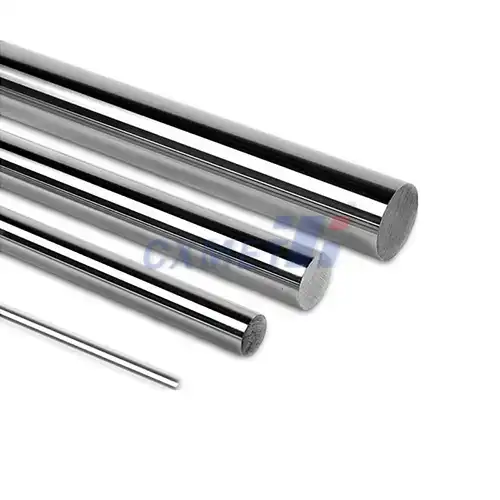
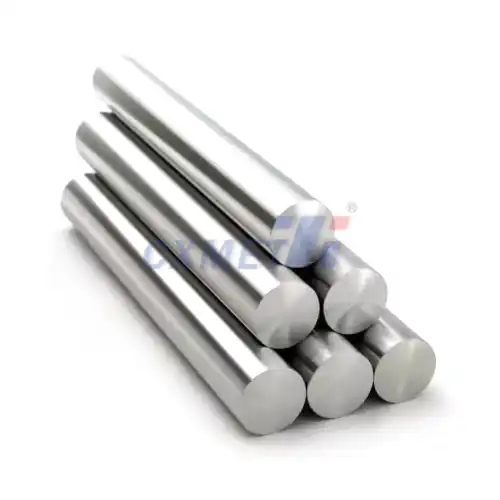
A little over 6% aluminum and 4% vanadium make up the Gr23 Ti 6AL4V Eli Medical Titanium Bar. Alpha and beta titanium make it up. Extremely low interstitial content is found in ELI. The alloy is more resistant to the introduction of O₂, N₂, carbon, and iron compared to ordinary Ti-6Al-4V. This wrought metal is used to make medical implants. Buyers may also refer to it as UNS R56401 or Grade 23. Annealing, grinding, polishing, cutting to length, hot rolling, cold rolling, and annealing are all possible processes for bars. Companies that manufacture orthopedic, dental, spinal, trauma, and surgical devices cut them into their final forms. CXMET is available in widths ranging from 4 mm to 100 mm and lengths ranging from 1000 mm to 3000 mm.
Grade 23 vs. Grade 5 Chemistry
The gap between Grade 23 and Grade 5 is not that wide. According to the ASTM F136 standard, the maximum allowable concentrations of oxygen, iron, carbon, and nitrogen are 0.13%, 0.25%, 0.08%, and 0.05%, respectively. Up to 0.20 percent oxygen and 0.40 percent iron are permissible in Grade 5 per ASTM B348. Eli Medical Titanium Bar Gr23 Ti 6AL4V has less intermediate content, making it more flexible and less likely to break. Knowing whether the loads that a pin or rod within the body must carry evolve with time is crucial. Introduced parts are better off with a Grade 23 bar than parts used in industry, which are better served by a Grade 5 bar.
Standards and Documents to Verify
Before you place an order, be sure to look at the standard version on your drawing. This standard provides information about the mechanical qualities, handling instructions, and composition of an ASTM F136 titanium bar. Because it is identical to ASTM F136, the ISO 5832-3 standard is recognized all around the globe. Our list also includes AMS 4930. Grain size is defined by ASTM E112, while tensile testing are governed by ASTM E8/E8M. A mill test certificate with the mechanical, chemical, and thermal numbers should be requested. Size details, results from acoustic studies, and confirmation that the product is suitable for their purposes are also important to many customers. It may be necessary to establish boundaries if the consumer has certain requirements. In your query, please make sure to cover these points.
Key Properties and Applications of Gr23 Ti 6AL4V Eli Medical Titanium Bar
Strength, Weight, and Stiffness
Gr23 Ti 6AL4V Eli Medical Titanium Bar has a tensile strength of at least 860 MPa and a yield strength of at least 795 MPa. ASTM F136 says that the stretch must be at least 10%, so check the number on each certificate. This titanium alloy is about half as dense as 316L stainless steel, which weighs eight grams per cubic centimeter. Steel has an elastic modulus of about 190 GPa, while this one is about 110 GPa. The stress protection doesn't work as well when the modulus is low because the implant can bend closer to the bone. It's also not magnetic, which is good for people who need to get an MRI.
Corrosion Resistance and Surface Cleanliness
A uniform coating of titanium oxide prevents the bar from reacting with bodily fluids and from degrading in gamma, steam, or plasma sterilization processes. This layer is susceptible to damage from ironing, scratches, or inadequate cleaning. A product's sheen is no guaranty that it is safe for medical usage. I would inquire about the cleaning and finishing processes. Following a pickled, polished, or ground finish, various procedures complement each. Think about how you'll be using the finish in addition to its esthetic value. For optimal results, it's best to consider the bar size, grain structure, heat treatment, and finishing simultaneously.
Applications in Medical Manufacturing
Bars manufactured from Gr23 Ti 6AL4V Eli Medical Titanium are utilized in the production of a wide variety of surgical instruments, fixation plates, rods, pins, spinal components, abutments, dental implant components, and spinal components. Surgical and emergency jaw and facial gear also makes use of it. Spine rods must be resistant to corrosion and wear. Corrosion resistance is critical for implants used for an extended period of time, and doctors need equipment that are easy on the hands and wrists. Custom parts created particularly for a patient can be achieved by a combination of computer numerical control cutting, secondary processing, and laser-based procedures. Steel becomes quite hot at the cutting edge, thus having sharp tools and a constant supply of cooling is essential. Attached to each lot should be records of the controlled device's heat number and material condition.
Comparing Gr23 Ti 6AL4V Eli Medical Titanium Bar with Other Implant Materials
Grade 5 and Commercially Pure Titanium
These grades are the best ones to use when you need something flexible and hard to break, like when you're making implants. Grade 5 can still be used for parts that don't need to be very tough and are used in industry. You can buy pure titanium in stores. It is easier to shape and fits better in designs with less load, but it is not as strong as Grade 23. Grade 23 is stronger, so parts that carry cycle loads can be thinner. Parts that need to be bent or deeply shaped might work better with a grade that is sold in stores. The grade should match the rule plan and the load case.
Grade 23 vs. Stainless Steel
316L stainless steel is cheap and easy to find, so it is used for quick fixes and tools. Grade 23 is good for long-term implants because it is less thick and weighs about 45% less. But the Gr23 Ti 6AL4V Eli Medical Titanium Bar does not have nickel or chromium in it; stainless steel does. Not only that, but MRI scans are clearer when titanium is used instead of stainless steel. Stain-free steel can still win when it comes to price and simple shapes that don't need to be used a lot. Feel free to look at the picture, price, quality, and availability to make sure they meet the needs of your device.
Hot-Rolled, Cold-Rolled, Ground, and Polished Bars
What's wrong with the bar affects the tolerance, the quality of the surface, the amount of residual stress, and the time it takes to machine. A hot-rolled bar base is good for parts with bigger diameters and a lot of room to machine. The surface of cold-rolled bar is smoother, and you can better control the size. When you smooth, grind, and finish bars, they don't have any runout and work well with automatic lathes that need a good guide-bushing fit. Finishing something in more than one step costs more, so don't pay extra for a finish that you will machine off. CXMET makes bars in two different ways: cold rolling and hot rolling. We have surfaces that are pickled, polished, and ground. We'll suggest a good state based on what you tell us about the next step.
How to Choose and Specify a Gr23 Ti 6AL4V Eli Medical Titanium Bar?
Define the Part Before the Material
Do not start with the database but with the part. Make your choice based on whether the part is firmly inserted, load-bearing, fatigue-critical, or subject to government-set rules. A bone screw and a surgical handle have different risks, so they need various test plans. The next step is to establish the alloy and the standard, set engineering goals, and give a name to the heat-treatment state. Things that need to be checked out should be added, such as ultrasonic testing and certification from a third party. You can avoid technical confusion and save time during production and quote by writing these things down early on.
Set Dimensions, Tolerances, and Surface
Write down the surface's diameter, length, straightness, roundness, ovality, and finish. CXMET sells Gr23 Ti 6AL4V Eli Medical Titanium Bars. They are 4 to 100 mm thick and 1000 to 3000 mm long. Just let us know what length you want them cut to. Ask for a ground bar with a clear tolerance class if you need to do Swiss-type machining. Let us know what kind of shipping and packing your cleanroom or machine line needs. Put in as much runout as your lathe can handle. People can give the right price the first time when they have these numbers.
Prepare a Complete RFQ and Understand Price
An official request for quotes (RFQ) for Gr23 Ti 6AL4V Eli Medical Titanium Bar includes the metal type, diameter, length, quantity, tolerance, surface condition, testing, packaging, documents, destination, delivery terms, and schedule date. Prices are set by the minimum order quantity, the cost of freight, insurance, taxes, and Incoterms. They are also based on the cost of the raw materials. Bars that are made to order take longer to make than things that are in stock. For OEM demand that comes up over and over, learn about yearly supply deals, reserved heat numbers, and buying based on what you think will happen. Also, US buyers should check early on customs forms and duties.
Evaluating a Gr23 Ti 6AL4V Eli Medical Titanium Bar Supplier
Factory-Direct or Distributor
When you buy from a plant, you can see how they make something and manage the process. A qualified distributor may have local stock and can get small amounts to you faster. Companies that trade can help with mixed orders, but they might not be able to oversee the production process. Check to see who is responsible for each step. Since 2005, Shaanxi CXMET Technology Co., Ltd. has been in business and now has 50,000 square meters of room in China's "Titanium Valley." There are more than 80 skilled techs I work with. Some of the metals we make and sell are zirconium, molybdenum, tantalum, nickel, niobium, tungsten, and their alloys.
Verify Claims and Spot Red Flags
Check where the material comes from and how much experience the company has with ASTM F136, batch-level testing, heat traceability, dimensional inspection, surface control, and sample reports. See if they can help you with custom sizes, first-article inspection, repeat sales, privacy, and getting in touch with a tech. Incomplete certificates, missing heat numbers, claims of "medical titanium" that aren't clear, prices that seem too low, inconsistent data, and certifications that you can't check are all red flags for any Gr23 Ti 6AL4V Eli Medical Titanium Bar supplier. When customers ask suppliers technical questions, they trust those who answer with documents more than those who answer with slogans. People ask our team about goods or for technical help, and we answer quickly.
A Five-Step Procurement Workflow
To obtain the Gr23 Ti 6AL4V Eli Medical Titanium Bar, you should follow these five steps. First, write the technical specification. Make sure that the options that would be best are separate from the options that are needed. Second, look at two or three good sites. The third step is to ensure the samples and papers are fine. Please check the sizes and surfaces, review the papers, ensure the packing is correct, and conduct machining tests if necessary. Fourth, make sure the purchase order has rules for what can be accepted, what documents must be included, how to mark items with a heat number, and what to do if something doesn't meet standards. Fifth, make plans, do checks, monitor batches, and have proper change control to manage the long-term supply. This order keeps risk low until the first full lot comes.
Conclusion
Another name for this type of Ti-6Al-4V is Gr23 Ti 6AL4V Eli Medical Titanium Bar. As long as it meets ASTM F136 and ISO 5832-3, it can be used as a surgical implant. It's less likely to break than Grade 5 because it has lower oxygen and iron limits. With a strength of at least 860 MPa, a low density, a low modulus, and a stable oxide layer, it can be used in teeth, bones, and trauma parts. When you compare it to stainless steel and commercially pure titanium, it hits a good mix between weight, strength, and how it behaves in imaging. Clear specs, a full RFQ, checked papers, and a timed review of the seller are the first things that make a good buy. Following these steps ensures the device works well from the first sample to the last.
FAQ
What is the difference between Grade 23 and Ti-6Al-4V ELI?
They both say the same thing about the metal. When it is wrought, ASTM F136 tells us how it can be used in surgical implants. Make sure you check which standard your drawing refers to.
Why choose Grade 23 over Grade 5 for implants?
In grade 23, there can be no more than 0.25% iron and 0.13% oxygen. That makes the material more likely to bend and break, which is important when implants are put through repeated loads of body fluids.
Which documents should arrive with a shipment?
The heat number, along with the chemistry and mechanical results, should be on the mill test certificate, along with a proof that they work together. It is possible to ask for dimensional and ultrasonic reports to be added.
How is the Gr23 Ti 6AL4V Eli Medical Titanium Bar priced?
How much something costs depends on how it was made, how it is finished, how it is tested, how many items are ordered, the freight, duties, and Incoterms. Send us your complete requirements so we can give you a precise quote.
Request a Gr23 Ti 6AL4V Eli Medical Titanium Bar Quote from CXMET.
Email sales@cxmet.com with your drawing, standard, size, number, surface state, and test needs. Gr23 Ti 6AL4V Eli Medical Titanium Bars are made by CXMET, a Chinese company. They will confirm if the bars are available, if they are traceable by heat number, if they meet ASTM F136 or ISO 5832-3 standards, supply certificates, minimum order amount, wait time, prices, and shipping options. There are also samples, ultrasonic tests, and cutting lengths to order that our team can help with. Visit https://www.cxmet-tech.com/ to learn more. Don't just pick a company based on price; also consider quality, papers, and service.
References
1. Standard Specification for Wrought Titanium-6A luminum-4 vanadium ELI (Extra Low Interstitial) Alloy for Surgical Implant Applications (ASTM F136), ASTM International, 2021
2. Implants for Surgery – Metallic Materials – Part 3: Wrought Titanium 6-Aluminum 4-Vanadium Alloy (ISO 5832-3), International Organization for Standardization, 2021
3. Materials Properties Handbook: Titanium Alloys, ASM International, 1994
4. Titanium in Medicine: Material Science, Surface Science, Engineering, Biological Responses, and Medical Applications, Springer, 2001
5. Titanium Alloys in Total Joint Replacement—A Materials Science Perspective, Biomaterials, 1998
6. Mechanical Biocompatibilities of Titanium Alloys for Biomedical Applications, Journal of the Mechanical Behavior of Biomedical Materials, 2008