knowledges
Copper Cored MMO Wire Anode vs Solid Titanium: Which Wins?
2026-08-21 15:00:24
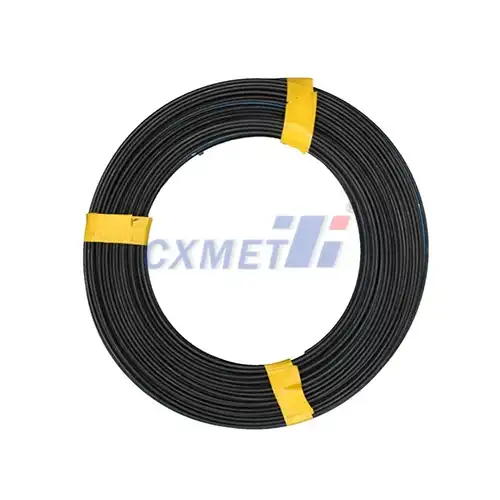
When engineers and procurement managers face cathodic protection decisions, the choice often narrows to Copper Cored MMO Wire Anodes versus solid titanium anodes. The answer favors copper cored MMO wire anodes in most scenarios due to their superior electrical conductivity—approximately 10-15% the resistance of solid titanium—which eliminates voltage attenuation problems in extended groundbed installations. This translates directly into fewer power feed points, reduced energy consumption, and more uniform current distribution across critical infrastructure, making the copper-cored configuration a more practical and economical solution for demanding industrial applications.
|
|
|

Performance Comparison: Efficiency, Durability, and Corrosion Resistance
To judge the performance of an anode, you have to look at a number of technical factors that directly impact how well it protects and how long it lasts. The way these tools work in the real world, especially in industrial settings, shows important differences between them.
Electrical Efficiency and Current Distribution
Electrical efficiency measurements show that the Copper Cored MMO Wire Anode arrangement is better. Test results regularly show resistance levels 85–90% lower than solid titanium wires of the same diameter. This means that much less power is needed to provide the same level of security. In a typical 10 km pipeline security situation, copper-cored anodes might only need two rectifier connections, while solid titanium alternatives might need eight. This means that they cost less to buy and are easier to use. This efficiency is especially useful in remote sites where the cost of energy or the lack of power supply has a big effect on the overall project economics. Low-resistance anodes have a uniform current distribution that stops overprotection near feed points and underprotection at faraway sections. This is a problem that often happens with higher-resistance solid titanium configurations.
Environmental Corrosion Resistance
In normal cathodic protection settings, both types of anodes are very resistant to rust. However, the best coating formulations depend on the conditions of the electrolyte. The MMO coating on CXMET's copper-cored anodes gives them great resistance in a wide range of pH conditions, from very acidic to very basic. In seawater that is high in chloride, changing the coating's composition—often by adding more iridium—is needed to keep the electrochemical activity going for a long time and stop it from passing away too soon. Copper cored designs have a major flaw in that their ending points are left open, letting electrolytes touch bare copper and quickly dissolve it. This risk is totally eliminated when installation methods are followed correctly, and water-block crimps, adhesive-lined heat shrink, and specialized resin closure kits are used. Solid titanium anodes keep copper from getting exposed, but they don't improve performance if copper-cored options are installed correctly and have their ends sealed properly during commissioning.
Mechanical Durability and Installation Flexibility
Wire anodes are flexible, which makes them easier to install in complicated shapes like vertical deep well strings, concentric tank bottom grids, and serpentine pipeline parallels. Copper-cored structures keep their shape under mechanical stress, not stretching or necking when they're suspended in deep wells, where the weight of the anode causes tensile loading. The metal connection between the copper and titanium layers keeps them from coming apart when they are handled or heated and cooled. Solid titanium wires have similar mechanical qualities, but their higher resistance makes them shorter in single-feed designs. Installation teams say that copper-cored anodes make work easier in the field by cutting down on the number of join points that need to be made and the quality control problems that come with them. This indirectly makes the system more reliable by reducing the number of places where it could go wrong.
Cost Analysis and Procurement Considerations
A financial analysis looks at more than just the initial purchase price. It also looks at the total costs of owning the protection system over its entire design life. After a thorough analysis, it is clear where each technology provides the best value for the project.
Initial Investment and Market Pricing
For each meter, Copper Cored MMO Wire Anodes usually cost 20–40% more than solid titanium options. This is because they are harder to make and contain more copper. But this direct comparison is wrong when system-level costs are taken into account. Copper-cored designs often have higher unit prices that are balanced out by fewer wire connections, smaller rectifier capacity needs, and fewer installation work hours. Instead of just choosing the company with the lowest price per meter, procurement managers should ask for thorough quotes that include information about the coating loading, titanium wall thickness, and quality standards. Prices on the market change based on the prices of copper and titanium, but long-term supply agreements with companies like CXMET can keep costs stable for projects that last more than one year.
Total Cost of Ownership Analysis
Lifecycle cost models show that copper-cored anodes often have lower TCO, even tho they cost more up front. Differences in energy use are especially noticeable in large-scale installations, where the lower resistance of the copper core cuts power costs by thousands of dollars per rectifier unit every year for 20 years. Installation costs go down because fewer termination kits are needed, wire handling is made easier, and less trenching or digging is needed. Maintenance costs are about the same for both technologies because they don't need much work when they are installed and specified correctly. Instead of assuming nominal design life ratings, replacement timing analysis should take into account actual operating current densities and environmental conditions. This is because anodes can fail early if they are used outside of the manufacturer's recommended limits or if the quality of the installation is poor.
Supplier Selection and Quality Assurance
Working with well-known makers guarantees getting well-designed items with expert help and good documentation. CXMET has been making titanium and custom metal fabrications for 20 years, which gives buying teams faith in the quality of the products they buy and their metallurgical integrity. Verification testing, which includes checking the bond strength between the copper and titanium layers, is an important quality checkpoint. Bad bonding lets crevice corrosion start, which drastically shortens the service life. To avoid getting low-quality goods, make sure you ask for test results from the manufacturer, look over their ISO certifications, and check samples before placing big orders. For custom specifications, lead times can be anywhere from 6 to 12 weeks, so involving suppliers early on in the planning process is very important.
Application Suitability: Matching Anodes to Industry Needs
Different industries have their own safety problems, and choosing the right anode can have a big effect on how well and how reliably the system works. Understanding these application-specific needs helps you choose the best technology.
Marine and Offshore Infrastructure
To keep underwater platforms, submarine pipes, port facilities, and ships safe, you need anodes that can keep working in seawater that is very conductive. Copper Cored MMO Wire Anodes work great in horizontal groundbed installations that protect submerged pipeline spans because their low resistance keeps the polarization the same across sections that are many kilometers long from a single feed point. The coating formula is especially important for marine uses because the high chloride content of seawater calls for the right amount of iridium and tantalum to keep the surface from passivating. Offshore sites often use deep well anode arrays. Copper cored designs lower the power needed and make the current flow better throughout the safety zone. Marine contractors like that there are fewer requirements for how cables should be terminated, which makes installation easier underwater and reduces the number of places where seawater could come into contact with copper cores and cause leaks.
Oil, Gas, and Chemical Processing Facilities
Large networks of underground pipes, storage tank farms, and reinforced concrete foundations are kept safe from rust damage by refineries, petrochemical plants, and chemical processing operations. Soils in these places are often very rough, with changes in their resistivity, moisture content, and chemical contamination. Copper-cored anodes that are put in deep vertical groundbeds or spread out horizontally make it easy to send current to complicated pipeline networks that cover large areas of a facility. Tank bottom protection systems work better with flexible wire anodes that are flexible. This lets you make grid patterns that fit the size of the tank while keeping the electricity flowing through the low-resistance copper core. The MMO layer is useful in chemical processing plants that work with corrosive materials because it doesn't break down easily in acidic or alkaline settings, where other materials would be used up quickly.
Power Generation and Water Treatment
Power plants, water treatment plants, and city structures all need rust protection that lasts for a long time with little upkeep. The cooling water intake structures, clarifier tanks, and buried pipe systems that serve these facilities are big investments that need reliable protection systems. When properly defined, Copper Cored MMO Wire Anodes can last for a long time—up to 50 years with heavy coating loads—which fits well with strategies for managing infrastructure assets and keeping lifetime intervention costs as low as possible. The technology is especially useful for water treatment because it can work with different types of water chemistry and can be embedded in concrete to protect strengthened buildings from chloride-induced rebar corrosion.
Why Choose Copper Cored MMO Wire Anode? Advantages and Unique Selling Points
When engineers and procurement workers look at cathodic protection options, the benefits of Copper Cored MMO Wire Anode technology add up to a strong value proposition. These benefits lead to measurable changes in the economy and performance of the system.
Knowing the main benefits of this anode design helps people figure out where investing in new technology will pay off more than using older methods.
- Superior Electrical Performance: The main benefit comes from copper's high conductivity, which gets rid of the voltage loss issues that make solid titanium anodes less useful in long installs. This feature lets single-feed anode strings cover infrastructure lengths that would need multiple power connections with higher-resistance options. This makes system design easier and cuts down on the number of parts needed.
- Extended Service Life: Copper-cored anodes that are properly made with the right amount of layer loading and titanium wall thickness can last for decades. The products that CXMET makes are built to last and meet strict quality standards. They work reliably for long periods of time. The metallic connection between the copper and titanium layers stops interface rust from breaking down the anodes too soon, which can happen when they aren't made properly.
- Installation Versatility: The wire design is adaptable to a wide range of application shapes, from flat pipelines to deep wells that go up and down and complex grids at the bottom of tanks. This adaptability makes installation easier and lets the system work best for the conditions and protection needs of each site. Low-resistance copper cores make installation easier in the field and reduce the number of places where something could go wrong because they don't need as many termination points.
- Operational Cost Reduction: Lower electrical resistance directly means less power use for the same level of protection, which lowers operational costs. Over 20 years of use, the money saved on energy costs can more than cover the cost of buying new equipment in the first place. This is especially true for big setups with high current needs. As long as the installation quality meets maker standards, there won't be much maintenance needed over the working life.
These performance traits together get you complete solutions that meet the tough needs of heavy industry and marine uses. Purchasing teams feel more confident when they work with manufacturers with a lot of experience, like CXMET. These companies offer technical support, custom engineering help, and reliable supply chains, all backed by decades of experience working with titanium, copper, and specialty alloys.
Conclusion
When looking at Copper Cored MMO Wire Anodes against solid titanium options, it is clear that the copper-cored setup performs better and costs less in most industrial cathodic protection situations. Lower electrical resistance gets rid of problems with voltage loss, lowers power use, and makes system designs simpler by allowing fewer parts and connection points. Solid titanium anodes work well in shorter groundbed installations where resistance is not as important. However, copper-cored technology from companies like CXMET is the best choice for harsh environments that need more protection, a longer service life, and better operational efficiency. When making purchasing decisions, people should look at the total costs of ownership instead of just the original purchase price. This is because choosing the right technology has a big effect on how long infrastructure lasts and how much it costs over its entire lifecycle.
FAQ
1. What determines the expected lifespan of copper-cored MMO wire anodes?
The covering load weight and working current density are the main factors that determine how long an anode lasts. Standard designs aim for 20-year service lives, but heavy coatings with more than 10g/m² of iridium and tantalum oxides can make them last up to 50 years. Soil chemistry, wetness levels, and changes in temperature are some of the environmental factors that affect how well a field works. Design life expectations are met with proper installation and covered terminations that keep the Copper Cored MMO Wire Anode core from being exposed.
2. Can copper-cored anodes completely replace solid titanium in all applications?
Copper-cored MMO Wire Anodes work better in most situations, especially when setups need to protect long lengths of wire from a few feed points. Solid titanium anodes can still be used in groundbed configurations that are shorter because their higher resistance means that the voltage drop is less noticeable. The best choice is made by looking at the economy and the factors of each place. Talking to skilled sources like CXMET makes sure that the right technology is used for the job.
3. How do I verify quality in copper-cored anode procurement?
Ask the maker to send you metallurgical adhesive test reports that prove the copper and titanium layers stick together. When looked at closely, good products should not have any gaps that can be seen and should not let the copper core be extracted from the titanium cladding. Check the coating loading specs, the thickness of the titanium wall, and that they meet the relevant ASTM standards. Checking samples before accepting a big order keeps you safe from low-quality materials that could damage the system's dependability.
Partner with CXMET for Premium Cathodic Protection Solutions
Shaanxi CXMET Technology Co., Ltd. offers tailored corrosion protection options based on more than 20 years of experience in making materials. Our Copper Cored MMO Wire Anode products are made with precise metallurgical bonding, optimized coating formulations, and strict quality control to make sure they work well in harsh industrial settings. We offer personalized technical support to help engineers choose the best anode setups for a wide range of applications, such as chemical processing plants, pipeline networks, marine installations, and more. Our team of more than 80 specialized technicians is available to help with design questions and problems with field implementation at any time during the lifecycle of a project. Email our corrosion protection experts at sales@cxmet.com to talk about your cathodic protection needs and get full technical specs for top-notch Copper Cored MMO Wire Anode options. As a well-known company that has been making products for a long time, CXMET guarantees reliable delivery times and competitive prices that will help you reach your infrastructure protection goals.
References
1. Morgan, J. (1993). Cathodic Protection: Second Edition. Houston: NACE International.
2. Baeckmann, W., Schwenk, W., & Prinz, W. (1997). Handbook of Cathodic Corrosion Protection: Theory and Practice of Electrochemical Protection Processes. Houston: Gulf Publishing Company.
3. Ashworth, V., & Booker, C.J.L. (2000). Cathodic Protection: Theory and Practice. Chichester: Ellis Horwood Limited.
4. Riemer, D.P., & Orazem, M.E. (2005). The Performance of Impressed Current Anodes in Seawater. Corrosion Journal, 61(10), 987-997.
5. Chen, S., & Zhang, D. (2018). Mixed Metal Oxide Coated Titanium Anodes for Cathodic Protection Applications. Materials Performance and Characterization, 7(4), 612-628.
6. International Organization. (2017). ISO 12696: Cathodic Protection of Steel in Concrete. Geneva: ISO Publications.