knowledges
Customized CNC Titanium Parts vs. Aluminum: Which Is Best?
2026-11-12 17:01:52
If your application requires great strength, resistance to corrosion, a long fatigue life, or service in severe chemical and marine conditions, then customized CNC titanium parts are the superior option to consider. Choose aluminum when other factors, such as low weight, rapid machining, and low part cost, matter more than ultimate durability. In any case, neither metal is the clear winner. The correct response is the one that takes into account the load, the environment, the operating temperature, the production volume, and the total cost during the part's lifetime. Following is a side-by-side comparison of the two materials, an explanation of grades, tolerances, finishes, and costs, and a demonstration of how to make the decision with complete assurance.
|
|
|
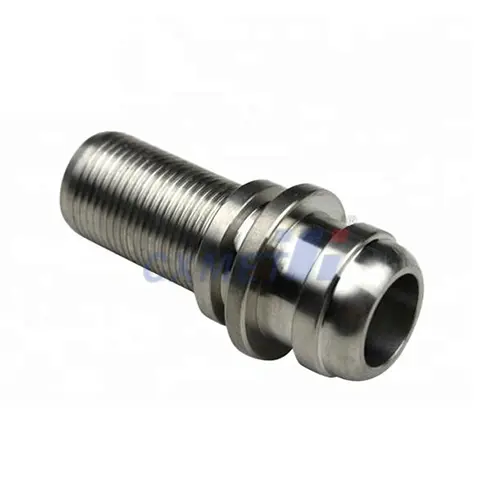

Titanium vs. Aluminum: Key Material Differences
Strength, Density, and Stiffness
Steel weighs about 7.85 g/cm³, but Ti-6Al-4V weighs only 4.43 g/cm³. Because of this, it is often used to make airplane frames, as it is very strong and 44% less dense than steel. You can still use a bolt to join things together, but safety factors and torque control change the outcome. It is stiffer than steel (about 114 GPa vs. 200 GPa), so it may not respond the same way to shaking or weight. When heated to 750°F (400°C), titanium doesn't change much.
Customized CNC Titanium Parts: Advantages and Limitations
The metal layer that titanium creates is resistant to contamination from rust and salt water. Notwithstanding these benefits, there are still dangers, such as galling or cold welding. Ti threads are capable of welding together if they are repeatedly forced down on one another. With the addition of molybdenum disulfide or anti-seize and the maintenance of a controlled pressure, the likelihood of this happening with customized CNC titanium parts is reduced. In addition to the natural oxide film, chemical teams that come into contact with the water ought to investigate the possibility of chemical exposure.
Custom CNC Aluminum Parts: Advantages and Limitations
As a result of titanium's anodic nature, aluminum components that come into contact with a titanium bolt may rust more rapidly in an environment that is moist and electric. Such rust is referred to as gas-charged rust. As a potential means of preventing this galvanic reaction, a coating, seal, or isolation cleanser could be utilized. Aluminum, despite being lighter and less expensive than Grade 5 metals, is not as robust and does not remain on the thread for as long. Additionally, it does not last as long.
Titanium Grades and Aluminum Alloys for CNC Machining
Grade 5 and Grade 2 Titanium
Grade 5 contains around 4% vanadium and Ti-6Al, while Grade 2 is considered commercially pure. The minimum strength requirement for Grade 5 is 895 MPa, while the maximum strength requirement for Grade 2 is merely 345 MPa. Business professionals interested in ordering customized CNC titanium parts should use the metal grade as a guide and compare the other mechanical qualities to the design.
Common Aluminum Alloys: 6061, 7075, and 2024
Steel is available, but it is more expensive and does not always have higher strength than these metals. If you are using aluminum alloys, you should examine how the fix works, how heavy it is, and how warm it is. Titanium Grade 5 is typically the most robust and heaviest of the titanium options available. It is frequently substituted with high-strength aluminum alloys in situations where the standard regulates the certification of the material for use in aerospace or sports.
Material Certification and Traceability
Material Test Certificates, often known as MTCs, are documents that demonstrate that the chemical and mechanical properties of a heat have been evaluated. The majority of individuals, while preparing a First Article Inspection Report (FAIR), adhere to the AS9102 standard. For the purposes of defense, space, and aviation, these high-quality systems are required to meet AS9100. Each batch of customized CNC titanium parts must have clear records, which should include the heat number, heat treatment groups, and inspection notes. It is essential to ensure that these records are up to date.
CNC Machining Process, Precision, and Surface Finishes
Engineering Review and Machining Strategy
Fastener standards like ASTM, AMS, ASME, ISO, NAS, AN, or MS all do different things. You can read about the chemistry of bars in ASTM B348 and AMS 4928, but they don't talk about the check plan or thread class of the finished part. For Customized CNC Titanium Parts, the engineering plan, the things you want to buy, and the list of suppliers are all kept on paper to ensure they work for the specific program.
Tolerances and Inspection
Each lot must have the correct chemical make-up, length, thickness, stiffness, thread class, and head form. If the threads' form or heat treatment changes, the mechanical value will also change. Our company holds an ISO 9001 license to ensure that Customized CNC Titanium Parts match your drawing. Inspectors also check that the delivery note, payment order, and amount written on the paperwork all match the shipment.
Surface Finish Options
Sizes M5, M6, and M8 are available for these components. Despite the fact that titanium is the element responsible for its color, it is feasible to clean it or hide it with something. Before you get started, you should make sure that you are familiar with how to clean, cover, oil, or passivate any processes that require it. Before obtaining the final set of papers, you should first look at your picture and determine how well the thread pitch corresponds with the sizes specified.
Cost, Lead Time, and Application-Based Selection
Cost and Lead Time Comparison
When comparing competing bids for customized CNC titanium parts, it is important to remember to factor in the costs of tests, tools, inspection, shipping, and documentation in addition to the unit price. The aspect that is most important is the cost of a decent component. You should not go with the option that is less expensive without first ensuring that it satisfies your requirements, and you should also check to see if the quality certificate of the provider is still current and up to date.
Where Titanium Fits Best?
Titanium Grade 5 bits reach automobiles, bicycles, and motorcycles. They are also used in powder metallurgy, boats, vacuums, paints, and the oil and chemical industries. Because they are 44% lighter than steel and very strong, they are often used to make airplane frames or offshore parts that face saltwater and high pressure.
Where Aluminum Fits Best?
When you need a rapid fix, and the atmosphere is mild, aluminum is a good material to use. Until you have completed all of the tests and papers correctly, you will not be able to send bits into space. In the event that an aluminum component is able to fulfill the design load and does not experience any galling or metal-on-metal contact concerns, it may be a secure method for reducing costs within the budget.
Choosing a Supplier and Making the Final Decision
A Practical Decision Process
The use of this strategy ensures that everyone is in agreement regarding the tasks that need to be completed. Make sure you are familiar with the rules and how to load the model. Second, inquire about the tools and quality control capabilities of the supplier. Check that the test pieces for the customized CNC titanium parts are the appropriate size and possess the appropriate mechanical properties. This is the third step. Last but not least, before you ship, check that the documentation and the purchase order are consistent with the goods.
How to Choose a Custom Titanium CNC Machining Supplier?
Seek a person who is capable of producing personalized components in accordance with your plans and who can also handle the documentation that is necessary for exporting internationally. Determine whether or not the manufacturer of customized CNC titanium parts possesses quality system certificates, sample records, and clear rules for what to do in the event that standards are not met. You can do this by examining the factory. You can assess their scientific expertise by asking a question and observing their response.
Why Buyers Choose CXMET for Customized CNC Titanium Parts?
In 2005, Shaanxi CXMET Technology Co., Ltd. established itself in the "China Titanium Valley" in Shaanxi Province. Our site covers 50,000 square meters and employs over 80 technicians. We produce Customized CNC Titanium Parts for automobiles, bicycles, and motorcycles with ISO 9001 certification. We help with technology while you talk to us one-on-one about what sizes and styles you want.
Conclusion
It is composed of Ti-6Al-4V, which is grade 5 titanium. In comparison to steel, it is 44% lighter, but it is not as stiff, and it is more susceptible to denting. In order to make use of customized CNC titanium parts in space, it is necessary to adhere to the specifications of the fasteners, using seller quality standards such as AS9100, and maintain accurate records of the heat number of the material as well as inspection reports. When there are a lot of questions, certificates that are up to date, and a mechanism to inspect each batch before it is used, it is safer to buy.
FAQ
Is titanium always better than aluminum?
Not all the time. The rules are in your drawing or buy order. Aluminum meets many needs at lower cost, while titanium is used when strength, fatigue life, or temperature capability justifies the price for programs like space or flight.
Why do Customized CNC Titanium Parts cost more?
Raw metal costs more, and you must add the cost of tests, tools, inspection, and paperwork to the unit price. Tighter process control and specialized certifications like AS9100 also add to the expense.
Which titanium grade should I choose?
Pick Grade 5 for high-load, strong parts that must meet at least 895 MPa. Pick Grade 2 when peak strength is not needed, and 345 MPa is enough for basic corrosion resistance.
What do you need for a quote?
Send the drawing or part number, along with the size, length, thread pitch, head style, amount, finish, packing, paperwork, and delivery location.
Can I order a single prototype?
Yes. It is best to test this first to check the size, threads, and mechanical qualities before you commit to volume.
Request Your Customized CNC Titanium Parts Quote from CXMET
Send your drawings, grade, quantity, and finish requirements to sales@cxmet.com, and the CXMET team will review them promptly. As a customized CNC Titanium Parts supplier with over 20 years of industry experience, we accept orders from one piece, hold ±0.01 mm tolerance, and offer OEM/ODM support. Visit https://www.cxmet-tech.com/ for product details.
References
1. ASM Handbook, Volume 2: Properties and Selection: Nonferrous Alloys and Special-Purpose Materials, ASM International, 1990
2. Titanium: A Technical Guide, 2nd Edition, ASM International, 2000
3. Materials Properties Handbook: Titanium Alloys, ASM International, 1994
4. ASTM B348/B348M, Standard Specification for Titanium and Titanium Alloy Bars and Billets, ASTM International, 2019
5. Titanium Alloys and Their Machinability: A Review, Journal of Materials Processing Technology, 1997
6. ASM Specialty Handbook: Aluminum and Aluminum Alloys, ASM International, 1993