knowledges
Dia 10mm Titanium Rod In Medical: A Certified Buying Guide
2026-11-12 17:01:57
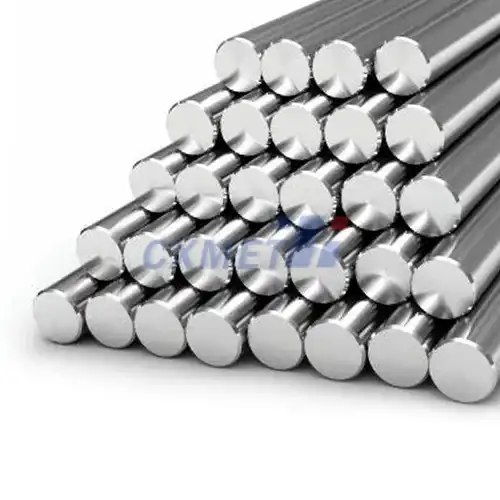
A Dia 10 mm Titanium Rod In Medical is a round titanium bar stock, 10 mm across, produced to surgical specifications such as ASTM F136 or ISO 5832-3, and sold as semi-finished material for machining implants, fixation frames, and instruments. I wrote this guide for implant makers, device OEMs, hospital procurement teams, and contract manufacturers who must compare grades, tolerances, finishes, test papers, and lead times without burning a quarter on samples. I also want to clarify a distinction that buyers often blur: certified stock is not a validated implant. Your design team, risk file, and regulatory pathway determine the final form of the rod. A Dia 10mm Titanium Rod In Medical starts as metal, not as a medical device.
|
|
|

What Does the 10 mm Diameter Deliver in Manufacturing?
It doesn't say much about how useful it is that every order starts with width.
Semi-Finished Stock, Not a Validated Implant
For a Dia 10mm Titanium Rod In Medical, the paper that comes with it talks about the metal, not the tool. It discusses the metal's structure, how it works, its size, its heat number, and the standard it meets. That doesn't include the part you're going to take off. Things need to be checked after the bar to make sure it is biocompatible, that it can be cleaned and sanitized, that the packaging can last a long time, and that it has been approved by the government. A mill certificate is not the same as a release form, but that's how I've seen buying teams use it. Issues with rules and engineering should be discussed before the first production run, not after.
Orthopedic, Spinal, and Instrument Applications
The Dia 10mm Titanium Rod in Medical is primarily purchased for the following three reasons:
- External fixation frames. A single or multiplanar fixator is used to connect a broken tibia and femur. Rods are the long bars that do this. It's much lighter than a stainless steel bar of the same size and only 10 mm thick, but it can hold weight that bends the knees. People who have to use crutches for twelve weeks should pay attention to this procedure.
- Intramedullary nail and screw stock. In machine shops, this width is used to turn plates, nails, and locking screws. The pieces are then drilled, threaded, and polished. When you get to 8 or 9 mm, the shape stays tight, and the scrap stays low.
- Instrument shafts and handles. Handles for orthopedic drivers, retractors, torque limiters, and cutting guides are made from this bar. They can be sterilized several times. When you have less mass in your hands, they don't get tired after long spinal and trauma cases.
Those in the trauma, spine, and instrument groups want a single width because it can be used in all three ways.
Why 10 mm Suits Turning, Threading, and Milling
The Dia 10mm Titanium Rod In Medical gives the artist enough stock to hold and chuck but still leaves enough room in one setting to get the shape just right. The walls can still be thick to create space in a 10 mm frame for threads, cross-holes, grooves, and turned parts. Just as important as the chemistry is how straight the bar is and how well the grinder works. Long, thin cuts tend to chatter and bend. Most shops that use Swiss-type lathes need ground stock in H7 or H6 for the guide nut to work right. During the first-article inspection, that one callout can mean the difference between a job going full speed or stopping.
Matching Titanium Grade and Standard to the Device
You should get the license that meets the needs. Instead, the grade tells you about the strength, flexibility, and amount of work.
Grade 2 Commercially Pure Titanium Under ASTM F67
Dia 10mm Titanium Rod in Medical Grade 2 is made of pure titanium, which doesn't rust or react with other metals. It's also easy to make and join. By ASTM F67, this stuff can only be used in surgery if it has a tensile strength of at least 345 MPa and a yield strength of at least 275 MPa. This is not even close to the tensile and yield strengths of metal grades. Plates for bones in low-load places, surgical tools, and fixes where price and flexibility are more important than peak strength can be found in Grade 2. It's also simple to clean up. But Grade 2 threaded sections can strip when they are torqued, while Grade 5 threaded sections don't mind. Make sure that all of the threads are being used before you decide on a design.
Grade 5 Ti-6Al-4V Under ASTM F1472 and B348
With a Dia 10mm Titanium Rod in Medical Grade 5, the industry-standard Ti-6Al-4V metal has a tensile strength of about 860 MPa and a yield strength of about 795 MPa. The one for surgery is in ASTM F1472, and the one for everyday use is in ASTM B348. Each one has a different amount of power they need over the chemicals between the cells. Grade 5 is good for screw parts that need to stay stiff and strong over time in a small area, spinal gear, and screws that hold weight. A lot of OEM plans need Grade 5 paper with F1472 for tools that aren't put in. This keeps the cost of the part from going up too much without making it less strong.
Grade 23 ELI Under ASTM F136 and ISO 5832-3
Iron stays at or below 0.25% in Grade 23, which is also called Ti-6Al-4V ELI. Oxygen stays at or below 0.13%. Some of its strength is lost when it breaks, but it gets tougher and more flexible. Both ASTM F136 and ISO 5832-3 say that this metal can be used in implants. There are a lot of doctors and knowledgeable groups that say it should be used in places where a permanent device might bend. CXMET inspection sheets typically show 860 MPa tension, 795 MPa yield, and 14% or better elongation for a Dia 10mm Titanium Rod in Medical Grade. Name ELI if the risk file talks about being tired, sensitive to cuts, or being put down for a long time. The extra money is not worth it for a jig.
Properties That Decide Whether the Component Survives
The maximum is set by chemicals. What makes the difference in how close you can get is the shape, finish, and processing.
Biocompatibility and the Passive Oxide Layer
Titanium forms a thin film of titanium dioxide on top of itself when it is scratched. This film sticks back together in milliseconds. This layer on a Dia 10mm Titanium Rod In Medical keeps it from getting pitted in water, acidic body fluids, and cleaning chemicals. When iron from tools gets buried, hands smear the metal, or waste gets stuck in a crack, the film breaks. It tells you how to clean and mark the surface of metal things in ASTM F86. When you passivate something after cutting it, you get rid of any iron that is now free. Keep an eye on both the shop floor and the mill certificate at the same time. The oxide layer you depend on could become weak if you don't.
Fatigue Life Under Gait Loading
You walk about one to three million times, which is a lot of power. Your leg goes through several times your body weight every step. You should look at both the stress and the steady tensile values of a Dia 10 mm titanium rod in medical applications. Stress builds up in cross-holes, keyways, thread roots, and grinding marks. It takes a lot longer for something to wear out on a rough surface. It matters how things grind and how much stress keeps them from turning. If you think that a bar's properties will change into a finished part with sharp edges, you should ask your supplier how the part was made and what the surface looks like. Next, check to see if the device level is tired.
Sterilization Cycles and Body-Fluid Exposure
Titanium can handle ethylene oxide, gamma irradiation, and steam autoclave cycles between 121 °C and 134 °C without any issues, but they all have an effect on the whole assembly. Some parts of a Dia 10mm Titanium Rod in Medical might not be able to handle water or heat. These parts could be the polymer, the coating, or the markings. If you autoclave parts over and over, heat-tint rust can form on instrument-grade parts. For this reason, it is important to know how to clean tools that will be used more than once. Please do not connect stainless steel parts with galvanic when it is wet. The metal that isn't worth as much will rust more quickly. Make sure that the titanium and the other materials can be used with each other.
Titanium Against Stainless Steel at the Same Bar Size
There are two kinds of implants that work well, but they break down and cost different amounts of money.
Density, Stiffness, and Stress Shielding
Titanium weighs 4.43 g/cm³, and steel 316L weighs about 8 g/cm³. A 10 mm diameter titanium rod used in medical applications has an elastic modulus of about 110 GPa. It takes about 193 GPa of force to stretch 316L stainless steel. Bones are under 10 to 30 GPa of pressure. For long-term fixing, a steel bar of the same size will protect the bone next to a 10 mm diameter titanium rod in medical applications better. Also, put the same amount of weight on the other side. Titanium bends more at the same width, so a structure that needs to be stiff when bent might need a steel design or a bigger titanium piece. A smaller modulus is not always better. You should instead match it to the precise goal.
Machining and Fabrication Reality
Titanium can only move about 7 W/mK of heat well, so the edge of the tool gets hot when it cuts and breaks quickly. A Dia 10mm Titanium Rod In Medical gets harder when rough tools are used on it, and it chatters when it's not held in place. It's also harder to bend and shape because it doesn't spring back as steel does. It is important for shops to have high-pressure water, slow speeds, sharp carbide, and sets that won't move. Iron isn't as easy to cut and join as stainless steel. It will take longer and cost more to make tools out of titanium. Put the prices of bars into the quote model first, then use a spreadsheet to compare them.
Corrosion, Imaging Artifact, and Landed Cost
Nickel can make some people sick when they get stainless steel implants. Metal implants don't make that kind of noise, and they don't break when you get an MRI or CT scan. It costs more per kilogram because the Dia 10mm Titanium Rod In Medical is lighter and has more parts per kilogram. If you need something stiff, proven to work, or experience with a process that has been used before, stainless steel is the best choice. Making, inspecting, cycle time, finishing, and the amount of trash that is made are just a few of the costs that you want to compare. When the score from the shop floor comes in, the smaller bar usually loses.
Surface Finish, Tolerance, and Cleanliness Control
A picture that only says "polished" is often what makes a buyer and a seller fight.
Ground, Centerless-Ground, and Polished Stock
Dia 10 mm Titanium Rod Medical applications can be hot rolled, forged, cold worked, ground, centerless-ground, or polished. The surface is different after each step. When you grind without a center, the diameter needs to stay the same, and the length needs to stay straight so that clamps can move. It helps inspectors find flaws like laps, gaps, and more before cutting. When you talk about quality with the word "polish," you should write a roughness value that can be checked, like "Ra 0.8 µm or better." When CXMET sells this size of ground, it rolls it out first so that buyers can be sure that machines will work as they should.
Tolerance, Ovality, and Straightness Callouts
An H7 band can handle 0 to -0.015 mm of width, and an H9 band can handle 0 to -0.036 mm of width. A Dia 10mm Titanium Rod in Medical Grade H9 is good for general turning, while H7 is good for collet work and guide bushings. You can add to the list ovality, straightness in mm per meter, cut length with error, and end state such as saw-cut, chamfered, or deburred. Someone could send you material that is the right diameter but not straight enough for a long Swiss job if those aren't there. Being exact only costs money when you know what you need.
Cleaning, Handling, and Export Packaging
If the seller doesn't take them off, swarf, scale, cutting oils, and alpha case will move with the bar. A Dia 10mm Titanium Rod in Medical should have proof that it has been cleaned, kept safe, and packed in a way that it can be sent by ocean freight. Plain wooden boxes that have been cleaned to keep them from rusting are used to ship CXMET abroad. While they are being handled by customs and while they are being driven on inside the country, this keeps the surfaces safe. Mixed lots make it hard to find things at the worst possible time because the heats are spread out in different parts of the building. The fact that the packaging is good is not an added bonus.
Certification, Supplier Checks, and the Quotation Process
The person who buys metal and the person who sells metal have to fill out paperwork.
Reading a Material Test Certificate
A good certificate for a Dia 10mm Titanium Rod in Medical will have the grade, the standard, the heat or lot number, the chemical make-up, the mechanical results, the state of the heat treatment, the measurements, and the name of the mill that melted the metal. For Grade 23, make sure that the iron and oxygen amounts given are within the ELI window and that the rules for the test are followed. There should be numbers written on the tag instead of stamps that say "pass" or "fail." Check the heat number against the packing list and the tag itself. There will be a power gap because there is a difference.
ISO 13485, Process Control, and Supplier Checks
As long as a medical gadget has ISO 13485 approval, you know that a quality system has been set up. Calibration, dealing with nonconformances, taking the right action, and managing changes are all parts of this method. First, find out what the certificate covers and when it ends. Next, ask the seller how they'll let you know if something changes. When you buy a Dia 10mm Titanium Rod In Medical, the seller should give you sample certificates, inspection records, and proof that any issues have been fixed. CXMET has been based in Shaanxi for 10 years on a 50,000-square-meter site with more than 80 technicians. When there are technical questions, the company doesn't go through traders. They answer in-house.
RFQ Fields, Quotation, and First-Article Approval
A full RFQ is used to get prices that are the same as the first one. Write down the ID, grade, length, number, annual need, surface finish, how straight the ends are, testing scope, packaging, location, and Incoterms. You should be able to see where your money is going in a Dia 10mm Titanium Rod. In medical, quote by seeing how much it costs for material, cutting, grinding, inspection, certification, and freight. Before sending the bulk, you should order samples, look over the first one, and agree in writing on what a good item is. For prototype runs, CXMET's MOQ is 10 kg, and their stock sizes range from 3 mm to 40 mm. Before the item can be accepted, it needs to be made and its size checked. Each step needs to be approved.
Conclusion
This approved Dia 10mm Titanium Rod In Medical is all you need right now. There's still work to be done. The grade you pick tells you how strong and bendy something is. Grade 2 is best for parts that don't rust and don't hold a lot of weight. If you need high-demand hardware that isn't an implant, Grade 5 is best. If you need paperwork for an implant, Grade 23 ELI is best. For different kinds of products, ASTM F67, F1472, F136, and ISO 5832-3 all have different rules. The certificate and the picture must match. As important as chemistry is, so are the class of the surface, its ovality, straightness, and cleanliness. This is because fit and wear issues usually start on the outside. You always get what you agreed to, as long as there is traceability, ISO 13485 process control, and clear RFQ terms.
FAQ
Does the 10 mm diameter alone make a rod suitable for orthopedics?
Not at all. It all starts with the diameter, but how well it works depends on the alloy, its interstitial chemistry, the surface condition, the heat treatment, and the final shape. A 10 mm titanium rod in Medical Grade 5 cannot be used instead of a Grade 23 ELI when the design calls for toughness against breaking. Still, a rough bar will wear out faster than a smooth one, no matter what grade it is.
What separates Grade 5 from Grade 23?
In Grade 23, the amount of iron and oxygen can't be more than 0.25% and 0.13%, respectively. To make the steel less likely to break, it has been bent more. In Grade 5, there is more space between the ranges. When it comes to how strong they are, the difference is more in how long they last and whether they meet safety standards than in how strong they seem on paper.
Which standards should appear on the certificate?
If you need Ti-6Al-4V ELI implant stock, look for ASTM F136 or ISO 5832-3. Surgery Grade 5 can be made with ASTM F1472. ASTM F67 is fine for titanium that hasn't been mixed with anything else. ASTM B348 is fine for wrought bar. The standard on the order and the one on the certificate should match.
Can suppliers cut custom lengths?
Yes. Most good mills that cut to length and grind to tolerance have a link between the test report and the heat number. So that prices can be compared, the RFQ should say how long it can be, what the end state is, and what the review scope is.
Talk to CXMET About Your Dia 10mm Titanium Rod in Medical Order
Since 2005, Shaanxi CXMET Technology Co., Ltd. has been making metals that aren't iron. Their clients are in the medical, marine, chemical, and vacuum fields, and they sell ground titanium bars. Feel free to email sales@cxmet.com with the grade, tolerance, length, and amount. Check out https://www.cxmet-tech.com/ to see what else they can do. The minimum order quantity is 10 kg, and the stock size ranges from 3 mm to 40 mm. Our engineers answer technical questions directly. Dia 10 mm Titanium Rod In the medical supplier CXMET, Grade 5 and Grade 23 with ASTM B348, F136, or F67 paperwork, custom cutting, and export packing in a wooden case.
References
1. ASTM F136-13 (2021), Standard Specification for Wrought Titanium-6 Aluminum-4 Vanadium ELI Alloy for Surgical Implant Applications, ASTM International, 2021.
2. ISO 5832-3:2021, Implants for Surgery — Metallic Materials — Part 3: Wrought Titanium 6-Aluminium 4-Vanadium Alloy, International Organization for Standardization, 2021.
3. ASTM F67-13(2017), Standard Specification for Unalloyed Titanium for Surgical Implant Applications, ASTM International, 2017.
4. Long, M. and Rack, H. J., "Titanium Alloys in Total Joint Replacement — A Materials Science Perspective," Biomaterials, 1998.
5. Geetha, M., Singh, A. K., Asokamani, R., and Gogia, A. K., "Ti Based Biomaterials, the Ultimate Choice for Orthopaedic Implants—A Review," Progress in Materials Science, 2009.
6. ISO 13485:2016, Medical Devices — Quality Management Systems — Requirements for Regulatory Purposes, International Organization for Standardization, 2016.