knowledges
High Quality Gr1 Pure Titanium Bar vs Gr2: Key Differences
2026-11-02 17:02:37
High Quality Gr1 Pure Titanium Bar and Grade 2 share the same density and strong corrosion resistance, but they differ in strength and formability. Grade 1 has lower oxygen and iron limits, so it bends, draws, and forms more easily. Under ASTM B348, Grade 1 requires a minimum yield strength of 170 MPa, while Grade 2 requires 275 MPa. Choose Grade 1 for deep forming, complex shapes, and corrosion-focused service. Choose Grade 2 when the part carries higher static loads. Below, I cover chemistry, properties, comparisons with other metals, fabrication, and buying steps.
|
|
|

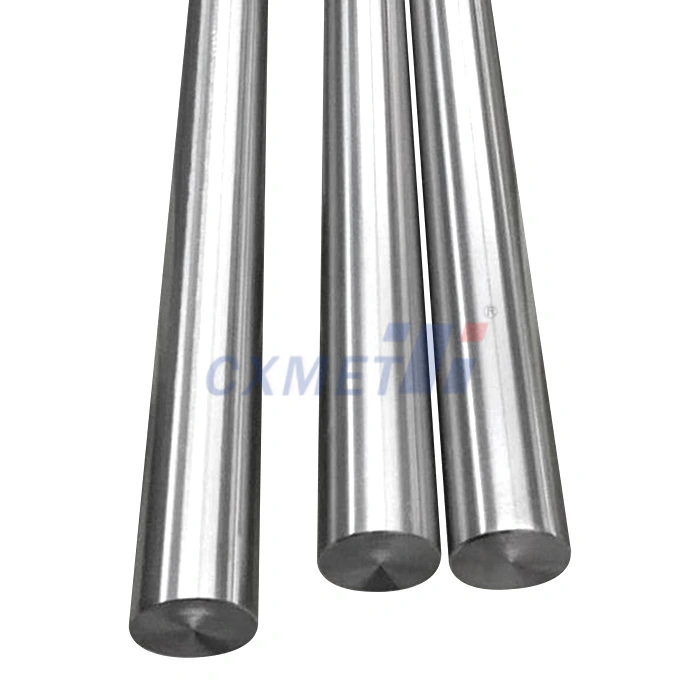
High-Quality Gr1 Pure Titanium Bar vs. Grade 2: Chemistry, Properties, and Key Differences
Chemical Composition of ASTM B348 Grade 1
It's important to remember that both types of titanium are pure titanium that can be bought. What makes them different is how dirty they are. According to ASTM B348, Grade 1 can't have more than 0.20% iron and 0.18% oxygen. Up to 0.30 percent iron and 0.25 percent oxygen can be in Grade 2. The maximum amounts of carbon (0.08%), nitrogen (0.03%), and hydrogen (0.015% maximum) are the same for both. Oxygen is the most important thing because it makes the titanium mesh stronger and less flexible by breaking it down. You can feel the difference between a High Quality Gr1 Pure Titanium Bar and a Hard Bar. Our Grade 1 bar is made up of at least 99.5% titanium. Check out the heat analysis on the mill test certificate for exact numbers.
Mechanical Properties Side by Side
The most basic numbers that meet ASTM B348 are shown in the table. Different grades are all 4.51 g/cm³ dense. Tensile strength: at least 240 MPa | 345 MPa | Yield strength: at least 170 MPa | 275 MPa | Elongation: at least 24% | 20% | Grade 1 | Grade 2
Most of the time, Grade 2 is about 60% stronger than Grade 1, and Grade 1 can stretch four points farther than Grade 2. This is what our High Quality Gr1 Pure Titanium Bar needs to meet in order to be Grade 1. In this case, the major trade-off is between load ability and making a profit. The real results of the lot are different, so make sure the results on the certificate are right.
How to Choose Between the Two Grades?
Start with the part instead of the score. Grade 1 is the least likely to crack when it is used to make thin-wall shapes, cold heads, or tight bends. Grade 2 works better when the part is under pressure or has to handle higher standing loads, and it's important to have smaller pieces. Even though they can both handle seawater and oxidizing acids, the corrosion review still needs to look at temperature, concentration, flow, cracks, and galvanic contact. Neither grade is good for building parts that are under a lot of stress. For those, Grade 5 (Ti-6Al-4V) is the best choice. When a customer gives us a picture, the first thing I do is ask about making steps and loads. It makes sense to use a High Quality Gr1 Pure Titanium Bar when it's important to be able to bend.
Grade 1 Titanium Bar Compared with Stainless Steel and Aluminum
Weight and Specific Strength
Titanium is 4.51 g/cm³ dense. While most aluminum alloys are about 2.7 g/cm³, and most austenitic stainless steels are about 8 g/cm³. Aluminum is about two-thirds as heavy as titanium, which means titanium is about 45% lighter than stainless steel. Grade 1 stainless steel isn't as strong as some others, so cuthigh-qualityis only helpful when the design allows it. The perks are mostly for ducting, tubes, and other parts that are far away. When loads decide what size piece to use, you shouldn't just compare most of its properties, but also its specific power. That is why a High Quality Gr1 Pure Titanium Bar is good for parts that don't need to hold much weight.
Corrosion Behavior and Service Conditions
It forms a stable layer of TiO₂ that heals quickly when oxygen is present. Some acids that eat away at metals can damage 304 and 316 stainless steel, but not this film. 304 and 316 stainless steel can pit and crack. Aluminum can work in mild conditions, but it will rust in many places where there are a lot of acids, alkalis, and chlorides. Electrical and chemical tools, like electrolysis cells and anode parts, often use Grade 1. It's not always safe to use titanium, though. Acids that are too hot, chlorine gas that is dry, and fluorides can all hurt it. You can't just pick a rust grade; you have to think about the whole setting in which it will be used.
Lifecycle Cost and Joining
It's a fact that titanium bar costs more per kilogram than any other metal bar. The real question is how much it will cost in the long run. A higher price may be worth it if parts don't need to be replaced because of corrosion, unplanned shutdowns, or heavy support structures. Stainless steel is still the best material for everyday parts that will only be used once in a while. Aluminum is the best choice because it is light and good for the environment. Galvanic pairing is another way to do it. That means that if you mix titanium with aluminum or carbon steel in salt water, the other metal will be attacked more quickly. Sleeves or washers that keep heat in help. A High Quality Gr1 Pure Titanium Bar is worth the money when used in a way that would damage other bars.
Machining, Welding, and Temperature Performance of Grade 1 Titanium Bar
Machining Practices
When set up right, a High Quality Gr1 Pure Titanium Bar works well. Titanium makes it hard for heat to pass through, so heat stays near the edge. This makes it more likely that tools will wear out, get galled, or get dirty. You should use lots of flood cooling, sharp, hard tools, slow cutting speeds, and a steady feed. Don't leave the tool in the cut or rub on it. This will keep the surface from getting too hard. The edge will get burned. It is important not to chip Grade 1 because it is soft and can get stuck. There should be enough space to machine cold-rolled stock, and long pieces should be checked to make sure they are straight before they are turned. Our bars come with H9–H11 standards, which help you plan for that. They can be finished in polished, pickled, or sanded ways.
Welding and Shielding
Titanium Grade 1 is one of the easiest to weld because it sticks together well. There is no dirt on it. An alpha case is made when hot titanium takes in oxygen, nitrogen, and hydrogen. This case is very frail. That's why you need high-purity argon until the metal cools down on the root side, the trailing area, and the weld pool. Get the joint clean and brushed with a stainless steel brush. Then, use the right-sized replacement wire. Most of the time, a bright silver or light straw color means it's safe, while a dark blue, gray, or white oxide color means it's dirty. Some big projects may need visual, penetrant, or radiographic inspections, along with proof that the methods used were safe. These steps will make it easy to weld a High Quality Gr1 Pure Titanium Bar.
Temperature Limits
No matter how cold it is or how hot it is, our bars can be used. Titanium that is sold in stores stays flexible at low temperatures, which is good for things that are used in cryogenics. As the temperature rises, strength decreases and rust and gas pickup speed up. The shape of the object, the atmosphere, the stress, and the length of time it was exposed all play a role. It will act differently if you put a bar at 300°C in a clean, low-load setting and then keep putting weight on it in a stream of oxidizing gas. When you start, use broad temperature ranges. Then, have your engineers look over the actual duty cycle. A titanium mix may work better than a High Quality Gr1 Pure Titanium Bar as the load or temperature rises.
How to Buy High-Quality Gr1 Pure Titanium Bar: ASTM B348 Specifications and Product Forms?
ASTM B348 and Common Product Forms
ASTM B348 tells us about bars and billets made of titanium and titanium alloys. The medical orders might say to use ASTM F67, and the work in space might say to use AMS 4921. All three of these conditions are met by our bar. The words that are used are also very important. Different processes, like hot rolling, cold rolling, cold drawing, and cold finishing, change the surface quality, how straight it is, the tolerance, and the space for machine work. We roll our High Quality Gr1 Pure Titanium Bar in a cold process and make it round. Sizes range from 2 mm to 300 mm and lengths from 2 mm to 6000 mm. If you need a different length, we can make it. Everything you need is in the package.
What to Include in Your Purchase Specification?
A full description stops most arguments before they happen. Note down the ASTM B348 Grade 1 callout, the diameter, the length, the tolerance class, the surface finish, the number, the type of certificate, the packaging, and the address where the goods will be shipped. Include any other tests and the technical requirements. The material that was shipped should have the same chemical make-up, mechanical results, and heat number, and it should be able to be traced back to the mill test certificate. We can certify your goods based on ISO, EN 10204 3.1/3.2, or SGS. When you look at prices, you should add up the costs of cutting, checking, freight, taxes, packing, and returning or replacing the item. There's a chance that a higher bar price will win when those things are taken into account.
Quality Control Checks Worth Requesting
People who work in the field often ask for four checks. AMS 2631 says that ultrasonic tests can find holes and other things inside a material. We can be sure that the heat is within the chemistry of the space between oxygen, nitrogen, hydrogen, and carbon by using inert gas fusion to look at these areas. Hydrogen must be kept below 0.015%. If you look at the microstructure of equiaxed alpha grains according to ASTM E112, you can see that consistent forming is possible. Making sure the h9–h11 limits are met with a laser micrometer and a surface roughness reading below Ra 0.8 µm cuts down on the number of places where stress can start on the end parts. We'll make sure that the checks you need for your project are sent with the High Quality Gr1 Pure Titanium Bar that you ordered. That simple.
Procurement Risks and Why a Qualified Grade 1 Titanium Bar Supplier Matters
Common Procurement Risks
Some mistakes happen over and over, but each time they happen in a different order. People buy Grade 1 and Grade 2 titanium mixed up, sale-grade titanium that isn't marked, or compare prices without checking the standard. The results can be the wrong strength, no traceability, not meeting the dimensions, delays in qualification, and application failure. Write down the grade and standard on the mill certificate, the packing list, the price, the purchase order, and the product label. Just right away, decide on the acceptance criteria, tolerances, straightness, cut length, and quality of the surface. Talk about galvanic contact and contamination while making, keeping, and welding, especially if the work will be done in a marine, chemical, or conductive setting. Titanium shouldn't be mixed with carbon steel dust because the iron in the steel dust can make the titanium less resistant to rust.
What a Qualified Supplier Provides?
A good supplier does more than just ship metal. It helps pick the grade, keep track of things, plan work, and refill, but your experts still have the final say. Shaanxi CXMET Technology Co., Ltd. was founded in 2005 and sits in the "China Titanium Valley" in Shaanxi Province, on a 50,000-square-meter site. Our technicians work with titanium, nickel, tantalum, niobium, tungsten, molybdenum, zirconium, and their alloys. There are more than 80 of them. Our goods are used in the marine, petroleum, chemical, power metallurgy, medical, electronics, vacuum, and coating industries. When you order High Quality Gr1 Pure Titanium Bars, you can get useful extras like bars that are cut to length, trial quantities, and packaging for export.
Final Selection Checklist
Look over this list before you send out a purchase order. It is better to choose Grade 1 when it comes to ductility, deep forming, tight bends, complicated shape, and resistance to corrosion then Grade 2. Grade 2 is the right choice if you need stronger tensile and yield strengths, more load capacity, or smaller cross-sections. After that, make sure you know the exact grade, ASTM standard, diameter, length, tolerances, surface finish, chemistry, mechanical properties, need for inspection, certificate type, heat tracking, packing, shipping terms, and how to file a claim. Even if the price difference seems good, you need to get engineering approval first if you want to change grades. The person in charge of your design has the final say, but our team can look at your picture and make some suggestions.
Conclusion
Trade-grade titanium comes in two grades, 1 and 2. Grade 1 is chemically and mechanically different from Grade 2 titanium. They are both very dense (4.51 g/cm³) and don't rust easily. There are lower limits for iron and oxygen in Grade 1. It also has a minimum yield strength of 170 MPa and an elongation minimum of 24%. This makes it better for deep forming, tight bending, and corrosion-related work. With Grade 2, the minimum yield goes up to 275 MPa for stronger static loads. Titanium is about 45% lighter than stainless steel and doesn't react with chloride, but it costs more at first. It's lighter than steel, but aluminum doesn't hold up as well in rough places. You need water and sharp tools to machine something. To weld, you need clean parts and argon gas to protect them. You should see the full ASTM B348 standard, have certificates that can be tracked, and get technical approval of the grade beforstrength e you buy something.
FAQ
What is the main difference between the Gr1 and Gr2 titanium bars?
At 4.51 g/cm³, they are both very dense. When it comes to iron and oxygen, Grade 1 is easy to shape and lasts longer. Grade 2 offers higher minimum yield and tensile strength, which suits greater static loads.
Can a high-quality Gr1 pure titanium bar be welded easily?
It's true. Some of the easiest types of titanium to weld are Grade 1 and Grade 2. On the root, weld pool, and following area, use clean joints and argon that is very pure. Oxygen and nitrogen pick up and break down the alpha case without protection.
Which documents should come with a shipment?
Ask for an EN 10204 3.1 mill test certificate that shows the heat number, chemical analysis, and mechanical data and that it meets ASTM B348 standards. Each bar should have the same number as the heat number.
Can you supply custom sizes?
Yes. Our bars come in lengths of up to 6000 mm and can be cut to any length. Their width ranges from 2 mm to 300 mm. Send us your drawing and how many items you need for a price.
Request a Quote for High-Quality Gr1 Pure Titanium Bar
Want to buy High Quality Gr1 Pure Titanium Bars from a business that can answer your questions about grades before you even place your order? CXMET makes cold-rolled round bars about 2 mm to 300 mm across and up to 6000 mm long. They have the EN 10204 3.1/3.2 mark on them. Email sales@cxmet.com with the size, length, number, and purpose of the metal you need. You can also see all of our titanium, nickel, and alloy products at https://www.cxmet-tech.com/.
References
1. ASTM International, Standard Specification for Titanium and Titanium Alloy Bars and Billets (ASTM B348/B348M), 2019
2. ASTM International, Standard Specification for Unalloyed Titanium, for Surgical Implants (ASTM F67), 2013
3. Donachie, M. J., Titanium: A Technical Guide, 2nd Edition, ASM International, 2000
4. Leyens, C. and Peters, M., Titanium and Titanium Alloys: Fundamentals and Applications, Wiley-VCH, 2003
5. Boyer, R., Welsch, G., and Collings, E. W., Materials Properties Handbook: Titanium Alloys, ASM International, 1994
6. Schutz, R. W. and Thomas, D. E., Corrosion of Titanium and Titanium Alloys, ASM Handbook Volume 13B: Corrosion: Materials, 2005