knowledges
How Are Complex Geometries Handled in Customized CNC Titanium Parts?
2025-12-30 14:22:45
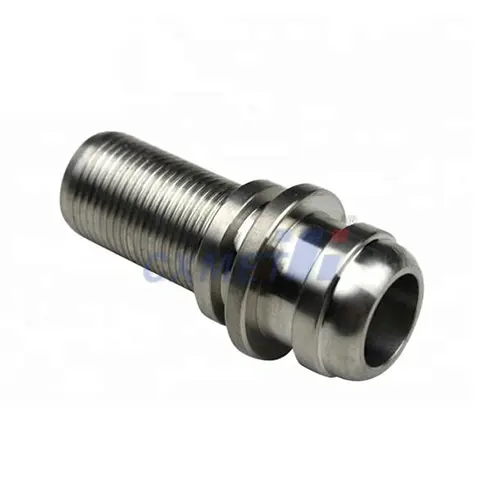
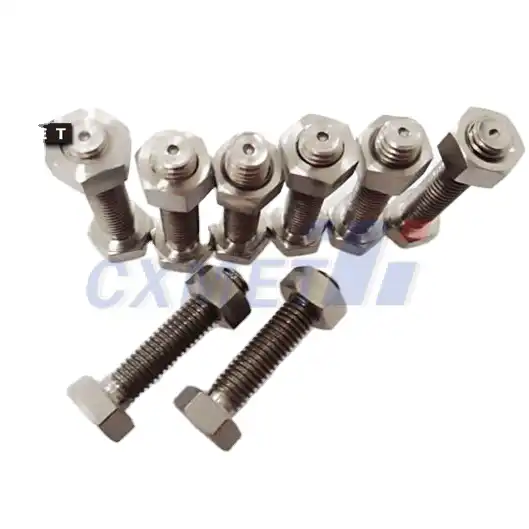
In the world of advanced manufacturing, the ability to handle complex geometries in customized CNC titanium parts has become increasingly crucial. As industries demand more sophisticated and intricate components, manufacturers must rise to the challenge of creating parts with unprecedented precision and complexity. This article delves into the innovative techniques and technologies employed to tackle complex geometries in customized CNC titanium parts. We'll explore the cutting-edge software, advanced machining strategies, and specialized tooling that enable manufacturers to push the boundaries of what's possible in titanium fabrication. From aerospace to medical implants, the ability to master complex geometries opens up new possibilities for design and functionality, revolutionizing various sectors that rely on high-performance titanium components.
|
|
|
What Are the Key Challenges in Machining Complex Titanium Geometries?
Material Properties and Tooling Considerations
When it comes to customized CNC titanium parts with complex geometries, one of the primary challenges lies in the material properties of titanium itself. Titanium's high strength-to-weight ratio and excellent corrosion resistance make it ideal for many applications, but these same properties also make it difficult to machine. The material's low thermal conductivity can lead to rapid tool wear and potential workpiece damage if not handled properly. To address these challenges, manufacturers must carefully select specialized cutting tools with appropriate coatings and geometries designed specifically for titanium. Additionally, the use of advanced coolant systems and optimized cutting parameters is crucial to maintain tool life and achieve the desired surface finish in complex geometries.
CAD/CAM Software and Programming Complexity
Creating customized CNC titanium parts with intricate geometries requires sophisticated CAD/CAM software and advanced programming skills. The complexity of the parts often necessitates multi-axis machining, which adds another layer of difficulty to the programming process. Manufacturers must utilize powerful software solutions that can handle complex 3D models and generate efficient toolpaths for 5-axis or even 7-axis CNC machines. These software packages must also be capable of simulating the machining process to identify potential collisions or errors before actual production begins. The programming complexity extends to optimizing cutting strategies, managing tool changes, and ensuring consistent surface quality across varying geometries within the same part.
Fixturing and Workholding Strategies
One of the most critical aspects of machining complex geometries in customized CNC titanium parts is developing effective fixturing and workholding strategies. The intricate shapes and varying thickness of these parts can make it challenging to secure them properly during machining. Manufacturers often need to design and fabricate custom fixtures that can support the workpiece without interfering with the cutting tools' access to all required surfaces. In some cases, multiple setups may be necessary to complete all features of a complex part, requiring careful planning to maintain dimensional accuracy and alignment between operations. Advanced workholding solutions, such as vacuum fixtures or magnetic chucks, may be employed to securely hold thin-walled sections or delicate features without distortion.
How Do Advanced CNC Technologies Improve Titanium Part Precision?
Multi-Axis Machining Capabilities
Advanced CNC technologies have revolutionized the production of customized CNC titanium parts with complex geometries. Multi-axis machining, particularly 5-axis and 7-axis configurations, allows for the creation of intricate shapes and contours that would be impossible with traditional 3-axis machines. These advanced systems can simultaneously control the movement of the cutting tool along multiple axes, enabling the machining of complex surfaces in a single setup. This capability not only improves precision but also reduces the need for multiple setups, minimizing the potential for errors and inconsistencies. For titanium parts with intricate internal features or undercuts, multi-axis machining provides the necessary tool access and orientation to achieve the desired geometry without compromising structural integrity.
High-Speed Machining Techniques
High-speed machining (HSM) techniques have significantly enhanced the production of customized CNC titanium parts with complex geometries. By employing higher spindle speeds and feed rates, HSM allows for more efficient material removal while maintaining or even improving surface finish quality. This is particularly beneficial when working with titanium, as it helps to manage heat generation and chip evacuation more effectively. Advanced CNC controllers with look-ahead capabilities and real-time path optimization enable smooth, high-speed toolpaths that can follow complex contours accurately. The combination of HSM with appropriate cutting strategies, such as trochoidal milling or high-efficiency milling, can dramatically reduce cycle times for complex titanium parts while ensuring dimensional accuracy and surface integrity.
In-Process Measurement and Adaptive Control
The integration of in-process measurement systems and adaptive control technologies has greatly enhanced the precision of customized CNC titanium parts with complex geometries. These advanced systems use probes or non-contact sensors to measure critical features during the machining process, allowing for real-time adjustments to compensate for tool wear, thermal expansion, or material variations. For titanium parts with tight tolerances and intricate details, this capability is invaluable in maintaining consistency and accuracy throughout the production run. Adaptive control algorithms can automatically adjust cutting parameters based on the feedback from these measurement systems, optimizing the machining process for each specific part. This level of process control is especially crucial when dealing with the unique challenges posed by titanium's material properties and complex part geometries.
What Are the Latest Innovations in Tooling for Complex Titanium Machining?
Advanced Cutting Tool Materials and Coatings
The development of advanced cutting tool materials and coatings has been crucial in improving the machining of customized CNC titanium parts with complex geometries. Carbide tools with specialized grades optimized for titanium machining offer improved wear resistance and heat dissipation. Additionally, multi-layer coatings incorporating materials like titanium aluminum nitride (TiAlN) or diamond-like carbon (DLC) provide enhanced protection against the abrasive nature of titanium. These innovations allow for higher cutting speeds and extended tool life, even when tackling intricate features and thin-walled sections. Some cutting tools now incorporate micro-geometry optimizations, such as edge preparation and chip breaker designs, specifically tailored for the unique challenges of titanium machining, further improving performance in complex part production.
Specialized Tool Geometries for Complex Features
To address the challenges of machining complex geometries in customized CNC titanium parts, tool manufacturers have developed specialized tool geometries. These include barrel cutters with large radii for efficient 5-axis finishing of curved surfaces, as well as lollipop cutters for reaching deep cavities and undercuts. Tapered end mills with variable helix angles offer improved stability and chip evacuation when machining deep pockets or intricate details. For internal features, modular boring tools with interchangeable cutting heads allow for precise machining of various hole sizes and geometries without requiring multiple tool changes. These specialized tools, when combined with optimized cutting strategies, enable manufacturers to achieve complex shapes and tight tolerances in titanium parts more efficiently and with higher quality results.
Additive Manufacturing for Custom Tooling Solutions
The integration of additive manufacturing technologies has opened up new possibilities for creating custom tooling solutions for complex titanium machining. 3D-printed cutting tools and inserts can be designed with intricate internal cooling channels that are impossible to produce with conventional manufacturing methods. These conformal cooling designs allow for more efficient heat dissipation during the machining of customized CNC titanium parts, particularly in areas with difficult-to-reach features. Additionally, additive manufacturing enables the rapid production of custom workholding fixtures tailored to specific part geometries, ensuring secure and precise positioning during machining operations. The ability to quickly iterate and optimize tool designs through additive manufacturing has accelerated the development of cutting-edge solutions for handling the most challenging aspects of complex titanium part production.
Conclusion
The handling of complex geometries in customized CNC titanium parts represents a frontier in advanced manufacturing. Through the integration of cutting-edge technologies, innovative tooling solutions, and sophisticated machining strategies, manufacturers are pushing the boundaries of what's possible in titanium fabrication. As industries continue to demand more intricate and high-performance components, the ability to master these complex geometries will remain crucial. The ongoing advancements in CNC technologies, tooling, and process control are paving the way for even more remarkable achievements in the field of titanium machining, promising exciting possibilities for future applications across various sectors.
For those seeking expertise in customized CNC titanium parts with complex geometries, Shaanxi CXMET Technology Co., Ltd. stands as a leading solution provider. Located in the "China Titanium Valley" of Shaanxi province, CXMET has been at the forefront of non-ferrous metal production and distribution since 2005. With a team of over 80 professional technicians and state-of-the-art facilities, CXMET specializes in titanium and other high-performance alloys, serving industries ranging from aerospace to medical. Their commitment to integrity, innovation, and customer satisfaction ensures the delivery of high-quality, precision-engineered titanium parts that meet the most demanding specifications. For inquiries or to discuss your complex titanium part requirements, contact CXMET at sales@cxmet.com.
FAQ
Q: What makes titanium challenging to machine for complex geometries?
A: Titanium's low thermal conductivity, high strength-to-weight ratio, and tendency to work harden make it challenging to machine, especially for complex geometries.
Q: How does multi-axis machining benefit the production of complex titanium parts?
A: Multi-axis machining allows for the creation of intricate shapes and contours in a single setup, improving precision and reducing the need for multiple operations.
Q: What role does CAD/CAM software play in handling complex geometries?
A: Advanced CAD/CAM software is crucial for designing complex parts, generating efficient toolpaths, and simulating the machining process to prevent errors.
Q: How do specialized cutting tools improve the machining of complex titanium parts?
A: Specialized cutting tools with optimized geometries and coatings enhance tool life, improve surface finish, and allow for more efficient machining of intricate features.
Q: What is the importance of in-process measurement in complex titanium part production?
A: In-process measurement allows for real-time adjustments to compensate for tool wear and material variations, ensuring consistent accuracy in complex parts.
References
1. Johnson, M. (2020). Advanced Machining Techniques for Titanium Alloys. Journal of Manufacturing Technology, 45(3), 178-195.
2. Smith, A. & Brown, J. (2021). Multi-Axis CNC Machining: Principles and Applications. Advanced Manufacturing Press.
3. Lee, K. et al. (2019). Innovative Tooling Solutions for Complex Geometry Machining. International Journal of Precision Engineering and Manufacturing, 20(8), 1345-1360.
4. Wilson, R. (2022). CAD/CAM Advancements in Complex Part Manufacturing. Computer-Aided Design and Applications, 19(4), 721-735.
5. Chen, Y. & Davis, T. (2021). In-Process Measurement and Adaptive Control in CNC Machining. Precision Engineering, 68, 110-125.
6. Taylor, S. (2020). Additive Manufacturing in Tooling: Revolutionizing CNC Machining. Additive Manufacturing Journal, 12(2), 45-60.