knowledges
How Are Hafnium Sputtering Target Impurities Measured and Controlled?
2026-04-21 14:26:14
Inductively Coupled Plasma Mass Spectrometry (ICP-MS), Glow Discharge Mass Spectrometry (GD-MS), and Secondary Ion Mass Spectrometry (SIMS) are some of the most advanced analytical techniques used to measure impurities in hafnium sputtering targets. These techniques can find contaminants at levels as low as parts-per-million or even parts-per-billion. To keep things under control, they get high-quality raw materials, use vacuum melting and electron beam polishing, give the surfaces a lot of care, and follow strict quality management rules throughout the whole production process. These two methods work together to make sure that the hafnium sputtering target materials are very pure, which is important for making semiconductors, optical coatings, and other precise uses.
|
|
|
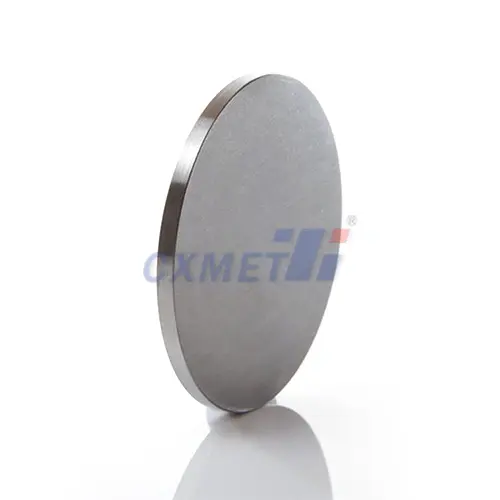
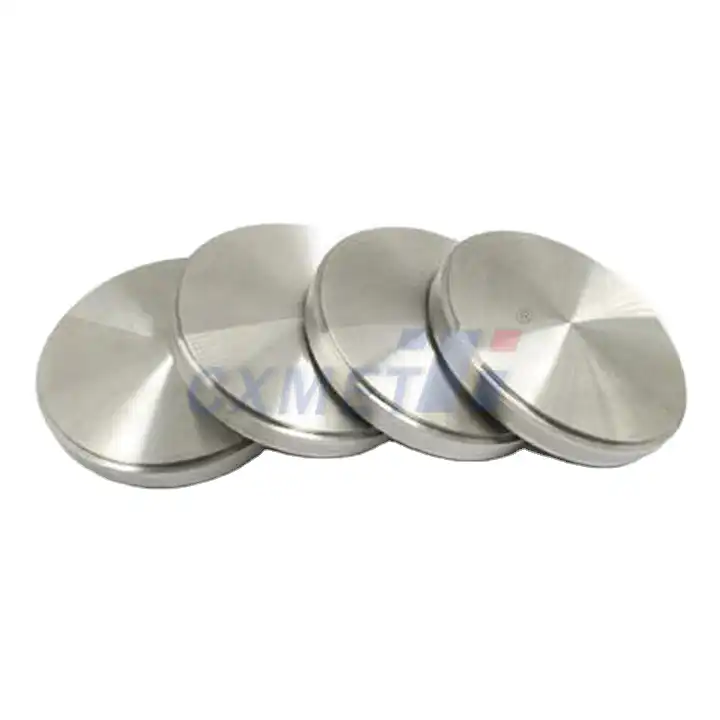
Understanding Impurities in Hafnium Sputtering Targets
When we work with high-performance materials for semiconductor and optical applications, understanding impurity profiles becomes absolutely critical. Hafnium targets used in physical vapor deposition processes must maintain exceptional purity because even trace contaminants can compromise the entire coating operation.
Types of Impurities Found in Hafnium Targets
An impurity can be a metallic element like zirconium, iron, tungsten, or molybdenum, a non-metallic element like oxygen, nitrogen, carbon, or hydrogen, or a gaseous addition that gets stuck during production. It is still the most dangerous pollutant because it naturally forms in mineral sources with hafnium and has chemical properties that are very similar to zirconium's. It takes complicated tuning methods that cost a lot but really make a difference in performance to separate these parts. Metal impurities can make it hard for electricity to flow and can damage films that have already been formed. On the other hand, elements that aren't metals change how chemicals stick to surfaces and how stable they are.
How Impurities Impact Performance and Reliability
Even small amounts of dirt can ruin the thin film and make the tool not work as well as it should. When impurities are added to semiconductors, they change the dielectric constant of the gate layers made of hafnium oxide. This raises leakage currents and lowers the security of the transistor. There are lower limits on laser damage, and absorption losses happen in optical coatings when contaminants change the crystal structure of films that are formed. During sputtering, metallic elements make hot spots in some places. These hot spots create particles that damage the surfaces. It is important for companies that want to make high-end goods to keep an eye on impurities because they cause lower production yields and shorter device lifetimes. The hafnium sputtering targets we keep at Shaanxi CXMET Technology are at least 99.95% pure, and for many uses, they need to be even purer. Because they know that contaminants can affect the performance of the end product, they are very careful about the quality of the materials they use. Being in China's "Titanium Valley" gives us access to high-tech tools and technical know-how that have been built up over twenty years of producing only titanium.
Techniques for Measuring Hafnium Sputtering Target Impurities
Accurate impurity detection requires analytical methods sensitive enough to identify contaminants at extremely low concentrations while providing quantitative data across the periodic table.
Conventional Analytical Methods
X-Ray Fluorescence (XRF) spectroscopy is a quick and safe way to look at hafnium sputtering target elements that can be used for initial screening. This method works great for finding metal flaws above about 10 parts per million, but it has trouble with lighter elements like oxygen and nitrogen. It can be used with Optical Emission Spectroscopy (OES), which is especially helpful for finding carbon and sulphur. These common methods are good for checking the quality of products during production without breaking the bank, but they're not sensitive enough for ultra-high purity checks. XRF and OES are often used for routine batch testing in manufacturing facilities. More advanced methods are saved for certification and troubleshooting.
Advanced High-Sensitivity Measurement Technologies
ICP-MS is the best way to find trace elements because it can usually reach detection limits below one part per billion for most elements. In an argon plasma, the method changes the materials into ions and then sorts them by the ratio of their mass to their charge. In this way, many things can be carefully examined at the same time. Depth profiling is something that GD-MS can do. This shows how the amounts of impurities change from the top of the object to the middle. This is important information that will help you figure out where the pollution is coming from. For some elements, SIMS is the most sensitive way. It also lets you see how impurities are spread out on work surfaces. With these high-tech ways, the full impurity profiles that are needed to certify materials for important optical and semiconductor uses are made. Each output batch at CXMET is checked by our technical team using a mix of these measuring tools. We understand that purchasing managers and R&D experts need correct analytical data to pick the best providers. Along with our hafnium goals, giving thorough impurity certificates shows that we want to be honest and do the best work we can.
Industry Standards and Acceptance Criteria
Most of the time, the highest level of impurities in semiconductors is less than 50 parts per million (ppm), and the highest level of each element is less than 10 ppm. Top-of-the-line types made for high-tech electronics may need less than 10 parts per million (ppm) of total pollutants. The same is true for optical coating applications. These have very tight rules because they know that as contamination levels rise, so do absorption losses. Many producers make their own rules that are different from what is written in international standards like ASTM B737. These rules tell us how to test for the purity of hafnium. Teams that buy things can use these guidelines to make sure that the materials used on all orders are the same and that suppliers are telling the truth.
Strategies for Controlling and Reducing Impurities
Effective contamination control requires integrated approaches spanning raw material selection through final packaging, with each production stage offering opportunities for improvement.
Raw Material Selection and Preparation
The foundation of high-purity targets begins with carefully sourced feedstock. We select hafnium sponge or crystal bar materials that have undergone multiple refining cycles to reduce zirconium content and eliminate metallic impurities. Vendor qualification processes verify source material purity through independent laboratory analysis before acceptance. Proper storage in controlled environments prevents atmospheric contamination that could introduce oxygen or moisture. These preliminary steps establish baseline purity levels that subsequent processing preserves and enhances rather than degrades.
Manufacturing Process Optimization
Vacuum arc melting and electron beam melting represent hafnium sputtering targets, the primary techniques for consolidating refined hafnium into dense ingots suitable for target fabrication. These processes occur in high-vacuum environments that prevent oxidation and contamination from furnace atmospheres. Electron beam refining provides additional purification through preferential evaporation of volatile impurities during melting. Mechanical processing, including forging, rolling, and machining, must occur using clean tooling dedicated exclusively to high-purity materials to avoid cross-contamination. Surface cleaning procedures employing chemical etching or electropolishing remove work-hardened layers and embedded particles before final finishing operations. Our manufacturing facility in Shaanxi province maintains dedicated production lines for refractory metals, preventing cross-contamination that could occur in mixed-material operations. This specialization, combined with over 80 professional technicians trained in contamination control protocols, enables us to consistently deliver targets meeting the most demanding purity specifications. The 50,000 square meter facility incorporates cleanroom environments for final processing and packaging, protecting products from airborne particulates.
Quality Management and Testing Protocols
Comprehensive quality systems ensure that impurity control measures function effectively throughout production. ISO certification demonstrates adherence to documented procedures and continuous improvement practices. Batch testing at multiple production stages catches contamination early, preventing costly rework or material waste. Statistical process control monitors key parameters such as vacuum levels, processing temperatures, and material handling procedures that influence final purity. Traceability systems link finished targets back to source materials and processing records, enabling root cause analysis when specifications are not met.
Here are the core advantages that our quality approach delivers:
- Raw Material Traceability: Complete documentation from initial feedstock through final certification ensures accountability and enables targeted process improvements when contamination occurs.
- In-Process Monitoring: Real-time analytical feedback during critical manufacturing stages allows immediate corrective actions rather than discovering issues during final inspection.
- Third-Party Verification: Independent laboratory confirmation of purity specifications provides objective validation that supports customer qualification requirements.
- Controlled Storage Environments: Climate-controlled warehousing with humidity and particulate monitoring preserves material integrity between production and shipment.
These quality practices reflect our understanding that engineers and procurement managers stake their reputations on supplier reliability. We view every target we produce as a commitment to supporting our customers' success in demanding applications where material performance directly impacts production outcomes. Our focus on contamination control translates into consistent sputtering behavior, predictable film properties, and reduced defect rates that justify the investment in premium materials.
Comparing Hafnium Sputtering Targets: Impurity Control as a Differentiator
Material selection decisions must account for how different sputtering target options perform under application-specific conditions, with impurity profiles playing central roles in these assessments.
Performance Characteristics Versus Alternative Materials
Hafnium targets offer unique advantages over titanium and zirconium alternatives when high dielectric constant films are required. While titanium provides lower material costs, hafnium oxide films exhibit superior dielectric properties and reduced leakage currents in gate oxide applications. Zirconium shares chemical similarities with hafnium but introduces different impurity challenges due to varying refining efficiencies. The high melting point of hafnium—2,233 degrees Celsius compared to titanium's 1,668 degrees—enables stable sputtering at elevated power densities without target degradation. Thermal conductivity of 23.0 W/m·K facilitates effective heat dissipation during operation, extending target lifespan and maintaining consistent deposition rates.
Cost-Performance Trade-Offs in Procurement Decisions
Higher-purity hafnium targets command premium pricing that reflects additional hafnium sputtering target refining cycles and more stringent analytical verification. Procurement teams must evaluate whether application requirements genuinely necessitate 99.99% purity versus 99.95% material, as this specification difference can impact pricing by 20-30%. Lead times also extend for ultra-high-purity grades since additional processing and testing cycles add weeks to production schedules. Volume commitments sometimes enable better pricing and prioritized production slots, though this approach requires accurate demand forecasting. Balancing these economic factors against performance requirements and project timelines represents a core procurement skill that directly affects manufacturing costs and competitiveness. Our customization capabilities at CXMET address these trade-offs by offering multiple purity grades and flexible order quantities. We work collaboratively with customers to match material specifications to actual application needs rather than applying one-size-fits-all solutions. This consultative approach helps optimize material costs while ensuring performance requirements are met, building the long-term partnerships that characterize our business model.
Best Practices for Procuring High-Quality Hafnium Sputtering Targets
Experienced procurement professionals develop systematic approaches to supplier evaluation and material qualification that minimize risk and ensure consistent supply.
Supplier Evaluation and Qualification Criteria
Robust supplier assessment examines multiple dimensions beyond quoted pricing. Manufacturing capability evaluation includes facility audits to verify cleanroom environments, dedicated equipment, and contamination control procedures. Quality certifications such as ISO 9001 demonstrate systematic process management, while industry-specific certifications like ISO 14001 indicate environmental responsibility. Customer references provide insights into delivery reliability, technical support responsiveness, and problem-resolution effectiveness. Analytical capability verification ensures suppliers possess or have access to the measurement technologies necessary for impurity certification. Financial stability assessment reduces supply chain risk by avoiding vendors whose business continuity might be questionable.
Customization Options and Technical Support
Application-specific requirements often demand customized target dimensions, bonding configurations, or purity grades beyond standard catalog offerings. Suppliers with in-house engineering capabilities can collaborate on optimizing target designs for particular sputtering systems and process conditions. Minimum order quantities must align with consumption rates to avoid excessive inventory carrying costs while ensuring economic production runs. Technical support availability—including material selection guidance, process troubleshooting assistance, and failure analysis services—adds value beyond the physical product. These consultative relationships transform suppliers into development partners who contribute to process optimization and problem-solving. We have structured our organization to deliver this comprehensive support model. Our technical team brings deep expertise across semiconductor, optical, and industrial coating applications, enabling us to provide relevant advice rather than generic recommendations. Customization extends from target geometry through packaging specifications, ensuring materials arrive ready for integration into production workflows. Engineers and procurement managers appreciate our responsiveness, whether they need rapid quotations, technical clarifications, or expedited delivery for urgent requirements.
Packaging, Handling, and Logistics Considerations
There are risks of contamination all along the supply chain if the right safety steps are not taken. After the final surface treatment, we package each hafnium target in a clean room. Vacuum-sealing plastic bags stops them from absorbing water and oxidising while they're being shipped. Vibration and contact can damage metal parts, but high-density foam cushions them. Electrostatic discharge risks that could attract particles or damage sensitive surface finishes are taken care of by anti-static packing. The outside packaging has moisture barriers and clear instructions on how to handle the material so that it stays intact during international shipping and customs processing. These safety measures keep the surface finish of Ra less than or equal to 0.8 micrometres, which we achieve by carefully machining and cleaning the material. Our dedication to providing production-ready materials is shown by the fact that we keep our building clean all the way through the customer receiving inspection. When packaging properly protects material quality, incoming inspections aren't needed as often, and qualification rounds go faster, which is good for procurement teams.
Conclusion
Measuring and controlling impurities in hafnium sputtering targets requires sophisticated analytical techniques combined with rigorous manufacturing discipline throughout the production chain. Advanced methods like ICP-MS, GD-MS, and SIMS detect contaminants at parts-per-billion levels, verifying necessary for critical semiconductor and optical applications. Effective control strategies encompass careful raw material selection, optimized refining processes, contamination-aware handling procedures, and comprehensive quality management systems. Procurement decisions must balance purity requirements against cost considerations and lead times while prioritizing suppliers who demonstrate analytical capability, manufacturing expertise, and consistent quality delivery. Understanding these technical and commercial factors enables engineers and procurement professionals to select materials that optimize performance, reliability, and value in demanding thin film applications.
FAQ
1. What impurity levels are acceptable in high-purity hafnium targets?
Acceptable impurity levels depend on specific application requirements. Standard semiconductor-grade targets typically specify total impurities below 50 parts per million, with premium grades for advanced logic devices requiring less than 10 ppm total contamination. Zirconium often receives special attention with limits below 0.5% for low-Zr grades. Optical coating applications impose similar constraints, recognizing that absorption losses correlate directly with impurity concentrations. Individual element limits vary, with transition metals typically restricted to single-digit ppm levels while oxygen and carbon may be allowed slightly higher concentrations.
2. How do impurities affect hafnium target lifespan and performance?
Impurities degrade target performance through multiple mechanisms. Metallic contaminants create localized melting and arcing during sputtering, generating particles that become film defects. Non-metallic inclusions alter sputtering yield uniformity, causing thickness variations across substrates. Chemical impurities affect deposited film properties, including electrical conductivity, dielectric constant, and optical absorption. Contamination-induced defects reduce effective target lifespan by necessitating premature replacement when particle generation exceeds acceptable levels. These performance impacts directly affect production yields and manufacturing costs, justifying investment in higher-purity materials.
3. Can impurities be removed after target manufacturing?
Post-manufacturing purification proves technically challenging and economically impractical compared to process-integrated contamination control. Surface treatments like chemical etching or electropolishing remove near-surface contamination but cannot address bulk impurities. Thermal treatments under vacuum may reduce certain gaseous contaminants but risk introducing new contamination or altering material microstructure. The most effective approach focuses on prevention through high-purity feedstock selection, clean manufacturing processes, and contamination-aware handling throughout production. Suppliers committed to these upstream control measures deliver superior and more consistent purity than post-production remediation could achieve.
Partner with CXMET for Premium Hafnium Sputtering Target Solutions
Shaanxi CXMET Technology stands ready to support your high-performance thin film deposition requirements with hafnium sputtering targets engineered for exceptional hafnium sputtering target purity and consistency. Our 99.95% minimum purity specification, combined with customizable dimensions and shapes, ensures compatibility with your specific process conditions and performance objectives. As an established hafnium sputtering target manufacturer with over 20 years of specialized experience, we deliver the technical expertise, analytical capabilities, and quality systems that procurement professionals and engineers demand. Our competitive pricing reflects efficient production rather than compromised quality, while our responsive technical team provides the application support that transforms material purchases into collaborative partnerships. Contact us at sales@cxmet.com to discuss your requirements and experience the reliability that has earned us recognition across semiconductor, optical, and aerospace industries worldwide.
References
1. Westwood, W. D. (2003). Sputter Deposition. AVS Monograph Series. American Vacuum Society.
2. Ohring, M. (2001). Materials Science of Thin Films: Deposition and Structure (2nd ed.). Academic Press.
3. Handbook of Deposition Technologies for Films and Coatings (3rd ed.). (2010). Elsevier Science.
4. Wasa, K., Kanno, I., & Kotera, H. (2012). Handbook of Sputter Deposition Technology: Fundamentals and Applications for Functional Thin Films, Nano-Materials and MEMS. William Andrew Publishing.
5. Martin, P. M. (2009). Handbook of Deposition Technologies for Films and Coatings: Science, Applications and Technology (3rd ed.). William Andrew Publishing.
6. Seshan, K. (2002). Handbook of Thin Film Deposition Processes and Techniques: Principles, Methods, Equipment and Applications (2nd ed.). William Andrew Publishing.