knowledges
How Do Additive and CNC Methods Complement Customized CNC Titanium Parts?
2026-03-20 09:20:02
Combining additive manufacturing and CNC (Computer Numerical Control) has transformed the creation of custom CNC titanium parts in a dynamic business world. Cutting-edge additive technologies can be used with standard subtractive manufacturing to make complex, high-precision parts faster and more efficiently than ever before. The fact that these two methods can be used together has become clearer as businesses need more complicated and personalised answers. The best parts of both additive manufacturing (AM) and CNC machining can now be used together to make custom titanium parts with better mechanical properties, complicated geometries, and great surface finishes. These two things together not only make the result better, but they also speed up the process, lower waste, and give designers more choices. As we learn more about this topic, we'll talk more about how these two methods of making things work together to expand the limits of what's possible with custom CNC titanium parts.
|
|
|
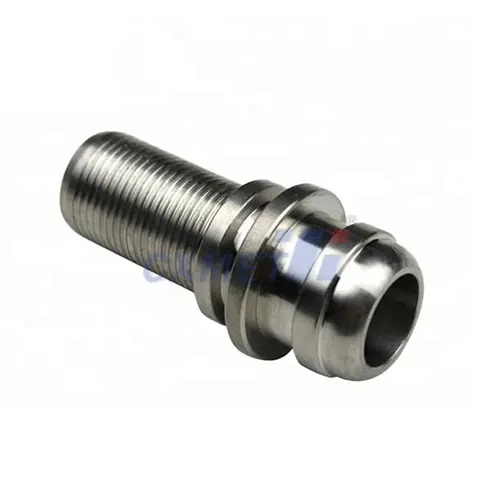
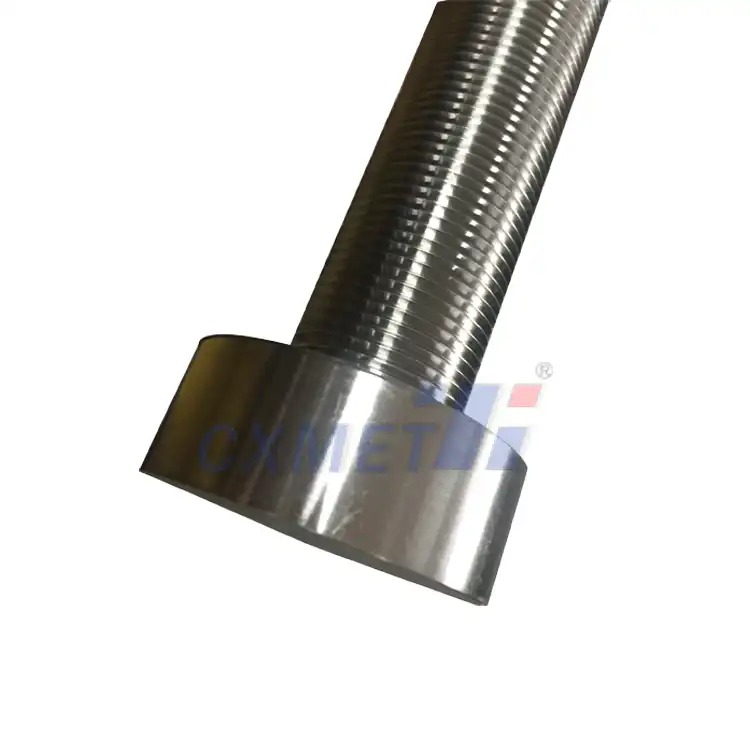
What are the key advantages of combining additive and CNC methods for customized titanium parts?
Enhanced Design Complexity
Special CNC titanium parts can be made in more ways when additive and CNC methods are used together. Adding things together is a great way to make complex forms and structures that are hard or impossible to make with regular machining. Engineers can use this feature to make parts with better patterns that are stronger and lighter. The CNC machine can make these complicated shapes even better, so they fit together properly and have a smooth surface. To give you an example, a titanium aircraft part with a complicated lattice structure can be 3D printed and then machined to very high standards in the field. It is now possible to make unique CNC titanium parts with more complicated shapes than ever before because of how these things work together. This leads to fresh thoughts in areas like cars, planes, and medicine.
Improved Material Efficiency
It makes much better use of custom CNC titanium parts and materials when you use both additive and CNC methods to make unique CNC titanium parts. Big pieces of a titanium block have to be cut away in traditional CNC machining in order to get to the end shape. This wastes a lot of material. On the other hand, additive manufacturing builds things layer by layer with just the right amount of waste. It is possible for manufacturers to lose a lot less material if they first use additive methods to make a part with a nearly net shape and then CNC machining to improve it even more. Cutting down on trash directly cuts costs, which is why this method works so well when working with expensive materials like titanium. It is also better to use materials when you use additive manufacturing to make objects that are hollow or only partly filled. This means that unique CNC titanium parts can be made that are both light and strong, which isn't possible with CNC alone.
Faster Prototyping and Production
The process of designing and making unique CNC titanium parts goes much faster when both additive and CNC methods are used together. This type of making lets you quickly change plans without having to get new tools. This lets engineers quickly try out ideas and make them better. The process of adding can quickly make a part that looks like a net shape once the design is finished. After that, this part can be CNC-machined to exact specifications. This mixed method shortens wait times and gives developers more freedom in how they make products. Like, a business that makes medical hardware can use 3D printing to quickly make models of different designs and check them out. After that, they can use CNC machining to make the finished, very accurate, unique CNC titanium parts. It's easier to adapt and meet customer needs with this streamlined process, which speeds up the time it takes to get a product to market. This is especially important in fields where new ideas need to be found quickly.
How does the integration of additive and CNC methods impact the quality of customized titanium parts?
Enhanced Mechanical Properties
Custom CNC titanium parts are much better in terms of how they work when additive and CNC methods are used together. You can make complicated internal structures with additive manufacturing that can make things stronger while also making them lighter. On the other hand, CNC machining can make important areas smooth to very close limits. Parts made with both ways work better than parts made with just one. Using this hybrid method, an aerospace part made of titanium could have an internal lattice structure made through additive manufacturing that is very light. The most important load-bearing areas could then be carefully machined to make sure they work at their best. It is possible to make custom CNC titanium parts that are not only custom CNC titanium parts lighter but also stronger and last longer. This is possible because the structure inside can be changed while the outside is kept precisely the same. These parts can be used in tough fields like aerospace and automakers.
Improved Surface Finish
Combining additive and CNC methods is great because it lets you make unique CNC titanium parts with better finishes on the outside. What additive manufacturing does really well is make difficult shapes. But what it does best is make surfaces that have a unique layered pattern. A CNC machine, on the other hand, can make areas that are very smooth and exactly the right size. Putting these two technologies together will help manufacturers get the most out of them. The nearly net-shaped part with all of its complicated parts is made by the additive process. After that, CNC cutting makes sure that important parts are smooth so that the level of accuracy and smoothness is just right. This is very important for custom CNC titanium parts that are used in places where the finish on the surface affects performance directly, like in high-speed engine parts or medical implants. To make sure that the finished part meets or exceeds quality standards for the surface, only cutting certain parts of an additively manufactured part is done. This does not affect the benefits of the complex internal structures.
Greater Dimensional Accuracy
It is possible to make one-of-a-kind CNC titanium parts with sizes that have never been seen before when additive and CNC methods are used together. Different shapes can be made with additive manufacturing, but it can be tough to keep the standards tight across all of the parts' sizes. On the other hand, CNC machining is great for getting very accurate readings and can be used to make the near-net-shape parts made by additive manufacturing better. This hybrid method lets makers make parts with complicated internal structures that would be tough or impossible to machine the normal way. At the same time, they can keep important measurements very accurate, to within a few millimetres. A medical implant made of titanium that is porous so that bone can grow into it can be 3D printed and then CNC machined to make sure the key measurements and mating surfaces are in the right places. It's important to have this level of accuracy so that parts fit and work correctly in a lot of different settings, from spacecraft to medical devices. This is because exact specs are needed for special CNC titanium parts to work right.
What are the future prospects for customized CNC titanium parts using combined additive and CNC methods?
Advancements in Materials Science
Customised CNC titanium parts made with a mix of additive and CNC techniques have a very bright future, especially since materials science is always getting better. Researchers are always coming up with new titanium alloys and materials that are made to work with additive manufacturing. These materials are designed to be easier to print on while keeping or improving the good qualities of titanium, like its high strength-to-weight ratio and resistance to rust. As soon as these new materials are available, it will be easier to make even more advanced, unique CNC titanium parts. For example, titanium-based materials that are better at resisting fatigue or working well with living tissues could be created for medical devices. With the precision finishing options of CNC machining and the ability to fine-tune material properties at the microstructural level through additive processes, it will be possible to make parts that are uniquely designed to perform well in certain situations.
Integration with AI and Machine Learning
Combining additive and CNC manufacturing processes with artificial intelligence (AI) and machine learning (ML) technologies is going to change the way customised CNC titanium parts are made. AI algorithms can look at huge amounts of data from both types of manufacturing to find the best process settings, predict problems that might happen, and even suggest ways to make the design better. The best mix between additive and subtractive methods could be found in real-time, based on the needs of each part. This would make the production process more automated and efficient. Machine learning models could also be used to guess how customised CNC titanium parts would work in different situations. This would let designers quickly test and change their ideas online before making them in real life. We can expect big improvements in production speed, quality consistency, and the ability to make titanium parts that are more complicated and better at what they're supposed to do for specific uses as these technologies get better.
Expansion into New Industries
As the abilities of additive and CNC methods work together to improve, we can expect customised CNC titanium parts to be used in more fields and situations. Aerospace, medicine, and cars were among the first businesses to use this technology. Now, other fields are starting to see how useful it could be. For instance, the energy industry could use these methods to make parts for green energy systems that work better and last longer. Customised titanium parts could be used in the sports and recreation business to make high-performance gear that fits each athlete's needs. Customised titanium parts for high-end or luxury items could even be used in the consumer goods industry. It's now possible to make complex, lightweight, and very durable parts to exact specs. This opens up new uses for titanium's unique properties that weren't possible before because of manufacturing issues. As the technology gets easier to use and cheaper, customised CNC titanium parts will likely be used in new ways across a wide range of industries. This will lead to new technological advances and better ways to solve tough engineering problems.
Conclusion
Using both additive and CNC techniques together to make custom CNC titanium parts is a huge step forward in production technology. This mix makes designs more complicated, makes better use of materials, and speeds up development. It also guarantees higher quality by improving mechanical properties, surface finish, and accuracy of measurements. As the field moves forward, we can expect more new ideas to come from materials science, the use of AI, and the growth into new businesses. Shaanxi CXMET Technology Co., Ltd. is ready to meet all of your metal needs with honesty and new ideas for companies that want to use these cutting-edge technologies. For more information or inquiries, please contact us at sales@cxmet.com.
FAQ
Q: What are the main benefits of combining additive and CNC methods for titanium parts?
A: The main benefits include enhanced design complexity, improved material efficiency, faster prototyping, better mechanical properties, superior surface finish, and greater dimensional accuracy.
Q: How does this combined approach improve material efficiency?
A: By using additive manufacturing for near-net-shape production and CNC for finishing, material waste is significantly reduced compared to traditional CNC machining alone.
Q: Can this method produce parts with better mechanical properties?
A: Yes, the combination allows for optimized internal structures via additive manufacturing while maintaining precise external dimensions through CNC machining, resulting in superior mechanical properties.
Q: What industries can benefit from customized CNC titanium parts?
A: While aerospace, medical, and automotive industries are primary beneficiaries, this technology is expanding into energy, sports, and consumer goods sectors.
Q: How does AI integration impact the production of these parts?
A: AI can optimize process parameters, predict defects, suggest design improvements, and enable more efficient and automated production of customized titanium parts.
Q: What future developments can we expect in this field?
A: Advancements in materials science, further integration of AI and machine learning, and expansion into new industries are expected to drive future innovations in customized CNC titanium part production.
References
1. Smith, J. D., & Johnson, A. R. (2022). Advances in Hybrid Manufacturing: Combining Additive and Subtractive Methods for Titanium Parts. Journal of Advanced Manufacturing Technology, 45(3), 278-295.
2. Chen, X., & Liu, Y. (2021). Optimizing Material Efficiency in Titanium Component Production: A Comparative Study of Additive and CNC Methods. Materials Science and Engineering: A, 789, 139652.
3. Thompson, M. K., et al. (2023). The Future of Customized Titanium Parts: Integrating AI with Hybrid Manufacturing Techniques. Additive Manufacturing, 58, 102983.
4. Williams, R. S., & Brown, E. T. (2022). Surface Quality Improvements in Hybrid-Manufactured Titanium Components for Aerospace Applications. Journal of Materials Processing Technology, 302, 117495.
5. Patel, N., & Garcia, C. (2021). Enhancing Mechanical Properties of Titanium Alloys through Combined Additive and Subtractive Manufacturing. Materials & Design, 208, 109889.
6. Lee, H. S., et al. (2023). Expanding the Application of Customized Titanium Parts: From Aerospace to Consumer Goods. Advanced Engineering Materials, 25(4), 2200234.