knowledges
How Do Customized CNC Titanium Parts Enhance Performance in Medical Devices?
2026-04-10 16:07:09
Customised CNC titanium parts make medical devices work better by providing biocompatibility, rust resistance, and precision engineering that regular materials can't match. With tolerances as low as ±0.01mm, subtractive manufacturing lets engineers make implants, surgical tools, and diagnostic equipment parts that are unique to each patient. Titanium has a great strength-to-weight ratio, which means that devices can stay light without losing their structural integrity. This keeps surgeons from getting tired during complicated treatments and improves patient outcomes. To make sure these precision-machined parts meet FDA and ISO standards for life-saving medical uses that can't have any failures, they go through strict dimensional checks and sterilisation validation.
|
|
|
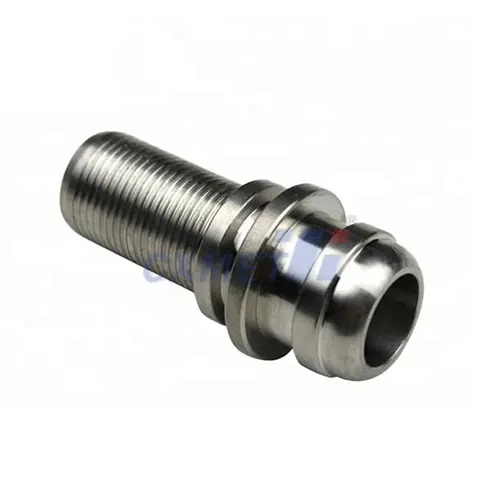
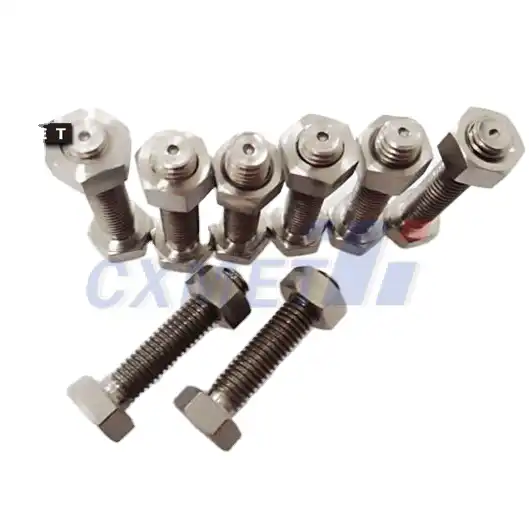
Understanding Customised CNC Titanium Parts in Medical Devices
What Defines Precision-Engineered Titanium Components
Precision-engineered titanium components are a special type of medical manufacturing. They are made by computer numerical control machining raw titanium alloys into complicated shapes based on CAD designs. Instead of mass-produced standard parts, custom components are made to fit specific body shapes and devices, which generic solutions can't do. This customisation lets companies that make medical devices improve their functions while still following the rules for a wide range of clinical uses.
Material Properties That Matter in Clinical Environments
Titanium's properties make it a very useful material in medical settings where devices will be touching human flesh for long periods of time. The metal is completely biocompatible, which means that the immune system sees it as harmless rather than foreign. This stops rejection reactions that put patients at risk of harm. It doesn't corrode when exposed to different pH levels or body fluids, so you don't have to worry about the material breaking down over the course of an implant's lifetime. The good strength-to-weight ratio—about four times that of stainless steel at the same mass—allows for thinner gadget profiles without lowering the load-bearing capacity. All of these qualities explain why titanium is used so often in orthopaedic, cardiovascular, and brain devices that need to last a long time.
CNC Manufacturing Techniques for Medical-Grade Titanium
Medical titanium is made using a CNC machine that uses special techniques to get around the material's low heat conductivity and tendency to work-harden. Flood coolant systems and carbide tooling are used in more advanced CAM methods to control heat buildup that would otherwise affect the accuracy of measurements. Multi-axis machining centres make it possible to make complex undercuts and internal features that aren't possible with traditional methods. This lets them build structures out of a single piece, so there are no weak spots like there are in welded joins. Surface finishing processes meet the Ra 0.8 standards needed for tissue integration and sterilisation to work. During production, real-time monitoring systems make sure that every part stays within the tight limits needed for device safety and functionality. This makes sure that all parts meet the strict standards set by regulatory bodies.
Advantages of Using Customised CNC Titanium Parts in Medical Devices
The integration of precision-machined titanium components into medical devices addresses critical performance requirements that directly impact clinical outcomes and operational efficiency. Medical device engineers increasingly specify these materials when standard alternatives cannot deliver the reliability demanded by life-critical applications.
Superior Mechanical Performance and Longevity
Titanium's high tensile strength and resistance to Customised CNC titanium parts wear mean that devices can be loaded and unloaded millions of times without breaking. Titanium Grade 5 is used to make orthopaedic implants that keep their shape under physiological stresses reaching 900 MPa, which is a lot better than other materials. This means that the device will last longer, which will lower the number of repair surgeries and the costs of those surgeries. Corrosion resistance keeps materials from breaking down when they come into contact with body fluids and chemicals used for sterilisation. This keeps performance traits stable throughout the lifecycle of the product. Autoclaving, gamma radiation, and ethylene oxide sterilisation methods can all be used together to make sure that devices can be cleaned over and over again without changing their material properties or surface finishes.
Weight Reduction and Ergonomic Benefits
Because titanium machined parts are so light, the total weight of the device is 40–60% less than it would be with stainless steel equivalents. This directly improves surgical ergonomics during long procedures. Precision titanium parts used to make handheld tools keep surgeons from getting tired, which improves procedure accuracy and patient safety. Implantable devices have less mass, which means they put less stress on the tissue around them. This speeds up mending and makes the patient more comfortable. It has been shown that dental implant systems with special titanium abutments have higher osseointegration rates than heavier options. Over five-year periods, clinical studies have shown that these systems have 95% or higher success rates.
Precision Engineering for Optimal Functionality
Being able to make very precise, custom parts guarantees the best usefulness and consistency from the prototyping stage to full-scale production. Tight tolerances made possible by CNC machining allow interference fits and alignment features that are very important for systems with more than one part. Making implants that are special to each patient based on their CT scan helps them fit better, which speeds up surgery and lowers the risk of complications. Manufacturers of cardiovascular devices have shown in real-world case studies that their products last longer and help patients better. For example, customised valve parts last 30% longer than standard designs. Titanium is useful in many medical situations where failure rates must be very low. These real benefits show how valuable it is.
Comparison of Titanium vs Other Materials in CNC Medical Parts
Titanium Versus Stainless Steel Performance
When choosing between titanium and stainless steel as a material, biocompatibility, mechanical qualities, and cost must all be taken into account. Titanium is very biocompatible because it has a passive oxide layer that blends in perfectly with bone and soft tissue. Stainless steel, on the other hand, has nickel and chromium in it, which can cause hypersensitivity responses in some patients. Corrosion resistance tests show that titanium's surface chemistry stays stable even after decades of being implanted, while different types of stainless steel release ions when they are exposed to chloride. Comparing fatigue strengths shows that titanium performs better under cyclic loads, which makes it the best material for implantables that are put under repeated stresses. Titanium machined parts usually cost two to three times as much as other parts because the raw materials are harder to find and the process is more complicated. However, this investment will pay off in the long run by reducing the number of revisions needed and improving patient results.
Titanium Compared to Aluminum Alloys
If you look at mechanical strength and durability, titanium is by far the better choice for surgical tools and load-bearing implants than aluminium alloys. Aluminium's lower density makes it lighter, but because it's not as strong, cross-sections have to be larger, which cancels out the weight savings. Titanium has three times the ultimate tensile strength of aerospace-grade aluminium while staying about the same weight. This means that devices can be made thinner while still having better usefulness. Galvanic corrosion happens when aluminium comes into contact with different metals, which makes multi-material assemblies more difficult. Titanium, on the other hand, is chemically stable, so it can be mixed with different biomaterials without worrying about electrochemical degradation.
Selecting Appropriate Titanium Grades
Purchasing professionals can match the properties of an alloy, customised CNC titanium parts to the needs of an application by understanding the specs for each titanium grade. Grade 5 (Ti-6Al-4V) is the most commonly used alloy for medical CNC uses because it is easy to machine and has high strength, making it perfect for orthopaedic and dental implants. Grade 23 (Ti-6Al-4V ELI) has lower levels of intermediate elements that make it more flexible and harder to break. This makes it perfect for heart and brain devices, where failure of the material could have disastrous effects. Commercially pure grades (1-4) are better at resisting corrosion and have lower strength profiles, making them good for uses that don't need to hold weight, like surgical tool handles. When making purchases, people need to think about governmental standards. For example, ASTM F136 and ISO 5832-3 specify the materials that can be used in implantable devices and make sure that the best performance is achieved by choosing materials that are in line with these standards.
How to Source and Procure Customised CNC Titanium Parts for Medical Devices
Evaluating Manufacturers and Certification Requirements
Getting precision titanium parts that work well starts with a careful review of the supplier's making skills and proof that they follow the rules. Verification of ISO 9001:2015 certification shows that quality management systems are in place, and ISO 13485 addresses the particular needs of making medical devices. Registration with the FDA and following the rules in 21 CFR Part 820 show that providers keep the right controls in place for medical-grade production. The specifications of the available equipment, the inspection methods, and the process validation documents should all be looked at when judging the manufacturing capabilities. Suppliers who keep cleanrooms and written sterilisation validation processes show that they are committed to the level of contamination control that is needed for implantable device parts.
Lead Times, MOQs, and Cost Structures
Knowing normal lead times and minimum order quantities helps you plan projects and set budgets correctly. From design approval to first article inspection, prototype development for custom titanium parts usually takes two to four weeks, based on how complicated the geometry is. The number of units produced has a big effect on the unit economy. For example, prototype runs command higher prices, while orders for 100 or more units get 30 to 50 per cent lower costs through setup amortisation. Budgeting is more accurate when cost structures are talked about openly from the pilot stage to mass production. The cost of materials makes up 25 to 35 per cent of the total price of a part. The rest of the cost comes from machining, inspection, and approval. For trial tooling, payment terms usually include a 50% deposit, with the balance due upon delivery. However, for production orders, terms of net-30 or net-60 may be negotiated if the business is well-known.
Global Sourcing Strategies and Supplier Selection
Global sourcing details show that different regions are good at making titanium parts. In China's "Titanium Valley," Shaanxi CXMET Technology Co., Ltd. has been making things for 20 years and has competitive prices that make it appealing to purchasing managers looking for trusted CNC titanium parts suppliers. Our ISO 9001:2015 certification and full technical support team make sure that we follow all the rules that are important for making decisions about buying things in the medical industry. North American and European suppliers are closer and have more established regulatory systems, but their prices are usually 40–70% higher than those of Asian manufacturers. Reliability and following the rules should be taken into account when looking at a supplier's track record. Referrals from current medical device clients can give you useful performance information. Whether to do machining in-house or outsource depends on factors like cost, quality control, and the ability to increase production. Most medical device companies outsource specialised titanium machining to benefit from the knowledge of suppliers while focusing on their core business.
Best Practices and Design Tips for Customised CNC Titanium Medical Parts
Optimising Geometry and Tolerance Specifications
For titanium CNC machining, the design rules start with geometric optimisation, Customised CNC titanium parts that balance the needs of the function with the limitations of the manufacturing process. To keep dimensional accuracy, the wall thickness should stay at least 0.5 mm. This is to stop tool deflection and shaking. Internal corner radii of at least 0.3 mm allow for different cutting tool shapes while lowering stress levels that cause wear failures. To manage tight tolerances, you need to strategically place features and make sure that important dimensions are placed to reduce the total error from multiple setups. Surface finish standards for medical uses usually call for Ra 0.8 or higher to help sterilisation work better and keep germs from sticking. These factors directly affect how feasible and expensive it is to make something. Tougher standards mean more inspections and longer machining cycles.
Material Selection and Surface Treatment Processes
Choosing the right titanium types, heat treatments, and surface processes makes devices last longer and be more compatible with living things. Titanium Grade 5 has the best strength for load-bearing uses, while commercially pure grades are better at being shaped into complex shapes. During heat treatment methods like solution treating and ageing, the microstructure is changed to achieve certain mechanical properties. Stress relief processes reduce the amount of residual stresses that lead to dimensional instability. Surface processes, such as anodising, make controlled oxide layers that make things more resistant to corrosion and make them easier to spot by using colour codes. Passivation processes get rid of surface impurities and help the protective oxide layer form as much as possible. To make sure that the results are the same from batch to batch, these processing steps must be part of the general manufacturing workflow.
Quality Assurance and Regulatory Compliance
Strict quality control procedures make sure that every part meets technical requirements and strict industry standards for medical devices. Coordinate measuring machines are used for dimensional inspections to check geometric tolerances. Statistical process control tracking finds trends before variations go beyond what is acceptable. Material certifications link the chemistry of the raw materials to mill test results that show the alloy composition meets ASTM standards. Validation of sterilisation shows that the shape of the device lets enough sterilising agents penetrate without leaving areas where contaminants can hide. ISO 10993-based biocompatibility testing makes sure that the material is safe for the lengths of time that it will be in contact with tissue. These thorough validation processes help with regulatory submissions and boost trust throughout the whole lifecycle of a product, from verifying the design at the beginning to keeping an eye on it after it's been sold. Documentation systems that keep full trackability from receiving raw materials to sending them out for delivery provide the audit trails that quality management systems and regulatory bodies need.
Conclusion
Precision-machined titanium components deliver measurable performance advantages in medical devices through superior biocompatibility, mechanical properties, and manufacturing capabilities that standard materials cannot match. The combination of lightweight construction, corrosion resistance, and tight tolerance achievement addresses critical requirements across orthopedic, cardiovascular, and surgical instrument applications. Strategic supplier selection, emphasising regulatory compliance, manufacturing expertise, and transparent cost structures, ensures procurement success. Design optimisation, considering material characteristics, geometric constraints, and quality assurance requirements, maximises part performance while controlling production costs. Medical device manufacturers who leverage these engineering principles and partner with experienced titanium machining specialists position their products for clinical success and regulatory approval in competitive global markets.
FAQ
1. What tolerances can be achieved with medical-grade titanium CNC machining?
Modern CNC machining centres routinely achieve dimensional tolerances of ±0.01mm on titanium components when proper tooling and process parameters are employed. Critical features requiring tighter specifications may necessitate secondary grinding or EDM operations. Surface finish requirements of Ra 0.8 or better are standard for medical applications, with additional lapping or polishing available for optical-grade surfaces. Geometric tolerances, including perpendicularity, concentricity, and position, can be held to 0.02mm through multi-axis machining strategies that minimise part repositioning.
2. How does titanium machining cost compare to stainless steel for medical parts?
Titanium machined parts typically cost 2-3 times more than equivalent stainless steel components due to higher raw material pricing and increased tool wear during machining operations. The material's work-hardening characteristics and low thermal conductivity necessitate specialised cutting strategies and carbide tooling that increase cycle times by 40-60%. Despite higher unit costs, titanium's superior biocompatibility and corrosion resistance often justify the investment through reduced revision surgeries and extended device lifespans that lower total ownership costs across product lifecycles.
3. What certifications should I verify when selecting a titanium parts supplier?
ISO 9001:2015 certification demonstrates fundamental quality management system compliance, while ISO 13485 specifically addresses medical device manufacturing requirements. FDA registration and adherence to 21 CFR Part 820 regulations confirm appropriate controls for medical-grade production. Material certifications per ASTM F136 and ISO 5832-3 specifications verify alloy composition meets implantable device standards. Additional certifications like AS9100 indicate aerospace-level quality systems that often translate to superior process controls beneficial for medical applications.
Partner with CXMET for Your Medical-Grade Titanium Machining Needs
Shaanxi CXMET Technology Co., Ltd. brings over twenty years of specialised experience delivering precision titanium components that meet the exacting standards of medical device manufacturing. Our ISO 9001:2015 certified facility houses state-of-the-art CNC machining centres capable of achieving ±0.01mm tolerances with Ra 0.8 surface finishes on Titanium Grade 5 and commercially pure alloys. As a leading customised CNC titanium parts manufacturer based in China's "Titanium Valley," we offer OEM/ODM services with Customised CNC titanium parts, with minimum order quantities of just one piece, supporting both prototype development and volume production requirements. Our technical support team collaborates directly with your engineering staff to optimise designs for manufacturability while maintaining regulatory compliance. Competitive pricing structures reflect our integrated supply chain advantages without compromising quality or delivery reliability. Contact our sales team at sales@cxmet.com to discuss your specific application requirements and discover how our titanium machining expertise can enhance your medical device performance and accelerate your time to market.
References
1. Davis, J.R. (2003). Handbook of Materials for Medical Devices. ASM International, Materials Park, Ohio.
2. Donachie, M.J. (2000). Titanium: A Technical Guide, 2nd Edition. ASM International, Materials Park, Ohio.
3. Brunette, D.M., Tengvall, P., Textor, M., and Thomsen, P. (2001). Titanium in Medicine: Material Science, Surface Science, Engineering, Biological Responses and Medical Applications. Springer-Verlag, Berlin.
4. ASTM International (2020). ASTM F136-13: Standard Specification for Wrought Titanium-6Aluminum-4Vanadium ELI Alloy for Surgical Implant Applications. ASTM International, West Conshohocken, Pennsylvania.
5. Rack, H.J. and Qazi, J.I. (2006). "Titanium alloys for biomedical applications." Materials Science and Engineering C, 26(8), 1269-1277.
6. International Organisation for Standardisation (2016). ISO 5832-3: Implants for surgery — Metallic materials — Part 3: Wrought titanium 6-aluminium 4-vanadium alloy. ISO, Geneva, Switzerland.