knowledges
How Do Fabricators Weld a Titanium Lap Joint Flange Safely?
2026-08-06 09:55:08
Welding titanium is a distinct discipline from that for welding steel, and nowhere is this more evident than in the fitting of a titanium lap joint flange into a pipe system. Titanium interacts violently with oxygen, nitrogen, and hydrogen at high temperatures. Loss of strength and corrosion resistance may occur in the weld if there is any failure of shielding or surface preparation. This article discusses why a titanium lap joint flange needs specific care, the shielding and joint preparation processes that ensure good welds, and the inspection practices fabricators use to verify a safe, durable connection.
|
|
|
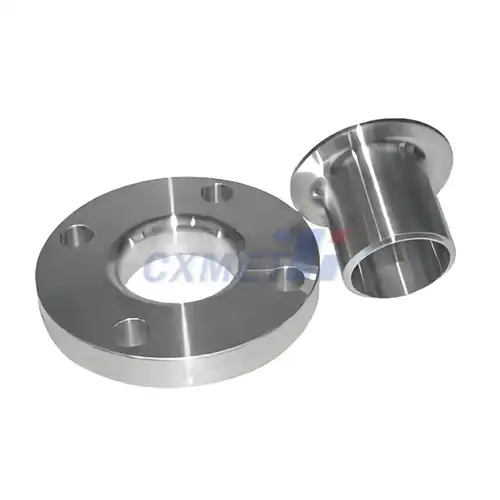
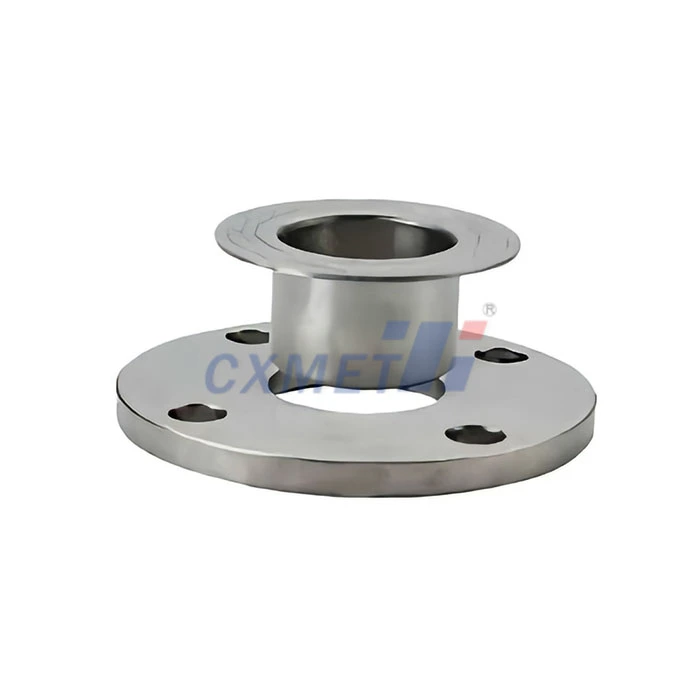
Why Does Welding a Titanium Lap Joint Flange Require Special Precautions?
Why Is Titanium So Reactive During Welding of a Titanium Lap Joint Flange?
The reactivity of titanium with ambient gases becomes a major problem when weld temperatures are above around 500 to 800 degrees Fahrenheit. At these temperatures, a titanium lap joint flange rapidly collects oxygen, nitrogen, and hydrogen from the surrounding air. This absorption, despite the surface may seem unbroken, embrittles the metal. Whereas steel will tolerate some atmosphere exposure when welding, titanium needs a completely inert atmosphere throughout the whole cooling cycle, not only while the arc is on. So fabricators working on a titanium lap joint flange must consider gas covering as a continuous need from the time the arc hits until the joint drops far below the reactive temperature threshold, since any gap in protection might silently damage the final connection.
How Does Contamination Affect the Integrity of a Titanium Lap Joint Flange?
Contamination during welding does not always provide a warning. This may be especially harmful for a titanium lap joint flange that is to be put into service under high pressure or corrosive conditions. Interstitial materials absorbed during welding decrease ductility and fracture toughness. A contaminated joint may pass a visual examination and break prematurely when subjected to cyclic loads or aggressive process fluid. Even a little exposure of virgin-cleaned titanium to ambient air before welding may greatly increase porosity in the final weld. As such, fabricators using a titanium lap joint flange see cleanliness as a time-dependent requirement, and therefore minimise the time between surface preparation and welding, rather than leaving prepared material exposed on the shop floor.
What Safety Risks Should Fabricators Anticipate When Welding a Titanium Lap Joint Flange?
Welding a titanium lap joint flange is not only a metallurgical issue, but it's also a practical safety issue that shops need to prepare for. Titanium fines and grinding dust are combustible and should be maintained under good housekeeping conditions and with specialist equipment kept away from carbon steel activity to prevent iron contamination and fire danger. Electrical safety and grounding must also be considered for high-frequency arc starters used in TIG welding. Fabricators also must deal with confined-space and gas displacement dangers while working in tight enclosures since an entirely inert environment may necessitate enclosed purge chambers or gas boxes. Early identification of these concerns enables shops to prepare for ventilation, tooling, and workstation arrangement before production welding of a titanium lap joint flange begins.
What TIG Welding Techniques Ensure a Safe Titanium Lap Joint Flange Weld?
Why Is Argon Shielding Essential When Welding a Titanium Lap Joint Flange?
The safe weld on any titanium lap joint flange starts with a high-quality argon shielding gas, preferably 99.999 percent pure. MIG might be used, but TIG is ideal for this application because it has low spatter and a controlled arc that works with a gas lens and tail shield arrangement. A trailing shield is especially critical for flange welds, where it continues to shield the joint with argon coverage until it cools below the reactive temperature threshold, long after the torch has passed. Fabricators also need to ensure the hose material is a nonporous plastic, not rubber. Rubber may collect and then release oxygen into a shielding stream, bringing precisely the contamination a titanium lap joint flange weld is supposed to prevent.
How Does Back Purging Protect a Titanium Lap Joint Flange During Welding?
Since a titanium lap joint flange is usually welded to the outer diameter of a pipe or stub end, the backside or root of the junction is just as prone to oxidation as the visible face. Back purging replaces the trapped oxygen within the pipe with argon. The inert environment around the joint is contained by dams, tape, or inflatable bladders. A sound titanium welding procedure requires that the internal environment be flushed out several times with the argon purge before arc initiation to reduce the oxygen content to acceptable levels. Back purging is a non-negotiable phase of the welding technique since skipping or speeding this stage is one of the most prevalent causes of root-side discolouration and embrittlement in a titanium lap joint flange assembly.
What Filler Metal and Joint Preparation Practices Matter for a Titanium Lap Joint Flange?
The right filler metal selection is critical for the connecting of a titanium lap joint flange to a pipe of the same grade. Improper filler might result in galvanic or mechanical properties incompatibilities at the junction. The filler rod should normally be the same grade as the base metal. The filler rod must be maintained under the covering of the shielding gas during the whole weld. If the filler rod tip is exposed to the open air, even for a moment, contamination will be introduced into the puddle. Equally important is surface preparation: all oil, oxide coatings, fingerprints and dust must be removed from the joint region just before welding using specific, clean instruments designed solely for titanium work. These preparatory behaviours, regularly performed, enable a titanium lap joint flange weld to be as strong and corrosion-resistant as the base material may be.
How Do Fabricators Verify the Quality of a Titanium Lap Joint Flange Weld?
How Does Weld Color Indicate Quality in a Titanium Lap Joint Flange?
Weld color is one of the fastest and most widely used quality indicators for a titanium lap joint flange, since the oxide layer that forms during cooling changes visibly with the level of atmospheric exposure. A properly shielded weld appears silver to light straw or gold, while progressively worse contamination produces blue, purple, gray, or ultimately chalky white discoloration. Fabricators use this visual scale as an immediate first-pass check before more formal inspection begins, since a joint showing gray or white coloration has almost certainly absorbed enough oxygen to compromise ductility. While weld color alone doesn't replace formal testing, it gives welders and inspectors valuable real-time feedback on shielding effectiveness while work on a titanium lap joint flange is still in progress.
What Inspection Methods Confirm a Sound Titanium Lap Joint Flange Weld?
Once welding is complete, a titanium lap joint flange destined for critical service typically undergoes formal non-destructive testing to confirm weld integrity. Dye penetrant testing is commonly used to detect surface-breaking defects on flange welds, while radiography or ultrasonic testing may be specified for full-penetration structural joints where internal defects would be unacceptable. In systems where gas-tightness matters, such as chemical process piping, helium leak testing can provide additional confidence beyond visual and radiographic checks. Combining these inspection methods gives fabricators and end users a layered verification process, ensuring that a titanium lap joint flange meets both the mechanical and leak-tightness requirements of its intended application before it enters service.
Why Is Documentation Important for Titanium Lap Joint Flange Welding Projects?
Traceability documentation is a huge aspect of titanium manufacturing, especially for a titanium lap joint flange to be used in aerospace, chemical processing, or other regulated sectors. A documented Welding Procedure Specification defines shielding gas purity, purge time, and process parameters to assure consumers that the weld was made under regulated and repeatable circumstances. Material certification, such as an EN 10204 3.1 certificate, provides a connection between the completed flange and its heat number and chemical composition, which supports quality audits and regulatory compliance. For overseas clients looking for a titanium lap joint flange, this documentation trail is frequently as vital as the actual weld itself, since it is the verifiable proof required to certify the item for rigorous service conditions.
Conclusion
Safely welding a titanium lap joint flange depends on strict shielding, careful joint preparation, and thorough inspection at every stage. Shaanxi CXMET Technology Co., Ltd, founded in 2005 in China's Titanium Valley with over 80 skilled technicians, manufactures and supports flanges built to these exacting standards. For technical guidance or custom specifications, contact sales@cxmet.com — our team is ready to assist.
References
1. American Welding Society, AWS D17.1 Specification for Fusion Welding for Aerospace Applications.
2. ASTM International, ASTM B381 Standard Specification for Titanium and Titanium Alloy Forgings.
3. Schutz, R.W., "Titanium in Chemical Process Industry Applications," NACE International Corrosion Technology Reference.
4. ASM International, ASM Handbook, Volume 6: Welding, Brazing, and Soldering.
5. AWS Welding Handbook Committee, Welding Handbook, Volume 4: Materials and Applications.
6. ISO 9001:2015, Quality Management Systems — Requirements, International Organization for Standardization.