knowledges
How Do Oxygen Levels Affect Gr23 Titanium Wire Toughness?
2026-08-06 09:55:03
Oxygen is a minor element, yet it has an outsized role in titanium metallurgy. If you’re an engineer selecting Gr23 titanium wire for aerospace, medical or marine applications, knowing the impact trace oxygen concentration has on strength, ductility and fracture toughness is key to consistent, dependable performance. This page describes why oxygen is so important, how it influences the mechanical behaviour of Gr23 titanium wire and what manufacturers undertake to maintain tight control of oxygen levels throughout manufacturing.
|
|
|
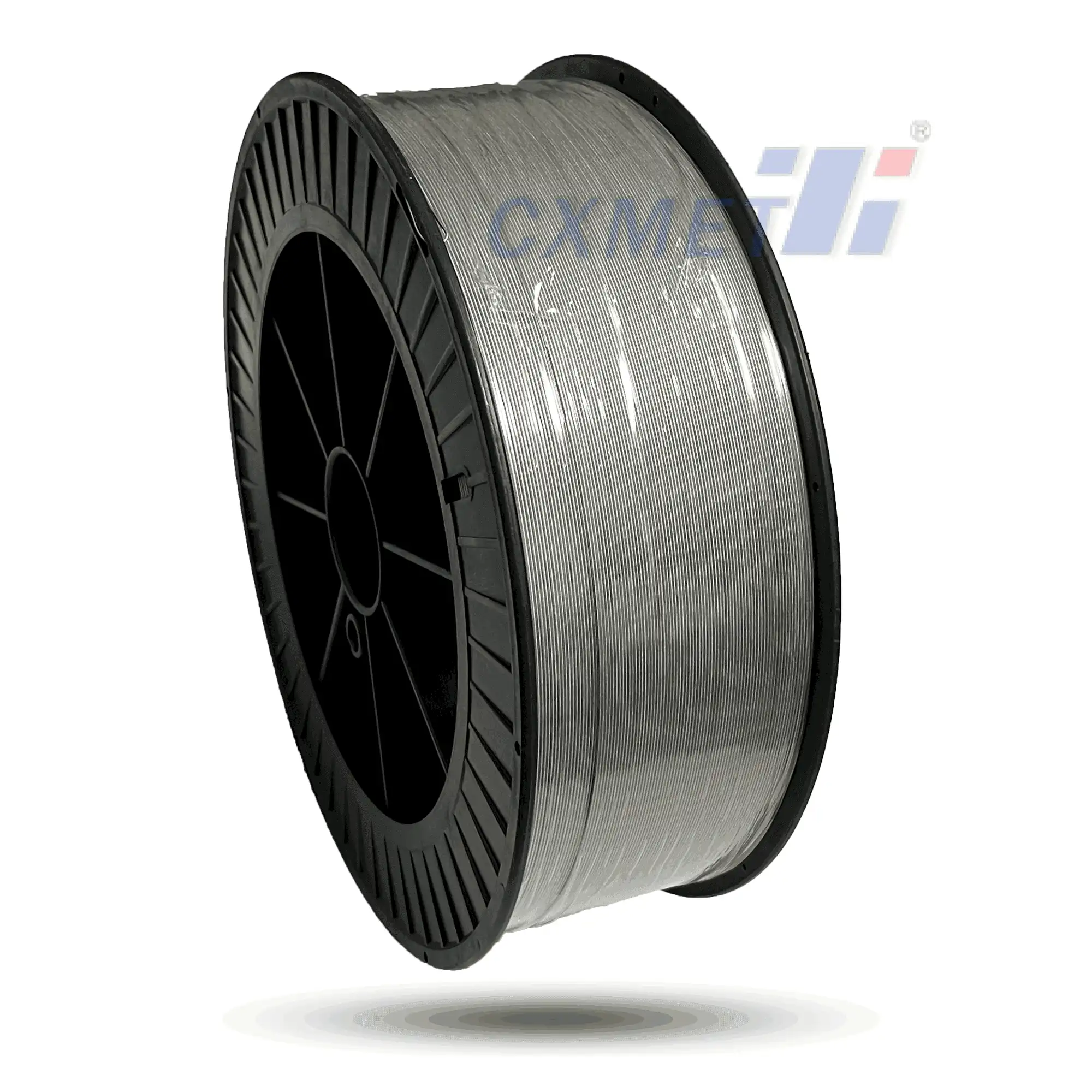
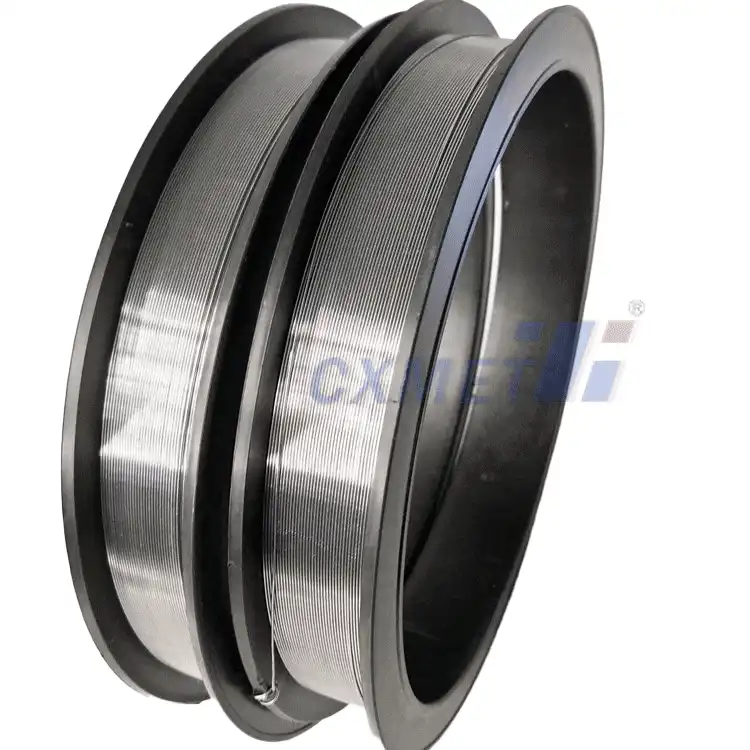
Why Is Oxygen Content So Critical for Gr23 Titanium Wire?
What Role Does Interstitial Oxygen Play in Titanium Alloys?
Oxygen lies in spaces between the titanium atoms in the crystal structure. Even in extremely tiny amounts, this interstitial oxygen inhibits the migration of dislocations, which is the process by which metals bend plastically. This effect is controlled on purpose, and not left to chance as with Gr23 titanium wire. It is an alloy that is purposely designed to be a low interstitial version of the Ti-3Al-2.5V family. The presence of oxygen enhances the hardness and the yield strength but also restricts the free deformation of the lattice, therefore reducing the capacity of the material to absorb energy before fracture. This dual impact is the beginning of the understanding of why oxygen specification is an essential quality criterion, and not an accidental contaminant in wire production.
How Does Oxygen Compare to Other Interstitial Elements in Gr23 Titanium Wire?
Of the interstitial elements in titanium alloys, nitrogen, carbon, and hydrogen, oxygen has the most impact on the mechanical characteristics at quantities normally observed in commercial wire products. Oxygen is more mobile in the titanium lattice than nitrogen or carbon and generates larger local strain fields surrounding each interstitial site. Thus, the oxygen concentration, rather than the total interstitial content, is often the metric most carefully followed throughout the manufacturing of Gr23 titanium wire. The other interstitials are not monitored as closely by manufacturers as oxygen, a few hundred ppm of which may make a measurable difference in the balance between strength and ductility, tight control being a hallmark of high-quality wire manufacturing.
Why Is ELI (Extra Low Interstitial) Grade Relevant to Gr23 Titanium Wire?
There are ELI ( Extra Low Interstitial ) designations because the oxygen sensitivity is so evident in titanium alloys. Basically, the ELI equivalent of regular Grade 5, Gr23 titanium wire has the oxygen limit purposefully kept low to retain toughness for demanding applications. This differentiation is especially significant in cryogenic, surgical, and fatigue-demanding situations where a brittle failure mode is undesirable regardless of how much strength is obtained. Gr23 titanium wire, with its oxygen concentration kept within the limit of the common grades, has a superior balance between ductility and fracture resistance, which is why it is used for surgical implants and aircraft parts, where the safety margin is quite tight.
How Does Increasing Oxygen Affect the Toughness of Gr23 Titanium Wire?
What Happens to Ductility as Oxygen Content Rises?
Ductility decreases in a predictable manner with higher oxygen concentration over the narrow limit recommended for Gr23 titanium wire. Interstitial oxygen atoms impede the motion of screw dislocations and force deformation from a more accommodating mode of cross-slip to a planar slip mode that concentrates strain in narrow bands. This localised strain accumulation renders the material more susceptible to fracture initiation under load. Even minor oxygen additions may dramatically reduce the elongation at break. That is why Gr23 titanium wire manufacturers use oxygen as a strict specification limit, not a flexible objective, during melting and processing.
How Does Oxygen Influence Fracture Toughness at Low Temperatures?
Oxygen sensitivity at low and cryogenic temperatures becomes more obvious, which is of major importance for aerospace and marine applications of Gr23 titanium wire. At lower temperatures, thermal activation of dislocation motion is diminished, and the material is more dependent on ductile processes already restricted by interstitial oxygen. The outcome may be a change from a ductile, energy-absorbing fracture to a more brittle failure mode with no warning. This behaviour demonstrates the performance benefit of the lower oxygen ceiling of Gr23 titanium wire over normal interstitial grades for components operating at sub-zero temperatures such as cryogenic fuel systems or high altitude aeronautical gear.
What Is the Trade-off Between Strength and Toughness in Gr23 Titanium Wire?
Metallurgists usually define the influence of oxygen as a trade-off curve, not as a good-bad connection. Increased oxygen concentration increases yield strength and hardness, ideal for certain load-bearing applications, but directly decreases toughness and fatigue resistance. Gr23 titanium wire is designed to be in a good place on this curve, with strength levels appropriate for demanding structural and medical applications, while maintaining sufficient ductility to prevent fracture propagation under cyclic or shock loading. This balance is not accidental, but the result of meticulous compositional management such that the alloy is capable of reliable performance in a broad spectrum of operating circumstances, without compromising long-term structural integrity.
How Can Manufacturers Control Oxygen Levels in Gr23 Titanium Wire Production?
What Melting and Processing Techniques Limit Oxygen Pickup?
Oxygen control starts long before the wire is pulled. Vacuum arc remelting and other controlled-atmosphere melting procedures are utilised to keep oxygen absorption to a minimum during the first consolidation of titanium sponge and alloying elements. Producers of Gr23 titanium wire maintain inert or vacuum atmospheres whenever the metal is exposed to extreme temperatures throughout the following hot working, wire drawing, and annealing phases, since hot titanium quickly absorbs oxygen from ambient air. Another major cause of undesired oxygen pickup is surface contamination during intermediate processing stages; therefore, careful handling practices and clean tools are a must. At every step of the manufacturing process, the possibility for oxygen penetration is considered. This is why strict process control is the key to continuously satisfying Gr23 standards.
How Is Oxygen Content Tested and Verified in Gr23 Titanium Wire?
Verification of oxygen concentration needs analytical means of examination, not visual or mechanical. Oxygen, nitrogen, and hydrogen determination in finished Gr23 titanium wire is usually performed by inert gas fusion analysis, which gives data traceable to recognised international standards. The reputable providers test each batch of manufacturing and will also provide material certificates stating that the oxygen levels are within the required range for the grade. This traceability is of particular importance to purchasers in the aerospace and medical sectors where recorded composition data is typically a required element of certification and procurement criteria. Standard testing processes ensure that consumers may be certain that all spools of wire will provide the mechanical performance anticipated of authentic Gr23 material.
What Industry Standards Define Acceptable Oxygen Levels for Gr23 Titanium Wire?
The maximum allowable oxygen concentration for this form of titanium wire is determined by international standards such as ASTM B863 and similar ELI requirements, which is usually much less than the amount permitted for normal interstitial grades. The reason these standards exist is that the link between oxygen and mechanical performance is well established and repeatable among providers. When obtaining Gr23 titanium wire, buyers should ensure that the material is certified to the applicable standard for their business, whether that is an aeronautical, medical or general engineering specification. The best approach to verify that the toughness and ductility advantages of the ELI designation are being realised in the material obtained is to follow recognised criteria.
Conclusion
Oxygen content is the single most influential factor shaping the toughness of Gr23 titanium wire, and controlling it precisely is what makes this alloy suitable for aerospace, medical, and marine applications. Shaanxi CXMET Technology Co., Ltd, founded in 2005 and based in China's "Titanium Valley," brings over 20 years of experience and a team of more than 80 technicians to the production of premium, tightly specified titanium wire. For technical consultation or custom specifications, reach out to sales@cxmet.com — our team is ready to help you find the right material for your application.
References
1. Yu, Q. et al., "Mechanistic Basis of Oxygen Sensitivity in Titanium," Science Advances.
2. Chong, Y. et al., "Elimination of Oxygen Sensitivity in α-Titanium by Substitutional Alloying with Al," Nature Communications.
3. "Grain Refinement in Titanium Prevents Low-Temperature Oxygen Embrittlement," Nature Communications.
4. "Effect of Interstitial Oxygen on the Microstructure and Mechanical Properties of Titanium Alloys: A Review," Crystals.
5. "Oxygen Interstitials Make Metastable β Titanium Alloys Strong and Ductile," Acta Materialia.
6. ASTM International, ASTM B863 Standard Specification for Titanium and Titanium Alloy Wire.