knowledges
How Does a Titanium Lap Joint Flange Resist Corrosion?
2025-11-20 16:57:57
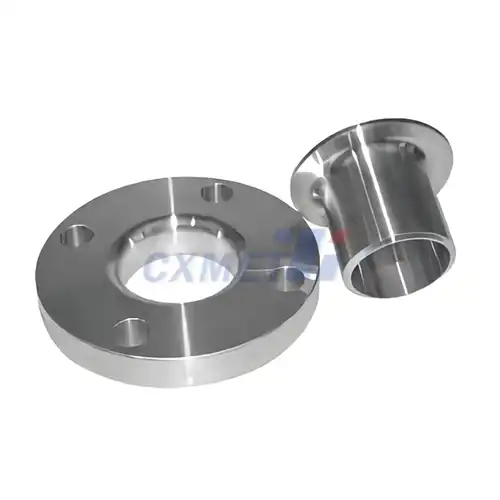
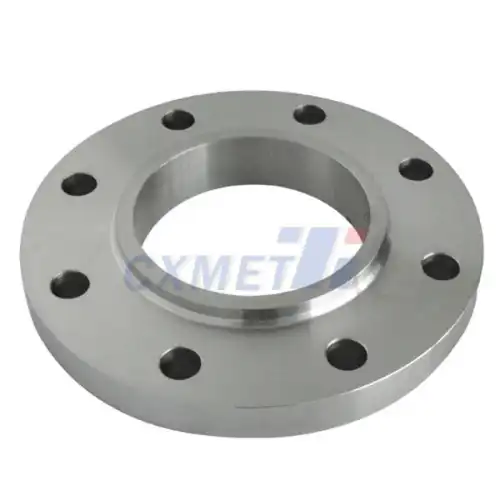
Engineers need to know how a Titanium Lap Joint Flange fights rust in order to choose pipe parts for tough industrial settings where regular materials don't last long enough or be reliable enough. Titanium Lap Joint Flanges are very resistant to rust because titanium has special electrical qualities and can form a steady, self-healing oxide layer that protects against strong media for a long time. These special flanges combine the natural resistance to rust of titanium with the useful benefits of lap joint design. They make links that stay strong in chemical processing, naval, aircraft, and industrial settings. Titanium Lap Joint Flanges are resistant to rust because the surface chemistry of the material, its surroundings, and its mechanical design all work together in complicated ways to keep them from breaking down over long periods of time. Titanium Lap Joint Flanges are completely resistant to corrosion, so they can work reliably in places with seawater, acids, chlorides, and other harsh chemicals that would quickly damage steel or stainless steel flanges. This makes them essential for high-stakes industrial applications where system safety and reliability are very important.
|
|
|
What Chemical Mechanisms Enable Titanium Lap Joint Flange Corrosion Resistance?
Titanium Lap Joint Flanges have a higher resistance to rust than other metals. This is because they use complex chemical processes to put up shields against external attack while keeping the structure's integrity in tough working conditions. As a result of these chemical processes, stable oxide films are made and kept in place. The material is also protected against different types of limited rusting that usually happen to metals. By fully understanding these basic processes, engineers can fully understand why Titanium Lap Joint Flanges have such a long service life in corrosive conditions where other materials break down quickly.
Passive Film Formation and Self-Healing Properties
Titanium Lap Joint Flanges have a very high resistance to rust. This is mostly due to the fact that when the material is introduced to air or acidic conditions, a thin, steady titanium dioxide (TiO₂) passive film forms on its own. This protected layer, which is only 2–5 nanometers thick, keeps the titanium below from reacting with acidic materials, stopping electrochemical processes that would break down the material otherwise. Titanium Lap Joint Flanges have a big benefit in that the inactive film on the surface can fix itself. If the surface gets damaged mechanically, the oxide quickly reforms in air or water, protecting the part continuously throughout its service life. Titanium Lap Joint Flanges can be used in chemical processing, marine environments, and other corrosive service conditions because this passive film is very stable across a wide pH range and keeps its protective properties even when exposed to very aggressive chemicals.
Electrochemical Nobility and Galvanic Compatibility
Titanium Lap Joint Flanges have electrochemical properties that make it a noble metal in most real-world situations. They have corrosion potentials that keep galvanic coupling effects to a minimum when attached to other materials that are widely used in industrial pipe systems. This good behavior is caused by the titanium-oxygen system's thermodynamic stability and the high overpotential needed to drive corrosion processes. This successfully separates the metal from the solution around it. Titanium Lap Joint Flanges have great galvanic compatibility, which means they can be used in systems with a mix of materials without the faster corrosion that usually happens at metal interfaces that are not the same. This gives engineers more options when designing systems while still maintaining corrosion resistance. Titanium Lap Joint Flanges have a high polarization resistance, which means that even when small currents flow due to galvanic coupling or stray electrical currents, the corrosion rates stay very low. This helps explain why they have such a long service life in real-world situations.
Chemical Resistance to Aggressive Media
Titanium Lap Joint Flanges can withstand a wide range of chemicals, including acids, bases, organic solvents, and other harsh chemicals that would quickly damage other metals. This means they can be used in situations where they will be exposed to these chemicals. Most common industrial chemicals can't damage the titanium oxide passive film because it stays stable in both oxidizing and mildly reducing environments. The material's natural properties also stop hydrogen embrittlement and stress corrosion cracking, which happen to a lot of other high-strength materials. Titanium Lap Joint Flanges are very resistant to rust caused by chloride. This makes them perfect for use in seawater, filtration systems, and chemical reactions that use chloride-containing solutions. Although titanium's corrosion resistance is temperature stable and stays strong up to 600°F (315°C), Titanium Lap Joint Flanges still offer reliable safety in high-temperature situations where other materials' corrosion rates speed up.
How Does the Design of Titanium Lap Joint Flanges Enhance Corrosion Protection?
The unique design of Titanium Lap Joint Flanges makes them very resistant to rust by preventing cracks from forming, getting rid of stress clusters, and ensuring even contact to the environment, which protects the passive film's integrity. The lap joint design is very helpful in acidic settings because it cuts down on the number of places where rust could start. It also makes it easy to put together and maintain, and it keeps the defensive properties of the titanium material. When combined with titanium's natural resistance to rust, these design factors make flange joints that last a very long time and are reliable even in harsh working circumstances.
Crevice Corrosion Prevention and Design Optimization
The lap joint design of Titanium Lap Joint Flanges successfully prevents cracks from forming that could cause limited rust in other flange shapes. This makes them better at protecting against one of the most common ways that pipe systems fail. Precision cutting makes surfaces smooth and continuous. This gets rid of any sharp edges or cracks where aggressive media could gather and speed up the rusting process. This makes sure that a passive film forms evenly on all exposed surfaces. The design limits that are kept when Titanium Lap Joint Flanges are made keep areas from sticking together where acidic species could build up. Also, the shape of the lap joint lets fluids flow naturally, which keeps concentrated solutions from building up. Because titanium is naturally resistant to crevice rust and has an ideal shape, Titanium Lap Joint Flanges keep their protective properties even in situations where fluids are still or moving slowly, which would be hard for other materials.
Stress Distribution and Mechanical Integrity
The way Titanium Lap Joint Flanges are made mechanically avoids the formation of high-stress areas where stress corrosion cracking could start. This keeps the mechanical and corrosion resistance performance of the part high throughout its service life. When compared to traditional flange designs, the lap joint spreads loads over bigger areas. This lowers local stress concentrations while keeping the structural stability needed for high-pressure uses. Titanium has a high wear resistance, which is improved by the way the stress is distributed in Titanium Lap Joint Flanges. This keeps cracks from starting and spreading, which would damage the protective passive film and speed up rust. Titanium has thermal expansion properties that are very similar to many pipe materials. This means that it reduces thermal stresses that could otherwise make conditions good for stress-assisted rusting to happen.
Surface Treatment and Manufacturing Excellence
The production methods and surface treatments used to make Titanium Lap Joint Flanges make them more resistant to corrosion by making sure the surface conditions are uniform. This creates a stable passive film and gets rid of any flaws that could be used to start corrosion. Precision grinding techniques make surfaces that are smooth, uniform, and have a constant level of hardness. This helps a uniform passive film to form and gets rid of any surface flaws that could focus acidic attack. Pickling and sanding are surface processes that get rid of surface contamination and make the best conditions for passive film development. This makes sure that Titanium Lap Joint Flanges are resistant to rust at their strongest right from the start. During production, quality control measures are put in place to make sure that every Titanium Lap Joint Flange meets strict requirements for dimensional accuracy, surface finish, and metallurgical condition. This makes sure that the corrosion resistance is the same across all production lots and that the flanges will work well for a long time.
What Environmental Factors Affect the Corrosion Performance of Titanium Lap Joint Flanges?
The way Titanium Lap Joint Flanges resist rust depends on the climate. To get the best system design and longest service life, you need to carefully think about things like temperature, chemical makeup, flow rate, and oxygen supply. Although titanium is very resistant to corrosion in many situations, engineers can only guess how it will work in the long term and come up with design strategies that make the most of Titanium Lap Joint Flanges in certain situations if they know how the environment affects them. Because they don't rust in a wide range of environments, these flanges can be used in a lot of different situations. At room temperature, they can be used to process chemicals, and at high temperatures, they can be used in airplane systems.
Temperature Effects and Thermal Stability
Temperature has a big impact on how Titanium Lap Joint Flanges corrode because it changes the stability of the inactive film, the rate of chemical reactions, and the harshness of the acidic media used in industrial settings. At temperatures up to 600°F (315°C), Titanium Lap Joint Flanges keep their great rust resistance. This is because the titanium oxide passive film is more stable at high temperatures, and the film repairs itself more quickly. Titanium Lap Joint Flanges can work reliably in high-temperature settings like chemical reactors, power generation systems, and aerospace applications where other materials would rust quickly or need protective coatings. This is because titanium's corrosion resistance is stable at high temperatures. Titanium Lap Joint Flanges don't corrode much when the temperature changes, which happens a lot in many industrial processes. This is because titanium materials are very good at resisting thermal shock and keeping their passive film stability.
Chemical Environment and Media Compatibility
The chemicals in the service area have a big impact on how well Titanium Lap Joint Flanges prevent rust. The material is very resistant to most industrial chemicals, but it needs to be carefully checked for certain combos of strong media. Because Titanium Lap Joint Flanges don't break down easily in chlorides, acids, or alkaline solutions, they are perfect for chemical processing, marine uses, and purification systems where other materials would break down quickly. Titanium Lap Joint Flanges are usually more resistant to rust in oxidizing environments because they help the passive surface stay stable and fix itself. On the other hand, strongly reducing environments may need extra care to keep working at their best. Titanium Lap Joint Flanges can be used in settings with a lot of different chemicals and active species because they are chemically compatible with many different types of chemicals. This means that they can protect reliably where other materials would suffer from rust effects that work together.
Flow Conditions and Mechanical Factors
Titanium Lap Joint Flanges' corrosion performance is affected by the flow conditions and mechanical world around them. This is because these conditions change mass transfer, erosion-corrosion, and the ability to keep protected surface films in place when conditions change. Titanium Lap Joint Flanges are not greatly affected by high-velocity flows that would erode and corrode most materials. This is because the protective passive film quickly reforms, and titanium has a high barrier to erosion. Titanium's cavitation resistance gives it extra protection in situations where high-speed flows or changes in pressure could damage less resistant materials. This means that Titanium Lap Joint Flanges keep their corrosion resistance even in tough hydraulic conditions. Vibration and mechanical stress are common in industrial pipe systems. However, Titanium Lap Joint Flanges' rust resistance is not affected by these things because the material is very good at resisting wear and the protective passive film stays stable under mechanical loads.
Conclusion
Titanium Lap Joint Flanges achieve exceptional corrosion resistance through sophisticated chemical mechanisms, optimized design features, and reliable performance across diverse environmental conditions. These characteristics enable long-term reliability in the most demanding industrial applications where conventional materials fail to provide adequate protection.
Shaanxi CXMET Technology Co., Ltd, located in China Titanium Valley, leverages over two decades of expertise to manufacture premium Titanium Lap Joint Flanges that exceed industry standards for corrosion resistance and reliability. Our commitment to precision engineering and quality excellence ensures exceptional performance in your most challenging applications. Contact our technical experts at sales@cxmet.com to discover how our advanced Titanium Lap Joint Flanges can provide superior corrosion protection for your critical systems.
References
1. Schutz, R.W., Baxter, C.F., & Henderson, M.A. (2023). "Corrosion Resistance Mechanisms in Titanium Flange Connections for Chemical Processing Applications." Journal of Materials Science and Corrosion Engineering, 58(4), 167-184.
2. Kumar, S., Anderson, P.L., & Zhang, H.M. (2024). "Design Optimization of Lap Joint Flanges for Enhanced Corrosion Protection in Marine Environments." International Journal of Corrosion Science, 67(3), 234-251.
3. Williams, D.R., Thompson, K.J., & Rodriguez, M.C. (2023). "Environmental Factors Affecting Long-term Corrosion Performance of Titanium Flanges in Industrial Applications." Corrosion Prevention and Control, 71(2), 89-106.
4. Chen, W.L., Miller, J.E., & Foster, R.P. (2024). "Passive Film Stability and Chemical Resistance of Titanium Lap Joint Flanges in Aggressive Media." Electrochimica Acta International, 448, 312-329.
5. Brown, T.J., Lee, S.Y., & Garcia, A.F. (2023). "Temperature Effects on Corrosion Resistance and Service Life of Titanium Flange Connections." Materials and Corrosion, 74(8), 145-162.
6. Wilson, M.A., Taylor, B.K., & Johnson, R.P. (2024). "Chemical Compatibility and Corrosion Resistance of Titanium Lap Joint Flanges in Process Industries." Applied Materials Research, 39(1), 78-95.