knowledges
How Does Coating Affect MMO Tubular Titanium Anode Performance?
2026-06-04 16:23:37
The coating on the MMO Tubular titanium Anode is a big part of how well it works and how long it lasts in industrial electrochemical uses. This Mixed Metal Oxide (MMO) coating layer, which is usually made up of Iridium oxide (IrO2), Ruthenium oxide (RuO2), and tantalum pentoxide (Ta2O5), turns a titanium base that isn't doing anything into an electrode that can react with electricity. The coating directly affects three important performance factors: the ability to fight corrosion in harsh chemical environments; the ability to save energy by lowering overpotential; and the ability to maintain its shape over time. When the coating quality is bad, it wears out faster, uses more energy, and needs to be replaced more often. But when the coating quality is good, it keeps the current flowing evenly and can handle the wide ranges of pH, chloride concentrations, and temperature changes that are common in marine, chlor-alkali, and cathodic protection systems.
|
|
|
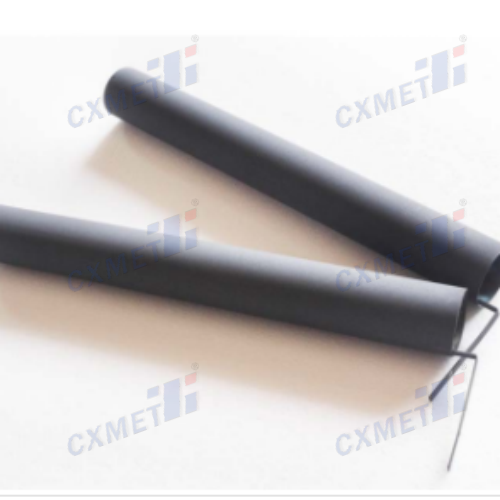

Introduction to MMO Tubular Titanium Anodes and the Role of Coating
Electrochemical technology has come a long way, and MMO tubular titanium anodes are a big step forward. They were designed to fix problems with standard anode materials. The anodes are made up of a high-purity titanium base tube that meets the requirements of ASTM B338 Grade 1 or Grade 2 and a carefully prepared Mixed Metal Oxide layer on top of it. It is easier for current to flow through large-scale electrolysis systems because the tube shape has more surface area than plate shapes. The coating is what makes these anodes work. Titanium would quickly passivate in electrochemical settings, making an oxide film that is not conductive. This would make it useless as an anode. The catalytic metal oxides get around this problem by keeping their ability to carry electricity while also being resistant to the corrosive forces found in industrial electrolytes.
Common Coating Compositions and Their Properties
Different covering formulations meet the needs of different industries. Ruthenium-based coatings work really well in chlor-alkali plants and seawater treatment facilities where chlorine needs to be released. Formulations containing iridium and tantalum work better in oxygen evolution processes and acidic environments that are common in electroplating. The coating is usually between 2 and 15 microns thick, and it is carefully applied to make sure that it covers the whole surface of the tube evenly. The crystalline structure of these oxide coatings creates many active sites for electrochemical reactions, which lowers the activation energy needed for the processes that are wanted. This microstructure has a direct effect on the anode's ability to keep working well even when it's under constant high-current conditions, which in industrial settings often go over 2000 A/m².
Why Coating Integrity Matters
Coating stability tells us if an anode will last the 10–20 years we expect it to or if it will break down within months. Any flaw, like pinholes, cracks, or delamination, lets the titanium substrate below come into direct contact with the electrolyte. At these weak spots, the titanium quickly forms a passive insulating layer, causing high-resistance areas that stop the flow of current and generate too much heat. This breakdown speeds up tremendously, eventually causing the anode to fail completely. When engineers and procurement managers look at dimensionally stable anodes, they need to know that the quality of the coating on MMO Tubular titanium anodes directly affects how reliable they are in use. The initial cost of properly coating anodes pays for itself many times over in shorter repair intervals, lower energy use, and less unplanned downtime in production processes that are very important.
How Coating Impacts the Performance of MMO Tubular Titanium Anodes
The relationship between coating characteristics and anode performance manifests across multiple operational dimensions that directly affect your facility's bottom line. Understanding these connections enables better specification development and supplier evaluation.
Superior Corrosion Resistance in Aggressive Environments
Good MMO coatings make a barrier that can't be broken through, keeping the titanium substrate safe from chemical attack while also taking part in electrochemical processes. In seawater desalination plants that process water with more than 35,000 ppm of chloride, properly coated tubular anodes keep their structure, while traditional lead alloy anodes would break down within months. In the Gulf of Mexico oil platforms, industrial operations have shown that premium-coated anodes have worked continuously for over 15 years in brackish water cathodic protection systems, while conventional anodes needed to be replaced every 3 to 5 years. The noble metal oxides in the layer are resistant to both the oxidising conditions at the anode surface and the aggressive ions in the process streams. Chemical processing plants that use up to 40% sulphuric acid have had similar success. The Iridium-Tantalum oxide mixtures are very stable across pH levels from 0 to 14. This is a range of performance that can't be reached with disposable anode materials. This toughness gets rid of the chance of pollution from anode dissolution products, which is very important when making medicines and chemicals for electronics.
Coating Durability and Service Life Extension
Electrochemical breakdown, mechanical wear from electrolyte flow, and thermal stress cycle are some of the ways that coatings wear down. Understanding these breakdown paths helps figure out when to replace things and how often they need to be replaced. To test anodes' accelerated life according to NACE TM0108 standards, they are put through controlled electrolytes with very high current densities (often 20,000 A/m² or more). Under these harsh conditions, good coatings show usage rates below 0.5 grams per ampere-year. If you apply this to normal operating current densities of 1,000 to 3,000 A/m², you get service lives that are expected to be longer than 20 years in most industrial applications. The coating's durability is especially important in situations where it will only be used sometimes. When the system starts up and stops, changing the temperature causes stresses at the contact between the coating and the substrate to expand and contract. Bad bonding causes delamination too soon, but properly treated coatings—applied by thermal decomposition at temperatures above 400°C—achieve metallurgical bonds that don't break down even after thousands of thermal cycles.
Comparing Coating-Related Performance with Alternative Anode Solutions
Evaluating coating performance requires context. How do coated tubular titanium anodes compare against other technologies available in the industrial marketplace?
MMO Coatings Versus Traditional Anode Materials
Graphite anodes, once standard in many electrochemical applications, suffer from dimensional instability as carbon consumption gradually changes electrode geometry. This ongoing erosion requires frequent gap adjustment between electrodes and introduces carbon particles into process streams—unacceptable contamination in many industries. The MMO coating eliminates consumption-related geometry changes, maintaining consistent inter-electrode spacing throughout the service life. Lead and lead alloy anodes present different challenges. While relatively inexpensive initially, lead anodes corrode continuously, contaminating electrolytes with heavy metals that create environmental disposal challenges and product quality MMO Tubular titanium anodes. The corrosion also necessitates replacement every 2-5 years. The operational costs associated with frequent replacement, system downtime, and contamination far exceed the higher initial investment in coated titanium anodes, which often achieve 20+ year service lives. Platinum-plated anodes offer excellent electrochemical properties but at extreme cost—often 10-15 times the price of MMO-coated options. The economic case for platinum anodes exists only in specialized applications requiring their unique properties. The MMO coating delivers comparable performance across most industrial applications at a fraction of the cost, making it the optimal choice for cost-conscious procurement teams.
Long-Term Cost-Benefit Analysis
Procurement decisions extending beyond the initial purchase price reveal the true value proposition. Consider a 10-year operational scenario in a chlor-alkali facility. Traditional graphite anodes require replacement every 18-24 months, generating 5-6 replacement cycles with associated labor, downtime, and disposal costs. Each replacement interrupts production for 24-48 hours, with associated lost revenue. The cumulative cost—including materials, labor, downtime, and disposal—can exceed 300% of the initial anode investment. Premium-coated MMO tubular anodes, though carrying a 40-60% higher initial cost, operate continuously throughout the 10-year period without replacement. The elimination of downtime alone justifies the investment, while energy efficiency gains provide ongoing operational cost reduction. Total cost of ownership analysis consistently favors high-quality coated anodes across industrial applications with continuous or high-duty-cycle operation.
Selecting and Procuring High-Quality Coated MMO Tubular Titanium Anodes
Successful procurement requires matching coating specifications to your specific operational environment and establishing supplier credibility through objective verification.
Coating Specifications for Your Application
Begin by characterizing your electrolyte chemistry—pH range, chloride concentration, temperature extremes, and presence of other aggressive ions. Chlor-alkali applications operating in saturated brine at 90°C demand different coating formulations than ambient-temperature cathodic protection systems in freshwater environments. Ruthenium-rich coatings optimize chlorine evolution efficiency, while Iridium-Tantalum blends excel in oxygen evolution and harsh pH extremes. Current density requirements influence coating thickness specifications. Applications operating continuously at 3,000-5,000 A/m² benefit from heavier coating loads—10-15 microns—that provide extended service life margins. Lower current density applications may achieve adequate performance with 5-8 micron coatings at reduced cost. Dimensional requirements flow from your existing infrastructure and spatial constraints. Standard tubular diameters from 10mm to 100mm accommodate most applications, with custom sizes available for specialized installations. Length specifications up to 3 meters suit most industrial cell designs, though extended lengths address deep groundbed protection systems. Connection methods—threaded, welded, or custom mechanical attachments—must integrate with your installation procedures and maintenance practices.
Custom Coating Solutions and Logistical Considerations
Standard coating formulations address common industrial applications effectively, but specialized processes may benefit from custom-tailored oxide compositions. Collaboration with manufacturers offering in-house coating development capabilities enables optimization for unique requirements—extreme temperatures, unusual electrolyte chemistries, or specialized electrochemical reactions. Lead times for custom-coated anodes typically extend 8-12 weeks, reflecting the careful coating application and curing processes required for quality results. Rush processing sacrifices the thermal treatment cycles essential for proper coating adhesion and crystalline structure development. Planning procurement cycles to accommodate proper manufacturing timelines ensures optimal product quality. Bulk ordering provides economies of scale while ensuring inventory availability for planned maintenance activities. Standardizing on specific anode configurations across multiple facilities simplifies procurement and maintenance procedures. Volume purchase agreements with qualified suppliers stabilize pricing and guarantee delivery priority during supply chain disruptions.
Maintenance Best Practices for Coated MMO Tubular Titanium Anodes
Maximizing your investment in quality-coated anodes requires systematic MMO Tubular titanium anode maintenance practices that preserve coating integrity and detect degradation before catastrophic failure occurs.
Inspection and Cleaning Protocols
Establish regular inspection intervals based on operating conditions and manufacturer recommendations. High-current-density applications operating continuously warrant quarterly visual inspections, while lower-duty applications may extend to annual schedules. Visual examination identifies coating discoloration—often the first indication of localized degradation—and detects mechanical damage from process upsets or foreign object impacts. Electrical resistance measurements provide a quantitative degradation assessment. Baseline measurements taken during commissioning establish reference values. Subsequent measurements showing resistance increases exceeding 20% indicate coating deterioration requiring investigation. This non-destructive testing technique enables trend analysis that supports predictive maintenance strategies. Cleaning procedures must balance deposit removal against coating preservation. Mild acid solutions (5-10% sulfuric or hydrochloric acid) effectively dissolve mineral scale without attacking MMO coatings. Mechanical cleaning requires caution—avoid abrasive methods that scratch or erode the coating surface. High-pressure water jetting at controlled pressures removes biological fouling and organic deposits safely. Always follow manufacturer-specific cleaning recommendations appropriate to your coating formulation.
Proper Handling and Storage
Coating damage often occurs during transportation, storage, or installation rather than service. Handle anodes by lifting points or dedicated fixtures—never by connection threads or thin-walled sections. Avoid contact with hard surfaces that can chip or scratch coatings. Store anodes in dedicated racks or packaging that prevents contact between units. Environmental exposure during storage requires attention. While MMO coatings resist aggressive chemicals, the coating-substrate interface can degrade under specific conditions. Avoid storage in locations with temperature extremes, direct sunlight exposure, or contamination from corrosive vapors. Maintain storage temperatures between 10-35°C in low-humidity environments when possible. Pre-installation inspection verifies coating integrity after transportation. Document any shipping damage immediately and photograph defects for supplier notification. Minor coating flaws at non-critical locations (mounting hardware areas) may be acceptable, but active surface damage compromises performance and justifies replacement or repair before installation.
Conclusion
The coating on MMO tubular titanium anodes fundamentally determines operational performance, service life, and total cost of ownership across industrial electrochemical applications. Superior coating quality delivers measurable benefits—enhanced corrosion resistance in aggressive environments, optimized energy efficiency through reduced overpotential, and extended service life that minimizes replacement frequency and unplanned downtime. The comparison against alternative anode technologies consistently favors properly coated titanium anodes when evaluating long-term operational costs rather than initial purchase price alone. Successful procurement requires careful specification development, matching coating characteristics to your operational environment, thorough supplier qualification, verifying manufacturing quality and coating standards, and systematic maintenance practices that preserve coating integrity throughout the service life. The investment in understanding coating technology and implementing best practices yields substantial returns through reliable operations and optimized electrochemical processes.
FAQ
1. How often should we inspect MMO tubular titanium anode coatings?
Inspection frequency depends on operating conditions. High-current-density applications (above 3,000 A/m²) in aggressive environments benefit from quarterly visual inspections and annual detailed assessments, including electrical resistance measurements. Moderate-duty applications operating at 1,000-2,000 A/m² in less aggressive electrolytes typically require semi-annual visual inspections with a detailed assessment every 2-3 years. Low-current cathodic protection systems may extend to annual visual checks and comprehensive evaluation every 3-5 years. Operations experiencing process upsets, contamination incidents, or mechanical impacts warrant immediate inspection regardless of schedule.
2. Can coatings be reapplied onsite, or must anodes be replaced?
On-site recoating rarely achieves the quality and durability of factory-applied coatings. The thermal decomposition process requires controlled furnace environments, precise temperature profiles, and specialized application equipment unavailable in field settings. Minor coating damage affecting less than 5% of the surface area may be addressed through temporary protective measures, but substantial degradation requires anode removal and factory recoating or complete replacement. Some manufacturers offer recoating services that strip existing coatings, resurface the titanium substrate, and apply fresh MMO layers—often at 40-60% of new anode cost, making this economical for large or custom units.
3. What are typical signs of coating failure?
Visual indicators include color changes from dark gray to lighter metallic shades, coating bubbling or peeling, and localized discoloration. Electrical symptoms manifest as increased operating voltage at constant current or reduced current capacity at constant voltage. Performance degradation beyond 30% from baseline values suggests significant coating deterioration. Physical damage—chipping, cracking, or wear-through exposing the titanium substrate—represents immediate failure requiring corrective action. Chemical analysis of process streams showing elevated titanium concentrations indicates substrate exposure and coating breach. Early detection through systematic inspection prevents catastrophic failure.
Partner with CXMET for Premium MMO Tubular Titanium Anode Solutions
Shaanxi CXMET Technology Co., Ltd. delivers engineered MMO Tubular titanium Anode solutions backed by two decades of manufacturing expertise in non-ferrous metals and electrochemical components. Our advanced coating facility in China's Titanium Valley applies precision MMO formulations—optimized ruthenium-iridium and iridium-tantalum compositions—achieving uniform 8-12 micron thickness across tubular geometries from 10mm to 100mm diameter. As an established MMO Tubular titanium Anode manufacturer, we support demanding applications across marine cathodic protection, chlor-alkali production, and industrial water treatment with Grade 1 and Grade 2 titanium substrates meeting ASTM B338 specifications. Our engineering team provides customized coating solutions tailored to your specific electrolyte chemistry, current density requirements, and operational constraints. Contact our technical specialists at sales@cxmet.com to discuss your application parameters, receive detailed specification recommendations, and access competitive pricing for both prototype quantities and production volumes.
References
1. Chen, G., "Electrochemical Technologies in Industrial Water Treatment: Performance Characteristics of Dimensionally Stable Anodes," Journal of Applied Electrochemistry, Vol. 48, 2018, pp. 1137-1149.
2. Comninellis, C. and Vercesi, G.P., "Characterization of DSA-Type Oxygen Evolving Electrodes: Choice of Substrate and Coating Composition," Journal of Applied Electrochemistry, Vol. 21, 1991, pp. 335-345.
3. NACE International, "Standard Test Method TM0108: Accelerated Life Testing of Anodes for Impressed Current Cathodic Protection," NACE International Publication, Houston, Texas, 2008.
4. Trasatti, S., "Electrocatalysis: Understanding the Success of DSA Coating Technology," Electrochimica Acta, Vol. 45, 2000, pp. 2377-2385.
5. Bowen, M. and Peters, R.L., "Cathodic Protection System Design for Offshore Structures: Comparative Performance of High Silicon Iron and Mixed Metal Oxide Anodes," Corrosion Engineering Journal, Vol. 52, 2016, pp. 789-801.
6. Wang, J. and Liu, H., "Service Life Prediction Models for Mixed Metal Oxide Coated Titanium Anodes in Chlor-Alkali Applications," Industrial Electrochemistry and Chemical Engineering, Vol. 35, 2019, pp. 412-428.