knowledges
How Does Finish (PVD, heat color) Enhance Titanium GR5 Bolt for Bicycle?
2026-04-20 15:25:28
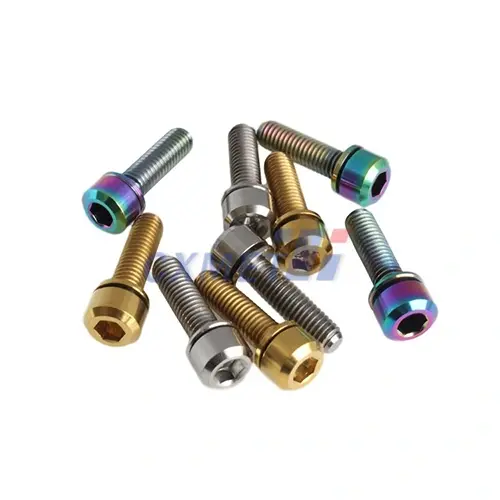
Finishes like Physical Vapour Deposition (PVD) and heat colour treatments make Titanium GR5 bolts work much better for bicycle uses by adding protective layers to the surface that make them less likely to rust, better at withstanding wear, and more eye-catching. PVD coats put down very thin ceramic films that make the surface harder while keeping the advantageous lightness of Ti-6Al-4V alloy. Heat colouring uses controlled oxidation to make bright colours from bronze to blue, a Titanium GR5 bolt for a bicycle, while also making the oxide layer stronger against environmental damage. These finishes meet procurement goals by making parts last longer in harsh cycling environments and meeting brand differentiation needs without affecting the high strength-to-weight ratio that makes titanium fasteners perform so well.
|
|
|
Overview of Titanium GR5 Bolts in Bicycle Applications
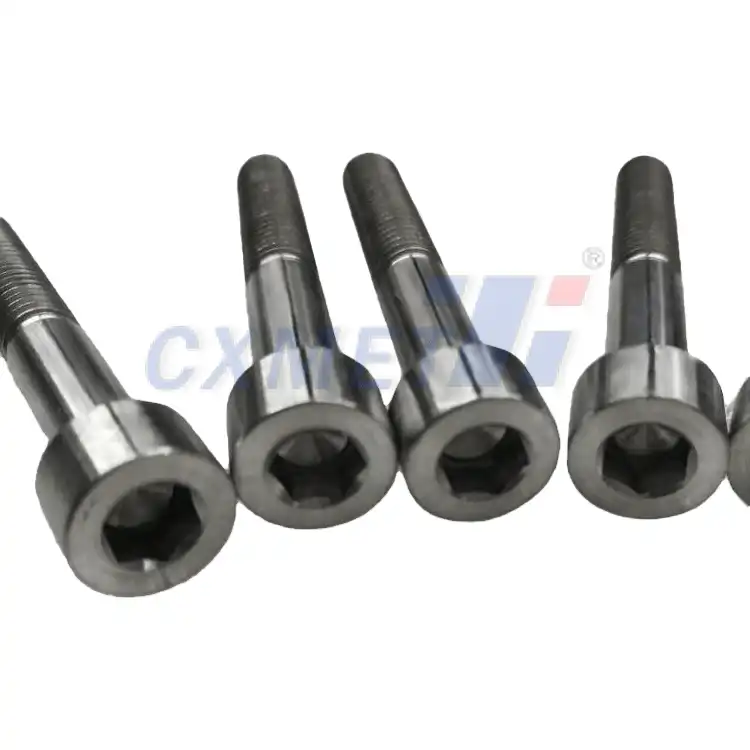
The use of Titanium Grade 5 fasteners is a big step forward in the engineering of modern bicycle parts. At Shaanxi CXMET Technology Co., Ltd., we've seen directly how the unique mix of properties in Ti-6Al-4V alloy changes the way bicycles work. With a density of only 4.43 g/cm³, these bolts are about 45% lighter than stainless steel. They save weight without losing strength. Our factory in China's "Titanium Valley" has been making precision titanium parts for more than 20 years, for professional riding teams and high-end bicycle makers all over the world. These fasteners are especially interesting because of their mechanical properties.
The tensile strength is 895 MPa, and the yield strength is 825 MPa. This means that the performance is about the same as high-grade steel bolts, but they are much lighter. This strength is very important in places that get a lot of stress, like stem faceplates, brake calliper bolts, and derailleur hangers, where failure could be very bad. The 10% elongation property makes sure that the material is flexible enough to absorb shock loads during rough riding situations without breaking easily.
Raw titanium bolts already outperform conventional materials, yet surface treatments unlock additional performance dimensions. The natural oxide layer on titanium provides baseline corrosion protection, but advanced finishes amplify this characteristic while addressing other procurement concerns. Premium bicycle brands increasingly demand components that combine technical excellence with visual appeal—a requirement that standard metallic finishes cannot fully satisfy.
Understanding PVD and Heat Color Finishes on Titanium GR5 Bolts
Physical Vapor Deposition and heat color finishing employ fundamentally different approaches to enhance titanium bolt surfaces, yet both deliver measurable performance improvements that justify their selection in B2B bicycle component procurement.
The PVD Process Explained
Through vacuum chamber deposition, PVD technology puts very thin layers of titanium nitride, chromium nitride, or zirconium nitride on the sides of bolts. We use cutting-edge PVD tools at CXMET to vaporise coating materials and deposit them one atom at a time onto titanium substrates while the temperature is between 200°C and 500°C. This process raises the surface hardness from the base material's 36 HRC to over 80 HRC for the coated layer, making it much more resistant to wear. The coating's thickness is usually between 1 and 5 microns, adding very little weight while protecting against abrasive wear from repeated assembly and disassembly. This is especially helpful for service parts that techs have to change often. The covering sticks at the molecular level, so there are no problems with delamination like there are with plating. There are gold, black, gunmetal, and rainbow styles to choose from, so you can customise the look to fit your brand.
Heat Color Finishing Fundamentals
Controlled thermal oxidation, not material formation, is how heat colouring improves the look of things. By putting Ti-6Al-4V bolts in specific temperature ranges in oxygen-rich settings, we can control the growth of an oxide layer that makes unique interference colours. Bronze tones show up around 400°C, purple at 500°C, blue at 600°C, and gold at 700 °C. Changing the temperature by just 25°C can make a big difference in the colour that is produced. This thickening of the oxide layer—from 5 to 10 nanometres to 40 to 100 nanometers—not only makes the colour look better, but it also makes the surface harder and, Titanium GR5 bolt for bicycle more resistant to rust. The treated surface hits about 500–600 HV, which makes it harder to scratch than titanium that hasn't been treated. Heat colouring doesn't add much weight, but it does strengthen the protective oxide barrier that keeps the galling from happening during the installation and removal processes.
Comparative Performance Characteristics
In bicycle fastener uses, these finishing methods work well together. PVD coatings provide the hardest surface possible and offer better wear protection in places with a lot of friction. This makes them perfect for derailleur pivots and mounting points for brake callipers. Heat colouring works best for improving the surface slightly while also making the process faster and easier. It's especially good for frame hardware and decorative accent bolts where uniformity in appearance is important. Temperature stability varies between treatments. Up to about 500°C, PVD coats stay intact before they start to break down, while surfaces that have been coloured at high temperatures show great thermal stability. The mechanical qualities of the bolt aren't changed much by either finish because they happen below 920°C, which is below the point at which Ti-6Al-4V phase transformation would weaken the bolt.
How Finishes Solve Industry Challenges for B2B Bicycle Clients
Bicycle manufacturers face persistent challenges that directly impact product performance, warranty costs, and brand reputation. Advanced surface finishes on titanium fasteners provide engineering solutions to these industry pain points while supporting commercial objectives.
Extending Component Lifespan in Harsh Environments
Coastal riding conditions expose bicycles to salt-laden air that aggressively corrodes standard fasteners. Mountain biking subjects components to abrasive mud containing silica particles that gradually erode unprotected surfaces. Urban cycling introduces road grime mixed with de-icing chemicals that attack even stainless steel. Our finished Ti-6Al-4V bolts demonstrate exceptional resilience across all these scenarios. Testing data from independent laboratories shows PVD-coated titanium bolts maintain surface integrity after 2,000 hours in salt spray chambers—equivalent to years of coastal exposure—without measurable corrosion. Heat-colored specimens similarly resist degradation, with the thickened oxide layer preventing chloride ion penetration that initiates corrosion. Bicycle manufacturers incorporating these fasteners report virtually zero corrosion-related warranty claims, translating directly to reduced service costs and enhanced customer satisfaction.
Enhancing Mechanical Reliability Under Cyclic Loading
Vibration and impact loading characterize bicycle operation, particularly during competitive racing and off-road applications. Bolts experience millions of stress cycles throughout their service life, making fatigue resistance paramount. Surface treatments contribute meaningfully to fatigue performance by eliminating surface imperfections that serve as crack initiation sites. The PVD coating process includes surface cleaning and preparation steps that remove microscopic defects before deposition occurs. This results in a smoother, more uniform surface that resists crack formation. Heat coloring similarly benefits fatigue life by rounding sharp surface features during the thermal cycle. Field testing with professional racing teams confirms that finished titanium bolts maintain torque specifications longer than untreated alternatives, reducing the maintenance burden during multi-stage events.
Meeting Aesthetic and Brand Differentiation Requirements
The premium bicycle market increasingly demands components that signal quality through visual distinction. Manufacturers differentiate product lines through carefully coordinated aesthetic themes where fastener appearance plays a surprisingly significant role. Standard metallic bolts lack the visual impact that finished titanium provides. Heat-colored bolts create signature looks that become brand identifiers—think of high-end mountain bikes with distinctive blue Ti-6Al-4V hardware or road frames featuring gold accents. PVD coatings enable precise color matching to frame finishes or component groups. This aesthetic flexibility supports premium pricing strategies by reinforcing perceived value. Procurement managers report that marketing departments now specify finished titanium fasteners as essential elements of product photography and promotional materials, recognizing their contribution to brand storytelling.
Comparative Analysis of Titanium GR5 Bolt Finishes with Other Bolt Materials
Strategic fastener selection requires understanding how the Titanium GR5 bolt for bicycles, finished titanium, performs against alternative materials across multiple dimensions that impact the total cost of ownership and product positioning.
Weight and Strength Comparisons
Stainless steel remains the default fastener material for mid-range bicycles, offering adequate corrosion resistance at accessible price points. However, A2 and A4 stainless bolts carry significant weight penalties—a complete bolt kit for a high-performance road bike weighs approximately 180-220 grams in stainless steel versus 95-115 grams for equivalent Ti-6Al-4V hardware. This 50-60% mass reduction contributes meaningfully to rotational weight reduction on wheels and overall bicycle weight targets. Aluminum alloy bolts achieve a comparable weight to titanium but lack adequate strength for critical applications. Aluminum fasteners in 7075-T6 specification reach approximately 500 MPa tensile strength, substantially below the 895 MPa our GR5 bolts deliver. This necessitates larger diameter aluminum bolts to achieve equivalent load capacity, negating weight advantages and creating packaging challenges in tight clearance areas. Aluminum also demonstrates poor galling resistance, leading to thread damage during installation that titanium finishes specifically prevent.
Total Cost of Ownership Analysis
Initial purchase costs position titanium bolts at a premium—typically 3-5 times the price of stainless steel equivalents. However, comprehensive cost analysis reveals different economics over the product lifecycle. Stainless steel bolts require periodic replacement due to corrosion and wear, particularly in brake and drivetrain applications exposed to harsh conditions. The labor costs and downtime associated with field service calls or warranty replacements accumulate quickly. Our finished titanium fasteners demonstrate service life exceeding the bicycle frame itself under normal conditions. Warranty data from OEM clients shows less than 0.1% failure rates across five-year periods, compared to 8-12% for premium stainless steel hardware. For manufacturers, this reliability translates to warranty cost reduction that offsets the initial material premium. For riders, it means confidence in component integrity and elimination of preventive maintenance tasks related to fastener degradation.
Performance Across Bicycle Categories
Different cycling disciplines impose distinct requirements that influence optimal fastener selection. Road racing prioritizes weight minimization where every gram matters in competitive contexts. Here, heat-colored Ti-6Al-4V bolts deliver maximum weight savings with adequate corrosion protection for predominantly dry riding conditions. The aesthetic appeal reinforces the premium positioning essential to high-end road bike marketing. Mountain biking demands maximum durability against impact, abrasion, and contamination exposure. PVD-coated titanium bolts provide the surface hardness to resist wear from repeated mud exposure and the corrosion resistance to survive frequent pressure washing. The coating prevents aluminum frame threads from galling during service, a common problem that renders frames unrepairable. Gravel and adventure cycling occupy the middle ground, benefiting from titanium's corrosion resistance during multi-day wilderness rides while appreciating weight savings on long climbs.
Procurement Guide: Sourcing Finished Titanium GR5 Bolts for Bicycles
Successful procurement of finished titanium fasteners requires attention to specification details, supplier qualifications, and quality verification protocols that ensure components meet demanding bicycle application requirements.
Critical Specification Parameters
Material certification represents the foundation of quality assurance. Authentic Ti-6Al-4V should include mill test reports documenting chemical composition within ASTM B348 or AMS 4928 specifications. At CXMET, we provide complete material traceability from ingot to finished bolt, including heat lot identification that enables tracking throughout the supply chain. Procurement professionals should insist on third-party verification of titanium grade, as counterfeit material occasionally enters markets marked as GR5 but actually containing lower-grade alloys. Thread specification requires careful attention since titanium's galling tendency makes thread form critical. We recommend rolled threads rather than cut threads for bicycle applications. Rolling work-hardens the thread surface while preserving grain flow, increasing fatigue strength by 20-30% compared to cut threads. Thread class selection should favor 6g tolerance for external threads paired with 6H internal threads, providing adequate clearance to prevent installation difficulties while maintaining secure engagement. The finish specification should detail coating type, thickness requirements, and acceptance criteria. For PVD applications, specify coating composition (TiN, CrN, or other), minimum thickness (typically 2-4 microns), and adhesion requirements per ASTM standards. Heat coloring specifications should reference color standards or sample approvals since thermal oxidation produces natural variations. Our technical team works directly, Titanium GR5 bolt for bicycle with procurement managers to develop specifications that balance performance requirements with manufacturing practicality.
Supplier Qualification Criteria
Manufacturing capability assessment should examine equipment sophistication and process control systems. Modern titanium bolt production requires CNC machining centers capable of holding tight tolerances, heat treatment furnaces with precise temperature control, and finishing equipment appropriate to specified treatments. Our 50,000 square meter facility houses dedicated titanium processing lines that prevent cross-contamination from other materials while enabling efficient production scaling. Quality management systems provide insight into manufacturing consistency. ISO 9001 certification establishes baseline quality frameworks, while AS9100 aerospace certification demonstrates capability for more demanding applications. Our quality documentation includes first article inspection reports, in-process verification records, and final inspection certificates that accompany every shipment. Statistical process control data available upon request demonstrates long-term capability to meet specifications. Technical support infrastructure distinguishes responsive partners from transaction-oriented vendors. Bicycle applications occasionally present unique challenges requiring engineering collaboration—custom thread lengths, specialized coatings, or performance validation testing. Our team of 80+ technical professionals brings deep expertise in titanium metallurgy and surface treatment, enabling rapid response to technical inquiries and development of customized solutions when standard products require modification.
Logistics and Inventory Optimization
Lead time management becomes crucial when coordinating titanium fastener procurement with production schedules. Standard catalog items from established inventory typically ship within 5-7 business days. Custom specifications requiring unique dimensions or finishes extend lead times to 4-6 weeks, depending on complexity and order volume. We recommend establishing blanket purchase orders for high-volume applications with scheduled releases that balance inventory carrying costs against production continuity requirements. Packaging considerations protect finished surfaces during transportation and storage. Individual bolts should be separated to prevent contact damage to PVD coatings or heat-colored surfaces. We utilize compartmentalized trays within protective boxes that prevent shifting during transit. Anti-corrosion packaging proves unnecessary for titanium itself, but we include desiccant packs to prevent moisture accumulation that could affect aluminum or steel components in mixed hardware kits.
Conclusion
Surface finishes transform already exceptional Titanium GR5 bolts into premium components that solve real engineering challenges while supporting brand differentiation strategies. PVD coatings and heat color treatments extend service life, improve mechanical reliability, and enable aesthetic customization that resonates with discerning bicycle manufacturers and riders. The performance advantages justify premium positioning through measurable reductions in warranty costs and enhanced customer satisfaction. Procurement professionals gain a competitive advantage by understanding how these finishing technologies align with specific application requirements across road, mountain, and specialty cycling categories. Partnering with experienced titanium specialists ensures access to the technical expertise and manufacturing capabilities essential for successful component integration.
FAQ
1. Does PVD coating affect bolt torque specifications?
PVD coating reduces the coefficient of friction between bolt threads and mating surfaces, typically by 15-25% compared to uncoated titanium. This necessitates torque specification adjustment to prevent over-tightening that could damage threads or components. We recommend reducing installation torque by approximately 10-15% for PVD-coated bolts versus uncoated equivalents, with precise values depending on coating composition and mating material. Always use calibrated torque wrenches and appropriate anti-seize compounds formulated for titanium applications to prevent galling while achieving proper preload.
2. How does heat coloring impact bolt strength?
Heat color finishing does not reduce the tensile or yield strength of Ti-6Al-4V bolts when performed within proper temperature ranges below 700°C. The process occurs well below the 920°C beta transus temperature, where phase transformation would affect mechanical properties. Testing confirms heat-colored bolts maintain full material specification strength while gaining surface hardness benefits. The controlled oxidation actually improves fatigue resistance by removing microscopic surface defects, contributing positively to component reliability under cyclic loading conditions encountered in bicycle applications.
3. What is the cost differential between finished and unfinished titanium bolts?
PVD coating typically adds 40-60% to the base cost of machined titanium bolts, depending on coating type and production volume. Heat coloring adds approximately 15-25% due to simpler processing requirements. While these percentages seem significant, the absolute cost increase remains modest on a per-bolt basis—typically $1.50-$3.00 for PVD and $0.50-$1.25 for heat coloring. Volume purchasing reduces per-unit costs through production efficiency. The extended service life and warranty cost reduction generally provide a positive return on investment for premium bicycle applications where component reliability and brand perception justify the material upgrade.
Partner With CXMET for Superior Titanium Fastener Solutions
Shaanxi CXMET Technology Co., Ltd. stands ready to support your procurement objectives with precision-engineered Titanium GR5 bolts for bicycle applications that combine advanced finishing technologies with uncompromising quality standards. Our 20+ years of titanium industry specialization positions us as a trusted manufacturer capable of, Titanium GR5 bolt for bicycle delivering customized solutions tailored to your exact specifications. We maintain a comprehensive inventory of standard bolt configurations in M5, M6, and M8 diameters with PVD and heat color finish options, ensuring rapid fulfillment of both prototype and production volume requirements. Contact our technical sales team at sales@cxmet.com to discuss how our finished titanium fasteners can enhance your product performance, reduce warranty exposure, and strengthen brand differentiation in competitive bicycle markets.
References
1. Donachie, Matthew J. "Titanium: A Technical Guide, 2nd Edition." ASM International, Materials Park, Ohio, 2000.
2. Lutjering, Gerd and Williams, James C. "Engineering Materials and Processes: Titanium." Springer-Verlag Berlin Heidelberg, 2007.
3. Budinski, Kenneth G. "Surface Engineering for Wear Resistance." Prentice Hall, Englewood Cliffs, New Jersey, 1988.
4. Mattox, Donald M. "Handbook of Physical Vapor Deposition (PVD) Processing, 2nd Edition." William Andrew Publishing, Norwich, New York, 2010.
5. Boyer, Rodney, Welsch, Gerhard, and Collings, E.W. "Materials Properties Handbook: Titanium Alloys." ASM International, Materials Park, Ohio, 1994.
6. Rack, H.J. and Qazi, J.I. "Titanium Alloys for Biomedical Applications." Materials Science and Engineering C, Volume 26, Issue 8, 2006.