knowledges
How Does Hafnium Oxide HfO₂ Tablet Enable High‑κ Gate Dielectrics?
2026-05-14 09:46:33
Hafnium oxide HfO₂ tablets make high-κ gate dielectrics possible by providing an extremely high dielectric constant, about 25, compared to silicon dioxide's value of 3.9, which allows much smaller gate oxide layers in transistors without lowering their ability to insulate. This big step forward lets chipmakers make transistors smaller while cutting gate leakage currents by a huge amount. This is a big problem in nanoscale device designs. Because they are very stable at temperatures up to 2758°C and work well with current CMOS methods, these tablets are now required to make high-performance microprocessors and memory chips.
|
|
|
Understanding Hafnium Oxide HfO₂ Tablets and Their Core Properties
Chemical Composition and Physical Characteristics
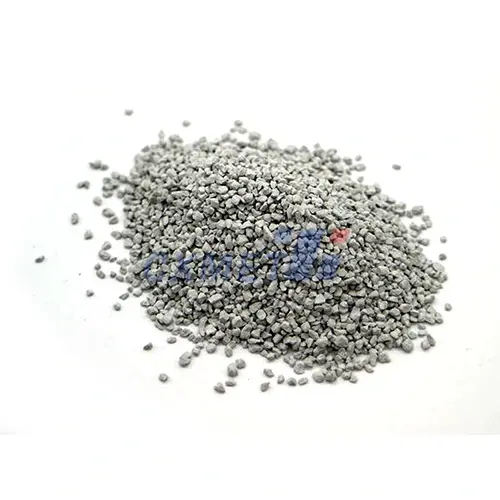
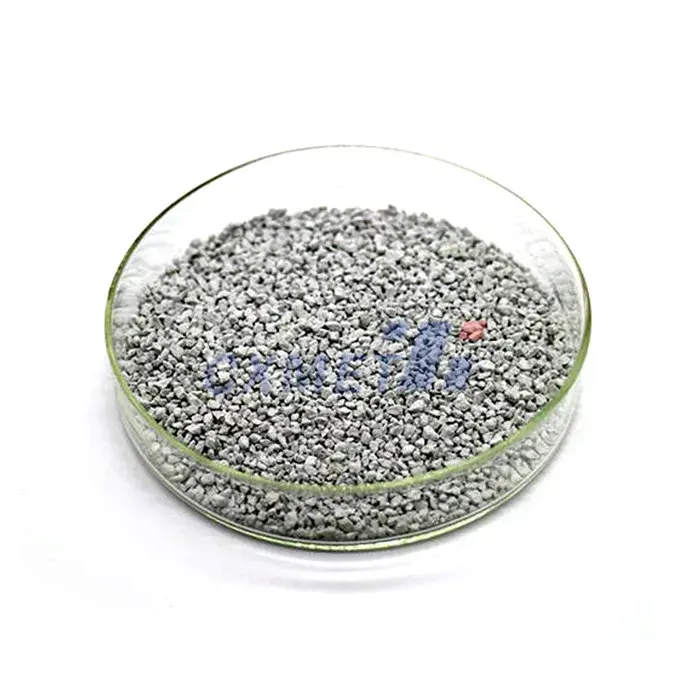
Hafnium atoms join with oxygen atoms in a steady crystalline structure to make a binary compound with the formula HfO₂. Our Hafnium oxide HfO₂ tablets have a cubic crystal structure and a mass of 9.68 g/cm³, which makes them strong when they are being handled and processed. The white powdery look means that the purity level is higher than 99.9%, which means that there aren't many small impurities that could affect how well the semiconductor works electrically. This high level of purity makes sure that unwanted ionic species don't cause defects in the dielectric layer. In thin-film coating techniques, controlling the particle size is still very important. The material helps even spread during physical vapor deposition (PVD) or chemical vapor deposition (CVD) methods because the particles are always kept at a size of ≤10 microns. The melting point of 2758°C is much higher than the temperatures used to process semiconductors. This ensures thermal stability during manufacturing steps that often involve quick thermal warming steps above 1000°C.
Dielectric Properties That Matter
The dielectric constant (κ number) tells you exactly how well a material can store electric charge in a certain space when you are testing it as a gate dielectric. When transistor sizes were measured in micrometers, traditional silicon dioxide worked well for the industry. But as Moore's Law pushed feature sizes below 45 nanometers, it became clear that there were physical limits. Because of quantum tunneling effects, leakage currents through very thin SiO₂ layers grew by a factor of ten, using more power and generating more heat. This problem can be solved by HfO₂'s naturally high dielectric constant. A bigger hafnium-based dielectric layer can have the same equivalent oxide thickness (EOT) as a much smaller silicon dioxide layer. This stops tunneling currents and keeps the capacitance density the same. This trait directly leads to better switching speeds and less power use in current integrated circuits. Leading semiconductor research centers have confirmed that HfO₂-based dielectrics cut gate leakage by three to four orders of magnitude compared to SiO₂ layers of the same size.
Thermal and Chemical Stability in Fabrication Environments
Extreme thermal cycles and harsh chemical conditions are used to make semiconductors. Materials need to be able to handle cleaning fluids that are both acidic and basic, oxidizing atmospheres, and temperature changes of more than 500°C in just minutes. Because HfO₂ doesn't dissolve in water, it saves device structures during wet working steps by stopping materials from moving or dissolving without being meant to. Thermal safety is more than just thinking about the melting point. Multiple annealing processes are needed to activate dopants and fix lattice damage in neighboring silicon layers. The material keeps its cubic crystal structure and dielectric properties. This toughness makes sure that the electrical properties of Hafnium oxide HfO₂ tablets in each chip batch are the same, and HfO₂ tablets lower the yield losses caused by changes in the process. Engineers like that HfO₂ doesn't respond badly with metal gate wires or the silicon substrates below them. This makes it easier to incorporate into current production processes.
The Role of Hafnium Oxide HfO₂ Tablets in High-κ Gate Dielectrics
Overcoming Silicon Dioxide Limitations
Silicon dioxide was the most common gate dielectric for many years because it forms naturally on silicon surfaces and is a great insulator. But the constant shrinking of devices caused problems that couldn't be solved. Quantum mechanical tunneling let electrons pass straight through the barrier as the gate oxide thickness got close to 1.2 nanometers, which is about five atomic layers. This caused leakage currents that were too high and drained batteries while limiting operating frequencies. The semiconductor business needed options that would keep insulating well while letting them go even bigger. It turned out that Hafnium oxide (HfO₂) tablets and hafnium-based dielectrics were the answer, and starting with 45nm technology nodes, big makers switched to HfO₂ gate stacks. This change was one of the biggest in the history of semiconductors. It meant that a lot of the deposition tools, process recipes, and quality control methods had to be redesigned.
Enabling Thinner Equivalent Oxide Thickness
The normal way to compare different dielectric materials is to use equivalent oxide thickness (EOT). It shows the amount of silicon dioxide that, if it were real, would have the same capacitance as the high-κ material. An HfO₂ layer that is 4 nanometers thick has an EOT of about 1 nanometer. This gives the transistor the capacitance it needs to work while also blocking electron tunneling very effectively. This feature lets device makers keep increasing the size of transistors without lowering their speed or power efficiency. Gate capacitance has a direct effect on drive current and switching speed, so keeping the capacitance density high is still important for making processors work better. At the same time, the bigger physical barrier greatly lowers leakage, Hafnium oxide HfO₂ tablets which fixes the problem of rising static power usage that was threatening to stop progress due to silicon dioxide scaling.
Integration with Advanced Transistor Architectures
FinFETs and gate-all-around (GAA) designs are used in modern transistors. In these designs, the gate wire goes around thin silicon channels. To put down even, conformal dielectric layers on these complicated shapes, you need materials that are very good at covering steps and sticking to surfaces. ALD-deposited HfO₂ has almost perfect conformality, covering vertical sides and narrow gaps with a layer of the same thickness. Because the material works with metal gate electrodes, especially those made of titanium nitride and tantalum nitride, it was possible to switch from polysilicon gates that had depletion effects. Using metal gate/high-κ dielectric stacks cut EOT by an extra 0.3 to 0.5 nanometers compared to polysilicon designs, Hafnium oxide HfO₂ tablets which made a big difference in performance. Almost all complex logic and memory goods made in the world today are based on this synergistic mix.
Comparing Hafnium Oxide HfO₂ Tablets with Alternatives: A Procurement Perspective
Material Performance Trade-offs
When purchasing managers look at high-κ dielectric materials, they have a few options to choose from, and each has its own pros and cons. Zirconium oxide (ZrO₂) has a dielectric constant of about 22, which is a little lower than HfO₂. It is also more thermally stable and costs less per kilogram. But ZrO₂ has higher interface state densities when it is put directly on silicon. This means that extra interface engineering layers are needed, which makes handling more difficult. Titanium oxide (TiO₂) has an even higher dielectric constant—it gets close to 80 in some crystal phases—but it has a lot of leakage current because of oxygen vacancy flaws that make paths for electricity to flow. Because these holes make the threshold voltage unstable in transistors, TiO₂ is not good for logic uses, even though it has nice insulating qualities. Some companies are looking into Hafnium oxide (HfO₂) tablets or hafnium-zirconium/hafnium-lanthanum oxides to fine-tune dielectric constants and contact qualities. However, managing these materials in the supply chain is more difficult.
Cost Considerations and Supply Chain Factors
Hafnium is still not as common as silicon or aluminum. It is mostly taken as a result of processing zirconium ore. Because of the limited supply, the prices of raw materials are affected, and buying teams have to balance these costs with the needs for performance. High-purity hafnium chemicals cost between $800 and $1,200 per kilogram right now, based on the purity grade and the size of the order. Getting long-term supply deals with well-known sources keeps prices stable and makes sure that materials are available when production ramps up. Different providers have very different minimum order amounts. Companies that make a lot of semiconductors can save 15 to 25 percent per unit by buying in bulk. On the other hand, research institutions and companies that make specialty devices may need smaller amounts and more flexible delivery plans. As important as it is to compare prices at first, it turns out to be more important to look at providers' production capacity, quality certifications, and technical support skills as well. This is because material uniformity of Hafnium oxide (HfO₂)- tablets has a direct effect on fabrication output and device reliability.
Supplier Selection Criteria
Besides price and availability, procurement pros give more weight to sellers who have strong quality control systems and clear traceability. Certifications like ISO 9001 and standards for semiconductors like SEMI S2 show that quality standards have been set. It's easier to plan for what will happen in production when suppliers provide full material profile data, such as impurity analysis, particle size distribution histograms, and batch-to-batch consistency reports. Premium suppliers are different from basic suppliers because they offer technical help. It is very helpful to have access to materials scientists who understand deposition chemistry and can help with process integration problems. This is especially true when putting in place new device designs or moving to smaller nodes. Lead times for normal grades are usually between four and eight weeks, but there are faster choices for those who need them right away. By forming relationships with several qualified suppliers, you can protect your supply chain from problems that might happen because of natural disasters or geopolitical events that affect certain production sites.
Manufacturing Process and Quality Control of Hafnium Oxide HfO₂ Tablets
Raw Material Sourcing and Synthesis Methods
High-quality HfO₂ production begins with hafnium tetrachloride (HfCl₄), which is made from pure hafnium sponge through chlorination methods. When the tetrachloride is broken down by water in controlled settings, hafnium hydroxide forms. This is then heated to between 600°C and 900°C to form the oxide phase. The finished crystal structure can be cubic, tetragonal, or monoclinic, depending on how well the calcination temperature and atmosphere are controlled. Cubic phases are best for dielectric uses because they have better electrical qualities. In other ways to make things, hafnium alkoxides like hafnium isopropoxide are used. These are put through sol-gel processing to make very fine powders that are very pure. This method reduces the amount of metal impurities, especially zirconium contamination, which can change the dielectric qualities. Even if a different way is used to make the Hafnium oxide HfO₂ tablets, it must go through strict steps to get rid of trace elements like iron, aluminum, and titanium until their amounts are below 10 parts per million.
Processing Steps for Tablet Formation
Several important steps are needed to turn synthetic powder into pills that are tightly packed. Jet milling or ball milling can be used to reduce the particle size to below 10 microns, which improves the flowability and packing density. To make regular agglomerates that press down more evenly when tablets are pressed, spray drying or granulation can be used. For pressing, hydraulic or mechanical presses with pressures between 50 and 200 MPa are used to turn the powder into solid pills with few holes. Cracking or laminate problems that could happen during shipping and handling are avoided by die design and lubrication techniques. Post-pressing sintering at temperatures between 1200°C and 1600°C makes the structure even stronger, reaching densities higher than 95% of the theoretical maximum. This makes the tablets denser so they dissolve consistently during vapor deposition processes, providing consistent material flow to substrate surfaces.
Quality Verification Protocols
Complete testing methods make sure that Hafnium oxide HfO₂ tablets, the finished pills, meet very strict requirements. Analyzing with X-ray diffraction (XRD) proves the crystal structure and phase purity, finding unwanted monoclinic or tetragonal phases that hurt the dielectric performance. Inductively coupled plasma mass spectrometry (ICP-MS) measures small amounts of impurities to make sure that pollution levels stay below certain limits for semiconductor use. Archimedes' method or helium pycnometry are used to measure density and make sure that tablets are packed down to the right level. Scanning electron microscopy (SEM) is used to look at the structures and surface appearance. Testing the dielectric constant, breakdown voltage, and leakage current density of test films that were formed from sample tablets shows that the material properties are translated properly during the deposition process. Statistical process control charts keep track of key factors across production runs to find trends before they affect product quality. This is done to make sure that stability from batch to batch is very high.
Practical Guidance for Procuring Hafnium Oxide HfO₂ Tablets
Matching Specifications to Application Requirements
To choose the right Hafnium oxide HfO₂ tablets and material grades, you need to know how the standard factors affect how the product will work in the end. Semiconductor companies that need EOTs below 1 nanometer need ultra-pure grades with total impurities below 20 ppm and tuned particle size distributions that help thin films form evenly. Optical coatings can handle a little more impurity, but they need certain crystal stages that make the refractive index qualities work best. Standards for purity usually fall between 99.9% and 99.99%, and each level of growth costs 20 to 30 percent more. For important uses, the higher prices are worth it because they improve yield and device reliability. For less important uses, normal grades may be enough to get good results. By asking for detailed certificates of analysis (COA) for sample runs, you can compare the actual impurity profiles to internal standards. This lets you see if higher grades really do help with certain uses.
Evaluating Supplier Capabilities
Looking at product listings is only one part of evaluating possible sellers. Site visits or checks by a third party show the production capabilities, quality systems, and process controls that decide how reliable something will be in the long run. Key evaluation factors include the ability to produce enough to meet high demand, the ability of the analytical laboratory to fully characterize the material, and the existence of documented change control processes that stop sudden changes to the specifications. Before making big purchases, it's important to make sure that sample review programs work. If you ask for samples from more than one production lot instead of just a few, you can see how consistent the process really is. By putting these samples through normal process conditions on current deposition equipment, any integration problems can be found early on, saving a lot of money during the production ramp-up. When suppliers offer expert advice during sample evaluation, it shows that they care more about the success of their customers than just making sales.
Logistics and Inventory Management
For global providers, lead time planning needs to take into account both the time it takes to make the product and the time it takes to ship it internationally. Usually, it takes six to eight weeks to get the raw materials, make the tablets, test their quality, and prepare the paperwork. This time frame can be cut down to three to four weeks for rush orders, but they usually come with extra fees of 25 to 40 percent. Keeping strategic inventory backups of two to three months' worth of consumption protects against supply problems and balances the costs of having stock with the risks of running out of it. How well the materials are packed directly affects how good they are when you get them. Vacuum-sealed or inert atmosphere shipping keeps out wetness and bacteria while it's being shipped. If you check the box as soon as it arrives and write down any damage, you can get a replacement if the quality of the materials drops. Setting up clear receiving inspection processes, such as random samples for verification testing, can find quality problems before the material goes into production, saving a lot of money on scrap and rework.
Conclusion
Hafnium oxide HfO₂ tablets have changed the way semiconductors are made by making it possible for transistors to keep getting smaller by having better high-κ insulating qualities. Their high dielectric constant, temperature stability, and process compatibility get around some of the main problems with regular silicon dioxide. This helps the industry keep trying to improve performance and use less power. When looking for these important products, procurement workers should know about both the technical needs and the supply chain issues that come up. Suppliers are judged on their quality systems, expert support, and how reliable their logistics are. This makes sure that materials work consistently, which leads to successful manufacturing and a competitive edge in electronics markets that are very picky.
FAQ
1. What makes hafnium oxide superior to silicon dioxide for gate dielectrics?
Hafnium oxide HfO₂ tablets provide a material with a dielectric constant that is seven times higher than silicon dioxide. This means that it can make layers that are physically bigger and stop quantum tunneling while keeping the same electrical capacitance. In nanoscale transistors, this feature cuts gate leakage currents by three to four orders of magnitude. This directly improves power economy and device reliability in advanced semiconductor nodes.
2. How does purity level affect HfO₂ performance in semiconductor applications?
When impurities get into the dielectric layer, they create charge traps and flaw states that increase leakage currents and make the threshold voltage unstable. Ultra-high purity grades that are higher than 99.9% reduce these effects, making sure that electrical behavior is predictable and device lifetimes are longer. Premium purity grades are necessary for certain critical uses because they improve manufacturing results and make the end product more reliable.
3. Can hafnium oxide tablets be used in applications beyond semiconductors?
Of course. HfO₂ tablets are used in optical coatings to make materials with a high refractive index that don't scatter light or pick out specific wavelengths. Hafnium-based thermal barrier layers are used by aerospace companies on turbine parts that work above 1500°C. Because the material is biocompatible, it can also be used in medical imaging tools. However, semiconductors make up the biggest market segment by volume.
Partner with CXMET for Reliable Hafnium Oxide HfO₂ Tablet Supply
Shaanxi CXMET Technology Co., Ltd stands as your trusted Hafnium oxide HfO₂ tablet supplier, combining two decades of non-ferrous metal expertise with state-of-the-art production facilities spanning 50,000 square meters in China's Titanium Valley. Our semiconductor-grade pills always have a purity level of 99.9% or higher, particles that are less than 10 microns in size, and go through strict quality checks that meet international standards. We have more than 80 expert techs ready to help you with your procurement needs. We offer personalized technical advice, adjustable MOQ choices for both R&D sampling and large-scale production, and full documentation such as MSDS, COA, and compliance certificates. Our vacuum-sealed package keeps materials safe during shipping around the world, and our helpful staff answers questions within 24 hours. Contact us at sales@cxmet.com to discuss your high-κ dielectric material requirements and discover how our commitment to quality production and putting the customer first helps us build long-lasting relationships based on trust and new ideas.
References
1. Robertson, J. (2006). "High dielectric constant gate oxides for metal oxide Si transistors." Reports on Progress in Physics, 69(2), 327-396.
2. Wilk, G. D., Wallace, R. M., & Anthony, J. M. (2001). "High-κ gate dielectrics: Current status and materials properties considerations." Journal of Applied Physics, 89(10), 5243-5275.
3. Chau, R., Datta, S., Doczy, M., Doyle, B., Jin, B., Kavalieros, J., Majumdar, A., Metz, M., & Radosavljevic, M. (2005). "Benchmarking nanotechnology for high-performance and low-power logic transistor applications." IEEE Transactions on Nanotechnology, 4(2), 153-158.
4. Houssa, M. (2004). "High-κ Gate Dielectrics." Institute of Physics Publishing, Bristol and Philadelphia, Series in Materials Science and Engineering.
5. Kingon, A. I., Maria, J. P., & Streiffer, S. K. (2000). "Alternative dielectrics to silicon dioxide for memory and logic devices." Nature, 406(6799), 1032-1038.
6. Huff, H. R., & Gilmer, D. C. (2005). "High Dielectric Constant Materials: VLSI MOSFET Applications." Springer Series in Advanced Microelectronics, Volume 16.