knowledges
How Does Hafnium Oxide HfO₂ Tablet Support Ferroelectric Film Growth?
2026-05-14 09:46:36
Hafnium oxide HfO2 tablet is an important part of making ferroelectric films because it acts as a pure starting material for thin-film deposition. With controlled stoichiometry and little contamination, these tablets make it possible to precisely form ferroelectric phases in hafnium-based films. While the material is being heated and changing phases, HfO₂ tablets keep the orthorhombic or tetragonal crystal phases stable, which is important for their ferroelectric properties. This steadiness directly leads to better polarization switching, better retention properties, and lower leakage currents in the next generation of logic and memory devices.
|
|
|
Understanding Hafnium Oxide HfO₂ Tablets and Their Properties
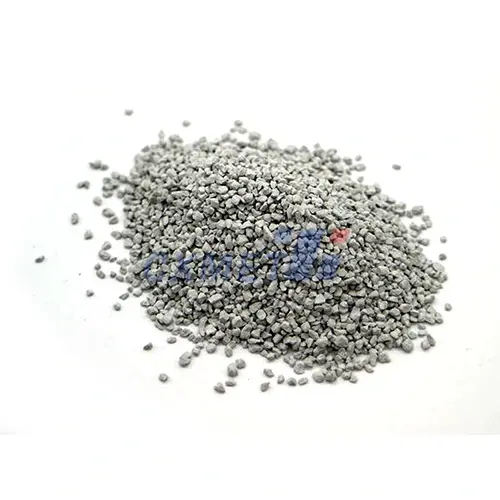
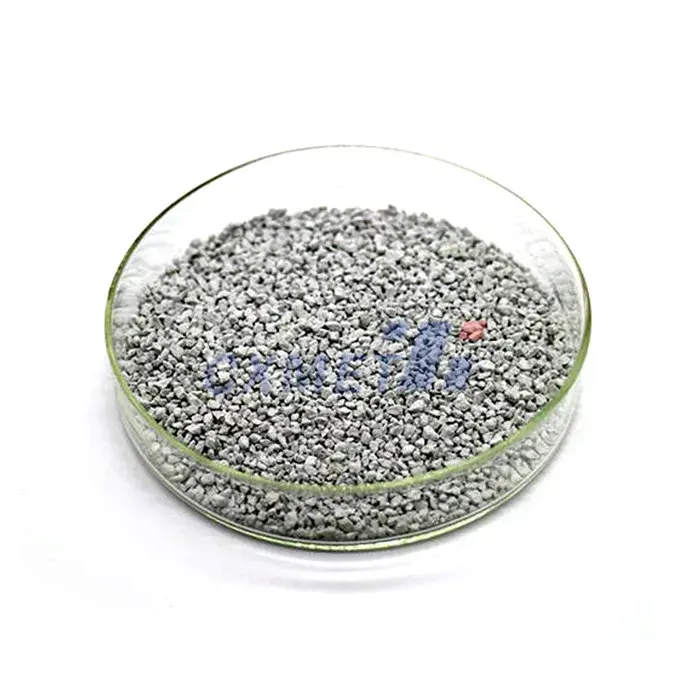
Hafnium oxide HfO2 tablet is a chemical that has unique properties that make it very useful for making advanced microelectronics. The chemical formula for the substance is HfO₂, and our tablets are exceedingly pure at 99.9%. This extreme cleanliness ensures that there aren't many impurities that could damage the thin film during formation or while the device is running afterward.
Chemical and Physical Characteristics
Our tablets have a density of 9.68 g/cm³ and an amazingly high melting point of 2758°C. This makes them the most thermally stable materials for high-temperature processing. The particles are about 10 microns in size and look like white powder. This allows for even spread and controlled evaporation rates during physical vapor deposition methods. At room temperature, the cubic crystal structure changes phases under certain conditions. This is very important when creating the ferroelectric qualities of thin films. You can use these physical traits to your benefit in factory settings. The fact that it doesn't dissolve in water stops unwanted reactions from happening during wet processing steps. The fine particle size distribution also makes sure that the material evaporates consistently during sputtering or electron beam deposition. Our strict quality control makes sure that each batch is the same, which has a direct effect on how well the ferroelectric film properties can be repeated across production runs.
Superior Thermal and Chemical Stability
Hafnium oxide is more resistant to heat breakdown and chemical attack than zirconium oxide, titanium oxide, or silicon dioxide. This stability is very important during heating processes, which happen at temperatures between 400°C and 800°C and are needed for the ferroelectric phase to crystallize. The material keeps its stoichiometry and doesn't break down or create unwanted secondary phases that a Hafnium oxide HfO2 tablet would hurt the performance of the gadget. Hafnium oxide sheets usually have a dielectric constant between 20 and 25, which is a lot higher than silicon dioxide's value of about 3.9. This higher dielectric constant lets thicker films be used while keeping the same electrical capacitance. This lowers leakage current and makes the device more reliable. Hafnium-based dielectrics are the best choice for transistor gate stacks and capacitor dielectrics in advanced semiconductor nodes below 28nm because they have these electrical properties.
Distinctive Crystal Structure and Phase Behavior
Hafnium oxide's crystal structure is polymorphic, which means it can take on different solid forms based on temperature, pressure, and treatment conditions. At room temperature, the monoclinic phase is the most stable form. The metastable tetragonal and orthorhombic phases can be made more stable by carefully processing them. The orthorhombic phase in particular has strong ferroelectric qualities, with spontaneous polarization values higher than 20 μC/cm². This makes it perfect for memory uses. Controlling the film width (usually 5–10nm for best ferroelectricity), deposition temperature, cooling atmosphere, and dopant addition are some of the ways that engineering teams can change the stability of a phase. Our high-purity pills give you the clean starting material you need to reach these exact phase engineering goals, without any contaminants getting in the way of the crystallization paths.
The Role of HfO₂ Tablets in Supporting Ferroelectric Film Growth
The clarity and uniformity of the source materials used during deposition are very important to the quality of ferroelectric films. Hafnium oxide HfO2 tablet products are the main source of material in different thin-film synthesis methods. They have a direct effect on how nucleation works, how fast growth happens, and the qualities of the end film.
Precision Control in Deposition Processes
Atomic Layer Deposition has become the best way to make ultrathin ferroelectric hafnium oxide films because it is so good at controlling thickness and conformity. Our tablets can be used in ALD processes in special heat evaporation sources that make precursor fumes that contain hafnium. Because our material is very pure, each atomic layer that is formed has the right stoichiometric ratio and doesn't have any metals or organic contaminants that would change its electrical properties. The density and grain structure of the target material have a big effect on the quality of the film made by sputtering. Our tablets' cubic crystal structure makes them the best targets for this process. In certain reactor setups, Chemical Vapor Deposition methods can use hafnium oxide powder as a source material. Because the particles are so small, they can sublimate or react with transport gases in a controlled way, making reactive species that stick to hot surfaces. Because our pills are very thermally stable, they stay together at the high temperatures that are common in CVD reactors without breaking down too quickly.
Impact of Purity and Morphology on Film Quality
The requirement for purity of ≥99.9% directly leads to lower flaw densities in films that are formed. Even very small amounts of metallic elements like iron, copper, or sodium can cause charge traps in the dielectric film. This makes leakage current go up and memory device retention gets worse. Multiple steps of purification and strict scientific tests are used in our manufacturing processes to keep contaminant levels below the levels that can be detected. The shape of the particles affects how easily the powder flows, how densely they pack into evaporation crucibles, and how evenly the powder evaporates. The controlled particle size of ≤10 microns strikes the best balance between surface area (which affects the rate of evaporation) and handling properties (which stop dust from forming and make sure processing is safe). Our plant has been making non-ferrous metals for twenty years and has improved the precise milling and classification methods that lead to this standard.
Case Evidence from Semiconductor Manufacturing
New developments in ferroelectric random-access memory technology have shown that films made from highly pure hafnium oxide sources can last for more than 10^10 switching cycles and more than ten years at normal working temperatures. When premium-grade ferroelectric gate dielectrics are used in thin-film transistors in display backplanes, the threshold voltage stability is better, and the hysteresis is lower. Memory chip makers say that switching from oxide sources with lower purity to materials that meet our standards has led to 15-20% higher yields. This is better because there were fewer failures caused by defects during electrical tests, and the process window margins were better during the high-temperature heating steps. This kind of real-world proof shows how much it's worth to spend money on better source materials for making ferroelectric films.
Comparative Analysis: Hafnium Oxide vs Other Oxide Tablets for Ferroelectric Films
When choosing a material for ferroelectric film growth, you have to think about how well it works electrically, how stable it is at high temperatures, how well it works with other processes, and how much it costs. There is only one Hafnium oxide HfO2 tablet in this setting, and it has benefits that other oxides can't match for many advanced uses.
Hafnium Oxide Versus Zirconium Oxide
Because they are in the same group on the periodic table, zirconium oxide and hafnium oxide are chemically similar. Both materials have crystal structures that are very similar and can behave ferroelectrically when the conditions are right. Zirconium-doped hafnium oxide films have better ferroelectric qualities than pure hafnium oxide, which suggests that they work together to make things better. The dielectric constant and band gap properties are what make them different. Zirconia has a dielectric constant of 20, but hafnium oxide has a dielectric constant of about 25. This means that bigger physical plates can have the same capacitance. This width benefit means less leakage current through quantum mechanical tunneling, which is a very important thing to think about for technology nodes below 10nm. Zirconia has a band gap of about 5.0 eV, while hafnium oxide has a band gap of about 5.8 eV. This means that hafnium oxide is a better insulator and leakage currents are lower. Cost can sometimes be a factor in zirconia's favor because it comes from more natural sources and is easier to remove. But hafnium oxide is still the best material for cutting-edge electronics uses that can't skimp on performance, even though it costs more. In the end, the choice will rely on the needs of the gadget and how it fits into the target market.
Performance Against Silicon Dioxide and Titanium Oxide
Traditional silicon dioxide has been the main gate insulator for many years, but it has serious problems in more modern nodes. Because the dielectric constant is so low, very thin plates (less than 2nm) are needed to get the capacitance that is needed. This causes too much gate loss through direct tunneling. Hafnium oxide has the same electrical performance as a material that is 3–4 times thicker, but it has a lot less loss and the same switching speed. Titanium oxide has even higher dielectric constants (around 80–100), but it is not very stable at high temperatures and tends to form oxygen holes that make it conduct electricity in a way that is not wanted. These empty oxygen atoms give away electrons, changing a material that should be shielding into one that loses electrons or even conducts some of them. Hafnium oxide stays very good at insulating even when heated or cooled and under different processing conditions. This makes it a much more stable material for making useful devices. Hafnium oxide films are more mechanically resilient than silica-based dielectrics. This means they are less likely to crack when temperatures change and when they are under stress. This long-lasting quality is especially useful in power electronics and car uses, where devices have to work in harsh conditions for a long time.
Impact of Material Grade on Device Performance
Material certificates from trustworthy sources tell you important things about impurity levels, particle size distribution, and phase purity that have a direct effect on the yield and durability of the device. Our center is ISO 9001 certified and uses a variety of testing methods, such as inductively coupled plasma mass spectrometry to look for metal contaminants, X-ray diffraction to find the phases, and scanning electron microscopy to describe the shapes and sizes of things. Another important factor that is often ignored when choosing materials for the first time is batch-to-batch uniformity. For months or years of production, manufacturing lines need stable process windows that don't change. Tougher standards can be met by suppliers with strong quality systems and high production volumes compared to smaller or less well-known providers. Our ability to produce a lot of goods and our 20-year history of doing business give high-volume producers the supply chain security they need. Third-party approval and following international rules like RoHS and REACH show that a company cares about the environment and the safety of its products. To meet the legal needs of our customers in global markets, we offer full paperwork packages that include Material Safety Data Sheets, Certificates of Analysis, and compliance declarations.
Procurement Guidance for Hafnium Oxide HfO₂ Tablets
To find the best way to buy advanced products like Hafnium oxide HfO2 tablet units, you need to find a balance between scientific requirements, the dependability of the supply chain, and the total cost of ownership. The procurement and engineering teams need to work together to set standards that improve the performance of both the gadget and the business.
Understanding Minimum Order Quantities and Lead Times
Depending on how well the material deposits and how much is made, industrial-scale thin-film production usually needs kilogram to multi-kilogram amounts of source material every year. Our factory has variable minimum order numbers that start at 1 kg for initial qualification runs and go up to 25 kg or more for production supply deals. This gives R&D teams the freedom to test how well materials work before committing to large-scale buying. Lead times for standard-grade material are usually between two and four weeks, from the time an order is confirmed until it is delivered. This includes time for final quality checking and making export paperwork. Custom specs, like different particle size ranges or higher purity grades, may need 6 to 8 weeks to allow for extra steps in the processes. We keep a strategic inventory of popular specs on hand to support fast shipping when customers' plans require it. As order sizes go up, per-kilogram costs go down simply because of promises to buy a lot of goods. An annual supply deal can save you even more money and make sure that you always have the materials you need and that the specifications stay the same during the contract time. These kinds of deals are especially helpful for factories that run nonstop production plans and would have to shut down lines for expensive repairs if they ran out of materials.
Quality Assurance and Supplier Evaluation
Before it is sent out for shipping, every production batch goes through a lot of scientific tests. ICP-MS analysis is used in our quality control lab to check the purity levels and find any small contaminants that are above the allowed limits. X-ray diffraction checks the crystal structure and phase makeup, and laser diffraction particle size analysis checks that the distribution is within 10 microns. Certificates of Analysis are made from these test results and are sent with every package. Facility audits, quality system reviews, and expert skill tests should all be part of the supplier qualification process. Our Baoji plant is 50,000 square meters and has production lines just for hafnium, zirconium, titanium, Hafnium oxide HfO2 tablet and other metals that are hard to work with. With more than 80 skilled techs and engineers on staff, we have the technical depth to meet our customers' changing material needs and solve process problems. Customer references and the supplier's name in the industry can tell you a lot about how reliable and quick they are. Customers in the marine, oil, chemical processing, power generation, pharmaceutical, electronics, and vacuum coating industries buy our goods. This shows how technically strong and well-known we are in the market. Potential customers are encouraged to talk to current clients to see how well we've done in the past.
Logistics and Sample Availability
Maintaining the integrity of materials during shipping is an important but often forgotten factor. As part of our packing procedures, we use moisture-proof metal foil bags sealed with vacuum or inert gas to keep items from getting contaminated or oxidized during shipping. The anti-static foam padding and cleanroom-grade inner cases keep the tablets safe from damage and contamination. Strong outer packaging with clear handle marks makes sure that the goods are safe during transport by air, sea, or land. We keep a stock of samples so that potential buyers and R&D teams working on new processes can quickly evaluate them. Samples of 50 to 100 grams are sent out within 3 to 5 business days of the request being approved. They come with Certificates of Analysis and Material Safety Data Sheets that are typical. This quick access to samples shortens the time it takes to qualify new products and get them on the market. There are different tablet sizes and packing options that can be made to fit specific process tools or handling needs. Some deposition methods use crucible shapes or materials that are different from the standard powder specs. Our technical team works directly with process engineers and equipment makers to create the best material forms that make deposition as efficient as possible while reducing waste.
Future Outlook and Trends in Ferroelectric Film Growth with Hafnium Oxide
The ferroelectric Hafnium oxide HfO2 tablet technology is moving in the direction of more uses, better material engineering, and easier production scaling. Material suppliers and gadget makers are faced with both possibilities and challenges because of these trends.
Emerging Applications in Advanced Electronics
Ferroelectric transistors are being used in next-generation memory designs to combine processing and memory functions into a single device structure. This integration makes it possible for in-memory computer models that use a lot less energy for jobs that use artificial intelligence to draw conclusions. Hafnium-based ferroelectric materials make these devices possible because they work well with normal CMOS processes and can be scaled up to nanometer levels. Devices that show analog resistance or capacitance states are needed for neuromorphic computer systems that work like biological brain networks. Hafnium oxide films can be used to make ferroelectric memristors that can reach various intermediate polarization states. This lets neural network hardware processors use synaptic weights. These devices are good for energy-efficient edge computing because they have low working voltages (below 2V) and fast switching speeds (nanoseconds).Internet of Things sensor nodes need memory that doesn't lose its data when the power goes out and uses very little power when reading and writing. These needs can be met by ferroelectric capacitors and devices made from hafnium oxide films, which are naturally low-power and resistant to radiation. These features come in very handy for medical implants and uses in space where long-term dependability without battery renewal is important.
Industry Trends Toward Sustainability and Cost Optimization
Eco-friendly manufacturing methods are being used more and more in the semiconductor supply chain because of rules about the environment and business green efforts. Our factory uses closed-loop water recycling, processing equipment that uses less energy, and trash reduction rules that keep product quality high while reducing damage to the environment. These actions are in line with what customers want in terms of a sustainable supply chain and being a good business citizen. Increasing the speed of batch processes and optimizing yield cuts down on the cost of materials per unit without lowering quality standards. When compared to human production methods, process automation and improved process control systems make it possible to have better specification windows and less variation. Customers gain from these investments in technology because they make products more consistent and keep prices stable over time. When material suppliers and gadget manufacturers work together on development projects, innovation processes speed up and the time it takes to bring new technologies to market is cut down. Our technology team works closely with customers to understand how their material needs change and to come up with new ways to solve problems. This way of working together has created customized dopant mixes, improved particle size ranges, and new tablet shapes that make application more efficient.
Conclusion
The Hafnium oxide HfO2 tablet is a key component of the upcoming generation of ferroelectric thin-film devices used in neuromorphic computers, memory, sensors, and semiconductors. Because these tablets are so pure, stable at high temperatures, and have great crystalline qualities, they make better films, work better in devices, and make more products. As material needs get more complicated and procurement managers try to find the best mix between performance and cost, it becomes more important than ever to work with experienced suppliers. This piece gives technical insights and procurement advice that helps business-to-business workers make smart choices that improve both product capabilities and business outcomes in a world where technology is changing quickly.
FAQ
1. Why is hafnium oxide preferred over other materials for ferroelectric applications?
Hafnium oxide HfO2 tablet has a lot of special qualities that make it perfect for growing ferroelectric films. The material is very stable at high temperatures (up to 2758°C), so it can be processed at those temperatures without breaking down. It has a high dielectric constant (around 20–25), which lets thicker films form that lower leakage current while keeping capacitance the same. Hafnium oxide can be used to make advanced semiconductors because it can be processed in a way that keeps the ferroelectric crystal phases stable at nanoscale thicknesses. The material also works well with current CMOS fabrication methods, which lowers the cost of research and speeds up adoption compared to more unusual options.
2. What purity level should procurement teams specify for ferroelectric film applications?
In ferroelectric uses, the yield and dependability of a device are directly affected by how pure the material is. For semiconductor-grade uses, purity must be at least 99.9%; many modern memory devices need it to be at least 99.95%. Even tiny amounts of metallic contaminants (parts per million) can cause charge traps and increase leakage currents. Our normal requirement of ≥99.9% purity and thorough analytical tests makes sure that few defects are introduced during film growth. Teams in charge of buying things should ask for Certificates of Analysis that show the impurity levels in each batch. This is especially important for elements like iron, copper, sodium, and aluminum that have a big effect on electrical qualities.
Partner with CXMET for Premium Hafnium Oxide HfO2 Tablet Supply
To get reliable ferroelectric film performance, you need a seller of Hafnium oxide HfO2 tablet products who knows about both material science and how things are made. With more than 20 years of experience making non-ferrous metals, CXMET has the technical know-how and reliable supply chain that semiconductor and electronics users need. Our Baoji plant in Shaanxi province makes hafnium oxide tablets that meet the strictest quality standards in the industry (≥99.9%), and the particles are no bigger than 10 microns, which makes them ideal for even coating. In addition to high-quality materials, we also offer full expert help during the whole process of purchasing and implementing. Our team of more than 80 trained techs can help you choose the right materials, make your process run more smoothly, and fix problems. We have flexible minimum order amounts that start at 1 kg for research and development. These quantities can be easily increased to multiple kilograms for production, and the specs stay the same from batch to batch. There is full paperwork with every shipment, such as Certificates of Analysis, MSDS, and compliance certifications, to support your quality systems and meet legal needs. Email our expert sales team at sales@cxmet.com to talk about your unique ferroelectric film needs and to ask for a sample to be evaluated. If you need standard specs or custom-engineered solutions, CXMET's dedication to honesty, new ideas, and complete customer satisfaction will make sure that your supply chain for advanced materials helps your technology grow instead of stopping it.
References
1. Böscke, T.S., Müller, J., Bräuhaus, D., Schröder, U. und Böttger, U. (2011). "Ferroelectricity in hafnium oxide thin films." Applied Physics Letters, 99(10), 102903.
2.. Park, M.H., Lee, Y.H., Kim, H.J., Kim, Y.J., Moon, T., Kim, K.D., Müller, J., Kersch, A., Schroeder, U., Mikolajick, T., and Hwang, C.S. (2015). "Ferroelectricity and antiferroelectricity of doped thin HfO₂-based films." Advanced Materials, 27(11), 1811-1831.
3. Cheema, S.S., Kwon, D., Shanker, N., dos Reis, R., Hsu, S.L., Xiao, J., Zhang, H., Wagner, R., Datar, A., McCarter, M.R., Serrao, C.R., Yadav, A.K., Karbasian, G., Hsu, C.H., Tan, A.J., Wang, L.C., Thakare, V., Zhang, X., Mehta, A., Karapetrova, E., Chopdekar, R.V., Shafer, P., Arenholz, E., Hu, C., Proksch, R., Ramesh, R., Kortright, J., and Salahuddin, S. (2020). "Enhanced ferroelectricity in ultrathin films grown directly on silicon." Nature, 580(7804), 478-482.
4. Schroeder, U., Hwang, C.S., and Funakubo, H. (2019). "Ferroelectricity in Doped Hafnium Oxide: Materials, Properties and Devices." Woodhead Publishing, Cambridge, UK.
5. Pešić, M., Fengler, F.P.G., Larcher, L., Padovani, A., Schenk, T., Grimley, E.D., Sang, X., LeBeau, J.M., Slesazeck, S., Schroeder, U., and Mikolajick, T. (2016). "Physical mechanisms behind the field-cycling behavior of HfO₂-based ferroelectric capacitors." Advanced Functional Materials, 26(25), 4601-4612.
6. Hyuk Park, M., Joon Kim, H., Jin Kim, Y., Moon, T., Seong Hwang, C. (2016). "Evolution of phases and ferroelectric properties of thin Hf₀.₅Zr₀.₅O₂ films according to the thickness and annealing temperature." Applied Physics Letters, 102(24), 242905.