knowledges
How Does High Standard Gr12 Titanium Alloy Bar Perform?
2026-11-06 16:19:24
High Standard Gr12 Titanium Alloy Bar performs as a corrosion-resistant, moderate-strength material for hot chlorides, seawater, and mildly reducing acids. Its Ti-0.3Mo-0.8Ni chemistry meets a minimum tensile strength of 483 MPa, a minimum yield strength of 345 MPa, and at least 18 percent elongation under ASTM B348 at a density of 4.51 g/cm³. It welds and forms readily, so it fits heat exchangers, marine systems, and chemical equipment. Real performance still depends on verified chemistry, controlled processing, dimensional accuracy, and traceable documentation. This guide shows what to check before you buy.
|
|
|
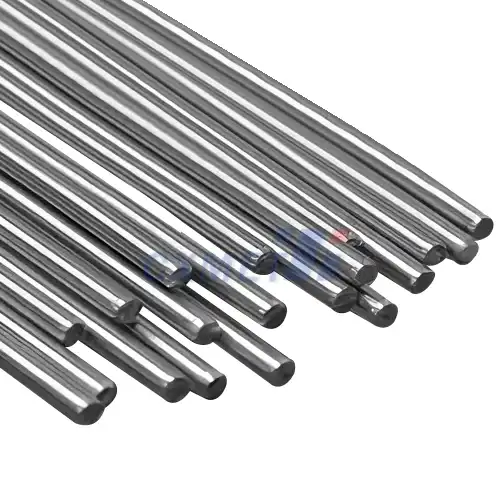

I wrote this guide for engineers, procurement managers, and R&D teams who must specify titanium for demanding service. The grade name alone does not guarantee results. Buyers should confirm exact requirements against the governing standard, product form, size, supply condition, and test scope. Certification, engineering suitability, and lifecycle value should then guide the decision.
What Is a High-Standard Gr12 Titanium Alloy Bar?
Composition and the Role of Each Element
An alloy made of titanium that is close to alpha is Grade 12. It is written as Ti-0.3Mo-0.8Ni most of the time. Nickel and molybdenum should be 0.6 to 0.9 percent, and iron should be 0.3 to 0.4 percent. The amount of oxygen should be between 0.2% and 0.4%. The oxide film that keeps metal from rusting is made of titanium. Nickel and molybdenum make the film last longer in hot chloride and media that do a little reducing. They also make it stronger than store-bought titanium that is just Titanium. Just a little difference in the final limits can change how corrosion works and how the material works physically. This is because the ASTM, or customer standard, is very important. Always make sure you get the heat analysis for the lot you own.
Why Buyers Choose Grade 12 Over Grade 2 or Grade 5?
There are some jobs that Grade 2 can do with chemicals and salt water, but it's not forceful, and hot brine can damage cracks. High Standard Gr12 Titanium Alloy Bar is stronger and better at stopping cracks than Grade 7 steel. It does this without palladium, which is very expensive. Grade 5 is much stronger, but it is harder to shape and weld. People buy it mostly for how strong it is compared to how heavy it is, not because it doesn't rust. Because of this, Grade 12 is good when commercially pure Titanium isn't enough, and more expensive alloys would be too expensive.
Manufacturing Controls That Shape Consistency
It starts to be good when the bar is melted and gets better as it is rolled, shaped, heated, bent, milled, and the surface is finished. It is possible to polish, peel, grind, or turn the sides of the Gr12 bar that CXMET sells. The bar has been cast, rolled, and annealed. Each step changes the grain structure, the amount of stress that is still there, and the stability of the dimensions. A bar's strength can change along its length if the heat treatment isn't even, and bad straightening can waste time and material when it's being machined. Titanium can also pick up oxygen when it's hot, so it's important to keep an eye on surface layers like alpha case and remove them when needed. Even more important than the grade name is how it is always handled.
How Does High-Standard Gr12 Titanium Alloy Bar Perform in Key Properties?
Corrosion Resistance and Its Limits
Tin has a thin oxide film that heals itself, so it doesn't rust. When mixed with seawater, chloride-rich solutions, oxidizing media, and slightly reducing acids, the High Standard Gr12 Titanium Alloy Bar works well. Also, it doesn't crack or rust easily in cracks. The results still depend on the chemistry, concentration, temperature, flow, contamination, surface condition, and the number of cracks and crevices. Acids that are hot and concentrated or streams of fluoride can hurt any grade of Titanium. For engineers to make the right choice of material, I tell buyers to send all the service data, which should include the temperature and pH range. This way, the choice is based on the real setting and not just a number.
Strength, Ductility, and Hardness
A grade 12 bar must meet the requirements of ASTM B348. It must have a tensile strength of at least 483 MPa (70 ksi), a yield strength of at least 345 MPa (50 ksi), and an extension of at least 18%. For Grade 2, the tensile strength must be 345 MPa and the yield strength must be 275 MPa. If the plan calls for it, you can add a decrease of area and hardness to the order. What changes the results are the size of the bar, how it is processed, how it is heated, and the direction of the test. So, ask for data that fits your size and supply situation. It's possible that a big forged bar will not test the same as a small rolled round.
Temperature, Machining, and Welding
Our scientific data says that the alloy can be used constantly at about 572°F (300°C). To be sure, check your design limit against the code. When you work with Gr12, make sure you have sharp tools, steady feeds, lots of coolant, and rigid setups to keep the heat down. The material is joined with GTAW (TIG), and ERTi-12 filler metal keeps the weld zone's corrosion protection the same as the bar's. Because oxygen, nitrogen, and dirt make joints break easily, only a trained professional should do welds, and a strong inert gas shield should be used to protect them. Most of the time, you don't need to heat treat after welding, but if you do a lot of heavy cold work, you may need to stress release.
Gr12 Titanium Bar ASTM B348 Specifications and Quality Requirements
What to Define in the Purchase Order?
For work that needs to be done under pressure, ASME SB348 is the same as ASTM B348 for titanium bars and billets. A clear buy order spells out the grade, shape, size, chemical and mechanical needs, the range of tests and certifications, and how the goods will be supplied. You must describe the intermediate limits, the length and width tolerances, as well as the state of the surface, the end preparation, and how straight or oval the piece is. Our High Standard Gr12 Titanium Alloy Bar comes in sizes ranging from 6 mm to 200 mm in diameter and from 6 mm to 6,000 mm in length. They can also be made to order with ISO 2768 tolerances or tolerances set by the customer. You can also get sheets and tubes in the wider CXMET Grade 12 range. Please check to see if your size is available.
Verification Before Acceptance
You can think of acceptance as a list. The mill certificate, the packing list, and the heat number on the bar mark should all match. Check to see if the amounts of oxygen, molybdenum, nickel, and iron meet the needs. Then, change the heat and conditions given to see how the tensile strength, yield strength, and extension change. Feel the surface to see how big, long, straight, oval, and good it is. If someone asks you to, you should compare the results of ultraviolet testing (often to AMS 2631), dye penetrant testing, or eye testing to the acceptance standards that were written down. It can be proven through metallographic tests that the structure is even and there is no alpha case. Do not throw away the certificates, inspection reports, heat treatment records, compatibility statements, or proof of origin. Keep them all.
Selecting a Supplier and Writing the RFQ
To tell the difference between a real manufacturer and a trading distributor, ask about their lab facilities, quality certifications, experience exporting, and application references. In 2005, the Shaanxi CXMET Technology Co., Ltd. was set up. Its main office is on 50,000 square meters in China's Titanium Valley, where more than 80 skilled techs work. You should include the grade, standard, size, tolerance, quantity, surface finish, heat treatment, testing, certification, packaging, where the goods will go, when they will be delivered, and how they will be sent in your RFQ. You should ask suppliers to list the prices of materials, cutting, testing, packing, and shipping. You should also find out if the price is based on theoretical weight or actual weight. Don't just look at prices per kilogram; compare quotes based on paperwork and following the rules. Blanket sales and first-article reviews lower the risk of not having enough of an item that people want over and over again.
How Does Gr12 Titanium Compare With Other Materials?
Gr12 Versus Grades 2 and 5
Grade 2 is better for many light services because it costs less and holds its shape better. It costs more, but the High Standard Gr12 Titanium Alloy Bar is stronger and less likely to break when hot salt is added to it. It's also simpler to shape and put together. Under B348, Grade 5 (Ti-6Al-4V) must be able to handle 895 MPa of strain and 828 MPa of yield pressure. This is a lot more than Grade 12, so it can be used for parts that are highly loaded. Not only is it harder to form and join, but it also doesn't rust very well. If Grade 2 isn't enough for you, move on to Grade 12. If you don't need the extra strength, skip Grade 5.
Gr12 Versus Stainless Steel
Stainless steels like 316 have a density of about 8 g/cm³. Grade 12, on the other hand, has a density of 4.51 g/cm³, which makes it about 40% lighter. Steel types that are exposed to chloride and salt water can get pitting and cavity rust, which makes it more likely that they will need to be fixed or replaced. These threats can't get through Titanium's metal coat, but it costs more at first. Value over time makes the difference most of the time. When a stainless steel part breaks down early, it can cost more in lost time and labor to fix it than the difference in price. As long as the temperatures are low and the chlorides are not too strong, stainless steel may still be the best choice.
A Decision Check Instead of One "Best" Material
Sometimes no one wins. Look at a number of choices and compare them based on their service chemistry, temperature, stress, galvanic conditions, design needs, and overall cost of ownership. Titanium will break down many metals if it comes in touch with aluminum or carbon steel in salt water. This can speed up the attack on the other metal if you don't carefully separate the pieces or make the areas the right size. You should look at how much something costs, how long it's expected to last, how many checks it will need, and how much downtime will cost. These are some things that our engineers can talk about with you before you sign off on a specification.
Where Is High-Standard Gr12 Titanium Alloy Bar Used?
Chemical Processing and Heat Exchangers
Grade 12 bar is used to make heat exchanger parts, condenser systems, pipe parts, and equipment for chlor-alkali and pulp and paper in industrial and chemical plants. Cl2 that is wet, hot brine, and weak reducing acids have a hard time getting into cracks in Grade 12 at the seal joints and flange faces. Before you finish the design, make sure that mixed-metal heat exchangers are galvanically compatible. Having the right design codes, welding skills, NDT certification, and material certification are also important for pipes and parts that deal with pressure. There is less waste when the bar's diameter, length, and machining allowance are all the same as the part that is being made.
Marine Equipment and Desalination
Systems that work with salt water need to be able to handle chips and cracks caused by chloride. High-standard Gr12 Titanium Alloy Bar is cut into bolts, supports, pump shafts, valve parts, and fasteners for marine equipment and plants that remove salt from water. Structures on ships that are low in density are lighter, and structures that are well-surfaced and can be tracked work reliably. Also, shafts need to be straight and strong enough to last through wear and tear. Ask for limits on how straight they can be and for ultrasound testing in places where force is important. Have a look at the whole situation, like the flow rate, temperature, and shape of the cracks. All of these points affect the outcome.
Power Generation and Custom Components
Factory and power plants use tube and pipe systems made of Titanium. In flue gas desulfurization (FGD) systems, materials are put in contact with chloride and acidic condensate. It is possible to make one-of-a-kind bolts, supports, and building or structure parts out of High Standard Gr12 Titanium Alloy Bar in places where it will rust. The alloy works well in systems that work at high temperatures and in places that are damp and prone to condensation. That way, we can help you choose the right width, length, and finish for your part. Please describe the finished drawing when you ask.
Conclusion
High Standard Gr12 Titanium Alloy Bar is as strong as Grade 2 and can keep titanium from rusting. Because it is made of Ti-0.3Mo-0.8Ni, it has a minimum tensile strength of 483 MPa, a yield strength of 345 MPa, an 18% expansion rate, and a density of 4.51 g/cm³. When weather, flow, and cracks are taken into account along with the rest of the surroundings, performance stays the same in chloride, seawater, and slightly lessening service. An item with a grade name is reliable if it meets the requirements of ASTM B348 and is put through chemical, mechanical, and measurement tests. Because it is more resistant to rust and can be formed without needing Grade 5 strength, Grade 12 is better than Grade 2, Grade 5, and stainless steel for many uses. It's worth a lot because it lasts a long time and has few needs.
FAQ
What is the composition of Grade 12 titanium?
Molybdenum and nickel levels should be between 0.2 and 0.4 percent for Grade 12 (also known as Ti-0.3Mo-0.8Ni), and between 0.6 and 0.9 percent for Grade 12. Always look at the standard or the customer's guideline to see what the exact limits are.
Is the High Standard Gr12 Titanium Alloy Bar suitable for seawater?
Yes, it can be used in salt water and on ships as long as the temperature, flow, and shape of the cracks are all taken into account. High Standard Gr12 Titanium Alloy Bar performance is general knowledge, not permission for a certain job.
Which documents should come with a shipment?
You should ask for a mill certificate, EN 10204 3.1 paperwork if you need it, inspection reports, NDT records, and the ability to keep track of a heat number. Before you place an order, make sure you know the most recent rules and any other wants.
Request a Quote for High-Standard Gr12 Titanium Alloy Bar
Are you ready to pick the High Standard Gr12 Titanium Alloy Bar? CXMET is a Chinese business that sells high-standard Gr12 titanium alloy bars. They offer materials that are in line with ASTM B348 or other standards in both standard and custom forms. Along with mill certificates, heat-number tracking, chemical and mechanical testing, OEM support, and export packing, they also offer these services. Send an email to sales@cxmet.com with your grade, size, quantity, tolerance, surface finish, certification, delivery date, and where you want the metal sent. You may also go to https://www.cxmet-tech.com/.
References
1. ASTM B348/B348M-19, Standard Specification for Titanium and Titanium Alloy Bars and Billets, ASTM International, 2019
2. Titanium: A Technical Guide, 2nd Edition, ASM International, 2000
3. Materials Properties Handbook: Titanium Alloys, ASM International, 1994
4. Titanium and Titanium Alloys: Fundamentals and Applications, Wiley-VCH, 2003
5. Titanium, 2nd Edition, Springer, 2007
6. ASM Handbook, Volume 13: Corrosion, ASM International, 1987