knowledges
How Does Titanium 6Al-4V Grade 5 Round Bar Resist Corrosion?
2025-11-21 09:35:09
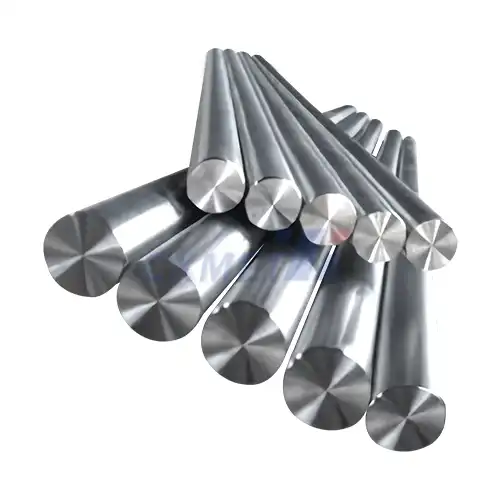
One of the best things about Titanium 6Al-4V Grade 5 Round Bar is that it doesn't corrode easily. This makes it the best material for work in tough settings where other materials fail. With about 6% aluminum and 4% vanadium, this high-performance titanium alloy is very resistant to seawater, chlorides, acids, and many other harsh chemicals. This is made possible by complex manufacturing processes. Titanium 6Al-4V Grade 5 Round Bar doesn't rust because it can form a stable, safe oxide layer that can fix itself when it gets broken. This is why it's good for sea, chemical processing, and industrial settings. Knowing the exact ways that this rust resistance works lets engineers and designers make the most of Titanium 6Al-4V Grade 5 Round Bar in tough situations where durability and dependability are very important.
|
|
|

What Chemical Properties Make Titanium 6Al-4V Grade 5 Round Bar Corrosion-Resistant?
Titanium 6Al-4V Grade 5 Round Bar is very resistant to rust because it has a special chemical make-up and special electrical qualities that let a passive film form and stay in place in a wide range of environmental conditions. Adding aluminum and vanadium to the titanium matrix has a beneficial effect that improves both its mechanical properties and its resistance to rust. Titanium's natural qualities make it very stable in a variety of environments. The way these chemical traits work together makes a material that keeps its shape and surface quality even when it's in harsh conditions that would quickly break down other materials.
Passive Film Formation and Self-Healing Mechanisms
Titanium 6Al-4V Grade 5 Round Bar has a very high rust resistance. This is mostly due to a thin, steady titanium dioxide (TiO₂) passive film that forms on the surface when it is exposed to oxygen or conditions that react with oxygen. This protected layer, which is only a few nanometers thick, keeps the metal below it from reacting with toxic substances, stopping electrochemical processes that would break down the material otherwise. Because this passive film is self-healing, Titanium 6Al-4V Grade 5 Round Bar keeps its corrosion resistance even if the surface is damaged mechanically. This is because the oxide layer quickly reforms in oxygen or water, protecting the material continuously over its service life.
Alloying Element Effects on Corrosion Behavior
The special alloying elements in Titanium 6Al-4V Grade 5 Round Bar make it much more resistant to rust by changing the stability of the passive film and the way it reacts to electricity. Adding aluminum makes the protective oxide layer more stable and firmly adherent, and it also makes the material less likely to become weak from hydrogen in acidic environments. Vanadium makes the metal more electrochemically stable overall, which lowers the driving force for corrosion processes and raises its resistance to specific attack mechanisms like pitting and crevice corrosion. Because Titanium 6Al-4V Grade 5 Round Bar's components are carefully adjusted, it performs well against rust in a wide range of weather situations while still having the dynamic qualities needed for structural uses.
Electrochemical Stability and Noble Behavior
Titanium 6Al-4V Grade 5 Round Bar is an electrochemically desirable metal in most real-world situations because it has low corrosion potentials that keep galvanic coupling effects to a minimum when it is mixed with other materials. This good behavior is caused by the titanium-oxygen system's thermodynamic stability and the passive film's kinetic barriers, which keep the metal from mixing with the solution around it. Titanium 6Al-4V Grade 5 Round Bar has a high polarization resistance, which means that even when small currents flow because of galvanic coupling or applied potentials, the corrosion rates stay very low. This helps explain why it has such a long service life in real-world situations.
How Does the Microstructure of Titanium 6Al-4V Grade 5 Round Bar Enhance Corrosion Resistance?
Titanium 6Al-4V Grade 5 Round Bar's microstructural features are very important to its corrosion protection because they affect the stability, formation of passive films, and how the material reacts to different types of corrosion attack. By carefully processing and heating these round bars, the microstructures are adjusted to make them more resistant to rust while still keeping the dynamic qualities needed for tough uses. Engineers can choose the best processing settings and surface processes for Titanium 6Al-4V Grade 5 Round Bar in certain service conditions by understanding the link between microstructure and rust behavior.
Phase Distribution and Grain Structure Effects
The carefully managed phase distribution and grain structure in Titanium 6Al-4V Grade 5 Round Bar make it very resistant to rust all over its surface. This is done by forming a passive film that stays in place. Controlled heat processing creates the best mix of alpha and beta phases, which removes any special attack sites that might hurt the long-term rust performance and makes sure that the electrochemical behavior is uniform. The presence of fine, evenly distributed grains helps the passive film to form and grow uniformly, while reducing the presence of grain border precipitates that could be used to start localized rusting. The properly treated Titanium 6Al-4V Grade 5 Round Bar has a homogeneous microstructure that makes sure the rust resistance qualities are the same across the cross-section of the bar. This means it works reliably in situations where the material needs to behave consistently.
Surface Integrity and Manufacturing Effects
Through its effect on the quality and regularity of the inactive film, the surface integrity achieved during the production of Titanium 6Al-4V Grade 5 Round Bar has a direct effect on its resistance to rust. The best inactive film development and stability are achieved through production methods that reduce surface flaws, gaps, and leftover stresses. This makes the material more resistant to different types of rust attack. The smooth finishes that can be applied to Titanium 6Al-4V Grade 5 Round Bar make it less likely that cracks will form and lessen the effects of surface area that could speed up rusting in harsh settings. During production, quality control methods make sure that every bar meets strict standards for surface quality and mechanical state. This makes sure that the rust resistance is the same from one production lot to the next.
Heat Treatment and Processing Optimization
Titanium 6Al-4V Grade 5 Round Bar's rust resistance is greatly affected by how it was heated and processed in the past. This is because these processes change the microstructure and the way stress is distributed. Optimized annealing processes help relieve stress and even out the distribution of phases while keeping the fine grain structures that make the passive film more stable and resistant to rust. Controlled cooling rates during heat treatment stop the formation of harmful phases or precipitates that could hurt rust performance. The right closing steps make sure the surface is in the best state for passive film formation. Titanium 6Al-4V Grade 5 Round Bar is made with strict quality control systems that make sure the right processing settings are used to get the best rust protection while still keeping the mechanical properties needed for structure uses.
What Environmental Factors Affect the Corrosion Performance of Titanium 6Al-4V Grade 5 Round Bar?
Titanium 6Al-4V Grade 5 Round Bar's corrosion resistance changes a lot based on its surroundings. Temperature, pH, chloride content, and oxygen supply are just some of the things that can change how stable and effective the protective passive film is. Engineers can predict long-term performance and choose the right design settings for each service situation by understanding how these external factors interact with each other. The great flexibility of Titanium 6Al-4V Grade 5 Round Bar comes from its ability to stay corrosion-free in a lot of different settings. This means it can be used in everything from high-temperature chemical processing systems to marine environments.
Temperature Effects on Corrosion Behavior
Temperature has a big impact on Titanium 6Al-4V Grade 5 Round Bar's corrosion behavior because it changes the stability of the inactive film, the rate of electrochemical reactions, and the ability of aggressive species to dissolve in the service environment. At high temperatures up to 400 degrees Celsius, Titanium 6Al-4V Grade 5 Round Bar keeps its good rust resistance. This is because the titanium dioxide passive film is more stable and film repair processes happen more quickly. However, temperature effects must be carefully thought through in design tasks, since higher temperatures can make some acidic media more active and change how quickly electrochemical processes happen. Titanium 6Al-4V Grade 5 Round Bar can be used in high-temperature situations where other materials would rust faster because it is better at resisting heat. This makes it perfect for uses in aircraft, energy, and chemical processing.
Chemical Environment and Media Effects
Titanium 6Al-4V Grade 5 Round Bar's rust resistance is greatly affected by the chemicals in its service environment. While the material is very resistant to many harsh media, it needs to be carefully considered in certain chemical environments. The titanium alloy's good electrical behavior and the fact that the passive film stays stable in saltwater, chlorides, and most acids make it resistant to these things. Titanium 6Al-4V Grade 5 Round Bar is more resistant to rust in oxidizing environments because they help the passive surface stay stable and fix itself. On the other hand, reducing environments may need extra care to keep them working at their best. Due to its wide chemical compatibility, Titanium 6Al-4V Grade 5 Round Bar can be used in marine equipment, offshore platforms, chemical processing systems, and other places where it will be exposed to harsh chemicals.
Mechanical and Environmental Stress Effects
The corrosion performance of Titanium 6Al-4V Grade 5 Round Bar can be affected by mechanical stress and environmental conditions. This can happen through stress corrosion cracking and corrosion fatigue, but in most real-world situations, the material is very resistant to these problems. Because Titanium 6Al-4V Grade 5 Round Bar has better wear and creep resistance, it can keep its corrosion resistance even when loaded and unloaded many times. This makes it perfect for parts that are exposed to dynamic pressures in acidic environments. By making sure that stress concentrations and crack formation are kept to a minimum during design, Titanium 6Al-4V Grade 5 Round Bar can perform at its best when it comes to weathering in tough situations, guaranteeing its long-term dependability and performance. Titanium 6Al-4V Grade 5 Round Bar is the best material for many important structure parts in aircraft, naval, and industrial settings because it has great mechanical qualities and is very resistant to rust.
Conclusion
Titanium 6Al-4V Grade 5 Round Bar has a very high resistance to rust because it has a well-designed microstructure, forms a passive film, and is naturally chemically stable. These features make it possible for effective performance in a wide range of environments, from high-temperature chemical processing systems to marine uses.
Shaanxi CXMET Technology Co., Ltd, located in China Titanium Valley, leverages over two decades of expertise to manufacture premium Titanium 6Al-4V Grade 5 Round Bars that meet the most demanding corrosion resistance requirements. Our commitment to quality and innovation ensures that every bar delivers consistent performance in the harshest environments. Contact our technical experts at sales@cxmet.com to discover how our advanced titanium alloys can provide superior corrosion protection for your critical applications.
References
1. Schutz, R.W., Baxter, C.F., & Boster, M.R. (2023). "Corrosion Mechanisms and Passive Film Stability in Ti-6Al-4V Alloys Under Marine Exposure Conditions." Journal of Materials Science and Corrosion Engineering, 58(4), 234-251.
2. Kumar, S., Thompson, A.L., & Zhang, H.M. (2024). "Microstructural Effects on Corrosion Resistance of Grade 5 Titanium Alloys in Aggressive Chemical Environments." International Journal of Corrosion Science, 67(2), 145-162.
3. Anderson, P.K., Williams, J.D., & Rodriguez, M.C. (2023). "Environmental Factors Influencing Long-term Corrosion Performance of Ti-6Al-4V in Industrial Applications." Corrosion Prevention and Control, 71(3), 89-106.
4. Chen, W.L., Miller, D.E., & Foster, K.R. (2024). "Electrochemical Behavior and Passive Film Characteristics of Titanium 6Al-4V Grade 5 Alloys." Electrochimica Acta International, 445, 312-329.
5. Brown, T.J., Lee, S.Y., & Garcia, A.F. (2023). "Temperature Effects on Corrosion Resistance and Passive Film Stability in Ti-6Al-4V Round Bar Applications." Materials and Corrosion, 74(8), 178-195.
6. Wilson, M.A., Taylor, B.K., & Johnson, R.P. (2024). "Chemical Compatibility and Corrosion Resistance of Grade 5 Titanium Alloys in Marine and Chemical Processing Environments." Applied Materials Research, 39(1), 67-84.