knowledges
How Does Titanium Grade 2 Round Bar Improve Performance?
2026-11-02 17:02:34
Titanium Grade 2 Round Bar improves performance by combining corrosion resistance, low weight, and easy fabrication in one commercially pure material. Its stable oxide film protects parts in seawater, brine, and many chemical streams, which reduces replacement cycles and unplanned downtime. At about 4.51 g/cm³, it weighs roughly 40 percent less than steel, so shafts, fasteners, and spacers place less load on surrounding equipment. Grade 2 also welds and forms readily, which keeps fabrication costs predictable. This guide covers properties, material comparisons, machining, and buying steps for engineers and procurement teams before they place an order.
|
|
|

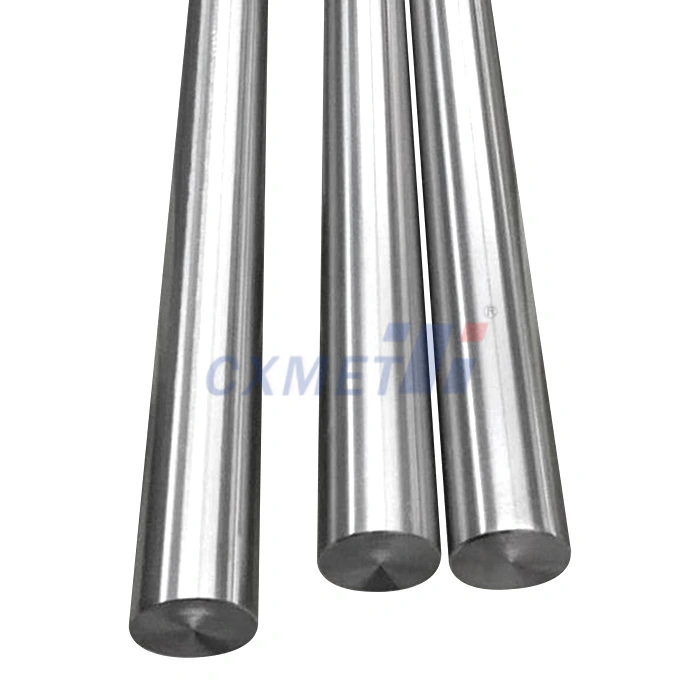
Why Titanium Grade 2 Round Bar Improves Performance in Demanding Applications
Corrosion Resistance That Cuts Replacement Cycles
Most of the time, chlorine attack is what breaks down metal parts in marine, oil and gas, and chemical plants. On the outside, there is a thin, solid oxide film. If there is air or water nearby, this film heals quickly after being touched. That is why a titanium Grade 2 Round Bar can handle cracks and pits better than 304 and 316 stainless steels. Parts don't need to be changed out as often when there is less rust. Engineers care most about these things for parts that are hard to get to, like shafts that are submerged or hardware on heat exchangers. This is because replacing something costs more and takes more time away from making things.
Lower Weight Than Stainless Steel and Nickel Alloys
Yes, Grade 2 is dense, measuring 4.51 g/cm³. A lot of austenitic stainless steel weighs about 8 grams per cubic centimeter, and even more nickel metal weighs even more. This is why a titanium part of the same size as a steel part weighs about 40 percent less. Moving things is easier when they don't weigh as much because they don't need as much support and don't have to work as hard. This is especially important for moving parts, offshore modules, and equipment that spins. Since Grade 2 is a medium-strength material, you should check the design loads before you move. You can save weight without giving up a lot of service life if you build for rust instead of peak strength.
Where Engineers Put It to Work?
If you work in marine, oil and gas, chemical processing, power and metallurgy, pharmaceutical, electronics, coating, UV work, or chemical processing, this stuff works best where we do the most work. Equipment for making electricity, electrochemical and anodizing equipment, tanks and lines for processing chemicals, and evaporation plants and systems for seawater are just a few of the places it is used. OEM parts, bolts, spacers, and polished rods are often made just for one customer. People never just look at the price; they also look at how much it will cost them over time. A titanium Grade 2 Round Bar that breaks easily costs less up front but more in the long run because it lasts longer and needs less help.
Titanium Grade 2 Round Bar Properties and Technical Performance
Chemistry and Purity
It is pure enough to be used in business, and its structure is in the alpha phase. Titanium is used to make at least 99.2% of CXMET Grade 2 bars. For ASTM B348, that is how much oxygen, iron, carbon, nitrogen, and hydrogen can be present: 0.25 percent oxygen, 0.30 percent iron, 0.08 percent carbon, 0.03 percent nitrogen, and 0.015 percent hydrogen. While metal is being rusty in nitric acid, making sure it doesn't have too much iron in it helps it stay flexible. There is a verified heat analysis on the mill certificate, not just average numbers. That is what I tell people when they buy something. That is because the certificate shows exactly what kind of heat was sent.
Mechanical Properties and Specifications
What you need to know about our titanium Grade 2 Round Bar is summed up in the table below. You can then compare them to your drawings.
| Item | Specification |
|---|---|
| Brand / Origin | CXMET / China |
| Type, Shape, Technique | Titanium bars, round, hot-rolled |
| Grade | GR2 (Titanium Grade 2) |
| Standards | ASTM B348, AMS 4921, ASME SB348 |
| Purity | Minimum 99.2% Ti |
| Diameter | 3 mm to 300 mm |
| Length | 1000 mm to 6000 mm or customized |
| Tensile / Yield Strength | Minimum 345 MPa / minimum 275 MPa |
| Elongation | Minimum 20% |
| Surface Finish | Polished, pickled, turned, or centerless ground |
| Tolerance | H9, H10, or per customer requirement |
| Certification | ISO 9001, SGS, EN 10204 3.1 |
| Application / Packaging | Industrial, medical / as per your requirements |
A well-balanced material should be strong all the way through, be able to stretch at least 20%, and not wear down or crack. Parts need to bend or shape a little before they break. That balance is good for those parts.
Operating Environments and Service Limits
Grade 2 is good for saltwater and brine, which are both chloride acids. Acids that oxidize, like nitric and chromic acid, and acids that slightly reduce, like sulfuric and hydrochloric acid, can also be used. You can also deal with salty, muggy air from the sea. There is a working temperature range of 0 to 400°C for hot and cold work. Rules are also a good thing to have. When there are a lot of reducing acids, cracks that are very tight in hot chloride brines, or debris on the surface, there needs to be a detailed study. Often, you need a different grade. Our team can tell you if Grade 2 is right for the job if you tell them what kind of fluid it is, how hot it is, how concentrated it is, and how it flows.
How Does Titanium Grade 2 Round Bar Compare with Other Materials?
Grade 2 Versus Grades 1, 5, and 9
You can change to Grade 1 if you want to. It is stronger than Grade 1, but it rusts the same way. As much as Grade 4 is easy to bend or join, Grade 5 (Ti-6Al-4V) is much stronger. Because of this, it is often used to make plans for buildings and planes. Grade 9 (Ti-3Al-2.5V) is stronger and can be used to make light tubes and buildings. A titanium Grade 2 Round Bar is good for rust work that doesn't need to be very strong. Most of the time, people want the grade that is sold in stores. It is easy to work with and doesn't have the extra issues that alloyed grades do when you try to cut or shape it.
Grade 2 Versus Stainless Steel, Nickel Alloys, and Aluminum
There is less salt water and chloride in Grade 2 than in 304 and 316 stainless steels. It is also lighter. But it costs more to machine. Even though they are heavy, nickel metals can be strong enough to stand up to harsh chemicals and high temperatures. Aluminum is cheap and easy to work with for items that don't need to hold a lot of weight. Titanium is stronger, though, and less likely to rust in harsh chemical or marine environments. It is also not reactive or magnetic, so Grade 2 can be used for very safe electronics and medical images. When you think about these trade-offs, don't just look at the price.
When Grade 2 Is the Right Choice
If staying strong against rust, being light, being able to bend, and having a long life are more important to you than being cheap or strong, I recommend Grade 2. It can be used in places with chemicals, hydrochloric acid, water, bonds, and machines. Chemicals that are hot and weak may work better with a different grade. The same goes for places where people are very stressed or tired, or for projects that need a different material. Take a look at the grade, standard, size, surface condition, expected use, manufacturing method, certification, landed cost, and delivery date before making a choice. Grade 2 is often a good match if everything goes well.
Machining and Fabrication Practices That Protect Grade 2 Performance
Machining Without Galling or Heat Damage
It is hard for heat to move through titanium, so it stays in the cutting zone and doesn't move with the chip. The tools get worn out faster, which makes the work harder. Hold the item firmly and keep the cutting speed slow. Also, keep the feed rate fast and the flow of coolant toward the cutting edge steady. You should use tools that are stiff and sharp. Avoid letting the tool rest on the surface or rub it against it. It will get rough and hard. When you drill, turn, mill, or thread, it is important to get rid of chips well. Just make sure they follow these rules when they cut a titanium Grade 2 round bar with regular tools. The outside will still look good.
Welding with Clean Inert-Gas Protection
Make sure the area is clean before you try to weld Grade 2 titanium. Titanium quickly takes in oxygen and nitrogen when it is hot. This makes the joint less strong and opens up the alpha case. Pure argon or helium should be used to protect the weld, and the metal should be covered from the back and the sides that follow it while it cools. Before you start, clean the joint of any dirt, grease, or fingerprints. A titanium Grade 2 Round Bar that is bright silver or light straw in color is usually safe. It is important to do work with blue or gray tones again.
Forming and Surface Care
Because it is easy to shape when it is cold, shops don't have to worry as much that Grade 2 will crack when they shape and bend it. When you want to relax, plan for springback and use normal ways to treat heat. After hot working or welding, people often pickle the surface to get rid of dirt and other things that aren't good for it. This makes sure that the protective oxide film forms correctly. You can get dull, shiny, pickled, turned, or ground bars without a center from CXMET. You may also choose to have the finish polished or passivated. If you choose the finish early on, you won't have to do as many steps. The surface stays the same from one bar to the next as well.
Selecting and Buying Titanium Grade 2 Round Bar from CXMET
Define Your Requirements and Standards
Being clear about what you want saves time. Give specifics about the form, size, length, tolerance, straightness, surface state, design loads, temperature, pressure, vibration, chemicals that will be present, and shape. Don't forget to name the standard, too. Steel bars and billets used in business are what ASTM B348 talks about. Our bars also use AMS 4921 and ASME B348. Medical implants must follow tighter rules set by ASTM F67. If you need one, please let them know right away. Our hot-rolled bars come in H9 and H10 sizes, and you can set your own tolerance for them. Lengths can be cut to order or fall between 1000 mm and 6000 mm. They range in size from 3 mm to 300 mm.
Plan Price, Availability, and Delivery
The price isn't just based on weight. The price is based on the size, weight, certification, inspection, cutting, packing, freight, and finish on the outside. Deals that use different cut lengths or cutting limits should not give you the wrong idea. You should instead look at the price per meter and the price per kilogram. Non-standard sizes take longer to make and need more time to ship. If you guess how much demand there will be, group packages together, and keep extra stock on hand, you can lower the landed cost. You can make changes to the package to fit your needs, which is helpful for both US projects and exports.
Verify the Supplier and Work with CXMET
How well a supplier does their job affects all of these things: rate, quality, and risk. It is important to look for quotes that are clear and mill certificates that can be tracked. CXMET has the right tools for ISO 9001, SGS, and EN 10204 3.1. If you need to, a third party can also check and test things. When it gets to you, make sure that the surface condition, cut length, heat number, and diameter are all the same as what you ordered.
Shaanxi CXMET Technology Co., Ltd. was founded in 2005. It is in the "China Titanium Valley" and has a building that is 50,000 square meters. More than 80 skilled workers work there. It is possible to change the width and length of the bars. We can also make them from models or CAD files, grind them to very precise levels, and send them to you under your own brand name or as an OEM. This is our team's job: to help people who are having trouble with apps and answer their tech questions.
Conclusion
The titanium Grade 2 round bar works better since it is less dense, has an oxide film to protect it, and is easy to shape. Because it doesn't react with salt, water, or many chemicals, it doesn't need to be changed as often. Since it only weighs 4.51 g/cm³, it is not as dense as metals like nickel and stainless steel. It has a medium strength and is easy to shape based on its chemical and mechanical minimums. Hot reducing acids, cracks that are too small, and temperatures above 400°C are not always safe to use. Aluminum grades 1, 5, and 9 are stronger than Grade 2 if you need something strong. For things that will rust, Grade 2 is better. Because the surfaces are clean, the work is done carefully, and inert gas is used during welding, the performance is safe to use. It's a good idea to compare prices, look at clear specs, and have official papers and checks ready before you buy.
FAQ
How does Grade 2 differ from Grade 5 titanium?
Grade 2 titanium is the best titanium that you can buy. It doesn't rust and is easy to shape. Grade 5 is stronger than Grade 2, but it might not work with as many things. Also, it is harder to cut and join.
Is a titanium Grade 2 round bar difficult to machine?
This can make the metal hotter, which makes it more likely to gall. It can be fixed with lots of water, sharp tools, slow speeds, and fast feeds.
Can Grade 2 titanium be welded?
Of course. Don't let oxygen and nitrogen get to the joint; they will weaken it. Cover it with argon or helium.
Is Grade 2 titanium magnetic?
Not at all. Because it is not magnetic, it is good for medical imaging housings and electronics that need to be kept safe.
What certification comes with CXMET bars?
Our work has been checked by ISO 9001, SGS, and EN 10204 3.1, and you can ask a third party to do so if you'd like.
Request a Titanium Grade 2 Round Bar Quote from CXMET.
Want to buy titanium Grade 2 Round Bar from a business that can meet your needs? Tell sales@cxmet.com what size, length, range, number, and surface finish you want and where you want the metal to go in a letter. There are several delivery options, and our team will check to see if it's a good fit. We can get ISO 9001, SGS, and EN 10204 3.1 certifications. You can find out more about the goods and ask your questions at https://www.cxmet-tech.com/.
References
1. ASTM International, Standard Specification for Titanium and Titanium Alloy Bars and Billets (ASTM B348/B348M), 2019
2. ASM International, Titanium: A Technical Guide, 2nd Edition, 2000
3. ASM International, Materials Properties Handbook: Titanium Alloys, 1994
4. ASM International, ASM Handbook Volume 13: Corrosion, 1987
5. Springer, Titanium, 2nd Edition, 2007
6. Wiley-VCH, Titanium and Titanium Alloys: Fundamentals and Applications, 2003