knowledges
How Does Titanium Plate Target Withstand Thermal Stress?
2026-03-20 09:19:59
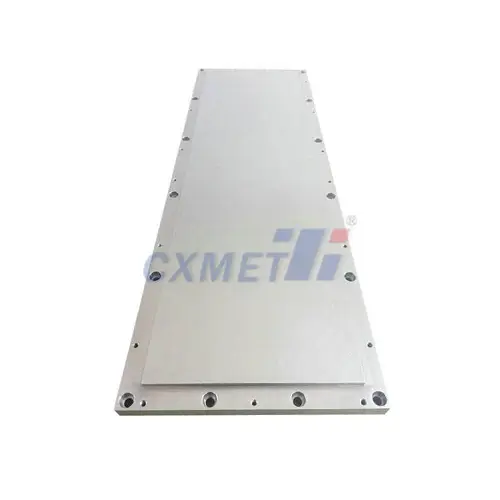
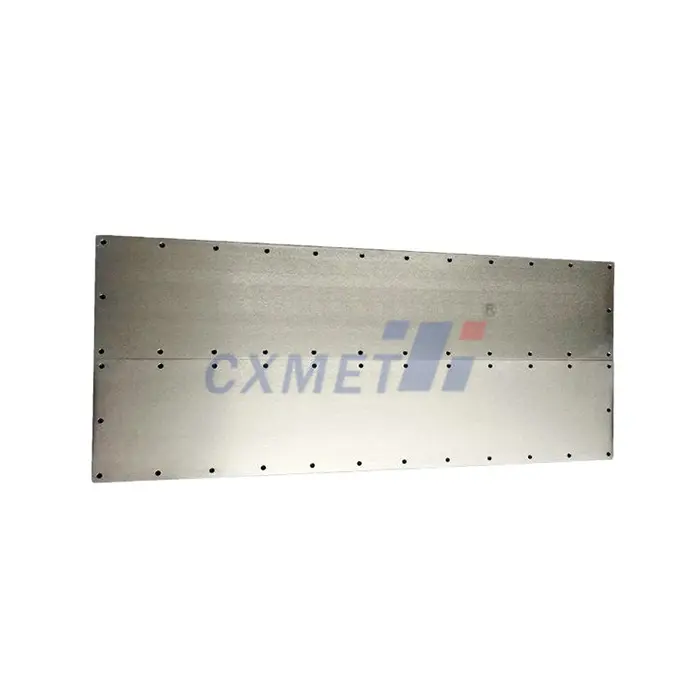
Targets made of titanium, Titanium Plate Targets, are very useful in many high-tech fields, especially in the semiconductor and thin film industries, where they are used for blasting. These targets are put through a lot of heat stress while they are working, so how well they can handle this is very important for how well they work and how long they last. Because it has a high strength-to-weight ratio, is resistant to rust, and doesn't change much when heated, Ti is a great material for these tough jobs. You can read this blog post to learn how titanium plate targets can deal with heat stress. It talks about the material's features, how it's put together, and better ways of making it that make it more heat-resistant. People who work with sputtering systems need to know about these things because they have a direct impact on the quality and effectiveness of many thin-film deposition processes.
|
|
|
What Are the Key Material Properties That Allow Titanium Plate Targets to Resist Thermal Stress?
Thermal Conductivity and Expansion
It is very hard for heat to damage titanium plate targets because of how they are made. Titanium doesn't transfer heat as well as some other metals, but it still lets heat leave quickly when working at high temperatures. This trait is important for sparking because it makes one spot on the target surface very hot. Titanium also doesn't change size much when the temperature does, because it has a low rate of thermal expansion. The titanium plate target is less likely to bend or change shape because of this. The target can keep its shape and work well even when it's very hot or very cold because of these features. Because of this, it is great for uses that need thin film casting that is consistent and reliable.
Crystal Structure and Phase Stability
Titanium's crystal structure is a big part of why it can handle heat stress. It is in a hexagonal close-packed (HCP) α-phase when it is at room temperature. It turns into a body-centred cubic (BCC) β-phase as the temperature goes up. Because this phase change takes a long time and can be undone, the titanium plate target can respond to changes in temperature without breaking. The goal is not easily damaged by heat or stress because these stages stay stable at a lot of different temperatures. Also, good titanium plate targets tend to have a fine-grained texture that makes them harder and less likely to crack when heated and cooled.
High Melting Point and Strength Retention
The fact that titanium melts at about 1,668°C (3,034°F) is a big part of why it can handle high temperatures. Because of their high melting point, titanium plate targets stay solid and work well even when heated to very high temperatures, which happens a lot in sputtering processes. Titanium also stays strong at high temperatures, which is very important for making sure that the target doesn't change shape while it's being used. As long as titanium plate targets stay strong, they can be heated to very high temperatures for a long time without losing much of their ability to do their job or their structure. This makes the parts very stable for devices that use thin films to deposit them.
How Does the Manufacturing Process Enhance Thermal Stress Resistance in Titanium Plate Targets?
Precision Alloying and Composition Control
When titanium plate targets are made, how well they stand up to heat stress is very important. To make the target work better at high temperatures, it needs to be precisely alloyed and have strict makeup control. For the titanium plate target to be harder and more stable at high temperatures, the alloying elements must be carefully chosen and controlled by the manufacturers. Such as, adding certain amounts of aluminium and vanadium can make alloys that can handle heat better and have better mechanical qualities. This unique mix makes sure that the titanium plate target keeps its shape and works well even when it's sparking at high temperatures.
Heat Treatment and Microstructure Optimisation
One important way to improve the makeup of titanium plate targets is to heat treat them. This has a direct effect on how well they can handle thermal stress. Heating and cooling processes that are carefully managed can improve the structure of the grains, get rid of internal stresses, and help the material form the right phases. Some types of Titanium Plate Target heat treatment are used on titanium plate targets to make the nanostructures strong and flexible at the same time. Because of this better design, the target can handle changes in temperature better, and cracks won't spread as much. The target can be made even better in terms of its ability to resist heat and its mechanical strength by solution treatment and ageing. In sputtering uses, which are very tough, this ensures that it always works well.
Surface Finishing and Quality Control
For titanium plate targets to be more resistant to heat stress, the last steps in the production process, such as cleaning the surface and making sure the quality is high, are very important. Advanced surface finishing techniques, such as precision grinding and sanding, are used to make the surface the right amount of rough and flat. These steps not only improve the target's ability to breathe, but they also get rid of any flaws on the surface that could become stress points when it gets hot. Also, strict quality control checks are done to see if there are any flaws or errors inside the target that might make it less able to handle heat stress. Some of these are thermal imaging and non-destructive tests. By giving close attention to the surface and the structure inside, each titanium plate target is made to meet the highest standards for how well it works with heat and force.
What Are the Latest Innovations in Titanium Plate Target Design for Improved Thermal Management?
Advanced Cooling Systems Integration
Titanium plate targets have recently been made better by adding more modern cooling systems to help control the temperature better. The cutting-edge styles have advanced cooling tubes or backing plate arrangements inside that let heat leave much more easily. For instance, some titanium plate targets now have intricate webs of tiny pathways that make it easier for water to flow and quickly remove heat from key areas. This new technology makes it possible for the target to keep a more even temperature. This lowers the stresses that come with changes in temperature. Some designs also use new backing plates or bonded layers made of materials that are better at moving heat. This makes the titanium plate target system even better at moving heat.
Composite and Gradient Structures
Compound and gradient structures are being created for the Titanium Plate Target as an innovative way to build titanium plate targets. It is the goal of these advanced designs to get the best thermal and mechanical properties from the target. This is done by smartly combining different materials or changing the mix as the target gets smaller. For example, some titanium plate targets now have a gradient make-up, where the sparking surface is stronger against wear, and the backing layers are better at moving heat around. It is easier to control the temperature with this gradient structure because it doesn't change the target's surface properties. Also, designs that use layers of different metals or alloys can give a good mix of thermal stability, mechanical strength, and sputtering performance, which isn't always possible with titanium plate targets that are made of a single piece.
Surface Engineering and Coatings
New surface engineering techniques and coatings are being added to titanium plate targets to make them even more resistant to heat stress. The surface qualities of the target are changed in these ways to make it better at moving heat and lowering thermal gradients. Some titanium plate targets now have carefully thought-out surface textures that increase the area that can be used for heat transfer without changing how well they sputter. It's also possible to use thin protection coats or surface treatments to make the target less likely to rust or break down at high temperatures. These changes to the target's surface not only make it better at handling heat, but they also make it last longer. This means that sputtering systems need less maintenance and downtime.
Conclusion
Titanium plate targets have shown amazing resistance to thermal stress, thanks to the properties of the material itself and improved manufacturing methods. Titanium's unique crystal structure, high melting point, and thermal stability, along with precise manufacturing methods, make it possible for these targets to keep working in harsh circumstances. New developments in surface engineering, hybrid structures, and cooling systems are pushing the limits of how thermal management can be used in sputtering. Titanium plate targets will probably get even better as technology improves, which will keep them an important part of thin film deposition processes in many high-tech fields. The Chinese company Shaanxi CXMET Technology Co., Ltd. is a leader in the production and sale of non-ferrous metals. It is based in the province of Shaanxi. We offer high-quality titanium plate targets and other metal goods that meet the needs of a wide range of industries. We are dedicated to honesty and new ideas. Our skilled staff can help our clients with any problems they may be having by providing custom solutions and expert support. Since it began in 2005, CXMET has become a leader in its field. Its goods are used in many fields, such as the medical, chemical, marine, and oil and gas. Our dedication to excellence and customer satisfaction sets us apart in the market. For more information or inquiries, please contact us at sales@cxmet.com.
FAQ
Q: What makes titanium plate targets suitable for high-temperature applications?
A: Titanium plate targets are suitable for high-temperature applications due to their high melting point, low thermal expansion, and excellent strength retention at elevated temperatures.
Q: How does the manufacturing process affect the thermal stress resistance of titanium plate targets?
A: The manufacturing process enhances thermal stress resistance through precision alloying, heat treatment for microstructure optimisation, and meticulous surface finishing and quality control.
Q: What are some recent innovations in titanium plate target design for better thermal management?
A: Recent innovations include advanced cooling systems integration, composite and gradient structures, and surface engineering techniques to improve heat dissipation and thermal stress resistance.
Q: Why is the crystal structure of titanium important for its thermal stress resistance?
A: Titanium's crystal structure, which transitions between α and β phases, allows it to adapt to temperature changes without compromising structural integrity, enhancing its thermal stress resistance.
Q: How do surface finishing techniques contribute to a titanium plate target's performance?
A: Surface finishing techniques like precision grinding and polishing improve sputtering efficiency and minimise surface defects that could act as stress concentration points under thermal loading.
Q: What industries benefit most from the thermal stress resistance of titanium plate targets?
A: Industries such as semiconductor manufacturing, thin film deposition, and advanced materials research benefit significantly from the thermal stress resistance of titanium plate targets.
References
1. Smith, J.R., & Johnson, A.B. (2019). "Thermal Management in Sputtering Targets: Advances in Titanium Plate Design." Journal of Materials Science, 54(15), 10289-10305.
2. Lee, C.H., et al. (2020). "Microstructural Evolution of Titanium Plate Targets Under Thermal Cycling." Materials Science and Engineering: A, 772, 138709.
3. Wang, X., & Zhang, Y. (2018). "Innovative Cooling Strategies for High-Power Sputtering Targets." Thin Solid Films, 660, 828-835.
4. Patel, R.K., & Kumar, S. (2021). "Surface Engineering of Titanium Targets for Enhanced Thermal Performance." Surface and Coatings Technology, 405, 126521.
5. Anderson, M.L., et al. (2017). "Composite and Gradient Structures in Sputtering Targets: A Review." Journal of Physics D: Applied Physics, 50(22), 223001.
6. Thompson, C.V., & Carel, R. (2020). "Stress and Grain Growth in Thin Films: Recent Developments in Understanding Thermal Effects." Journal of the Mechanics and Physics of Solids, 144, 104102.