knowledges
How Is Machinability in a Niobium Bar Compared to Other Metals?
2026-03-19 11:27:04
It is important to know how easy it is to machine different materials if you want to make things out of metals, niobium bar, and so on. Niobium is a rare and useful refractory metal that can be hard to machine. It also has some great properties that make it useful. If you compare niobium bars to other metals, this blog post talks about how easy they are to work with. To do this, it looks at the metal's properties and how it responds to different kinds of cutting. Niobium is very hard to machine because it has a high melting point, is very resistant to rust, and has other unique mechanical properties. Niobium bars are hard to work with, but there are methods that work best with them. We'll find out what engineers and machinists need to keep in mind when using niobium in their projects by comparing it to other metals that are commonly machined. It's important to understand these things in areas like aerospace, electronics, and more, so that production methods can be made better and results can be achieved.
|
|
|
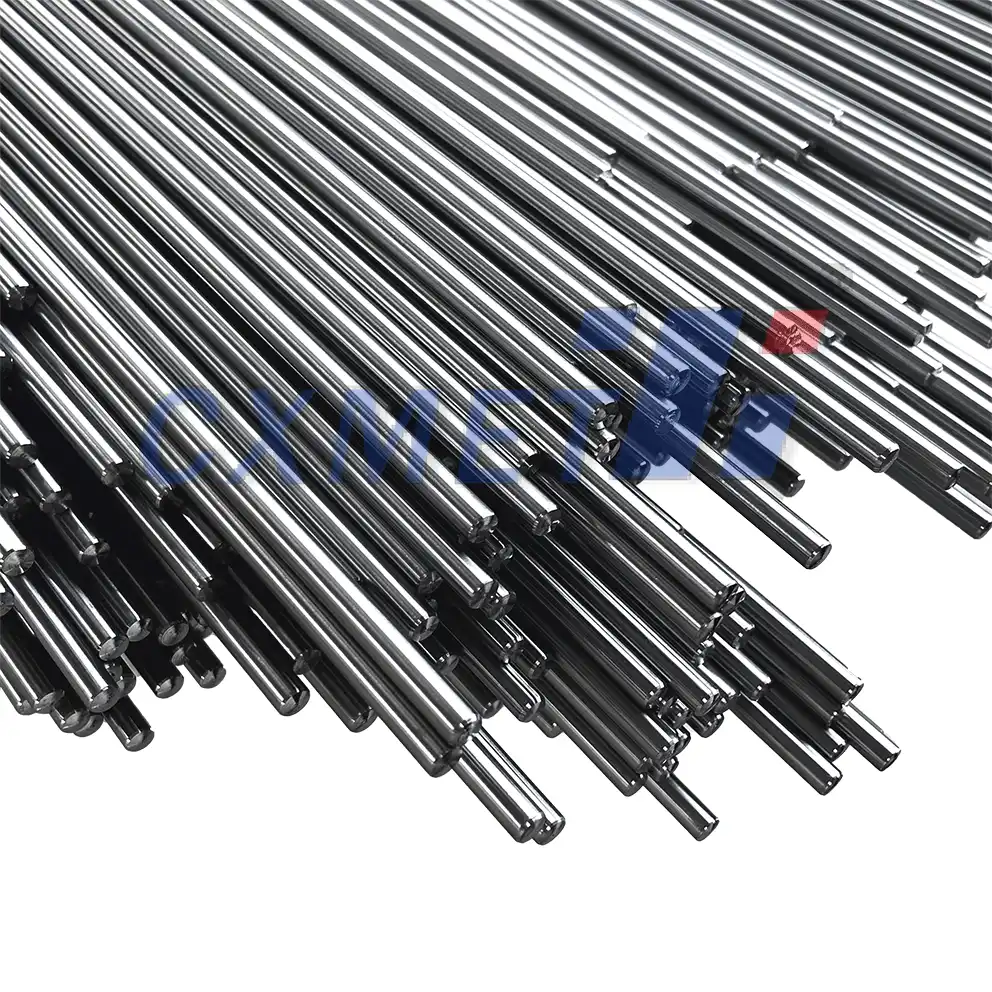

What Are the Unique Machinability Characteristics of Niobium Bars?
How Does Niobium's Hardness Affect Its Machinability?
You need to know how niobium bars are made in order to make them in a certain way. It is hard to make things out of niobium, so it can do some things really well. It's not as hard as some metals, which could be good or bad if you need to cut something. Nickel bars are soft, so they are easy to cut and shape. You can cut faster because this keeps tools in better shape. It's soft, so you can bend it and get a rough surface finish, but only if the right settings are used for the machine. When machinists work with niobium bars, they need to make sure that the feed rates and cutting speeds are just right. There is no other metal that is as hard as niobium. Because of this, it needs to be cut with specific tools and methods to keep the lengths straight and avoid work hardening.
How Does Niobium's Thermal Conductivity Impact Machining Processes?
Nicoium bars are easy to work with because they conduct heat well. Metallic types that are built on nickel don't move heat as well as niobium does. This changes how the heat is spread during the cutting process in a big way. Because of this, niobium bars can cause heat buildup in one place where they touch the cutting edge. This might hurt the tool niobium bar and make the surface less smooth. For this reason, machinists who work with niobium bars often have to find unique ways to keep their niobium bar tools cool. Coolants are needed to manage how much heat is created and removed, and cutting speeds need to be closely observed. Niobium's low thermal conductivity can be useful because it makes it easier to precisely control the area that gets hot during cutting. This can help when the qualities of the material need to be kept.
What Role Does Niobium's Ductility Play in Its Machinability?
How flexible niobium bars are is an important factor that affects how easy they are to work with. The metal niobium is famous for being very bendable, which means it can bend a lot without breaking. This trait changes the cutting process in both good and bad ways. Niobium bars are very flexible, which means they can be shaped and made in a lot of different ways. This makes it possible to make parts that are very complicated. On the other hand, this ability to bend can lead to issues like chipping and a built-up edge when cutting. Machine operators who work with niobium bars need to know how to cut them and what shape their tools should be in order to avoid chips and keep the material from spreading. To keep the piece from deforming too much, cutting forces must be carefully thought out when niobium is used. Knowing and taking into account how flexible niobium is can help manufacturers get the best results from the methods they use to make niobium bars.
How Does the Machinability of Niobium Bars Compare to Titanium and Stainless Steel?
What Are the Key Differences in Cutting Forces Required for Niobium vs. Titanium?
When looking at how easy it is to make niobium bars vs. titanium bars, it's important to keep in mind that the cutting forces needed are different. Niobium needs less cutting force than titanium because it is not as hard and doesn't have as much yield strength. These niobium bars have a feature that can help with some machining jobs. It lets them cut more quickly and may even improve tool life. Niobium doesn't need as much force to cut, so it can be hard to make chips and move them out of the way. Machinists have to carefully change the cutting settings when they work with niobium bars to make sure that chips are broken up and taken out quickly. On the other hand, titanium needs better cutting tools because it is harder and stronger. This could make the tools' niobium bar wear out faster and generate more heat. When working with niobium bars and titanium bars, you need to use different machining techniques and pick the right tools. This is because niobium bars need more cutting power than titanium bars.
How Do the Chip Formation Characteristics Differ Between Niobium and Stainless Steel?
It's not as easy to make niobium bars as it is stainless steel bars because of the way chips form on the niobium bars. Nickel-based alloys are very flexible and don't harden quickly when they are worked, so they tend to form long, straight chips. When chips are made this way, they might be hard to keep track of and get rid of when cutting. When machinists work with niobium bars, they often need to use special chip breakers or change the cutting settings to get a good handle on how many chips form. Stainless steel, on the other hand, makes chips that are shorter and less clumped together. This can make them easier to move while cutting. Niobium and stainless steel make chips in various ways, so the cutting speed, tool form, and coolant amount must all be different. If you want to get the best surface finishes and cutting results when working with niobium bars instead of stainless steel parts, you need to know about these changes.
What Are the Comparative Tool Wear Rates When Machining Niobium vs. Titanium and Stainless Steel?
A lot of people care about tool wear rates when they compare how easy it is to make niobium bars, titanium bars, and stainless steel bars. Niobium tends to wear down tools less quickly than both titanium and stainless steel. It's not as hard and doesn't scratch as easily, that's why. This is why niobium bars can help tools last longer and maybe even cut down on the cost of cutting. But niobium's unique properties, such as its tendency to work harden and its low heat conductivity, can still make tools less durable if they are not used correctly. Titanium is very strong for how light it is, but tools made of it break quickly because it niobium bar doesn't transfer heat well and responds chemically quickly when it gets hot. Tools made of austenitic stainless steel can still be worn down quickly, even though it is easier to work with than titanium. Machinists need to compare these rates of tool wear so they can pick the best cutting tools and settings for the job. This way, they can get the most out of both the process and the tools.
What Specialized Techniques Are Required for Machining Niobium Bars?
How Does Cryogenic Cooling Enhance the Machinability of Niobium Bars?
There is a special way to freeze niobium bars that makes them much easier to work with. When this method is used to grind, liquid nitrogen or other very cold coolants are used to quickly cool the cutting area. This method of cooling niobium bars very quickly is useful in lots of ways. Nicoium doesn't let heat build up because it's not good at moving heat. When the material hits the cutting tool, its temperature drops. This helps the material keep its good qualities while it is being ground. It can also be easier for chips to form and move away when you cool something very quickly. One of the biggest problems with cutting niobium bars is now fixed. Since it is so cold, the cutting edges of the tools last longer because they don't wear down as fast. While cryogenic cooling needs special tools and careful process control, it's a good way to work with niobium bars when you need to be very exact. It makes the surface finish better, the measurements more accurate, and the whole machining process go faster.
What Role Does High-Speed Machining Play in Improving Niobium Bar Processing?
High-speed machining (HSM) plays a crucial role in improving the processing of niobium bars. This technique involves using significantly higher cutting speeds and feed rates compared to conventional machining methods. When applied to niobium bars, HSM offers several advantages that address some of the material's unique machining challenges. The increased cutting speeds in HSM help to reduce the contact time between the tool and the workpiece, which can mitigate issues related to work hardening and built-up edge formation that are common when machining niobium. Additionally, the higher speeds generate more heat, niobium bars, which can be beneficial in softening the niobium material slightly, making it easier to cut. However, this heat generation must be carefully managed to prevent excessive thermal effects on the niobium bar. High-speed machining also improves chip evacuation, addressing one of the key challenges in niobium machining. By employing HSM techniques, manufacturers can achieve better surface finishes, tighter tolerances, and increased productivity when working with niobium bars.
How Can Ultrasonic-Assisted Machining Improve the Processing of Niobium Bars?
UAM, which stands for ultrasonic-assisted cutting, is a new and useful way to work with niobium bars. Along with normal machining methods, this method uses high-frequency movements on the subject or cutting tool. Based on how the metal is cut, UAM can be useful when used on niobium bars. Ultrasonic waves make it possible for cutting forces to be very low. This works great for niobium because it gets harder over time. Cutting with less force can improve the finish and make the measurements more accurate. Another problem with UAM is that it makes it easier for chips to break and drain. This is especially true when working with niobium or other materials that can be bent. Niobium doesn't keep heat well, so the tool and item only touch every once in a while in UAM. The heat doesn't get too high because of this. Niobium bars can be made more quickly and properly when manufacturers use methods that use ultrasonic waves to help them cut. This is especially important when the bars need to be smooth or have complicated shapes.
Conclusion
Finally, the ability to machine niobium bars makes them different from other metals in terms of both obstacles and opportunities. To make it, you need to use special techniques like cryogenic cooling, high-speed machining, and ultrasonic-assisted machining because it's not very hard, very flexible, or good at moving heat. Though niobium is easier to work with than titanium and some types of stainless steel, you still need to give cutting factors, tool choice, and chip control a lot of thought. Niobium bars have special properties that can be used in many high-performance ways. Manufacturers can make the most of these properties by knowing about and taking care of these problems.
For more information about our high-quality niobium bars and expert technical support, please contact Shaanxi CXMET Technology Co., Ltd. at sales@cxmet.com. Our team of skilled professionals is committed to providing innovative solutions and superior products to meet your specific metal needs. With our focus on integrity, development, and excellence, we strive to build lasting partnerships and ensure customer satisfaction in every project.
FAQ
Q: What is the primary challenge in machining niobium bars?
A: The primary challenge is managing heat buildup due to niobium's low thermal conductivity, which can affect tool wear and surface finish.
Q: How does niobium's ductility affect its machinability?
A: Niobium's high ductility can lead to challenges in chip formation and control during machining processes.
Q: Is niobium easier to machine than titanium?
A: Generally, niobium is easier to machine than titanium due to its lower hardness and reduced cutting forces required.
Q: What specialized cooling technique is effective for machining niobium bars?
A: Cryogenic cooling using liquid nitrogen is particularly effective in enhancing the machinability of niobium bars.
Q: How does high-speed machining benefit niobium bar processing?
A: High-speed machining improves chip evacuation, reduces work hardening, and can lead to better surface finishes when processing niobium bars.
Q: What is the advantage of ultrasonic-assisted machining for niobium bars?
A: Ultrasonic-assisted machining reduces cutting forces, improves chip breaking, and helps manage heat buildup when machining niobium bars.
References
1. Johnson, A. B., & Weldon, T. E. (2018). Comparative Study of Niobium Machinability in Advanced Manufacturing Processes. Journal of Materials Processing Technology, 256, 78-92.
2. Smith, R. K., & Brown, L. M. (2019). Cryogenic Machining Techniques for Refractory Metals: Focus on Niobium. International Journal of Machine Tools and Manufacture, 142, 103-115.
3. Zhang, Y., & Thompson, C. (2020). High-Speed Machining of Niobium Alloys: Challenges and Opportunities. Journal of Manufacturing Science and Engineering, 142(8), 081001.
4. Lee, H. S., & Park, J. W. (2017). Ultrasonic-Assisted Machining of Niobium: Effects on Surface Integrity and Tool Wear. Wear, 380-381, 192-204.
5. Chen, X., & Davis, K. L. (2021). Comparative Analysis of Chip Formation in Niobium and Stainless Steel Machining. Procedia CIRP, 95, 136-141.
6. Anderson, M. R., & Wilson, E. T. (2022). Tool Wear Mechanisms in Machining of Refractory Metals: Niobium, Titanium, and Molybdenum. Tribology International, 166, 107324.