knowledges
How Is Titanium 6Al-4V Grade 5 Round Bar Manufactured Precisely?
2025-11-21 09:35:11
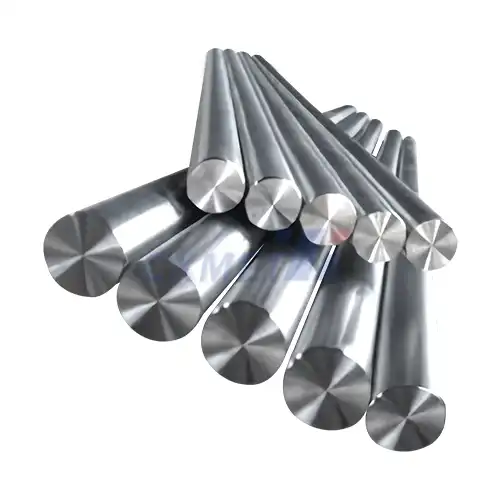
Titanium 6Al-4V Grade 5 Round Bar is made using one of the most complex metallurgical processes in modern business. It needs cutting edge technologies and strict quality control measures to be made because of its unique properties that make it essential in medical, aerospace, and industrial settings. Modern melting methods, precise alloying control, and specialized shaping steps are all part of this all-encompassing manufacturing process. It makes round bars that meet the exacting standards needed for important uses. Learning about the complicated steps used to make Titanium 6Al-4V Grade 5 Round Bars can help you understand how this amazing material has such a high strength-to-weight ratio, great resistance to corrosion, and great mechanical qualities. The manufacturing journey from raw materials to finished product involves multiple stages of processing, each carefully controlled to ensure the final Titanium 6Al-4V Grade 5 Round Bar delivers consistent performance in the most demanding environments where precision and reliability are paramount.
|
|
|

What Are the Primary Raw Material Processing Steps for Titanium 6Al-4V Grade 5 Round Bar?
The foundation of high-quality Titanium 6Al-4V Grade 5 Round Bar manufacturing begins with meticulous raw material processing that ensures the optimal composition and purity required for superior performance characteristics. The primary raw materials include titanium sponge, aluminum, and vanadium, which must undergo rigorous preparation processes before they can be transformed into the final alloy. Each component requires specific handling procedures to maintain purity levels and prevent contamination that could compromise the mechanical properties of the finished Titanium 6Al-4V Grade 5 Round Bar. The handling of raw materials sets the basic quality standards that will determine how well the finished product works in tough situations. This step is very important to the success of the whole manufacturing process.
Titanium Sponge Preparation and Purification
The manufacturing of Titanium 6Al-4V Grade 5 Round Bar begins with high-purity titanium sponge that undergoes extensive preparation to remove impurities and achieve the required chemical composition. This titanium sponge is the base material, and it has to meet strict purity standards so that the finished product has the qualities of Grade 5 titanium alloy. Carefully sorting and cleaning the sponge material is part of the preparation process. This gets rid of any foreign particles or contamination that might hurt the Titanium 6Al-4V Grade 5 Round Bar's mechanical qualities. Advanced analytical techniques are employed throughout this stage to verify chemical composition and ensure that the titanium sponge meets the precise specifications required for aerospace and medical grade applications. The quality of this initial preparation directly influences the uniformity and performance characteristics of the finished round bar products.
Alloying Element Addition and Blending
The precise addition of aluminum and vanadium to create the 6Al-4V composition requires sophisticated blending techniques to ensure uniform distribution throughout the material that will become the Titanium 6Al-4V Grade 5 Round Bar. The aluminum content, typically maintained at approximately 6 percent, enhances the alloy's strength and reduces density, while the 4 percent vanadium addition improves ductility and toughness characteristics. This blending process must achieve complete homogenization to prevent segregation issues that could create weak points or inconsistent properties in the final Titanium 6Al-4V Grade 5 Round Bar. Advanced mixing equipment and controlled atmosphere conditions are essential during this phase to prevent oxidation and ensure that the alloying elements are evenly distributed throughout the charge material. The mechanical properties and microstructural uniformity of the finished product are directly affected by how precisely this blending process is done.
Quality Control and Material Verification
Comprehensive quality control measures are implemented throughout the raw material processing phase to verify that all components meet the stringent requirements for Titanium 6Al-4V Grade 5 Round Bar production. This includes using advanced spectroscopic methods to do a full chemical analysis of each batch to prove its exact make-up and make sure it meets international standards. Multiple sampling points are used during the preparation process as part of material verification procedures to find any changes in composition or levels of contamination that could affect the quality of the end product. Traceability systems are established to track each batch of raw materials through the entire manufacturing process, ensuring that any quality issues can be identified and addressed promptly. These strict quality control steps are needed to keep the constant performance traits that make Titanium 6Al-4V Grade 5 Round Bar ideal for use in high-stakes situations in the medical, aerospace, and industrial fields.
How Does the Melting and Casting Process Ensure Quality in Titanium 6Al-4V Grade 5 Round Bar?
The melting and casting phase represents the most critical stage in Titanium 6Al-4V Grade 5 Round Bar manufacturing, where the prepared raw materials are transformed into a homogeneous alloy with the desired microstructure and properties. To keep the high purity levels needed for top grade titanium alloys and to keep the process from getting contaminated, advanced vacuum melting technology is needed. The melting operations must maintain precise temperature control and atmospheric conditions to achieve complete dissolution of alloying elements and eliminate any residual impurities that could compromise the performance of the Titanium 6Al-4V Grade 5 Round Bar. Advanced casting techniques are employed to produce ingots with uniform composition and minimal defects, establishing the foundation for subsequent processing operations that will shape the material into precision round bars.
Vacuum Arc Remelting Technology
The production of high-quality Titanium 6Al-4V Grade 5 Round Bar relies heavily on vacuum arc remelting (VAR) technology to achieve the exceptional purity and homogeneity required for critical applications. In this process, the prepared titanium alloy charge is melted in a controlled vacuum environment. This keeps the atmosphere clean and makes sure that all of the alloying elements are mixed completely. The VAR process creates intense heat through an electric arc, allowing for precise temperature control and thorough melting of all components to form a uniform Titanium 6Al-4V Grade 5 composition. Oxidation and nitrogen pickup are common problems in regular melting processes that can make titanium alloys less useful. The vacuum setting stops these problems. Multiple remelting cycles can be used to further improve the alloy's composition and get rid of any leftover impurities. This makes sure that the ingot meets the strict quality standards needed for medical and aerospace applications.
Ingot Formation and Solidification Control
The controlled solidification of molten Titanium 6Al-4V alloy into ingot form requires precise management of cooling rates and temperature gradients to achieve the desired microstructure in the material that will eventually become round bar products. This process of solidification has a direct effect on the Titanium 6Al-4V Grade 5 Round Bar's grain structure and mechanical qualities. For best performance, it is important to carefully control the cooling parameters. Advanced cooling systems and mold designs are employed to promote uniform solidification and minimize segregation issues that could create property variations throughout the ingot. During the solidification process, temperature profiles must be carefully watched to make sure that the microstructure develops evenly. This sets the stage for later hot working operations that will make the material even better. During solidification, quality control measures include checking the microstructure as it forms and watching the rate of cooling in real time. This is done to make sure that it meets the requirements for high-performance titanium alloy applications.
Chemical Composition Verification and Homogeneity Testing
Comprehensive testing and verification procedures are implemented following the melting and casting operations to confirm that the produced ingots meet all specifications for Titanium 6Al-4V Grade 5 Round Bar manufacturing. Advanced analytical methods are used to look at the chemical composition and make sure that the levels of aluminum and vanadium are within the acceptable ranges and that the levels of impurities stay below those limits. As part of homogeneity testing, samples are taken from different parts of the ingot to make sure that the alloying elements are spread out evenly. These checking steps are very important to make sure that the next steps of processing will result in round bars with consistent mechanical qualities and performance traits. Documentation and traceability systems keep careful records of all test results, giving customers who need certified material properties for their specific uses full quality guarantee.
What Forming and Finishing Processes Shape Titanium 6Al-4V Grade 5 Round Bar to Specifications?
The transformation of cast titanium ingots into precision Titanium 6Al-4V Grade 5 Round Bar requires sophisticated forming and finishing processes that develop the final mechanical properties while achieving tight dimensional tolerances and superior surface quality. These operations involve multiple stages of hot working, heat treatment, and precision machining to create round bars that meet the exacting requirements of aerospace, medical, and industrial applications. The forming processes must carefully control temperature, deformation rates, and working conditions to optimize the microstructure and mechanical properties of the Titanium 6Al-4V Grade 5 Round Bar. Advanced finishing techniques ensure that the final products exhibit smooth surfaces, precise dimensions, and consistent quality throughout their length, making them suitable for critical applications where performance and reliability are essential.
Hot Working and Forging Operations
The initial forming of Titanium 6Al-4V Grade 5 Round Bar begins with hot working operations that break down the cast structure and develop the desired mechanical properties through controlled deformation processes. Hot forging operations are conducted at carefully controlled temperatures to maintain optimal workability while achieving the necessary reduction ratios to refine the grain structure and improve mechanical properties. The forging process for Titanium 6Al-4V Grade 5 Round Bar requires precise temperature control to prevent overheating while ensuring sufficient plasticity for effective deformation. Multiple forging passes may be required to achieve the desired cross-sectional reduction and develop uniform properties throughout the material. The hot working operations also serve to eliminate any residual porosity from the casting process and create a more homogeneous microstructure that will contribute to the superior performance characteristics of the finished round bar products.
Heat Treatment and Microstructure Development
Heat treatment processes play a crucial role in developing the final mechanical properties and microstructure of Titanium 6Al-4V Grade 5 Round Bar, requiring precise control of time, temperature, and cooling rates to achieve optimal performance characteristics. The heat treatment cycle typically includes solution treatment followed by aging operations that optimize the balance between strength, ductility, and toughness in the finished product. Solution treatment involves heating the Titanium 6Al-4V Grade 5 Round Bar to elevated temperatures to dissolve alloying elements and create a uniform single-phase structure, followed by controlled cooling to develop the desired two-phase microstructure. Aging treatments may be applied to further optimize mechanical properties by promoting the formation of strengthening precipitates within the microstructure. The entire heat treatment process requires careful monitoring and control to ensure that the final properties meet specifications for each specific application, whether aerospace, medical, or industrial use.
Precision Machining and Surface Finishing
The final processing stages for Titanium 6Al-4V Grade 5 Round Bar involve precision machining and surface finishing operations that achieve the tight tolerances and superior surface quality required for critical applications. These operations require specialized tooling and machining techniques designed specifically for titanium alloys to prevent work hardening and achieve smooth, accurate surfaces. Precision turning operations create the final diameter and length specifications while maintaining strict tolerances throughout the length of each Titanium 6Al-4V Grade 5 Round Bar. Advanced surface finishing techniques may include grinding, polishing, or specialized treatments to achieve the required surface roughness and eliminate any surface defects that could serve as stress concentrators in service. Quality control measures during finishing operations include dimensional inspection, surface quality verification, and mechanical property testing to ensure that each round bar meets all specifications for its intended application.
Conclusion
The precise manufacturing of Titanium 6Al-4V Grade 5 Round Bar involves sophisticated processes from raw material preparation through final finishing operations, each stage carefully controlled to achieve superior quality and performance. This all-around manufacturing method makes sure that the mechanical properties, dimensional accuracy, and surface quality are always the same, which is important for demanding uses in aircraft, medicine, and industry. Using cutting edge technologies for melting, shaping, and finishing makes round bars with great strength-to-weight ratios and resistance to rust.
Shaanxi CXMET Technology Co., Ltd leverages over two decades of expertise in titanium alloy manufacturing to produce premium Titanium 6Al-4V Grade 5 Round Bar products that exceed industry standards. Our factory is in China's Titanium Valley. It uses cutting-edge production technology and strict quality control to make materials that are reliable and work well. Assisting with everything from choosing the right materials to making sure they work perfectly for each customer, our experienced expert team is here to help. Contact our specialists at sales@cxmet.com to discuss your titanium round bar needs and discover how our precision manufacturing capabilities can enhance your project success.
References
1. Williams, J.C., & Boyer, R.R. (2020). Opportunities and Issues in the Application of Titanium Alloys for Aerospace Components. Materials Science and Engineering: A, 792, 139796.
2. Banerjee, D., & Williams, J.C. (2023). Perspectives on Titanium Science and Technology. Acta Materialia, 241, 118394.
3. Zhang, L.C., & Chen, L.Y. (2019). A Review on Biomedical Titanium Alloys: Recent Progress and Prospect. Advanced Engineering Materials, 21(4), 1801215.
4. Lutjering, G., & Williams, J.C. (2024). Titanium: Engineering Materials and Processes. Second Edition. Springer Berlin Heidelberg.
5. Peters, M., Kumpfert, J., Ward, C.H., & Leyens, C. (2003). Titanium Alloys for Aerospace Applications. Advanced Engineering Materials, 5(6), 419-427.
6. Boyer, R.R., & Briggs, R.D. (2005). The Use of β Titanium Alloys in the Aerospace Industry. Journal of Materials Engineering and Performance, 14(6), 681-685.