knowledges
How to Choose and Import an MMO Tubular Titanium Anode
2026-09-01 17:17:00
To pick and bring in an MMO Tubular Titanium Anode, you need to know about its electrical properties, check the supplier's skills, and learn how to deal with the rules of foreign trade. These anodes are made of mixed metal oxide coatings and titanium, which makes them very strong and resistant to corrosion. They work very well for cathodic protection, treating seawater, and industrial electrolysis. To choose the best anode, you need to look at the coating's composition, its size, and the supplier's certifications. You also need to make sure that the import process goes smoothly so that you can get the best operational performance and value for your money.
|
|
|

Introduction
Corrosion protection options that are effective and can handle tough conditions are needed in modern industrial settings like naval infrastructure, chemical processing, and the oil and gas industry. MMO tube titanium anodes have become important parts of electrochemical systems because they work so well in a wide range of situations, from protecting steel piles on wharves to deep well cathodic protection systems. If purchasing managers and experts want to get the most out of their buying strategies, they need to know about the technical specs, performance traits, and source factors.
This helpful guide tells you everything you need to know to choose and import these special anodes. We talk about the problems that procurement professionals face when they have to judge the quality of a product, check the credentials of a supplier, and handle international logistics. No matter if you're in charge of maintaining offshore platforms, upgrading cathodic protection systems, or choosing parts for chemical tank farms, this guide will help you make better decisions and make sure your procurement goes smoothly.
Understanding MMO Tubular Titanium Anodes and Their Working Principle
The Fundamental Design and Structure
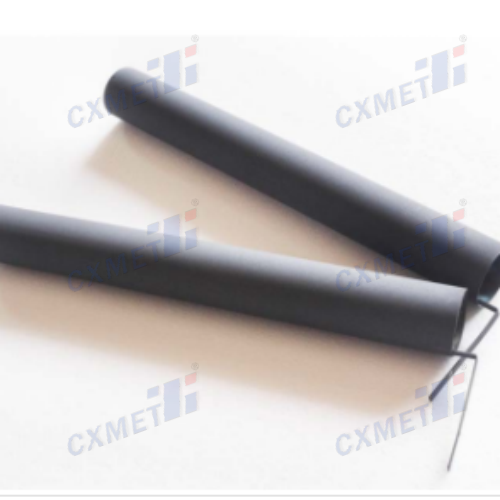
The MMO cylindrical titanium anodes have a Grade 1 or 2 titanium base that is covered with a carefully designed mixed metal oxide catalyst layer. The titanium base gives it great mechanical strength and chemical resistance. The MMO layer, which is usually made up of iridium-tantalum or ruthenium-iridium mixes, is what makes the surface electrochemically active. When compared to flat plate designs, this tubular geometry greatly increases the effective surface area. This makes it easier for current to flow through the protected structure. The coating's thickness and make-up are carefully adjusted to find the best balance between performance and durability. Depending on the application and design life needs, coating loads usually range from 1g/m² to 20g/m².
Electrochemical Operating Principles
An outside power source sends a protective current from the anode through the electrolyte to the structure that needs to be protected. This is how impressed current cathodic protection works. The MMO catalyst helps electrochemical processes happen at the anode surface with a very low overpotential. This means that less energy is used than with other anode materials. The coating helps chlorine evolution reactions happen in places with a lot of chloride, like seawater. But the iridium-tantalum formulations work better for oxygen evolution in places like soil-based systems. This electrochemical efficiency means that these anodes can handle up to 10 kA/m² of operational current in water. This means that they can be used in both continuous and intermittent protection systems with pH levels ranging from 0 to 14.
Advantages Over Traditional Anode Technologies
In comparison to regular graphite, lead, or disposable anodes, MMO Tubular titanium Anode forms are much better for working in factories. Graphite anodes wear out quickly and need to be replaced often, while lead-based options are bad for the environment and don't work well mechanically. The physical stability of MMO anodes doesn't change much over the course of their useful life, which can be anywhere from 20 to 75 years, based on how they are used. When compared to other technologies, the low chlorine evolution overpotential cuts power use by 15–30%, which saves a lot of money over the life of the anode. Because of these performance traits, MMO tubular anodes are the best choice for engineers who want to protect against corrosion in harsh environments in a reliable and cost-effective way.
Criteria to Consider When Choosing an MMO Tubular Titanium Anode
Coating Composition and Performance Characteristics
The catalyst formulation determines which applications the anode can be used for and has a direct effect on its operational lifetime. Ruthenium-iridium films work best in places where chlorine is released, like when sodium hypochlorite is made or when saltwater is used for cathodic protection, and they work best when the chloride level is more than 1000 parts per million. Iridium-tantalum mixtures work better for releasing oxygen in acidic environments, such as in electrowinning processes and cathodic protection systems that are built on dirt. To choose the right coating, you need to look at your electrolyte chemistry, which includes the chloride levels, pH range, organic content, and temperature extremes. Extra care should be taken with fluoride levels above 50 ppm, as they can attack the titanium substrate aggressively and need special protective layers or different substrate materials to make sure they last long enough.
Dimensional Specifications and Customization Options
Standard tube anodes come in lengths of up to 3 meters and widths ranging from 10 mm to 100 mm. In many workplace situations, though, unique sizes that fit the needs of the system are better. For deep well uses, lengths that are longer than what is normally available may be needed. For sea building safety, diameter-to-length ratios that are just right for current flow may be needed. You can connect things in several ways, such as with threaded ends for mechanical assembly, welded ends for permanent installations, or special connection designs made for specific mounting situations. When choosing the measurements, you should think about the current flow that is needed, the mounting space that is available, the conductivity of the electrolyte, and how easy it is to do upkeep. This will help you make sure that the shape you choose provides enough safety and can be used for a long time.
Material Quality and Manufacturing Standards
The quality of the substrate material has a big effect on how well and how reliably something works in the long term. In its cleanest form, Grade 1 titanium is better at resisting rust, while Grade 2 titanium has slightly higher mechanical strength with almost no purity loss. Trustworthy makers follow international rules, like ASTM B265 for titanium products and NACE TM0108 for checking cathodic protection components. To apply the coating, the surface must first be carefully prepared by sanding and chemical etching. This is followed by thermal breakdown coating methods that make sure the catalyst is spread out evenly. Manufacturers of good products give full certifications for the materials they use, reports on the analysis of the coatings, and data from accelerated life tests that show how well the products work in real-life situations. Demand proof that the product meets the necessary industry standards and ask for testing results from a third party when they are available.
Supplier Reliability and Technical Support Capabilities
When you work with an experienced manufacturer, you can get technical help at any time during the lifecycle of your product. Check out potential suppliers by looking at how long they've been making things out of non-ferrous metals, especially titanium processing and MMO coating. A good supplier should have professional technicians who know about electrochemical systems and can give advice on the best coatings, the best ways to optimize dimensions, and the best ways to install them. Look for companies that offer customized solutions instead of just stock goods. This shows that they can meet the specific needs of your application.
Step-by-Step Guide to Importing MMO Tubular Titanium Anodes
Supplier Identification and Qualification
Make a short list of possible makers who have experience making MMO anodes before you start the buying process. Find out what kinds of factories your suppliers have, paying special attention to the ones that have titanium processing facilities and coating application lines that they use themselves. Ask for detailed information about the company, such as how long it has been in business, how much it can produce, any quality standards (like ISO 9001), and client references from similar businesses. Shaanxi CXMET Technology Co., Ltd. was founded in 2005 in China's Titanium Valley. It is an example of a specialized manufacturer that combines a deep understanding of materials science with cutting-edge processing skills for titanium and other non-ferrous metals. Check to see if each individual has the right technical support team skills, can answer technical questions quickly, and is ready to offer unique solutions that meet the needs of your application.
Technical Specification Development and Quote Requests
Make detailed technical specifications for MMO Tubular titanium anodes that list all of your exact needs, such as the grade of the substrate, the type of coating, the dimensions, the connection methods, and the amount you need. Include details about the working conditions, including the required current density, the electrolyte's make-up, the temperature range, and the estimated service life. Give these details to the providers you've chosen and ask for official quotes that include unit prices, minimum order amounts, wait times, and payment terms. Different manufacturers have very different minimum order quantities (MOQs). Some need large quantities of standard products, while others can handle smaller orders with specific requirements. If you can, ask for samples to check the quality of the connections, coating uniformity, and accuracy of measurements before making large purchases. When you compare quotes, you should look at more than just the unit price. You should also look at the technical skills, the ability to customize, and the supplier's support services.
Import Compliance and Documentation Requirements
When you want to import titanium products, you have to deal with customs rules and make sure you have the right paperwork. Make sure that your provider can give you all the paperwork you need for exporting, such as business bills, packing lists, certificates of origin, and material test results. Most of the time, MMO anodes are classified under certain HS codes for titanium goods. These codes set the taxes and import limits that apply. Find out what the rules are in your country about importing titanium and see if there are any license requirements or limited uses. Depending on what you want to use it for, you may need environmental safety certifications like RoHS for electronics or specific certifications for marine equipment. Work with expert freight forwarders who know how to ship industrial metals. They can give you advice on the best ways to ship, how to get insurance, and how to clear customs so that you can cut down on travel times and avoid delays at ports of entry caused by missing paperwork.
Logistics Planning and Quality Verification
Plan shipping so that the anodes are safe while they're traveling across foreign borders. If the MMO layer gets damaged, it can affect how well they work. Tubular anodes need to be packed safely so they don't bend or get damaged by impacts. This is usually done with custom crating and foam protection for the treated surfaces. Set clear Incoterms with your seller that spell out when duty shifts and who is responsible for what during shipping. When it gets there, do a full incoming inspection that checks the quality of the connections, the accuracy of the measurements, and the integrity of the coating. Set up quality control processes for arriving products, such as checking for flaws in the finish, making sure the dimensions are correct, and testing for electrical connection. Any problems should be written down right away, and you should talk to your supplier to solve them before installation. Keeping detailed records of what you receive sets you up for responsibility and helps with insurance claims if there are problems with performance during operational deployment.
Comparing MMO Tubular Titanium Anodes with Alternative Anode Types
Performance Advantages Over Graphite Anodes
Graphite anodes have been used for cathodic protection for many years, but they have a lot of problems when compared to MMO technology. Graphite wears out at a rate of 0.5 to 1.5 kg per ampere-year, so it needs to be replaced often, which raises the cost of ownership and disrupts operations. Graphite is brittle, so it can be broken by machines while it is being installed or used, especially in places with a lot of flow. The size of MMO tube anodes stays the same over time, and the rate of wear is recorded in nanometers per year instead of kilos. This stability makes sure that the current flow is always the same and gets rid of the speed drop that comes with using up graphite. Another important benefit is that MMO coatings use 20–35% less power than graphite in similar situations. This means that over the 20–50-year design life of properly designed MMO systems, users will save a lot of money on operating costs.
Cost-Effectiveness Compared to Platinum Anodes
The platinum and platinized titanium anodes work very well and last a long time, but they are very expensive, so they can only be used in certain situations. Platinum anodes are 5–10 times more expensive per amp than similar MMO options. This makes it hard to do large-scale cathodic protection projects. Platinum has a lifespan that is almost infinite, but the long life of properly designed MMO anodes—which can be anywhere from 20 to 75 years based on the working conditions—is long enough for most commercial uses. The difference in performance between platinum and optimized MMO formulations has shrunk a lot as coating technology has improved.
Environmental and Safety Benefits Versus Lead Anodes
Lead-based anodes are still used in some situations, but they are becoming less and less accepted in modern industrial settings because they are bad for the environment and people's health. Lead corrodes goods pollute the environment, which means that cleanup tasks need to be done and regulations may be broken. Because lead is poisonous, it needs to be handled in a certain way during installation, upkeep, and removal, which raises the cost of work and the risk of responsibility. These worries are taken away by MMO tubular titanium anodes, because titanium and the oxide coatings are very good at being compatible with the environment and don't release any harmful byproducts when they dissolve. Exhausted MMO anodes are easier to get rid of because they are not active anymore, and the titanium substrate still has a lot of value as scrap that can be recycled. When the covering wears off, the base can be reused, recoated, and put back into service for about 30 to 50 percent of the cost of a new anode. This creates a chance for the circular economy that isn't possible with technologies that use disposable anodes.
Maximizing the Value of Your MMO Tubular Titanium Anode Investment
Preventive Maintenance and Performance Monitoring
Establishing a systematic inspection and monitoring program extends anode life and prevents unexpected failures. Implement quarterly visual inspections examining connections for corrosion, mechanical integrity, and electrical continuity. Monitor cell voltage or protective current output, as increasing voltage typically indicates coating depletion or surface passivation. For critical applications, maintain detailed performance logs tracking current output, voltage requirements, and environmental conditions to identify performance trends before failures occur. Clean anodes periodically when operating in environments with scaling tendencies, using appropriate methods that preserve coating integrity. In chloride-rich waters, biological fouling can occur on anode surfaces, reducing effective area and increasing operating voltage. Addressing fouling through mechanical cleaning or brief current reversal cycles restores performance without damaging the catalyst layer.
Recognizing End-of-Life Indicators and Planning Replacements
Understanding operational signatures of coating depletion enables proactive replacement planning before complete failure. Gradually increasing voltage requirements at constant current output signal coating thinning, while rapid voltage increases suggest coating breakthrough and titanium passivation. The typical design life ranges from 2 to 25 years, depending heavily on operating current density, electrolyte composition, temperature, and coating loading. Higher current densities accelerate coating consumption, with each doubling of current density approximately halving the operational life. Fluoride content above 50 ppm dramatically reduces lifespan through titanium substrate attack. When end-of-life indicators appear, evaluate recoating options versus complete replacement. The recoating process involves chemical cleaning, sandblasting, surface preparation, and application of fresh catalyst layers, typically costing 30-50% less than new anode purchases while delivering comparable performance in the renewed unit.
Leveraging Supplier Technical Support and Warranty Coverage
Establishing a collaborative relationship with your anode supplier provides valuable resources beyond the initial purchase. Experienced manufacturers like CXMET offer technical consultation addressing operational challenges, performance optimization, and troubleshooting assistance when issues arise. Take advantage of these support services by maintaining open communication channels and sharing operating data that enables informed recommendations. Review warranty terms carefully, understanding coverage duration, performance guarantees, and claim procedures. Quality suppliers stand behind their products with warranties reflecting confidence in manufacturing quality and coating durability. When performance issues emerge, document operating conditions thoroughly and engage supplier technical teams promptly to diagnose root causes. This collaborative approach often identifies corrective actions that restore performance or leads to warranty replacements when manufacturing defects are confirmed.
Conclusion
Selecting and importing MMO tubular titanium anodes requires balancing technical specifications, supplier capabilities, and procurement logistics to achieve optimal performance and value. Understanding coating chemistry, dimensional requirements, and application-specific considerations ensures the anodes you specify deliver reliable cathodic protection throughout their extended operational life. By partnering with experienced manufacturers offering technical expertise and comprehensive support, you minimize procurement risks while accessing customized solutions tailored to your unique requirements. The superior performance, longevity, and environmental compatibility of MMO technology compared to traditional alternatives justify the investment for industries demanding reliable corrosion protection in challenging environments.
FAQ
What lifespan can I expect from an MMO tubular anode in my application?
Operational life varies from 2 to 25 years based on current density, electrolyte chemistry—particularly fluoride and organic levels—and operating temperature. Anodes operated at lower current densities in benign electrolytes achieve the longest service life. Consulting with experienced suppliers during specification development helps establish realistic lifespan expectations for your specific conditions.
Can these anodes function in fluoride-containing environments?
Standard MMO tubular titanium anodes experience accelerated degradation in fluoride concentrations exceeding 50 ppm, as fluoride ions attack the titanium oxide passive layer and substrate. Applications with significant fluoride content require specialized protective interlayers or alternative substrate materials. Discuss electrolyte composition transparently with suppliers to ensure appropriate anode specification.
What's the difference between Ru-Ir and Ir-Ta coating formulations?
Ruthenium-iridium coatings optimize performance for chlorine evolution applications, including sodium hypochlorite generation and seawater cathodic protection. Iridium-tantalum formulations excel in oxygen evolution environments, particularly in highly acidic conditions found in electrowinning operations. Matching coating chemistry to your electrochemical application ensures optimal efficiency and longevity.
Is recoating a viable option when coating depletion occurs?
Absolutely. Once the MMO coating exhausts, the titanium substrate undergoes chemical cleaning, sandblasting, and receives fresh catalyst application. This recoating process typically costs 30-50% less than purchasing new assemblies while delivering comparable performance, making it an economically attractive option for lifecycle management.
What certifications should I require from suppliers?
Demand compliance documentation for ASTM B265 titanium material standards and NACE TM0108 cathodic protection testing protocols. Quality suppliers provide material certifications, coating analysis reports, and accelerated life testing data. Third-party certifications like ISO 9001 indicate robust quality management systems supporting consistent manufacturing quality.
Partner with CXMET for Reliable MMO Tubular Titanium Anode Solutions
Shaanxi CXMET Technology Co., Ltd. brings over 20 years of specialized expertise in non-ferrous metal production, operating from China's renowned Titanium Valley. Our team of more than 80 professional technicians develops customized MMO tubular titanium anode solutions engineered for your specific application requirements. We manufacture anodes using Grade 1 and 2 titanium substrates with precisely formulated MMO coatings optimized for marine, chemical processing, oil and gas, and industrial cathodic protection applications. Our comprehensive technical support guides you through specification development, installation best practices, and ongoing performance optimization. As a trusted MMO Tubular Titanium Anode manufacturer, we maintain rigorous quality standards, ensuring dimensional accuracy, coating uniformity, and long-term reliability. Contact our team at sales@cxmet.com to discuss your cathodic protection requirements and receive personalized technical recommendations backed by decades of materials science expertise and proven performance across demanding industrial environments.
References
1. Morgan, J. (2019). Impressed Current Cathodic Protection: Design and Application Principles. NACE International Press.
2. Chen, S. & Liu, W. (2021). "Performance Characteristics of Mixed Metal Oxide Coated Titanium Anodes in Marine Environments." Journal of Electrochemical Society, 168(4), 041502.
3. Baeckmann, W., Schwenk, W., & Prinz, W. (2020). Handbook of Cathodic Corrosion Protection: Theory and Practice of Electrochemical Protection Processes. Gulf Professional Publishing.
4. Trasatti, S. (2018). "Electrocatalysis: Understanding the Success of DSA®." Electrochimica Acta, 45(15-16), 2377-2385.
5. Riemer, D. & Ellis, M. (2022). Titanium and Titanium Alloys: Industrial Applications and Properties. ASM International.
6. International Titanium Association. (2023). Guidelines for Specification and Testing of MMO Coated Titanium Anodes in Industrial Applications. ITA Technical Standards Committee.