knowledges
How to Select the Right Titanium Electrode for Your Application?
2026-06-09 16:52:55
To choose the right titanium electrode, you need to make sure that the substrate titanium electrode grade and the catalyst layer are right for your electrochemical process. To make the right choice, you should first look at your electrolyte chemistry, operating temperature, current density needs, and projected service life. Different industries use Grade 1 or 2 titanium surfaces covered in ruthenium-iridium, iridium-tantalum, or platinum layers for a variety of tasks, such as making chlor-alkali, treating water, and electroplating. By knowing these factors, you can be sure that the electrodes you buy will have the best catalytic efficiency, corrosion protection, and long-term cost savings, without breaking down too soon or wasting energy.
|
|
|
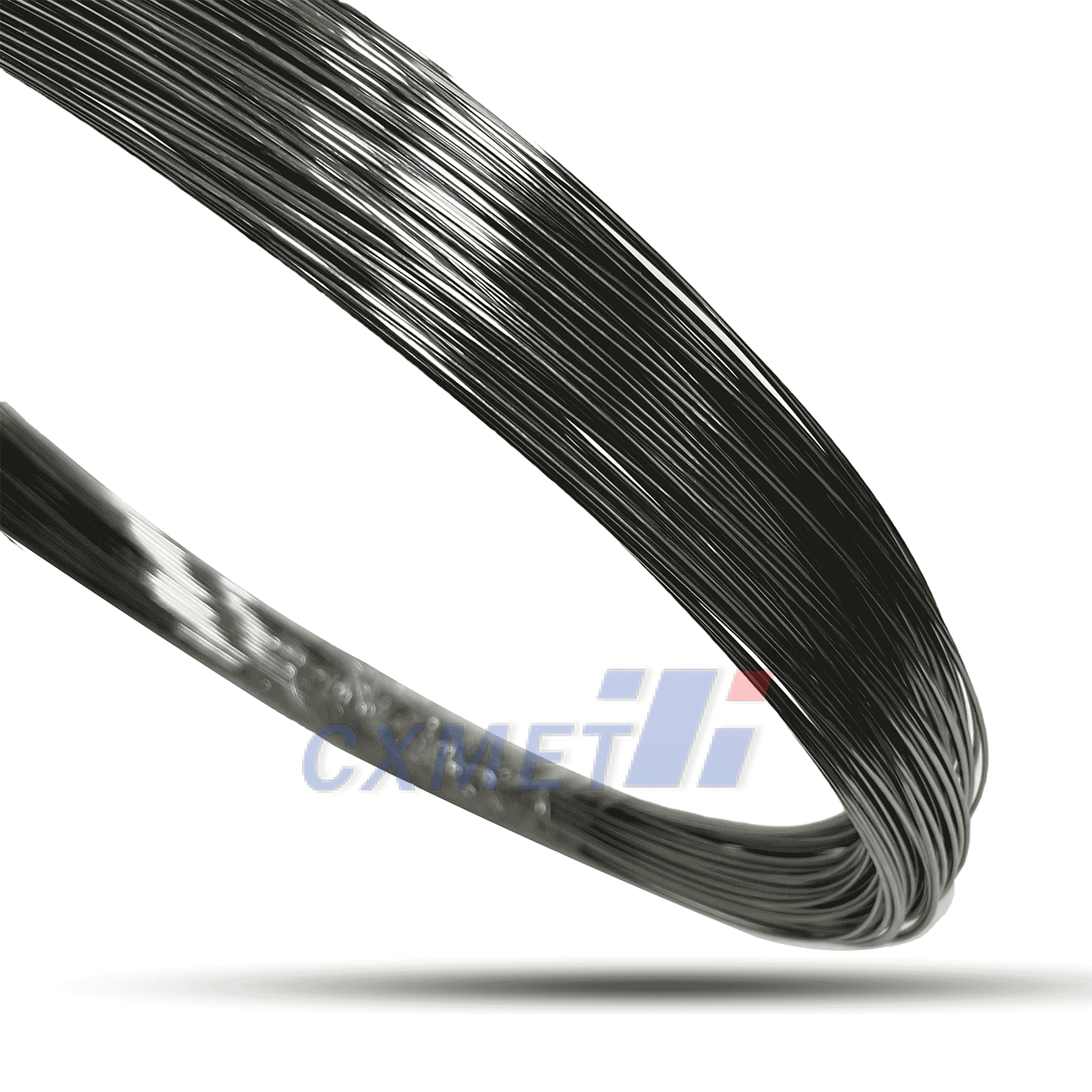

Understanding Titanium Electrodes: Types, Functions, and Benefits
Dimensionally Stable Anodes (DSA), which are also called titanium electrodes, are a big step forward in electrochemical technology. The base of these parts is usually ASTM B265 Grade 1 or 2 high-purity titanium, and they are covered with electrocatalytic mixed metal oxides or valuable metals. The engineering behind these electrodes solves problems that traditional graphite or lead-alloy anodes caused, like using too much anode, having unstable dimensions that make electrode gaps less accurate, and anode sludge polluting the electrolyte. These electrodes are made starting with titanium's natural properties. When properly treated, titanium has great mechanical strength and naturally doesn't rust. It also stays electrically conductive. The coating layer is between 2 and 5 micrometres thick and has chemicals that help reactions happen, like iridium oxide, ruthenium oxide, tantalum oxide, or platinum. This thin but strong layer makes it easier for electrons to move during electrochemical processes and keeps chemicals from attacking the titanium below.
Common Electrode Configurations and Their Applications
Different shapes are needed in industrial processes to get the best surface contact and current spread. Mesh electrodes have a lot of surface area compared to their volume. This makes them perfect for treating water and electrolytic cells that need to spread current evenly over large areas. Plate electrodes are very stable mechanically and are easy to set up in chlor-alkali cells and electroplating tanks. Cylindrical and tubular designs work well in places where room is limited or where flow-through layouts improve process efficiency. Examples include cathodic protection systems and specialised electrolysis units. Each layout meets different operational needs. Mesh patterns work great in systems that make ozone and clean swimming pools because they allow for the most catalytic surface contact, which speeds up reactions. Plate electrodes are used to finish metals when the plating thickness needs to be the same across big parts, and the distance between the electrodes needs to be stable. Tubular versions are used to protect against corrosion in marine environments and underground settings where installation space is limited but long service life is important.
Core Benefits Driving Industrial Adoption
Titanium-based anodes have more benefits than just replacing materials. If these electrodes are resistant to corrosion in harsh chemical conditions, like highly acidic electroplating baths or caustic chlor-alkali solutions, they will stay the same size for as long as they are used. This steadiness gets rid of the slow electrode degradation that happens with graphite anodes, which lose particles that contaminate electrolytes and lower the quality of the product. Another great benefit is that it saves energy. When electrodes are properly coated, the low overpotential makes the voltage needed to drive electrochemical processes lower. This directly leads to lower electricity use. This improvement in efficiency of the titanium electrode can cut annual energy costs for big operations that run all the time. The longer service life—often more than five years under normal conditions—reduces the need for replacement more often, cuts down on production downtime, and lowers the total cost of ownership compared to technologies that use disposable electrodes.
Key Criteria for Selecting the Right Titanium Electrode
Matching electrode specifications to your specific process requirements determines whether your investment delivers expected performance or leads to premature failure and operational frustration. The selection process involves evaluating several interconnected factors that influence both immediate functionality and long-term reliability.
Aligning Electrode Type with Industry Requirements
Electrochemical problems in different fields are unique and need custom answers. When valuable metals are being plated or when electrolyte purity is very important, platinum-coated electrodes are better. The platinum coating stops the dissolution of metal oxides that could contaminate sensitive plating baths. This keeps the quality and brightness of the deposits uniform. Ruthenium-iridium coatings are most common in chlor-alkali production and industrial wastewater treatment, where chlorine evolution happens. This is because they are better at releasing chlorine and resisting attack by chloride. Iridium-tantalum coatings are often used in chemical processing and pharmaceutical manufacturing because they are very stable in acidic environments and organic electrolytes. Water treatment plants that deal with changing water chemistry, like mixed metal oxide coatings, are flexible and don't get clogged up even when the amount of contaminants in the water changes. Coating choice is based on knowing your main electrochemical process, such as oxygen evolution, chlorine generation, or metal deposition.
Cost Analysis Beyond Initial Purchase Price
When making purchases, choices that weigh the initial cost against the total cost of ownership lead to better long-term value. A cheaper electrode with a thin enough coating or a poorly prepared base could fail within months, needing to be replaced and causing production losses that are much higher than any savings that were made at first. On the other hand, specifying too much electrode capacity or coating thickness for mild operating conditions wastes capital on performance margins that aren't needed. Buying in bulk usually saves money, but it also requires storage space and capital that is stuck in inventory. Building ties with dependable manufacturers who keep standard configurations in stock can save you money without adding to your inventory. Custom electrode solutions cost more than standard ones, but they don't have the performance problems that come with adapting standard goods to specific needs. When figuring out the return on investment, you should take into account the energy savings that come from being more efficient, replacing things less often, and not having to stop production.
Comparing Titanium Electrodes with Other Electrode Materials
Understanding how titanium-based anodes stack up against alternative electrode materials clarifies when this technology represents the optimal choice and when alternatives might prove more suitable.
Performance Comparison: Titanium vs. Graphite Electrodes
Before DSA technology came along, graphite anodes were the most common electrochemical process, and they are still useful in some situations. Graphite has a cheap initial cost and works well enough in some electrowinning and cathodic protection situations. However, graphite is constantly being used up during operation, which causes electrode sizes to shrink and inter-electrode gaps to widen. This means that the electrodes have to be replaced often, and the carbon particles they produce contaminate the fluids and products. Titanium electrodes stay the same size throughout their service life, so there is no change in the gap and the current flows evenly. This stability is especially useful in precision electroplating, where stable electrode positioning is needed to keep the deposit thickness the same across complicated part geometries. Titanium electrodes with catalytic coats can also work at lower cell voltages than graphite, which can cut energy use by 10–20% in many situations. Even though graphite's low initial cost seems appealing, titanium electrodes are usually better for continuous industrial processes because they use less energy and don't need as much replacement labour.
Operational Efficiency and Compliance Standards
Modern factories' titanium electrodeare under more and more pressure to use less energy and have less of an effect on the world. Both goals can be reached with titanium electrodes because of how they work. When the overpotential is lower, less electricity is used. This lowers both running costs and carbon emissions in places where fossil fuels are used to make electricity. Getting rid of anode materials that are only used once lowers the amount of trash that needs to be thrown away. To meet regulatory requirements, industries like pharmaceutical manufacturing and food processing need materials that are very pure and don't contain any contaminants. When titanium electrodes are kept in good shape, they don't make any particles dirty or add any metal impurities to process streams. This benefit of cleaning is especially useful when making ultra-pure water, pharmaceutical intermediates, or electronic parts, because even a small amount of contamination can lower the quality or yield of the final product.
Maintenance, Cleaning, and Longevity Tips for Titanium Electrodes
Maximising electrode lifespan and maintaining consistent performance requires implementing proper maintenance protocols. While titanium electrodes demand less maintenance than consumable alternatives, neglecting basic care accelerates coating degradation and leads to premature failure.
Effective Cleaning Procedures and Schedules
Electrode surfaces accumulate scale, organic deposits, and reaction byproducts during operation that insulate the catalytic coating and increase operating voltage. Regular cleaning restores performance and prevents buildup from causing permanent coating damage. The cleaning approach depends on the deposit type and your process chemistry. For inorganic scale deposits, mild acid cleaning effectively dissolves calcium, magnesium, and iron compounds without attacking the electrode coating. A 5-10% hydrochloric acid solution at ambient temperature removes most mineral scale when electrodes are soaked for 30-60 minutes. Organic deposits respond to alkaline cleaning solutions or specialised surfactant formulations designed for electrode cleaning. Mechanical cleaning with soft brushes removes loosely adherent deposits, but aggressive scrubbing with abrasive materials damages the catalytic coating and should be avoided. Establishing a cleaning schedule based on your process characteristics prevents excessive buildup—operations in hard water or high-organic-content electrolytes may require weekly cleaning, while others function effectively with monthly or quarterly maintenance.
Preventing Common Operational Pitfalls
Several operational practices significantly impact electrode longevity. Operating above rated current density accelerates coating wear through excessive local heating and mechanical stress from vigorous gas evolution. Allowing electrolyte levels to drop below electrode surfaces during operation causes localised overheating and rapid coating failure in the exposed areas. Frequent polarity reversals stress coatings not designed for cathodic operation, potentially causing coating delamination. Power supply characteristics also influence electrode life. Voltage transients and current surges create localised hot spots that accelerate coating degradation. Installing properly sized rectifiers with surge protection extends electrode life and improves process consistency. Maintaining electrolyte chemistry within specified ranges prevents accelerated attack on certain coating types—fluoride contamination particularly damages some mixed metal oxide coatings while having minimal impact on others.
Extending Service Life Through Best Practices
Implementing several straightforward practices substantially extends operational life. Ramping the current gradually during startup rather than applying the full load instantly reduces thermal shock stress on the coating-substrate interface. Maintaining adequate electrolyte circulation prevents localised concentration gradients that can create aggressive chemical conditions at electrode surfaces. Monitoring cell voltage provides early warning of electrode degradation—a gradual voltage increase over time indicates coating wear that allows planning replacement during scheduled maintenance rather than responding to unexpected failure. Proper storage of spare electrodes preserves coating integrity. Electrodes should be stored in clean, dry conditions away from potential mechanical damage. Periodic inspection of installed electrodes identifies developing issues before they cause failure. Visual inspection reveals coating delamination, mechanical damage, or connection problems. Electrical testing comparing voltage distribution across electrode arrays identifies individual electrodes developing higher resistance before complete failure occurs.
Sourcing and Procurement Strategies for Titanium Electrodes
Securing reliable suppliers who deliver consistent quality affects not only initial project success but long-term operational reliability. The procurement approach should balance immediate project requirements with the titanium electrode, establishing supplier relationships that support ongoing operational needs.
Identifying Reputable Manufacturers and Suppliers
Quality differences between electrode makers have a big effect on how well they work and how long they last. Reputable makers keep a close eye on quality from the time the substrate is prepared until the final inspection. Preparing the substrate surface before applying the coating has a big effect on how well it sticks and how regular it is. Manufacturers who skip this step make electrodes that are more likely to fail early from coating failure. To get the right coating qualities, the process of applying the coating needs to precisely control the temperature, atmosphere, and make-up of the precursor solution. Certifications are objective proof of a company's ability to make things and its quality control methods. Although ISO 9001 certification doesn't directly address electrode manufacturing competency, it does show that quality management practices have been used for a long time. Certifications specific to the industry and meeting ASTM standards for titanium materials show that the material is technically advanced. Documentation from a third-party testing the coating's thickness, adhesion strength, and electrical performance is a solid sign of the product's quality. The most accurate way to tell if a supplier's goods meet your needs is to ask for samples that can be tested in the conditions of your specific application.
Evaluating OEM Capabilities and Client References
Manufacturers offering custom electrode design and fabrication capabilities provide value beyond standard product supply. Complex electrochemical cells often require electrodes with specialised geometries, connection configurations, or coating compositions unavailable as standard products. Suppliers with in-house engineering support can optimise electrode design for your specific application, potentially improving performance or reducing costs compared to adapting standard products. Client references and case studies reveal how suppliers perform beyond the initial sale. Long-term customer relationships indicate consistent product quality and responsive technical support. Speaking directly with existing clients in similar industries provides insights into delivery reliability, technical support responsiveness, and how suppliers handle the inevitable issues that arise in complex industrial applications. Be cautious of suppliers unable or unwilling to provide verifiable references—this often indicates limited experience or problematic customer relationships.
Best Practices for International and Bulk Procurement
Buying electrodes from other countries can save you money, but it can also make things more difficult to manage and make sure the quality is good. Longer lead times mean that accurate demand forecasts and buffer stock are needed to keep production from stopping. Shipping costs and import duties can change the total landed cost, which could make price benefits less useful. When you sign a long-term supply deal in a foreign currency, the costs can change, and it can be harder to make sure the quality of the goods when the international suppliers are far away. Misunderstandings about requirements can be avoided by setting clear technical specs and acceptance criteria. By requiring inspection and testing records before shipping, you can be sure that the goods meet the requirements before paying for shipping and import taxes. Dealing with suppliers that have regional distribution or technical support is more responsive than dealing only with factories far away. Bulk purchasing strategies should weigh volume discounts against the cost of keeping inventory and the risk of items becoming obsolete. If you store electrodes correctly, they will last forever. This means that you can buy a lot of them if you have the money and space. Blanket purchase orders with scheduled releases help you get better prices on large orders while reducing the amount of goods you need to buy. When you work with suppliers on a consignment basis, they keep inventory at or near your building. This saves you money on storage costs and makes sure you can get products right away.
Conclusion
Selecting appropriate titanium electrodes fundamentally impacts your electrochemical process efficiency, operating costs, and product quality. The selection process requires understanding your specific application requirements—including electrolyte chemistry, current density, and operating temperature—then matching these needs with suitable substrate grades and coating compositions. While titanium electrodes command a higher initial investment than traditional alternatives, their dimensional stability, energy efficiency, and extended service life typically deliver superior total cost of ownership. Implementing proper maintenance practices and establishing relationships with capable suppliers ensures your electrode investment delivers expected performance throughout its operational life, supporting your production goals and quality standards.
FAQ
1. What coating type works best for chlor-alkali applications?
Ruthenium-iridium oxide coatings demonstrate superior performance in chlor-alkali service due to their exceptional chlorine evolution efficiency and resistance to chloride attack. This coating composition maintains catalytic activity in the aggressive conditions typical of chlorine production cells. Operating at moderate current densities with proper electrolyte management, these electrodes typically achieve 5-8 years of service life. Some manufacturers offer enhanced coating formulations with additional oxide components that further extend longevity in particularly demanding chlor-alkali operations. Consulting with your electrode supplier about your specific cell design and operating parameters ensures you specify the optimal coating for your conditions.
2. How do I know when electrodes need replacement?
Progressive cell voltage increases over time provide the most reliable indicator of electrode degradation. Monitoring voltage trends allows planning replacement during scheduled maintenance rather than reacting to sudden failure. A 15-20% voltage increase from initial operating levels typically indicates significant coating wear, warranting replacement. Visual inspection during maintenance reveals coating delamination, discolouration, or mechanical damage requiring attention. Comparing electrical resistance across multiple electrodes in array installations identifies individual units degrading faster than others. Establishing baseline performance metrics when installing new electrodes enables meaningful comparison as the installation ages, supporting data-driven replacement decisions rather than arbitrary time-based schedules.
3. Can damaged electrodes be recoated rather than replaced?
Specialised service providers offer electrode recoating services that can extend useful life at a lower cost than complete replacement. The recoating process involves removing the remaining original coating, inspecting and preparing the substrate surface, and then applying fresh catalytic coating. Successful recoating depends on substrate condition—repeated recoating eventually degrades substrate surface quality, reducing coating adhesion and performance. Economic analysis comparing recoating costs, additional processing required to return electrodes to service providers, and downtime against new electrode costs determines whether recoating makes financial sense for your operation. Many operations find the first recoating economically attractive while subsequent recoating attempts provide diminishing returns, making new electrode purchase more cost-effective.
Partner with CXMET for Superior Titanium Electrode Solutions
Selecting the optimal electrochemical components demands both technical titanium electrode expertise and manufacturing excellence. CXMET specialises in producing high-performance titanium electrodes engineered specifically for demanding industrial environments across marine, oil and gas, chemical processing, and water treatment sectors. Our electrodes utilise Grade 1 and 2 titanium substrates conforming to ASTM B265 standards, coated with precisely controlled layers of iridium oxide, ruthenium oxide, or platinum tailored to your application requirements. With customizable dimensions, coating compositions, and electrode configurations, we deliver solutions optimised for your specific process conditions rather than forcing you to adapt standard products. Our technical team provides application support throughout your procurement process, helping you specify electrodes that maximise performance and service life while optimising your investment. Whether you need standard plate electrodes for established processes or custom mesh configurations for specialised applications, CXMET serves as your reliable titanium electrode manufacturer and supplier. Contact our team at sales@cxmet.com to discuss your requirements and discover how our electrode solutions enhance your operational efficiency.
References
1. Comninellis, C., & Chen, G. (2010). Electrochemistry for the Environment. Springer Science & Business Media.
2. Trasatti, S. (2000). Electrocatalysis: understanding the success of DSA. Electrochimica Acta, 45(15-16), 2377-2385.
3. Martelli, G. N., Ornelas, R., & Faita, G. (1994). Deactivation mechanisms of oxygen-evolving anodes at high current densities. Electrochimica Acta, 39(11-12), 1551-1558.
4. Beer, H. B. (1980). The invention and industrial development of metal anodes. Journal of the Electrochemical Society, 127(8), 303C-307C.
5. Kuhn, A. T., & Chan, C. Y. (1983). pH changes at near-electrode surfaces. Journal of Applied Electrochemistry, 13(2), 189-207.
6. Chen, X., Chen, G., & Yue, P. L. (2000). Stable Ti/IrOx-Sb2O5-SnO2 anode for O2 evolution with low Ir content. The Journal of Physical Chemistry B, 105(20), 4623-4628.