knowledges
Is Gr7 Titanium Rod Certified for Chemical Processing Applications?
2026-10-29 16:40:41
Gr7 Titanium Rod may be furnished with recognized material certification, but it does not certify it for all chemical processes. Mill test certificate showing chemical and mechanical qualities, dimensions, and heat number. ASTM B348. Grade 7 rod. The paper can’t tell you whether your acid, temperature, pressure, and equipment design are OK to use on the metal. That is for your technical team to decide. Below, I’ll explain what the certification covers, how to verify it, and how to purchase with confidence.
|
|
|
What Gr7 Titanium Rod Is and Why Chemical Plants Use It
What Is Gr7 Titanium Rod?
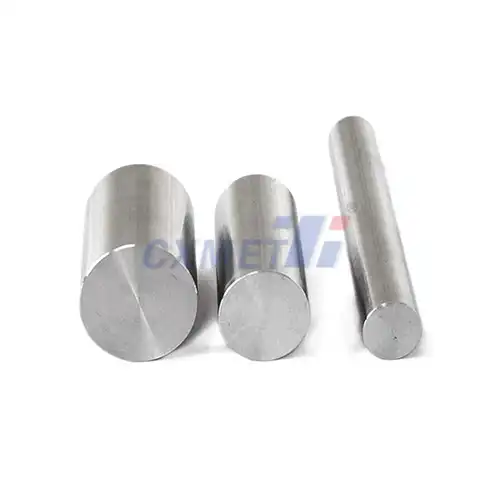
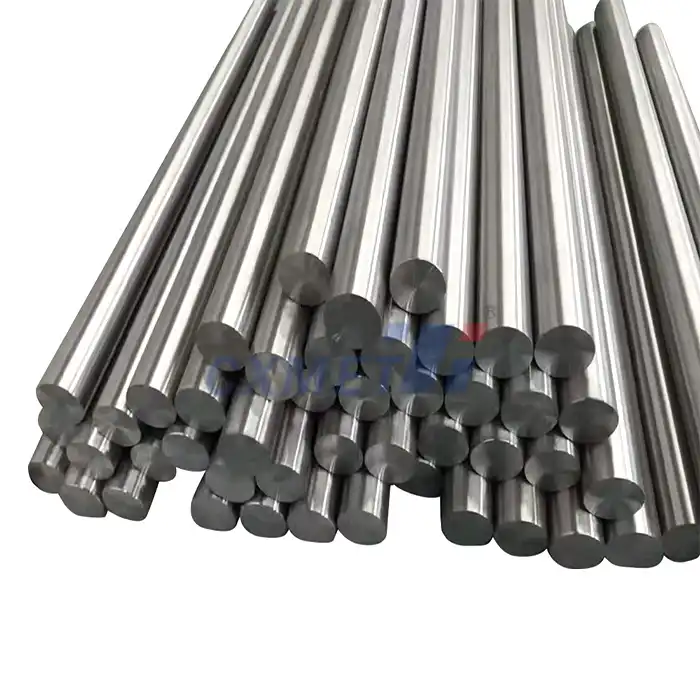
Gr7 Titanium Rod, also called Grade 7 titanium round bar, is commercially pure titanium with a small palladium addition of 0.12% to 0.25%. It is designated UNS R52400 and is also known to many engineers as Ti-0.2Pd. The palladium protects the surface in reducing acids and tight crevices, where the ordinary Grade 2 titanium may lose its protective oxide covering. The term "rod" might signify forged, rolled, or machined round stock. I usually recommend including the product shape in the purchase order. Rod, bar, billet, and wire are produced by various processes and might have varying tolerances and documentation. Our brilliant surface rod is created by forging or rolling, in diameters above 6 mm, and lengths up to 6000 mm.
Gr7 Titanium Rod Composition and Mechanical Properties
Grade 7 is restricted by ASTM B348. Check the latest version of the standard, not some random chart on the web. Maximums are nitrogen 0.03%, carbon 0.08%, hydrogen 0.015%, iron 0.30%, and oxygen 0.25%. Palladium is still in the 0.12 to 0.25% range; the rest is titanium. The minimum tensile strength is 345 MPa (50 ksi), the minimum yield strength is 275 MPa (40 ksi), and the minimum elongation is 20%. Density is around 4.51 g/cm3 , about 40 % lighter than steel. These data suggest that Grade 7 is as strong as Grade 2. The advantage is corrosion behavior, not load capacity. Heat-by-heat analysis is very important for pressure and safety-critical components.
Why Chemical Processing Teams Choose Gr7 Titanium Rod
Chemical industries use Grade 7 for its corrosion resistance, not because it is stronger. Palladium promotes cathodic reactions on the surface that assist in retaining titanium in its passive condition even in weak hydrochloric or sulfuric acids and boiling acidic chloride brines. Typical rod applications include pump shafts, valve stems, fasteners, tie-rods in heat exchangers, and components inside reactors, evaporators, scrubbers, and absorbers. The similar corrosion profile is also useful for seawater desalination, hydrometallurgy, and electroplating lines. Suitability is a function of concentration, temperature, flow velocity, oxygen level, chloride and fluoride content, and crevice shape. My suggestion to engineers is to look at regular operation and upset circumstances, including heat cycling.
Comparing Gr7 Titanium Rod With Other Materials
Gr7 Titanium Rod vs Grade 2
Grade 2 and Grade 7 have the same minimum tensile and yield strength; hence, it is a matter of chemistry. Grade 2 is frequently less expensive and resists corrosion effectively in oxidizing environments and ordinary usage. Grade 2 may lose its passive layer and corrode rapidly in reducing acids or in narrow cracks at increased temperature. In such instances, grade 7 is maintained. The price differential is mostly due to palladium, which increases cost per kg; however, one prevented downtime may pay for the difference. My suggestion is to pose one question: Is this portion sitting where the metal may leave its passive state? If the answer is yes, Grade 7 needs a closer study.
Grade 7 vs Grade 5 and Zirconium
Grade 5 (Ti-6Al-4V) has a minimum tensile strength of about 895 MPa, which is much higher than that of Grade 7. It’s hardly a straight switch when corrosion resistance and weldability are the leading needs. In certain hot concentrated acid services, zirconium may be superior to titanium; however, zirconium has different cost, availability, density, and fabrication requirements. There are additional stainless steels and nickel alloys in the running, but they are heavier. A simple comparison matrix makes the option justifiable when reviewed by procurement, engineering, and the end customer. Enumerate the medium, temperature, strength requirement, weight, manufacturing process, and life cycle cost for each candidate material. Then choose the material that satisfies the whole obligation, not just one feature.
Service Limits to Respect
Every substance has its limitations. Grade 7 is good to around 260°C (500°F). At temperatures above around 300°C, when oxidation rates increase, creep strength becomes a problem relative to Ti-6Al-4V. Titanium may absorb hydrogen if it contacts active metals in a galvanic pair or if it takes up iron contamination, and hydrogen makes it brittle. In seawater service, velocity, sedimentation, temperature, and galvanic effects must be considered. Welding should be performed using matching Grade 7 filler wire and sufficient gas shielding to preserve the corrosion resistance of the weld zone. Process chemistry still has to be carefully reviewed before clearance. Dry chlorine gas and various solutions of fluoride also damage titanium
How to Verify Gr7 Titanium Rod Certification and Quality
Reading the Mill Certificate
The mill test certificate is the essential confirmation for the specification of a Gr7 Titanium Rod. Look for the manufacturer name, grade, standard, such as ASTM B348, heat number, dimensions, chemical analysis, mechanical findings, and heat-treatment condition. Check the heat number against the rod's markings and packing. EN 10204 type 3.1: The manufacturer verifies the results of tests performed on the lot provided. Type 3.2 includes verification by the purchaser’s representative or by an inspector designated under official rules. My advice is to just ask for 3.2 support if your project code or client needs it. It adds time and expense.
How CXMET Produces and Documents Gr7 Titanium Rod
2005, Shaanxi CXMET Technology Co., Ltd. was established, located in the "titanium valley" of China. We manufacture Gr7 Titanium Rod by forging or rolling, with a shiny surface, diameters above 6 mm, and lengths up to 6000 mm. Titanium Rod Specifications: ASTM B348, ASTM F136, AMS 4928, ASTM F1295. Chemical processing orders: ASTM B348, Grade 7. We have more than 80 technicians who assist our work in titanium, nickel, tantalum, niobium, tungsten, molybdenum, and zirconium. A typical approved route involves certified feedstock, vacuum melting, forging or rolling, annealing where necessary, straightening, cutting, finishing, and final inspection. Tell us what credential level you require, and we match the papers to your order.
Quality Control and Handling
Quality control for Grade 7 should include chemical composition, tensile qualities, dimensions, straightness, surface condition, marking, and internal discontinuities where ultrasonic or other nondestructive tests are required. It’s also about dealing with things. Iron particles from carbon-steel tools, lubricants, and shop dirt may contaminate the surface and decrease corrosion performance after fabrication. I suggest purchasers inquire about storage, packing, welding controls, and machining procedures. Also confirm that the supplier has complete heat tracking from the source material through to dispatch. Clean tools, dedicated racks, and protective wrapping cost nothing compared to a botched weld or a rejected lot on site.
Buying Gr7 Titanium Rod for Chemical Service
Writing a Clear Purchase Specification
With a clear order, most disagreements are avoided. State Grade 7, the standard (ASTM B348, or ASME SB-348 for pressure vessel work), diameter, length, quantity, surface condition, delivery condition, tolerances, certificate type, inspection level, packing, and destination. Compare bids by cost per kg and cost per meter or piece. Density, cutting, machining, testing, certification, and freight all influence the final amount. The price of palladium is the major driver of the Grade 7 premium above Grade 2. Inquire about stock sizes, custom manufacture, minimum order quantity, lead time, samples, export papers, and repeat-order possibility. The provider also helps select the suitable Gr7 Titanium Rod form with the use of drawings and process data.
Mistakes to Avoid
The biggest error is to interpret the Grade 7 mark as a guarantee of fitness. Others include acceptance of a certificate with a heat number or a size not corresponding to the provided rod, purchase on the basis of the lowest price alone, and generic test reports with unclear standards or missing mechanical data. Fabrication also generates troubles: iron contamination, improper welding process, inadequate storage, and missed post-fabrication inspection. “Any price reduction is quickly gone if you have corrosion failure, rework, shutdown, or a project acceptance delay.” A simple examination of the paperwork before shipping is cheaper than any of these difficulties, and it protects the customer and schedule.
Application Checklist for Engineers and Procurement
Engineers should record the process medium, concentration, operating and design temperatures, pressure, flow velocity, redox conditions, chloride and fluoride levels, and contamination concerns. Then compare the standard, product form, welding process, and corrosion data with the equipment design. Procurement should examine the mill certificate, heat traceability, chemical and mechanical findings, dimensions report, and supplier quality credentials and inspection criteria. Commercial checks include the availability by size, minimum order number, price basis, lead time, packing, shipping conditions, and claim or replacement processes. In this manner, the two teams analyze the facts in front of them, and each team signs off on the technical approval and commercial evaluation separately.
Conclusion
Gr7 Titanium Rod may be provided with ASTM B348 paperwork comprising a mill test report showing heat number, chemical and mechanical findings; however, that paperwork proves the material, not the application. Grade 7 is Grade 2 with 0.12 to 0.25 percent palladium added. This increases resistance to reducing acids and crevice service. Same minimum tensile strength ( 345 MPa) and yield strength ( 275 MPa) as Grade 2. Grade 5 and zirconium address various issues, with temperature, hydrogen pickup, marine conditions, and contamination presenting significant restrictions. They can verify the certificate, handle the rod cleanly, write an exact buy specification, and examine process chemistry before approval, thereby giving chemical processing teams a defensible, lower-risk option.
FAQ
Does ASTM B348 Grade 7 approve a rod for my process?
No. It confirms the material meets a specification. Your engineers must still check the fluid, temperature, pressure, design code, and fabrication method.
When do I need an EN 10204 3.1 or 3.2 certificate?
Type 3.1 suits most orders. Choose 3.2 when your project code or customer requires independent validation of test results.
Can CXMET supply custom sizes?
Yes. We supply diameters above 6 mm and lengths up to 6000 mm, with a bright surface and customized lengths on request. Send your drawings, and we will confirm.
Is Grade 7 suitable for seawater?
It resists seawater well, but velocity, deposits, temperature, and galvanic effects still need review for each system.
What affects Gr7 Titanium Rod pricing?
Palladium cost leads, followed by diameter, length, machining, testing, certificate level, quantity, and freight.
Request a Quote for Gr7 Titanium Rod From CXMET
Send your drawings, diameter, length, quantity, certificate level, and process chemistry to sales@cxmet.com, and our engineers will reply with a technical and commercial quotation. As a Gr7 Titanium Rod manufacturer and supplier in China, CXMET offers ASTM B348 material, mill certificates, heat traceability, custom sizes, and international delivery. Visit https://www.cxmet-tech.com/ to see our titanium range, and tell us what your project needs.
References
1. ASTM International, Standard Specification for Titanium and Titanium Alloy Bars and Billets (ASTM B348/B348M), 2019
2. European Committee for Standardization, EN 10204: Metallic Products – Types of Inspection Documents, 2004
3. ASM International, ASM Handbook, Volume 13B: Corrosion: Materials, 2005
4. Matthew J. Donachie, Titanium: A Technical Guide, 2nd Edition, ASM International, 2000
5. Christoph Leyens and Manfred Peters, Titanium and Titanium Alloys: Fundamentals and Applications, Wiley-VCH, 2003
6. American Society of Mechanical Engineers, ASME Boiler and Pressure Vessel Code, Section II, Part B: Nonferrous Material Specifications, 2023