knowledges
Is Titanium Grade 2 Round Bar the Right Material for Your Project?
2026-11-17 17:04:17
For most corrosion-driven, moderate-strength components, titanium Grade 2 round bar is the right material. This commercially pure grade, UNS R50400, trades peak strength for ductility, weldability, and near-total immunity to seawater and chloride attack. I recommend it when a stainless part keeps failing, when weight matters, and when service temperature stays below roughly 425 °C. I steer buyers away from it when the part needs Grade 5 strength, abrasive-wear resistance, or the lowest first cost. What follows covers properties, comparisons, tolerances, and buying steps, so you can confirm the fit before releasing a purchase order.
|
|
|
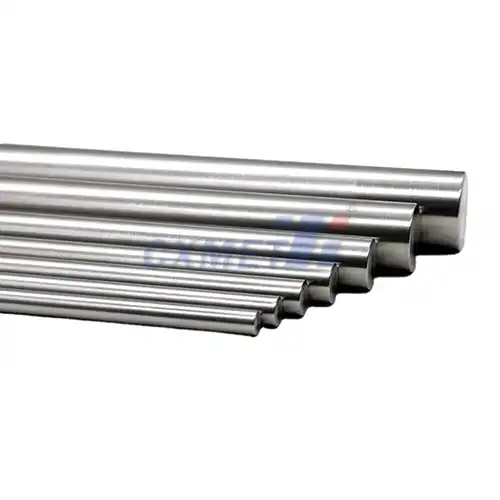
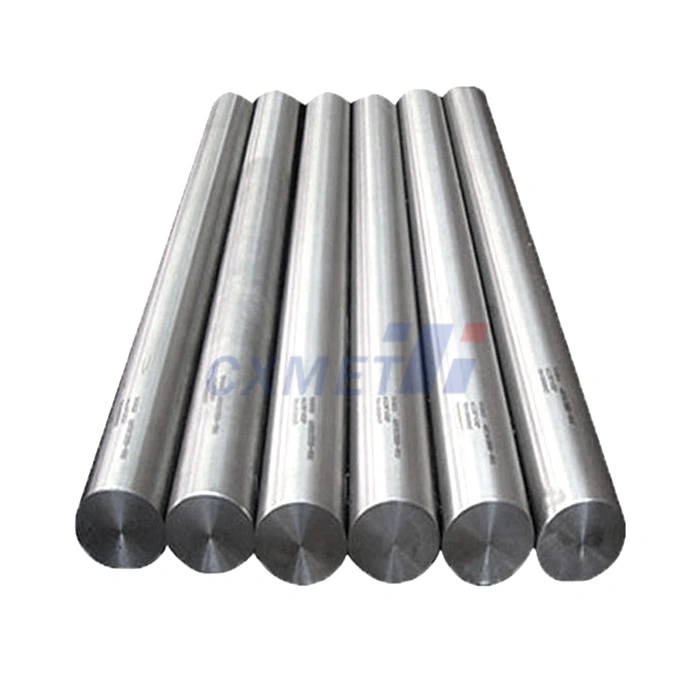
What Is Titanium Grade 2 Round Bar?
The UNS R50400 Designation and the Commercially Pure Family
Titanium Grade 2 Round Bar has the UNS number R50400 and is 100% pure, meaning it has not been mixed with other metals on purpose. The titanium sponge is smoothed out and then pushed together to make a strong bar. The grade is not added but rather kept in check by the amounts of oxygen, nitrogen, carbon, hydrogen, and iron. Grade 2 is between Grades 3 and 4, which are harder, and Grade 1, which is easier. This is because oxygen makes things stronger. At least 99.2 percent of the metal must be titanium. People buy the bar because they trust its behavior: it welds without preheating or post-weld heat treatment, it's easy to cold-form, and its resistance to rusting stays the same across the whole section.
How Hot-Rolled Production Shapes the Bar?
It is fired until the titanium bloom or billet is soft enough to work with. Thereafter, it is put through grooved rolls until it is the right thickness. This is how we get a titanium Grade 2 Round Bar from CXMET. The lengths range from 1000 mm to 6000 mm, and the diameters range from 3 mm to 300 mm. The rolling method changes the flow of the grain, resulting in different traits along the length and width. If you want to machine hot-rolled stock, you can. It has a slightly rougher surface and more sizes than cold-drawn stock. If the drawing calls for stock that needs to be turned, ground, or polished, I usually order hot-rolled bar that is too big and let the machine shop make it fit perfectly.
Standards You Should Name on the Order
Most industrial purchases are based on three factors. As part of ASTM B348, mechanical properties and testing rules for titanium and titanium alloy bars and billets are laid out. AMS 4921 says that commercially pure titanium bar, wire, and forgings that have been annealed are used in aerospace and other similar fields. ASME SB348 and B348 are the same for work with pressure vessels and boilers. ASTM F67 covers surgical implants made of titanium that has not been alloyed. It's not the same as B348; a medical buyer needs F67 and the right implant standard. I want the quote and the mill certificate to show the exact specification, revision year, and any customer add-ons. This is because just a grade name can cause paperwork that doesn't match. Shipments of titanium Grade 2 Round Bars that are going into controlled work won't be turned down because of that one line.
Titanium Grade 2 Round Bar Properties: Is the Performance Suitable?
Mechanical Values and What They Mean in Service
Grade 2 steel must have a tensile strength of 345 MPa (50 ksi), a yield strength of 275 MPa (40 ksi), and an elongation of at least 20% in 50 mm, according to ASTM B348. The numbers show that the substance isn't very strong but is very bendy. Elongation is more important than yield for real-world jobs because it lets the bar bend, swage, and thread without breaking. It has a density of 4.51 g/cm³, which is about 56% of steel's. If you finish the part, it will weigh about half as much as a steel one. It has a modulus of 105 GPa, which is less than steel and changes the way the math works for deflection. Because I need that number for every titanium Grade 2 Round Bar application with moving parts, I have to recalculate a shaft or spindle's stiffness every time it is bent.
Corrosion Behavior in Chlorides and Oxidizing Media
Titanium dioxide forms a thin film on the metal that keeps growing whenever it comes in contact with air or water. This film makes the rust happen. Since saltwater, brine, or chloride solutions don't break down the film, pitting and cracking don't happen very often. There are other acids that can do the same thing, like hypochlorite, bleaching service, and wet chlorine gas. There are bounds. You can damage the film with even small amounts of hydrofluoric acid. Strong hydrochloric or sulfuric acid can destroy it totally. Methanol that is not water-based can cause stress corrosion cracks. There are real chemistry, concentration, temperature, and flow rate factors that I look over before I sign off on any wet-service titanium Grade 2 Round Bar part. After that, I change the size of the part to fit.
Temperature Limits and Long-Term Stability
Strength: Grade 2 is strong up to about 425 °C (800 °F). When you go above that, oxidation speeds up, and oxygen forms a hard alpha case on the surface. This makes the creep strength go down. When put through air service, the alpha case is weak and can flake or crack when temperatures change. This is why it is ground away after hot work or welding. When it's very cold, titanium stays flexible, which is especially useful for gear that works with liquid gas. It works the other way when you cry. When I make plans for hot places, I make sure the creep and oxidation data are correct for that environment. This is because the same titanium Grade 2 Round Bar can work at higher temperatures when it is in inert or vacuum service instead of air service.
How Does Grade 2 Titanium Compare with Other Materials?
Grade 2 vs Grade 5 Titanium (Ti-6Al-4V)
The minimum tensile strength goes up to 895 MPa when 6% aluminum and 4% vanadium are added to Grade 5. The yield strength goes up to 828 MPa, which is about twice as high as Grade 2, and the elongation goes down to 10%. A Grade 5 machine takes longer to work, and heat treatment takes longer. Grade 2 is the best in terms of price per kilogram, ability to form, and ability to weld. Grade 5 is always what I choose for fasteners, aircraft fittings, and high-pressure hardware that need to hold a lot of stress in a small area. Grade 2 is the best choice for parts that are likely to rust, need to be cold-formed or welded, or have a big section size and a modest load. Buying Grade 5 titanium for a bracket that can be made with titanium Grade 2 Round Bar is a waste of money.
Grade 2 vs 316 Stainless Steel
Type 316 steel plate has a minimum tensile strength of about 515 MPa and a yield strength of about 205 MPa. It is stronger than Grade 2 in tension but less flexible. At 4.51 g/cm³, titanium Grade 2 Round Bar is lighter than 316, but their densities are very different. 316 can split and crack from chloride stress corrosion above about 60 °C when it is used with chloride, but Grade 2 doesn't. And this is why titanium Grade 2 Round Bar is often used instead of stainless steel when stainless fails in marine hardware and heat exchanger tubing. Because steel costs more the first time I buy it, I think about how often I have to change it and how much time I lose. And the math changes if a part breaks after two years. A titanium Grade 2 round bar usually pays for itself before I have to change the stainless steel part a second time.
Grade 2 vs Aluminum and Nickel Alloys
At 2.70 g/cm³, aluminum 6061-T6 has a tensile strength of about 310 MPa. This means it is cheaper and lighter than the titanium Grade 2 Round Bar. If the service is high in chloride, salty, or chloride-filled, it loses that edge. It can't be too stiff either because its stiffness is close to 69 GPa. If you go below a certain temperature, tin alloys, which cost more and weigh about 8.9 g/cm³, lose their strength. Nickel alloys, on the other hand, can handle reducing acids. First, I draw a map of the service area. The titanium Grade 2 Round Bar has stress points that are moderately high, moderately cold, and moderately salty. A nickel metal can be found where hydrochloric or sulfuric acid is hot and mixed together. There are light service points that are heavy to metal, and the savings are real, not just in your head.
Fabrication, Tolerances, and Documentation Buyers Should Specify
Machining and Welding Checkpoints
Titanium only moves heat about 22 W/m·K, which is a quarter of the speed at which steel does. In other words, the heat stays at the cutting edge and doesn't move into the bar. That heat and the fact that tools tend to get tougher over time make them last less long. People who work at my shop say to use positive rake, low surface speed, high feed per circle, and flood coolant to cut through the tough layer. It's fairly easy to weld, but it needs to be kept safe. A very pure argon or helium gas is put over the backside, the hot zone, and the weld pool until the metal cools to about 425°C. You can tell what kind of welded titanium Grade 2 Round Bar it is by its color. What does silver mean? It's acceptable. Straw means it's not great. Blue or gray means it's been messed with.
Diameter, Length, and Tolerance Calls
It has the diameter range, length, straightness, out-of-roundness, end preparation, and tolerance class all written out in one line item. CXMET can hold H9, H10, or any other limit set by the customer while cutting lengths from 1000 mm to 6000 mm. Turned, ground, and finished bar cuts down on cuts further down the line and make the concentricity better. Hot-rolled bar is used to make stock. You can grind without a center for shaft work where the finish and roundness affect how long the seals last. Cutting tolerance is important to know because a saw cut can move at least one millimeter on big sizes. For a titanium Grade 2 round bar order, I provide the end length plus an additional amount instead of a nominal number. Furthermore, people who buy things in imperial units should know what inches are and which standard is used to avoid problems when converting to metric units.
Mill Test Certificates and Traceability
Every package should have the right papers with it, like the barcode, the packing list, and the buy order. I need the mill test certificate that lists the grade, the specifications, the heat number, the chemical make-up, and the mechanical results. I also need the EN 10204 3.1 certification in case a third party needs to check the results. The loop closes with reports on the sizes, a certificate of conformity, confirmation of the surface condition, and heat-to-piece traceability. CXMET follows ISO 9001 rules and can arrange an SGS inspection if asked. It is also important to verify the markings. People who receive a titanium Grade 2 round bar package should be able to tell what it is without having to open the sealed packaging. This is because the grade, heat number, and size should all be written on the bar or bundle tag.
When Is Titanium Grade 2 Round Bar the Right Choice?
Applications That Fit Well
The best fit is where stress is low, and rust is not a concern. Low-cost metals break down in salt water, so heat exchangers and condensers use Grade 2 tube and tube-sheet stock. Desalination trains, brine pipes, and naval gear all need to be resistant to chloride. You can use oxidation media with tanks, pipes, and anodizing racks that are used in chemical processes. Biocompatibility is important to companies that make medical devices, so they use it in parts for surgery and implants. It is used in systems that clean up cooling water and waste gas from power plants. Not two different types of titanium are used to make parts like bolts, pins, shafts, spacers, bushings, rings, and fasteners. Instead, one titanium Grade 2 Round Bar is used. It doesn't rust and is lighter.
Applications That Do Not Fit
It's not always clear that Grade 2 is enough. Some parts need to be forceful and fit into a small space. Grade 5 or a nickel alloy is best for these parts. Titanium is soft, so areas that are rough, like slurry pumps and pipe covers, wear down quickly. It will last longer if the surface is harder or has been coated. Hydrofluoric acid service, hot concentrated hydrochloric or sulfuric acid, and anhydrous methanol can all be used to remove the oxide film. Service in air hotter than 425°C makes it less strong and more likely that the alpha case will happen. When it comes to light work, stainless steel or aluminum will save you the most money at first. It costs a lot to fix a titanium Grade 2 round bar that was picked for the wrong job, so I mark these cases early, before the drawings are set in stone.
A Three-Step Decision Process
There are three screens for each job I do. Start by drawing a map of the area. Include the chemistry, concentration, temperature, pressure, level of chloride, wear and tear, humidity, and cyclic loading. Make a list of the mechanical and manufacturing needs, like the maximum weight, the tolerance, the tensile strength, the yield strength, the fatigue strength, the stiffness, the wear, the weight cap, the cutting, the forming, the welding, the finish, and the wear. Third, make sure you follow the ASTM or customer standard, the medical or food-contact rules, the pressure-vessel code, and the rules for paperwork. Most of the time, titanium Grade 2 round bars pass all three tests: they can be used in wet and chloride-containing situations, they can hold modest loads, and they can be welded or shaped. If any of the filters don't work, I switch to a different grade before I quote.
How to Buy Titanium Grade 2 Round Bar from a Supplier You Can Verify?
Building a Complete RFQ
There is a price that you can use when you ask for a tight quote. I write down the grade and UNS number, the governing standard and revision, the diameter, the length, the amount, the state of the material, the surface finish, the tolerance class, the testing requirements, the packing, the port of arrival, and the delivery terms. Giving the job title, such as "seawater heat exchanger," "instrument blank," or "anodizing rack," helps the service provider find a problem before the order is sent to the mill. In order to find machined blanks, CXMET looks over drawings and CAD files and checks stock for items that are standard sizes. People who buy titanium Grade 2 Round Bar are given a better technical answer and more change orders later on if they tell the seller what the bar will be used for and where it will be repaired.
Price Beyond the Kilogram
You can get quotes by the kilogram, the meter, the piece, or the lot. To compare them, I first turn each offer into a cost per finished piece that can be used. Some cheaper kilograms may be more difficult to machine than a bar that has been turned and ground and costs more per unit. This is because the rough surface of the cheaper kilograms may cost more to machine. It depends on how many items are in stock as well, since a delivery in two weeks is often less expensive than a mill run that takes twelve weeks. Quotes for titanium Grade 2 Round Bars vary a lot because of three cost lines:
- The cost of machinery, scrap, and lost cuts was added to the price of the material to get the cost per finished piece. This means that you only need to look at one thing to compare a rough hot-rolled bar to a precision-ground bar.
- These are the costs of testing and certifying the wood. They include mill test certificates, EN 10204 3.1 paperwork, a third-party inspection, and any extra mechanical or rust testing that the project needs.
- The landing cost is the only number that will work with the project budget and be approved by the finance team. This includes freight, tax, brokerage, and inland delivery.
You can sum up a bunch of hard-to-understand offers in one simple number by adding those three lines.
Evaluating Supplier Capability
Trust in a supplier is based on proof, not words. I need to know where to find the mill, how to ship, how to register the quality system, what tools are needed for inspection, how to control the packaging, and how similar tools have been used in the past. I'm more interested in how quickly you can answer a complex question than in your price list. Since 2005, CXMET has been around and is based in the titanium valley in Shaanxi Province. The business is spread out over 50,000 square meters and has more than 80 skilled workers. If you call and ask about specs, you'll talk to an engineer instead of a call center. If the titanium Grade 2 Round Bar is in stock, what is the minimum order quantity? How long will it take to make? Can it be shipped in parts? Who will sign the certificate of conformity? All of these things should be asked before you send the purchase order.
Conclusion
With low stress levels and the need to weld, shape, or machine the metal, titanium Grade 2 Round Bar is a good choice for projects that want to avoid corrosion. In terms of strength, it can stretch 20%, pull 345 MPa, and yield 275 MPa. Its density is 4.51 g/cm³. The self-renewing oxide film on this metal can withstand seawater, brine, nitric acid, and wet chlorine. It is also light and easy to shape. Grade 5 is better if you want it to be stronger. 316 stainless steel is better because it costs less. And nickel alloys work better with reducing acids. It can't be used in hydrofluoric acid, above about 425°C, or with abrasives because they wear it down. Before you compare prices, write down the standard, dimensions, tolerance class, surface condition, and paperwork for each item you want to buy. Then, compare the landed cost per finished piece instead of the price per kilogram.
FAQ
What is the titanium Grade 2 round bar used for?
Anodizing racks, marine hardware, pump and valve parts, surgical instruments, heat exchangers, condensers, and machined fasteners, pins, shafts, bushings, and rings are all places where it can be found. They are all linked by mild stress, chlorides, oxidizing acids, or the need to lose weight. The shared characteristic of titanium Grade 2 round bars is their resistance to chlorides and their weight savings.
Is Grade 2 titanium stronger than 316 stainless steel?
Not at all. Type 316 plate has a tensile and yield strength of about 515 MPa, but Grade 2 plate only has 345 MPa. Grade 2 is better because it is more flexible, denser, and doesn't react with salt. If the part breaks because of stress or corrosion, the answer is different.
Can a titanium Grade 2 round bar be welded and machined?
Both processes are possible, but each has its own controls. To keep the weld pool, the hot zone, and often the sides safe, high-purity argon must be used. If the joint has a shiny finish, it's good. To machine, you need very sharp tools, a slow surface speed, a high feed rate, and water cooling. This is because heat stays at the cutting edge.
Source Your Titanium Grade 2 Round Bar from CXMET
Before we give you a quote, email sales@cxmet.com with your drawing, the diameter, the length, and the type of certification you need. They will check the stock, tolerance class, surface finish, and conformity with ASTM B348. The titanium Grade 2 round bar has been sold by CXMET to the marine, chemical, medical, and power industries since 2005. As soon as they find a risk, they inform the buyers. They check each standard to make sure it fits. Visit https://www.cxmet-tech.com/ to begin.
References
1. ASTM International, ASTM B348 – Standard Specification for Titanium and Titanium Alloy Bars and Billets, 2023.
2. ASTM International, ASTM F67 – Standard Specification for Unalloyed Titanium for Surgical Implant Applications, 2023.
3. Boyer, R., Welsch, G., and Collings, E.W. (eds.), Materials Properties Handbook: Titanium Alloys, ASM International, 1994.
4. Lütjering, G. and Williams, J.C., Titanium, 2nd edition, Springer, 2007.
5. ASM International, ASM Handbook, Volume 13B: Corrosion: Materials, 2005.
6. U.S. Geological Survey, Mineral Commodity Summaries: Titanium, U.S. Department of the Interior, 2024.