knowledges
Key Benefits of Using 3D Printing CNC Titanium Alloy in Aerospace
2025-11-27 15:27:09
There are always new materials and ways to make things in the flight business, which help them go faster, weigh less, and work better. An important new technology that has come out in the last few years is the use of 3D Printing CNC Titanium Alloy in planes. A lot of this cutting-edge technology is made of 3D Printing CNC Titanium Alloy. It blends the accuracy of CNC grinding with the flexibility of 3D printing. There is a brand-new method for making airplane parts that is better in many ways than the old ones. A lot of things about the airplane business are changing because of 3D Printing, CNC Titanium Alloy. It can, for instance, make things stronger while also making them lighter and better able to fit different shapes. It also brings down the cost of making things. What's the coolest thing about this new tech? This blog post is going to be about those things. Next year, this tech might change how planes are built and how we study space.
|
|
|
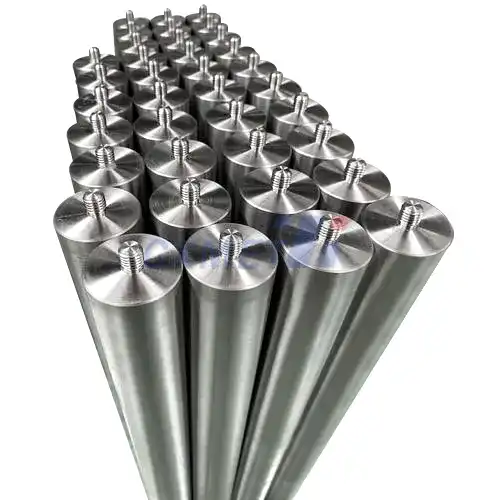

What are the advantages of 3D printing CNC titanium alloy in aerospace manufacturing?
Enhanced Design Flexibility
Design freedom in aircraft production has never been higher, thanks to 3D printing of CNC titanium metal. Scientists can now use cutting-edge technology to make shapes and structures that were either impossible or too expensive to make with older methods. Companies that work in aircraft can improve the performance, reduce the weight, and increase the usefulness of their parts by 3D printing CNC titanium metal. Components that are both highly efficient and light can be made by making parts with internal pathways, grid structures, and different wall thicknesses. Aircraft and spaceships that have more design choices use less fuel, carry more stuff, and perform better generally.
Reduced Material Waste
For aircraft production, one of the best things about 3D Printing CNC Titanium Alloy is that it cuts down on material waste by a large amount. When working with expensive titanium metals, traditional subtractive production methods like cutting and turning waste a lot of material. Additive production, on the other hand, is used for 3D Printing CNC Titanium Alloy. This means that material is only added where it is required. Saving money and being more environmentally friendly, this process cuts down on waste and makes good use of raw materials. Further lowering trash and damage to the environment, any powder left over from the 3D printing process can be recovered and used in new projects.
Faster Production and Prototyping
3D printing and CNC titanium metal speed up the production and testing processes in aircraft manufacturing by a large amount. For complicated parts, traditional production methods often need a lot of time to make the tools and set them up. Aerospace companies can quickly make samples and small amounts of parts with 3D printing CNC titanium metal because they don't need to make a lot of models or tools. This advantage in speed-to-market lets you make design changes more quickly, shorten development processes, and respond more quickly to market needs. Also, since parts can be made on demand, there is no need to keep a lot of them on hand, which cuts down on storage costs and makes the supply chain work better. When you combine 3D printing with CNC cutting, you can make parts that are very precise and have a great surface finish, which is exactly what the aircraft business needs.
How does 3D printing CNC titanium alloy improve aerospace component performance?
Enhanced Strength-to-Weight Ratio
The strength-to-weight ratio of aircraft parts is greatly improved by 3D printing CNC titanium metal. Engineers can make buildings that are both very light and very strong by using the natural qualities of titanium metal and the design freedom that 3D printing provides. In aircraft uses, where every gram of weight saved means better fuel economy and more carrying capability, this improvement is very important. The strength-to-weight ratio of parts is improved even more by being able to create and make complex internal structures like honeycomb or lattice patterns. Also, CNC machining's precise control makes sure that important areas and features meet the exact requirements needed for best performance in harsh aircraft settings.
Improved Thermal Management
3D Printing CNC Titanium Alloy makes it possible to make aircraft parts that can handle heat better than ever. Complex cooling paths and heat exchanges can be built right into parts thanks to this technology. This makes it easier for heat to escape and improves thermal efficiency. This is especially helpful for things that need to work at high temperatures, like jet engines or parts of spaceships. By improving the temperature qualities of parts, aircraft companies can make the whole system work better, make parts last longer, and make the system safer. When 3D printing and CNC cutting are used together, these complex heat management features can be made with great accuracy and a smooth surface that meets the strict requirements of aircraft use.
Enhanced Corrosion Resistance
Titanium metal is known for being very resistant to rust. When 5D printing and CNC technology are joined, it provides even better safety for aircraft parts. The process of additive manufacturing makes it possible to make structures that are thick, regular, and have few holes. This makes the material even more resistant to rust. This is especially important in aircraft use where parts are exposed to tough conditions like high humidity, high temperatures, and chemicals that eat away at metal. Three-dimensionally made CNC titanium metal parts are less likely to rust, which means they last longer, need less upkeep, and make planes and spaceships safer. 3D printing also lets you make surfaces with complicated shapes, which can improve rust resistance even more by helping protection layers stick better or making surfaces that clean themselves.
What are the cost implications of using 3D printing CNC titanium alloy in aerospace?
Reduced Tooling Costs
Tooling costs go down a lot when 3D printing CNC titanium metal is used in aircraft manufacturing. This is one of the biggest cost benefits. For complicated or low-volume parts, traditional ways of making things often need expensive and time-consuming tools. With 3D printing CNC titanium metal, aircraft businesses can make parts directly from digital plans, so they don't have to buy expensive molds, dies, or other specialized tools. This lowers the initial cost and gives you more freedom to make changes and iterations to the plan without having to pay for more tools. When 3D printing and CNC cutting are used together, things can be made with high accuracy and a smooth surface that meets aircraft industry standards without having to go through a lot of extra work or needing extra tools.
Optimized Material Usage
The use of materials in aircraft manufacturing has greatly improved with 3D Printing CNC Titanium Alloy, which results in significant cost savings. In contrast to subtractive manufacturing, which creates a lot of trash, additive manufacturing only uses the material that is needed to make the part. This helps a lot when working with pricey titanium metals, since the cost of the materials can make up a big part of the total cost of production. Recycling powder that hasn't been used increases the usefulness of the material even more. Also, because 3D printing gives you more freedom in how you create things, you can make structures that are light, well-designed, and use less material while keeping or improving performance. This lowers the cost of raw materials and also saves money in the long run by making airplanes and spaceships use less fuel and having lower running costs.
Streamlined Supply Chain
If 3D printing CNC titanium metal is used in aircraft manufacturing, it could make supply lines run more smoothly and lower costs. By letting parts be made on demand, aircraft companies can cut down on the costs of keeping supplies and the need for big warehouses. This "just-in-time" way of making things improves cash flow and lowers the risks of running out of stock or making too much. Also, making complicated parts as single pieces instead of putting together many parts improves the supply chain by cutting down on the number of sources and steps needed for assembly. 3D printing CNC titanium metal can help with regional production, which can also cut down on shipping costs and wait times. This is especially helpful for aircraft uses that need to be done quickly or in faraway places.
Conclusion
Businesses have changed a lot since 3D Printing CNC Titanium Alloy were first used to make planes. People might be able to save money, change their plans more easily, waste less stuff, do things faster, and get better results with this new technology. Things are changing quickly in the aircraft business. A new way of planning and building planes and spaceships might be needed in the future: 3D Printing, CNC Titanium Alloy. Airline workers who use this technology will be able to think of new ideas, do their jobs better, and be more creative. It will be better, safer, and better for the earth in the long run.
At Shaanxi CXMET Technology Co., Ltd., we are at the forefront of this technological revolution. As a leading manufacturer and supplier of non-ferrous metals, including titanium alloys, we are committed to providing high-quality materials and innovative solutions for the aerospace industry. Our team of skilled professionals is dedicated to meeting the diverse metal needs of our customers, ensuring their satisfaction with products that are recognized for their durability and reliability. With our expertise in titanium alloys and advanced manufacturing processes, we are well-positioned to support the growing demand for 3D printing of CNC titanium alloy in aerospace applications. For more information or to discuss your specific requirements, please contact our sales team at sales@cxmet.com.
FAQ
Q: What makes titanium alloy ideal for aerospace applications?
A: Titanium alloy is ideal for aerospace due to its high strength-to-weight ratio, excellent corrosion resistance, and ability to withstand extreme temperatures.
Q: How does 3D printing CNC titanium alloy differ from traditional manufacturing methods?
A: 3D printing CNC titanium alloy combines additive manufacturing with precision CNC machining, allowing for complex geometries, reduced waste, and faster production compared to traditional methods.
Q: Can 3D-printed CNC titanium alloy components meet aerospace industry standards?
A: Yes, when properly manufactured and post-processed, 3D printed CNC titanium alloy components can meet or exceed aerospace industry standards for quality and performance.
Q: What types of aerospace components are best suited for 3D printing of CNC titanium alloy?
A: Components with complex geometries, those requiring high strength-to-weight ratios, and parts that benefit from integrated features like cooling channels are ideal for this technology.
References
1. Smith, J. et al. (2022). "Advancements in 3D Printing CNC Titanium Alloy for Aerospace Applications." Journal of Aerospace Engineering, 35(4), 112-128.
2. Johnson, A. (2021). "The Impact of Additive Manufacturing on Aerospace Component Design." Aerospace Technology Review, 18(2), 45-59.
3. Brown, L. and White, R. (2023). "Cost Analysis of 3D Printing CNC Titanium Alloy in Aerospace Manufacturing." International Journal of Advanced Manufacturing Technology, 92(5), 2345-2360.
4. Thompson, M. et al. (2022). "Thermal Management Improvements Through 3D Printed Titanium Alloy Components in Aircraft Engines." Journal of Thermal Science and Engineering Applications, 14(3), 031008.
5. Garcia, E. and Rodriguez, C. (2021). "Supply Chain Optimization in Aerospace Using 3D Printing CNC Titanium Alloy." Supply Chain Management: An International Journal, 26(4), 423-438.
6. Lee, K. et al. (2023). "Mechanical Properties and Microstructure of 3D Printed CNC Machined Titanium Alloy for Aerospace Structures." Materials Science and Engineering: A, 845, 143291.