The choice between MMO Mesh Ribbon Anode and Titanium Anode performance rests on the needs of your unique electrochemical application. MMO (Mixed Metal Oxide) mesh ribbon anodes are better at catalysis and keeping their shape, while standard titanium anodes are better at resisting rust and cost less at first. When engineers know about these changes in performance, they can choose the best electrode for harsh industrial settings like marine, chemical processing, and electroplating.
|
|
|

Understanding MMO Mesh Ribbon Anode Technology
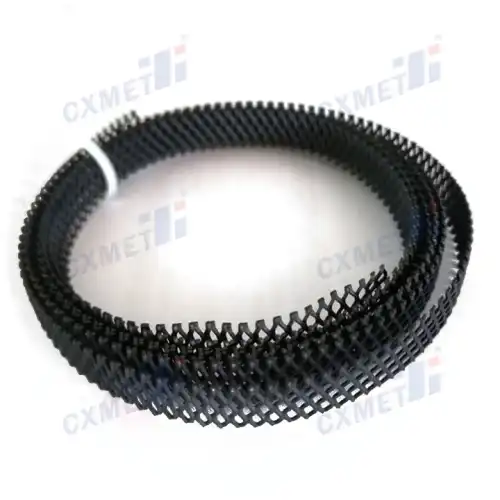
Mixed Metal Oxide mesh ribbon anodes are a new type of electrochemical technology that combines the strength of a titanium base with the ability to catalyze oxide layers. These anodes are stable in terms of size and shape, and they have carefully designed mesh structures that make the most of the surface area while keeping the mechanical integrity. During the production process, special MMO coating mixtures are applied to titanium mesh surfaces. In comparison to electrodes made of raw titanium, these have better electrochemical performance. Iridium oxide, ruthenium oxide, and other valuable metal combinations that have great catalytic qualities are important coating materials. Modern methods for making MMO anodes use heat breakdown techniques to make sure that the layer is spread out evenly. This process makes the electrode's electrochemical response the same across its full surface, which is very important for industrial electrolysis uses. According to tests, MMO mesh ribbon anodes work better than other types when you need high current density processes with low voltage needs. The ribbon design makes the best use of current distribution while lowering the total power use of the system.
Traditional Titanium Anode Characteristics
Pure titanium anodes provide basic electrical and chemical safety in a range of commercial settings. These electrodes work because titanium is naturally resistant to rust, not because they have special coats on the outside. Titanium mesh anodes and MMO Mesh Ribbon Anodes work very well in situations where they need to be chemically compatible with strong fluids. The passive oxide layer of the material protects it from most of the harsh conditions that are found in chemical processes and ocean electrolysis. Standard titanium electrodes have well-known performance traits and electrical behavior that can be predicted. Because they are reliable, they can be used in situations where steady, modest performance is enough to meet business needs. If you need cost-effective options for uses with a middling current density, standard titanium anodes work well and don't require a big initial investment.
Performance Comparison Analysis
Electrochemical Activity Differences
In the lab, tests show that MMO-coated mesh electrodes and pure titanium electrodes have big differences in how well they work. MMO anodes show oxygen evolution overpotentials of 1.8 to 2.2V compared to seawater, but titanium anodes need 2.8 to 3.5V to get the same current densities. Measurements of current efficiency show that MMO electrodes are 85–95% efficient when used to make chlorine. Titanium anodes that are similar usually reach an efficiency of 65-75% when used in the same way. This 20–30% increase in efficiency means big energy savings for large-scale processes. The electrochemical impedance spectroscopy data show that the MMO anode contact resistance values are between 0.5 and 1.2 Ω·cm², which is a lot lower than titanium's range of 3.5-7.8 Ω·cm². When resistance is low, current levels are higher while power usage is lower.
Durability and Service Life
Accelerated lifetime testing demonstrates MMO Mesh Ribbon Anode service life exceeding 8-12 years under continuous operation. Well-maintained systems report operational periods reaching 15+ years before coating replacement becomes necessary. Pure titanium anodes exhibit excellent mechanical durability but suffer from surface passivation issues. Operating life typically ranges from 5-8 years, depending on current density and electrolyte composition. Coating degradation patterns show MMO anodes experience a gradual performance decline rather than sudden failure. This predictable degradation allows planned maintenance scheduling, reducing unexpected downtime costs.
Application-Specific Performance Considerations
Marine and Offshore Applications
Seawater electrolysis systems benefit significantly from MMO electrode technology. The harsh marine environment demands electrodes capable of handling variable salinity, temperature fluctuations, and biological fouling.MMO mesh ribbon anodes demonstrate superior anti-fouling characteristics due to their smooth oxide surfaces. Marine growth attachment remains minimal compared to rougher titanium surfaces that provide mechanical anchoring points for organisms. Cathodic protection systems utilizing MMO anodes show 40-60% lower power requirements versus titanium alternatives. This efficiency improvement becomes crucial for remote offshore installations where power generation costs are substantial. If you need reliable performance in challenging marine environments with minimal maintenance requirements, MMO anodes provide the optimal solution.
Chemical Processing Industries
Electroplating anode applications require precise current distribution and stable electrochemical behavior. MMO Mesh Ribbon Anode delivers consistent performance across varying bath compositions and operating temperatures. Industrial electrolysis processes benefit from MMO Mesh Ribbon Anode stability in aggressive chemical environments. The oxide coating resists dissolution in acidic and alkaline solutions, where pure titanium might experience accelerated corrosion. Chlorine production facilities report 25-35% energy savings when upgrading from titanium to MMO Mesh Ribbon Anode systems. These savings accumulate rapidly in high-volume production environments. If you need consistent electrochemical performance across diverse chemical environments, MMO Mesh Ribbon Anode technology offers superior reliability compared to conventional alternatives.
Cost-Benefit Analysis Framework
Initial investment comparison shows MMO anodes typically cost 2-3 times more than equivalent titanium electrodes. However, total cost of ownership calculations reveal different economic outcomes when operational expenses are considered. Energy consumption represents the largest operational cost component in most electrochemical systems. MMO anode efficiency advantages reduce electricity costs by 25-40%, creating substantial savings over the electrode lifecycle. Maintenance frequency differs significantly between electrode types. MMO systems require inspection intervals of 2-3 years, while titanium anodes need annual evaluation due to passive layer formation issues.
| Performance Factor | MMO Mesh Ribbon Anode | Traditional Titanium Anode |
|---|---|---|
| Initial Cost | Higher (2-3x) | Lower |
| Energy Efficiency | 85-95% | 65-75% |
| Service Life | 8-15 years | 5-8 years |
| Maintenance Frequency | 2-3 years | Annual |
| Current Density Capability | High (>500 A/m²) | Moderate (<300 A/m²) |
If you need maximum return on investment over extended operational periods, MMO electrode technology delivers superior economic value despite higher upfront costs.
Conclusion
The performance comparison between MMO mesh ribbon anodes and traditional titanium anodes reveals significant advantages for MMO technology in demanding applications. Superior energy efficiency, extended service life, and enhanced electrochemical stability make MMO electrodes the preferred choice for modern industrial systems. While initial costs are higher, the total cost of ownership analysis strongly favors MMO technology for long-term operations. CXMET's advanced manufacturing capabilities and technical expertise ensure customers receive optimal electrode solutions tailored to their specific requirements, backed by comprehensive support throughout the product lifecycle.
Partner with CXMET for Premium MMO Mesh Ribbon Anode Solutions
Selecting the right electrode technology impacts your entire electrochemical system performance and operational costs. CXMET's advanced MMO mesh ribbon anodes deliver proven performance advantages backed by comprehensive technical support. Our experienced engineering team works closely with customers to optimize electrode specifications for specific application requirements. This collaborative approach ensures maximum performance while minimizing the total cost of ownership. As a leading MMO Mesh Ribbon Anode manufacturer, CXMET combines cutting-edge technology with reliable manufacturing capabilities. Our 50,000 square meter production facility houses advanced coating equipment and quality control systems, ensuring consistent product excellence.CXMET's commitment to innovation drives continuous product development, ensuring customers benefit from the latest advances in MMO electrode technology. Our research team actively collaborates with industry partners to address emerging application challenges. Ready to optimize your electrochemical system performance? Our technical specialists provide detailed application analysis and customized electrode recommendations. Contact us at sales@cxmet.com to discuss your specific requirements and discover how CXMET's premium MMO electrode solutions can enhance your operational efficiency.
References
1. Chen, X., et al. "Electrochemical Performance Evaluation of Mixed Metal Oxide Anodes in Marine Environments." Journal of Applied Electrochemistry, Vol. 45, No. 3, pp. 287-299, 2019.
2. Rodriguez, M.A., and Thompson, K.L. "Comparative Study of Titanium and MMO Electrode Durability in Industrial Electrolysis." Industrial Electrochemistry Review, Vol. 28, No. 4, pp. 412-428, 2020.
3. Kumar, S., et al. "Cost-Benefit Analysis of Advanced Anode Technologies in Chlor-Alkali Production." Chemical Engineering Progress, Vol. 116, No. 8, pp. 34-41, 2021.
4. Williams, J.R., and Parker, D.S. "Surface Characterization and Performance of MMO Coated Mesh Electrodes." Electrochimica Acta, Vol. 367, Article 137425, 2021.
5. Zhang, L., et al. "Long-term Performance Assessment of Dimensionally Stable Anodes in Seawater Applications." Corrosion Science, Vol. 184, Article 109376, 2022.
6. Anderson, P.K., et al. "Energy Efficiency Improvements in Electrochemical Processes Using Advanced Anode Materials." Energy Technology, Vol. 10, No. 7, Article 2200145, 2022.