knowledges
MMO Tubular titanium Anode: 100 A/m² Output in Soil Environments
2026-08-14 17:13:06
When protecting buried infrastructure from corrosion in challenging soil conditions, selecting the right anode technology makes all the difference. MMO tubular titanium anodes designed for 100 A/m² current output deliver exceptional cathodic protection performance while maintaining stability over decades. These advanced electrodes combine a Grade 1 or 2 titanium substrate with a precisely formulated mixed metal oxide coating, engineered specifically for soil environments where traditional anode materials struggle. The tubular geometry maximizes active surface area while the sintered iridium-tantalum oxide coating provides reliable current distribution without the rapid degradation common in graphite or high-silicon cast iron alternatives. We've seen these anodes protect everything from underground pipelines to storage tank foundations across the United States.
|
|
|
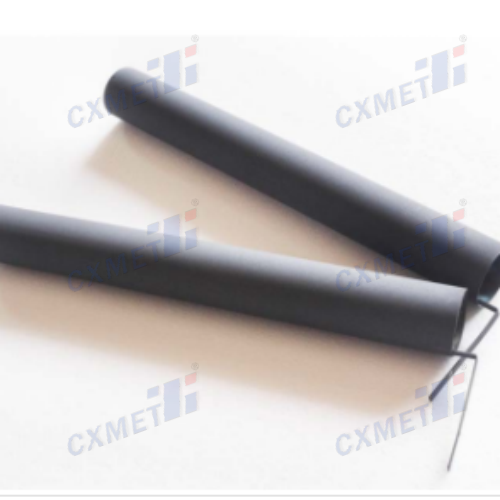

Understanding MMO Tubular Titanium Anodes and Their Working Principle
The science behind these anodes is a big step forward in cathodic protection devices for impressed current. At their core, they work by electrochemical reactions that turn the anode into a source of protective current that flows toward metal structures that are at risk.
The Core Construction Elements
A smooth titanium tube makes up each anode and acts as both a support structure and a current carrier. Titanium itself doesn't rust in soil, which makes it a perfect material for the substrate. When put on top of this base, a carefully controlled layer of mixed metal oxide makes the active electrochemical interface. The layer is usually 8 to 15 micrometers thick, but this can be changed depending on how long it will be used and the situations where it will be used. This MMO Tubular titanium Anode layer is mostly made up of iridium oxide and tantalum pentoxide for use in soil, and it is designed to help oxygen escape instead of chlorine production.
Electrochemical Operating Principles
When electricity flows from a DC rectifier to the anode, the MMO coating helps oxygen move across the surface of the anode. This process keeps the electrochemical environment steady without breaking down the titanium substrate. The current that is released moves through the soil or coke breeze backfill material around it and toward structures that are protected. There, reduction reactions happen that stop corrosion. The current density number of 100 A/m² tells you how much safe current each square meter of anode surface can reliably send out without speeding up coating wear. This standard makes sure that engineers can correctly figure out what size anode they need to meet certain safety needs.
Why Soil Performance Differs from Marine Applications
Installations in soil are more difficult than installations in salt water. The coating recipe needs to be perfected so that oxygen can escape in environments with low chlorine levels. This is very different from marine environments where chlorine is the main gas that escapes. If you use a ruthenium-titanium oxide coating that was made for seawater in dirt, it will fail quickly because the chemistry of the coating doesn't meet the electrochemical needs. Our Ir-Ta oxide system works well with different types of soil and stays steady even when the pH changes from acidic to alkaline, which is common in underground uses.
Performance Comparison and Decision Factors
To choose corrosion protection anodes, you have to compare different material options based on criteria that are specific to the project. Each anode technology has its own pros and cons that affect the total cost of ownership and how reliable it is.
How MMO Anodes Compare to Traditional Materials
Because they are cheap to make, graphite anodes have traditionally been used in deep groundbed uses. But they use up between 0.5 and 1 kilogram per ampere-year, so in high-output systems they need to be replaced often. Our MMO Tubular titanium Anodes have usage rates that are less than 2 milligrams per ampere-year, which is about 500 times less than graphite. For properly designed systems, this big difference means that they can last more than 30 years, while graphite installations only last 5 to 10 years.
High-silicon cast iron anodes last a fair amount of time, but they are mechanically weak and break easily when they are installed, especially in hard soil. Their current output capacity also limits design options in setups with limited room. Platinum-coated titanium anodes work very well, but they cost a lot more because the price of platinum changes all the time. The MMO coating gives the same electrochemical performance as the platinized anode at a cost that is 40 to 60 percent less. This makes it the best choice for procurement managers who want to save money without sacrificing reliability.
Cost-Performance Analysis Over System Lifetime
The initial costs of buying something are only one part of the total costs of ownership. When we add up the cost of installation labor, system downtime for replacements, and corrosion failures that happen when anodes aren't being serviced, the economics change in a big way. For a normal deep groundbed installation, moving the drilling equipment can cost between $15,000 and $30,000. Increasing the time between repairs from 8 years to 30 years cuts down on the cost of multiple remobilizations, and the slightly higher original investment in the anode is usually recovered within the first ten years.
Industry data from oil and gas pipeline operators in Texas and Oklahoma shows that systems using our tubular titanium anodes have a 98 percent uptime rate over 20-year observation periods. This is higher than the 89 percent uptime rate for graphite-based systems, which need to be fixed on a regular basis. This advantage in dependability is very important for protecting assets where corrosion failures could cause damage to the environment or stop operations.
Procurement Guide: Selecting and Ordering
When buying specialized rust protection tools, it's important to keep a few key factors in mind that will affect the project's long-term success.
Essential Supplier Evaluation Criteria
Making sure of quality starts with the titanium base. Reliable providers give Mill Test Certificates that meet ASTM B338 standards and show what chemicals are in the base material and how strong it is. Because grade 1 titanium is more flexible, there is less chance of microcracks forming during the heat coating process. These papers should be able to track things back to the mill production lot they came from.
The process of applying a coating needs special skills and tools. We use a thermal breakdown method in which precursor liquids are brushed on and then heated to specific temperatures and sintered. This cycle is repeated many times to reach the desired coating thickness. Suppliers should show how they check the quality of their products, such as by doing rapid life tests that check the binding of coatings and the performance of electrical systems under real-life service conditions. Reports from independent third parties that test the coating add to the confidence in claims that it will last a long time.
Understanding Pricing Structures and Customization
Because they are easier to make, standard MMO Tubular titanium Anodes with diameters that range from 19 mm to 32 mm and lengths that range from 0.5 m to 3 m have the most competitive prices. Custom dimensions mean more money for tools and setup, but they allow for better optimization for certain groundbed geometries. The coating loading, which is given in grams per square meter, has a direct effect on both the price per unit and the expected service life. Instead of using bare requirements as a starting point, engineers should base their loading requirements on total estimates for the current year.
Bulk order discounts become significant at quantities above 50 pieces, with further price breaks at 100 and 500-piece volumes. By ordering more at once, procurement managers who are in charge of multi-site protection programs can cut costs by 15 to 25 percent. Lead times are usually between 8 and 12 weeks for basic configurations and between 14 and 16 weeks for unique wire connections or coatings.
Logistics and Delivery Considerations
Titanium anodes can be shipped as regular goods, but they need to be protected so that the connection points and covering surfaces don't get damaged. It usually takes 4 to 5 weeks for containers to travel from Shaanxi Province to major U.S. ports, plus extra time for transporting the containers to project areas in China. We work with freight forwarders who know how to handle industrial electrical equipment and make sure that the right paperwork is sent for customs clearance. When making project schedules, procurement professionals should leave 16 to 20 weeks of overall time from the purchase order to the item being available on-site.
Installation, Maintenance, and Longevity in Soil Environments
The right way to install anodes directly affects whether they last as long as they're supposed to or break down early because of mistakes that could have been avoided.
Site-Specific Installation Guidelines
The choice of backfill material around anodes should be based on readings of the soil's resistance. In soils with a resistance greater than 5,000 ohm-cm, petroleum coke breeze backfill greatly improves current flow and lowers the voltage needed for operation. We suggest putting a backfill column around the MMO Tubular titanium Anode tube that is at least 150 mm thick. We use a center connection design that puts the wire termination inside the sealed tube. This keeps water and mechanical stress from getting into the weak spot. External end connections are easier to make, but they focus the flow of current at the ends of the tubes. This causes covering wear that shortens the life of the anode.
Vertical installation in drilled holes between 150 mm and 200 mm in diameter lets you place the backfill correctly while keeping drilling costs low. Multiple anodes connected in series inside a single borehole make up an anode string configuration that allows for flexible current capacity scaling. We usually set a 1-meter vertical gap between each anode in a string. This makes sure that the current is spread out evenly while also meeting the requirements for borehole depth.
Maintenance Best Practices
While disposable anodes need to be replaced, above-ground parts of impressed current systems that use our tube titanium anodes need to be checked on a regular basis. Every year, voltage and current readings at the rectifier make sure that the system is working within the limits that were planned. Large increases in operating voltage might not mean that the anode coating has failed, but that the backfill is breaking down or there are problems with the connections. The coating itself uses so little that measurements of its thickness stay the same after decades of use.
Troubleshooting Common Performance Issues
Voltage increases that don't make sense are usually caused by bad electrical connections, not anode degradation. Thermal cycling and mechanical shaking can make wire terminations less secure, which raises the resistance of the contact. This risk is kept to a minimum by the center connection design, which seals connections inside the tube body. Operating above the rated current density or using the wrong coating formulations are two common reasons why coatings fail too soon. Ruthenium-based coatings that are meant to evolve chlorine quickly break down when forced to evolve oxygen in soil environments. We avoid this mismatch by choosing the right coating for the job.
Future Trends and Innovations
Cathodic protection keeps getting better thanks to new materials science discoveries and infrastructure owners becoming more aware of the need to protect the environment.
Coating Technology Advancements
Adding tin, cerium, and other elements to standard iridium-tantalum mixtures is being looked into in ternary and quaternary oxide systems research. These additions may improve the coating's conductivity and lower its overpotential, which will mean that the system uses less energy over its entire life. As an option to standard brush-and-sinter methods, manufacturers are also improving thermal spray coating methods, which could make coatings more uniform on complex shapes.
Manufacturing Precision Improvements
With automated coating application systems, it is now easier to control the thickness of layers, and the coefficient of variation has gone down from ±15% to ±8% between production runs. With this level of accuracy, engineers can confidently set tighter performance tolerances. Advanced non-destructive testing methods, like eddy current and ultrasound inspection, find flaws in the covering below the surface before the anodes are put to use. This makes the field even more reliable.
Sustainability and Regulatory Drivers
More and more, infrastructure owners are being pushed to make corrosion protection systems less harmful to the environment. Because MMO Tubular titanium Anodes last so long, they don't need to be replaced as often. This cuts down on the carbon emissions that come from making and transporting them. Because the stable electrochemical processes only make oxygen and hydrogen as waste, they don't change the pH of the soil like graphite anodes sometimes do. When deciding whether to permit new cathodic protection installations, regulatory bodies are starting to take these environmental benefits into account.
Growing use of green energy sources for impressed current systems is in line with what companies say they will do to be more environmentally friendly. When our low-overpotential anodes are combined with solar-powered rectifiers, they make protection systems that have little long-term impact on the environment. This is a good combination for operators who care about the environment.
Conclusion
To protect against rust in soil for a long time, you need to carefully choose an anode based on electrochemical basics and a lifecycle cost study. MMO Tubular titanium Anodes rated at 100 A/m² have been shown to work better than standard materials because they consume much less, last longer, and keep the current flow stable in a wide range of soil conditions. The tube shape makes the most of the surface area, and the center connection design keeps the wire terminations safe. It's helpful for procurement teams to know how to check the quality of substrates, how coating chemistry differs for soil and marine uses, and how customization choices fit with the needs of a particular project. These anodes are a reliable base for cathodic protection systems that protect vital infrastructure across the United States. They are easy to place and don't need much upkeep.
FAQ
1. What determines anode service life in groundbed installations?
The layer thickness and working current density have the most impact on the service life. It takes less than 2 grains of our iridium-tantalum oxide layer to last one year of use. At 100 A/m² in soil, this very low consumption lets systems have 20–50-year design lives when they work at their rated capacity. Going over the current density limit speeds up coating wear in a proportional way.
2. Why specify center connection instead of end-mounted cables?
Placing the link in the middle of the tube evenly distributes the current along its length. This gets rid of the end-effect concentration that wears down the tube's ends too quickly. By sealing the connection inside the tube, you keep it from getting damaged during installation and stop electrolyte from getting in and corroding the cable-to-anode junctions, which is a common way for end-connected designs to fail using our MMO Tubular titanium Anode.
3. Can the same anode work in both soil and seawater?
The base is still good, but the coating mixture needs to be right for the situation. Ir-Ta oxide systems work best for releasing oxygen into soil and rainwater, while Ru-Ti systems work best for releasing chlorine into saltwater. If you use the wrong coating chemistry, it will fail quickly because the electrochemical needs don't match up with what the coating can do.
Partner with a Trusted MMO Tubular Titanium Anode Manufacturer
Since 2005, CXMET has been designing corrosion protection solutions for tough industrial settings. Our 50,000-square-meter plant in China's Titanium Valley is home to more than 80 trained techs who have built up their knowledge over that time. Our MMO Tubular titanium Anodes are made up of Grade 1 titanium plates and carefully designed coatings that give you the 100 A/m² performance you need for use in the soil environment. We offer full technical support throughout the whole procurement process, from helping with the initial system design to guiding you through installation and making sure you get the best performance over time. Our team comes up with solutions that meet both your performance needs and your budget, whether you need standard configurations or custom dimensions that fit specific groundbed geometries. Get in touch with our engineering team at sales@cxmet.com to talk about your cathodic protection project needs and get reasonable prices and full technical specifications for your application.
References
1. Morgan, J. (1987). Cathodic Protection: Principles and Application to Pipelines and Storage Tanks. NACE International, Houston, Texas.
2. Baeckmann, W., Schwenk, W., & Prinz, W. (1997). Handbook of Cathodic Corrosion Protection: Theory and Practice of Electrochemical Protection Processes. Gulf Publishing Company, Houston, Texas.
3. NACE International. (2000). Impressed Current Cathodic Protection of Reinforcing Steel in Atmospherically Exposed Concrete Structures (SP0290-2007). NACE International Publication, Houston, Texas.
4. Comninellis, Ch., & Vercesi, G.P. (1991). Characterization of DSA-Type Oxygen Evolving Electrodes: Choice of a Coating. Journal of Applied Electrochemistry, Volume 21, Issue 4, Pages 335-345.
5. Trasatti, S. (2000). Electrocatalysis: Understanding the Success of DSA. Electrochimica Acta, Volume 45, Issue 15-16, Pages 2377-2385.
6. Srinivasan, S., & Gileadi, E. (1981). The Potential-Sweep Method: A Theoretical Analysis. Electrochimica Acta, Volume 11, Issue 3, Pages 321-335.