You need to know about the material's features, how it should be worked with, and the weather in the area in order to choose the best niobium bar for fast industrial uses. In this in-depth guide, we learn about important topics like niobium pure grades, size standards, mechanical qualities, and issues that only happen in the military, chemical processing, electronics, and power generation. When engineers and purchasing managers know this, they can make smart choices that improve performance and make sure that the product will last in tough working circumstances.
|
|
|
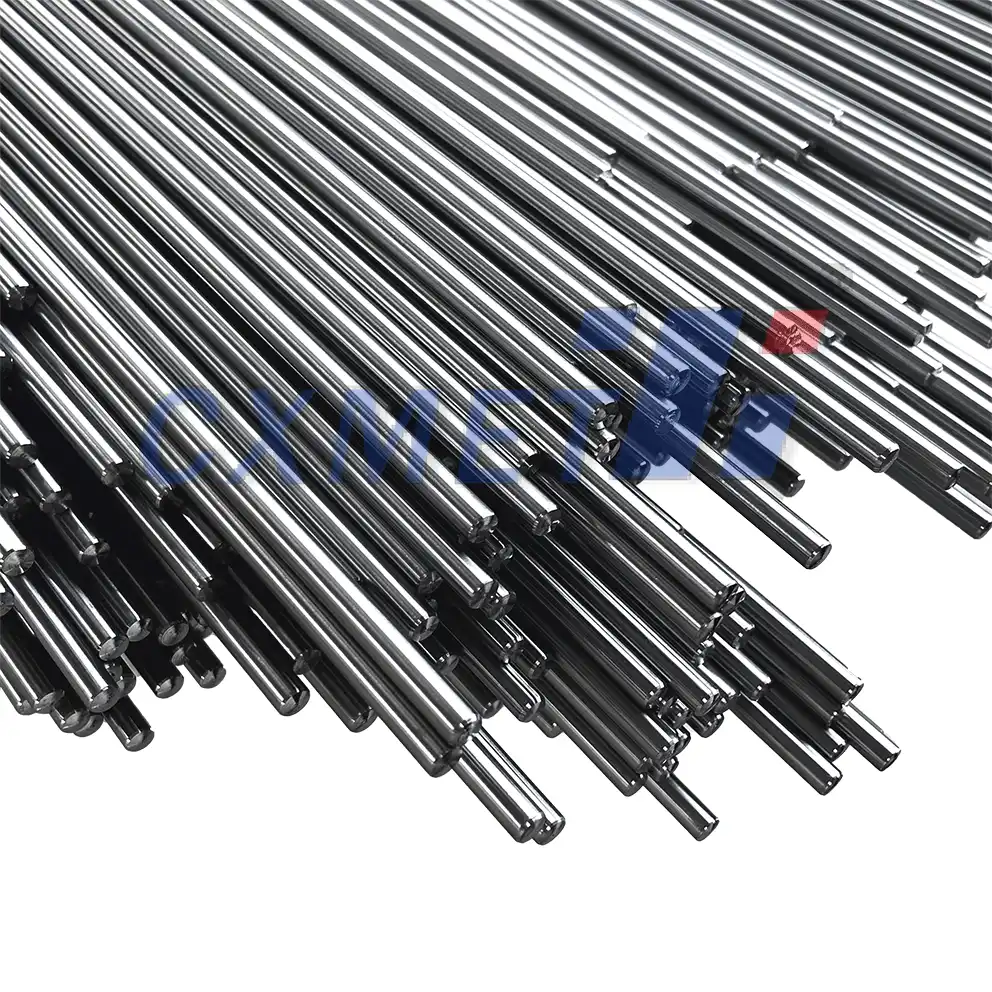
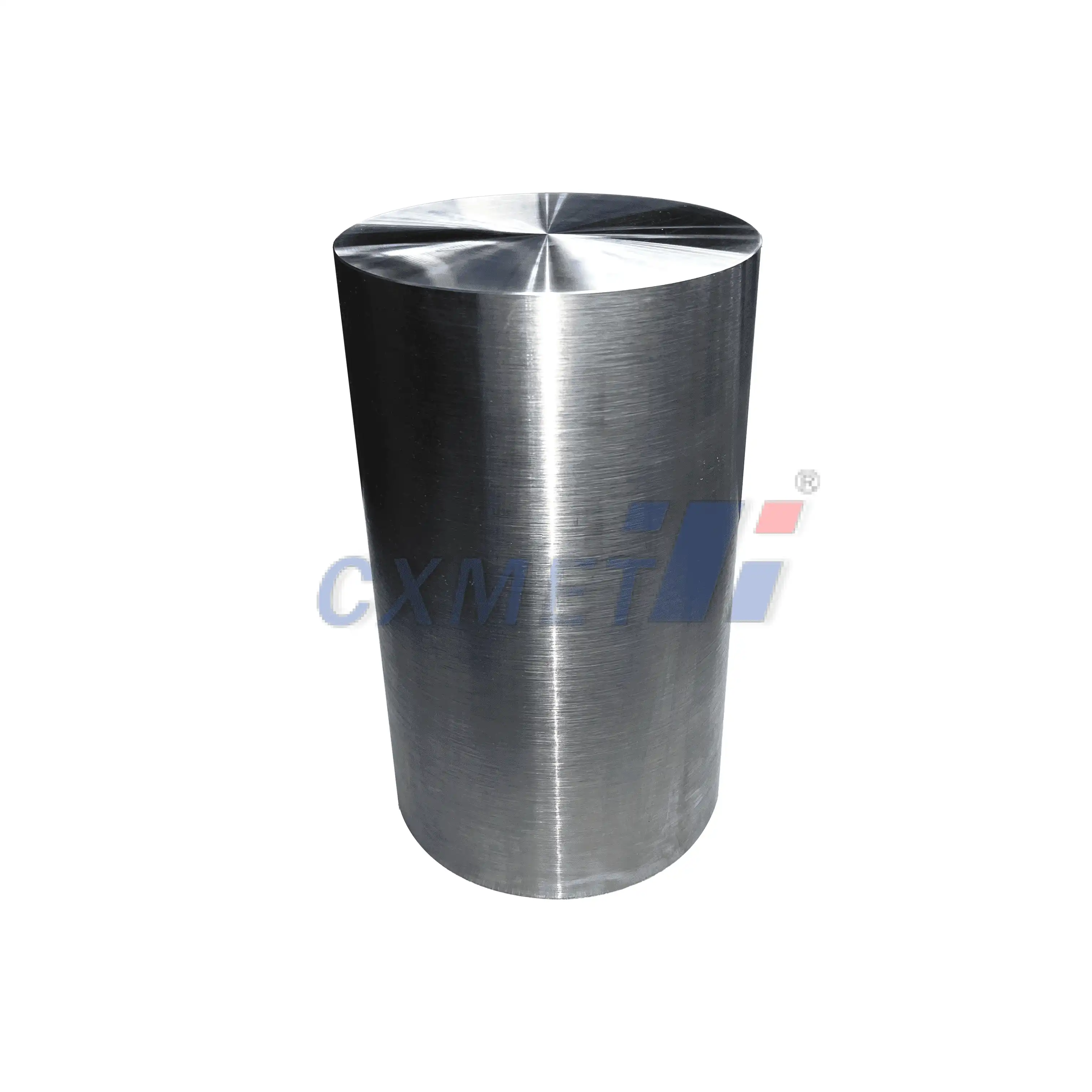
Understanding Niobium Properties and Performance Characteristics
Very special features of niobium metal make it very useful in many manufacturing settings. It's very resistant to rust, especially in acidic settings where regular metals break down. It is very important for modern electronics and magnetic resonance uses because it becomes superconducting at temperatures below 9.2 Kelvin.As niobium's density hits about 8.57 g/cm³, it offers strong mechanical support without adding too much weight. According to the quality and processing method, niobium's tensile strength can range from 200 to 400 MPa when it is heated. Some cold-worked niobium bars can have tensile strengths higher than 600 MPa, but it depends on how much they have deformed.Different from other hard metals, niobium has unique thermal qualities. At 7.3 × 10⁻\°C, its thermal expansion rate stays low, which lowers thermal stress in high-temperature situations. Although actual uses usually happen well below this temperature range, the material can still keep its shape at temperatures as high as 2,477°C.Niobium's transmission qualities include both electrical and heat features. Around 53.7 W/m·K of thermal conductivity is measured at room temperature, which makes it easy for heat to move through specialized equipment. With an electrical resistivity of 15.2 µ··cm, it can be used in situations where controlled electrical qualities are needed.
Critical Selection Factors for Industrial Applications
When choosing niobium bars for tough jobs, purity levels are the most important thing to think about. Most commercial purity grades are between 99.5% and 99.95%. For certain electronics uses, ultra-high purity grades can hit 99.99%. Materials with a higher quality level cost more, but they work better in harsh settings.For accurate production processes, accuracy in measurements is very important. Standard niobium bars keep their sizes within ±0.05 mm for diameter measurements and ±1% for length measures. Custom sizes can be made to fit the needs of each job, but lead times may get longer as a result.The quality of the surface finish affects both how well it works and how it can be processed. For most structure uses, mill finish surfaces are good enough, but polished surfaces are needed for vacuum systems and other specialized chemical processing equipment. Surface roughness standards are usually between 1.6 and 0.8 μm Ra, but this can change based on the needs of the product.The metallurgical state has a big effect on the mechanical qualities and how the metal is processed. When niobium bars are annealed, they are at their most flexible for shaping, but when they are work-hardened, they become stronger for structural uses. Conditions that ease stress strike a mix between the ability to shape and the ability to perform mechanically for medium-sized uses.
Industry-Specific Application Requirements
Marine settings need niobium alloys that don't rust or grow biofouling in salt water. Niobium is used in naval systems for things like heat transfer parts, propulsion system parts, and special screws. Because it doesn't crack when exposed to chloride, the material is better than regular stainless steels for use in saltwater environments.Niobium is very resistant to acid, so it is used in the chemical processing industry to make reactor tanks, heat exchanges, and piping systems. Niobium is resistant to fluoride attack, which is especially helpful in hydrofluoric acid settings where other materials break down quickly. Temperature cycling resistance makes sure that batch processing processes will work reliably for a long time.Niobium is used to make turbine parts, heat recovery systems, and parts for nuclear reactors because it is strong and stable at high temperatures. As long as the material doesn't absorb many neutrons, it can be used in nuclear uses where neutron economy is important.Ultra-high pure niobium is needed in the electronics industry for superconducting uses, RF holes, and special tools for handling semiconductors. For particle accelerators and MRI devices to reliably use superconducting technology, the magnetic qualities must stay the same.
Quality Standards and Certification Requirements
Different industries all follow the same rules for niobium bar specs. The ASTM B392 standard has strict rules for niobium and niobium alloy bars. These rules include limits on chemical makeup and mechanical properties. This standard makes sure that all providers and apps follow the same rules.For aerospace uses, it's common to need extra certifications like NADCAP special process approvals and AS9100 quality control systems. These approvals show that the company can keep quality standards high and track products all the way through the manufacturing process.Verification of chemical makeup through verified analysis is now needed for important uses. Testing by a separate lab verifies the supplier's certificates and makes sure that the quality standards are met. Limits on carbon, oxygen, and nitrogen are paid extra attention to because they have an effect on mechanical qualities.Tensile testing, hardness measures, and grain size studies are all common types of mechanical testing. These tests check the qualities of the material and the uniformity of the processing, which makes sure that the product will work well in service. Methods of non-destructive testing find problems inside that could affect performance.
Processing and Fabrication Considerations
To keep the material's purity and get the qualities you want, treating niobium needs special methods. Working temperatures that are very hot, between 1,200°C and 1,400°C, need controlled atmosphere burners to keep things from oxidizing. For mild deformations, cold working is possible, but for large deformations, intermediate heating may be needed.Welding niobium is hard because it needs special filler materials and safety from toxic gases. For precise tasks, electron beam and laser welding work great, while gas tungsten arc welding is good for general manufacturing needs. To improve the qualities of the joint, post-weld heat treatment may be needed.The way machining works means that you have to be very careful when choosing tools and optimizing cutting parameters. Work hardening is kept to a minimum with positive rake angles on carbide tools, and heat damage is avoided with flood coolants. During grinding, controlling surface debris is very important to keep the material pure.Using special forming methods like hydroforming, explosion forming, and precision casting is common when making things out of niobium. With these methods, complicated shapes can be made while keeping the material's qualities and measurements accurate.
Economic Factors and Supply Chain Management
The price and supply of niobium bar in different pure grades and sizes are affected by changes in the market. The price of raw materials changes depending on how much niobium is mined and how much is wanted around the world. Brazil is the world's biggest supplier of niobium, which means that buying managers need to think about the risks that could happen in the supply chain.Strategies for managing inventory weigh the costs of keeping things in stock against the safety of supplies for important uses. Long-term supply deals can help keep prices stable and make sure that supplies are always available, which is especially important for production projects that are already underway.Lead times are very different depending on the quality needs, the size, and the supplier's availability. Standard industrial grades usually ship between 4 and 6 weeks, but ultra-high quality materials may need 12 to 16 weeks to be made and tested.Some possibilities for value engineering are improving cleanliness standards, standardizing measurements, and combining relationships with suppliers. These methods can lower the overall cost while still meeting performance standards.
Conclusion
In order to pick the best niobium bar for high-performance industry projects, you should carefully consider the qualities of the metal, the needs of the job, and the quality standards. You can make smart decisions that improve performance and save money if you know about pure grades, mechanical qualities, and handle options. The military, chemical, technology, and power generation businesses all have very specific needs that mean they have to pick products and sources in a very specific way. To make sure that important programs run smoothly, you need to work with providers who have a lot of knowledge and can give you expert know-how, consistent quality, and reliable service.
Partner with CXMET for Premium Niobium Bar Solutions
CXMET stands as your trusted niobium bar supplier, delivering exceptional quality and technical expertise to meet demanding industrial requirements. Our comprehensive inventory includes various purity grades, dimensions, and metallurgical conditions to support diverse applications across marine, chemical processing, electronics, and power generation industries.Our experienced technical team provides customized support throughout the selection and procurement process. We understand the critical nature of material specifications in high-performance applications and maintain rigorous quality control standards to ensure consistent results. With over 20 years of experience in non-ferrous metals, CXMET has built lasting partnerships with industry leaders worldwide.Located in China's Titanium Valley, our 50,000 square meter facility houses advanced processing equipment and quality testing laboratories. Our team of 80+ professional technicians ensures every niobium bar meets or exceeds specified requirements through comprehensive testing and certification processes.Contact us at sales@cxmet.com to discuss your specific niobium bar requirements. Our procurement specialists provide competitive pricing, technical consultation, and reliable delivery schedules to support your project success.
References
1. Thompson, R.J. (2019). "Refractory Metals in Industrial Applications: Properties and Selection Criteria." Journal of Materials Engineering and Performance, Vol. 28, pp. 1245-1258.
2. Chen, L.M. & Rodriguez, A. (2020). "Niobium Alloys for High-Temperature Applications: Processing and Performance Characteristics." International Materials Review, Vol. 65, Issue 3, pp. 167-189.
3. Industrial Metals Handbook Committee. (2021). "Non-Ferrous Metals Selection Guide for Chemical Processing Industries." ASM International, 12th Edition, pp. 445-478.
4. Walsh, K.P. et al. (2018). "Superconducting Materials in Electronics Manufacturing: Quality Standards and Performance Requirements." IEEE Transactions on Applied Superconductivity, Vol. 28, No. 4, pp. 2301-2315.
5. International Niobium Study Group. (2022). "Global Supply Chain Analysis and Material Specifications for Industrial Niobium Applications." Annual Technical Report, pp. 78-124.
6. Martinez, S.A. & Kim, J.H. (2020). "Corrosion Resistance of Refractory Metals in Marine Environments: Comparative Analysis and Selection Guidelines." Corrosion Science and Technology, Vol. 19, Issue 2, pp. 89-105.