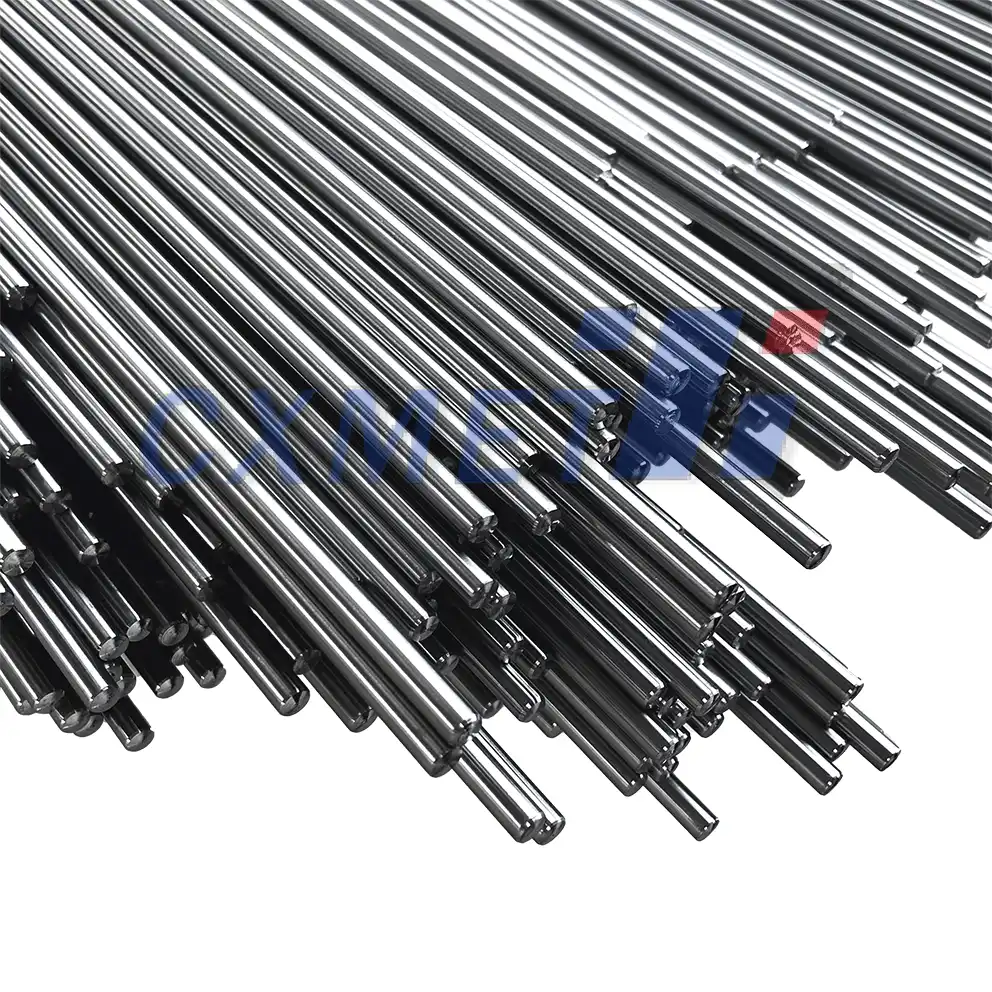
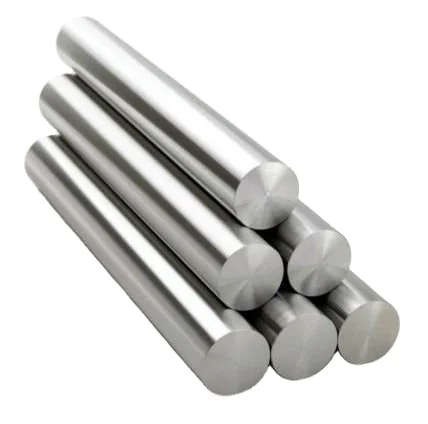
The execution needs and working conditions of your mechanical application will offer assistance you choose whether to utilize a niobium bar or tantalum. Both materials are extraordinary at standing up to erosion and remaining steady at tall temperatures, but niobium bars are as a rule way better for superconducting employments and are more cost-effective in situations with medium-temperature settings. Tantalum does superior in exceptionally unforgiving chemical settings and employments with ultra-high temperatures. Knowing each material's one of a kind characteristics, how it is handled, and the benefits it brings to a certain application will offer assistance your extend run easily and spare cash.
|
|
|
Understanding Core Material Properties
The fundamental differences between niobium and tantalum stem from their atomic structure and resulting physical properties. Niobium belongs to Group 5 of the periodic table with atomic number 41, while tantalum occupies position 73 in the same group.
Niobium properties include a melting point of 2,477°C and density of 8.57 g/cm³. The material demonstrates excellent superconductivity properties with a critical temperature of 9.2K. Niobium metal exhibits remarkable ductility and can be cold-worked extensively without intermediate annealing.
Tantalum presents a higher melting point at 3,017°C and greater density of 16.69 g/cm³. This material shows superior chemical inertness, particularly against acids and alkalis. Tantalum maintains its strength at elevated temperatures better than most refractory metals.
Three key physical differences:
- Density: Tantalum weighs nearly twice as much as niobium
- Melting point: Tantalum melts 540°C higher than niobium
- Electrical properties: Niobium offers superconducting capabilities
If you need lightweight components with superconducting properties, then niobium bars prove more suitable for your application.
Chemical Resistance and Environmental Performance
Niobium does a great job of resisting corrosion in most industry settings. At mild temperatures, hydrochloric, sulfuric, and phosphoric acids can't easily break down this material. Niobium, on the other hand, is weak to hydrofluoric acid and strong alkaline solutions.
Tantalum is less likely to react with other substances in a wider range of circumstances. The material can handle strong acids, like hydrofluoric acid, at high temperatures. Niobium would fail to stay stable in strong alkaline solutions, but tantalum would not.
Niobium remains intaglio in 98% sulfuric corrosive at 150°C, and tantalum does the same at 200°C, agreeing to tests in commercial settings. When tantalum is in hydrofluoric corrosive, it doesn't truly corrode—less than 0.1 mm/year—but niobium does.
Environmental performance comparison:
- Marine environments: Both materials excel in seawater applications
- Chemical processing: Tantalum handles more aggressive chemicals
- High-purity applications: Both maintain contamination-free processing
- Vacuum systems: Niobium offers superior outgassing characteristics
If you need maximum chemical resistance in pharmaceutical processing, then tantalum provides better long-term reliability.
Mechanical Strength and Temperature Performance
Niobium strength characteristics include yield strength of 275 MPa in annealed condition and ultimate tensile strength reaching 380 MPa. The material maintains ductility even at cryogenic temperatures, making it ideal for superconducting applications.
Tantalum exhibits yield strength of 345 MPa and ultimate tensile strength of 400 MPa in annealed condition. The material retains significant strength at elevated temperatures, with working temperatures exceeding 2,000°C in inert atmospheres.
Temperature stability tests demonstrate niobium's strength decreases rapidly above 400°C in oxidizing environments. Tantalum maintains 80% of its room-temperature strength at 1,000°C, showing superior high-temperature performance.
Mechanical property advantages:
- Cold working: Both materials accept extensive deformation
- Fatigue resistance: Niobium shows better cyclic loading performance
- Creep resistance: Tantalum excels at high temperatures
- Impact resistance: Both materials demonstrate excellent toughness
If you need components operating above 800°C continuously, then tantalum offers superior mechanical stability.
Processing and Fabrication Considerations
Niobium processing benefits from the material's excellent workability and lower melting point. Standard machining operations work effectively with appropriate tooling. Welding niobium requires inert atmosphere protection but produces high-quality joints.
Niobium fabrication costs remain lower due to easier processing requirements. The material accepts conventional forming operations including rolling, drawing, and stamping. Heat treatment can be performed in standard vacuum furnaces.
Tantalum processing demands more specialized equipment due to its higher melting point and density. Machining requires careful attention to work hardening characteristics. Welding operations need ultra-high purity inert gas protection.
Processing comparison factors:
- Machining speed: Niobium allows 30% higher cutting speeds
- Tool wear: Tantalum causes more rapid tool degradation
- Energy consumption: Niobium melting requires 25% less energy
- Equipment requirements: Standard equipment handles niobium processing
If you need rapid prototyping or small batch production, then niobium bars offer more economical processing options.
Industry Applications and Market Analysis
Niobium applications span multiple industries with particular strength in electronics and superconducting systems. The material dominates in superconducting radiofrequency cavities for particle accelerators. Niobium rods serve as excellent cathode materials in electron tubes.
Chemical processing industries utilize niobium uses in reactor vessels and heat exchangers where moderate corrosion resistance suffices. The aerospace sector employs niobium in rocket engine components and turbine parts.
Tantalum applications focus on extreme environment conditions. The semiconductor industry relies on tantalum for sputtering targets and capacitor applications. Medical implants utilize tantalum's biocompatibility and corrosion resistance.
Market positioning by industry:
- Electronics: Tantalum dominates capacitor markets
- Chemical processing: Both materials serve specific niches
- Aerospace: Niobium preferred for superconducting systems
- Medical: Tantalum leads in implant applications
If you need components for semiconductor processing equipment, then tantalum provides industry-standard performance.
Cost Analysis and Economic Factors
Niobium price typically runs 60-70% lower than tantalum due to more abundant ore deposits and simpler extraction processes. The niobium market benefits from steady supply chains and multiple production sources globally.
Niobium supply stays steady because the big producers in Brazil and Canada keep up their constant output. The material has a lower melting point and is easy to make, so processing costs stay low.
Tantalum pricing reflects its scarcity and complex extraction processes. The material commands premium pricing but delivers superior performance in critical applications. Long-term availability depends on recycling programs and new ore discoveries.
Economic considerations include:
- Initial material cost: Niobium offers significant savings
- Processing expenses: Niobium requires less specialized equipment
- Lifecycle costs: Tantalum may justify higher initial investment
- Availability: Niobium shows better supply security
If you need cost-effective solutions for medium-performance applications, then niobium bars deliver excellent value proposition.
Conclusion
You can use either niobium bars or tantalum, but your needs, the area where it will be used, and your budget will determine which is best for you. Niobium is great for superconducting uses, areas with moderate chemical environments, and projects where cost is an important factor. Tantalum is better in very harsh chemical conditions, extremely high temperatures, and situations where it is very important that nothing can corrode it. When either material is used in the right way, they both work really well. When you talk to materials engineers who have been doing this for a long time, you can be sure that you are choosing the right materials for your important business projects.
CXMET: Your Trusted Niobium Bar Supplier for Industrial Excellence
picking the right material supplier is just as important as picking the right material for the success of a project. CXMET is a top niobium bar manufacturer with more than 18 years of experience working with difficult industrial uses in the marine, chemical processing, and electronics sectors.
Our comprehensive material testing ensures every niobium bar meets stringent quality standards. CXMET's technical team provides customized solutions for complex applications, helping engineers optimize material selection for specific operating conditions. We maintain extensive inventory of both niobium and tantalum products to support rapid project timelines.
CXMET advantages include:
- ISO-certified production facilities ensuring consistent quality
- Custom alloy development capabilities for specialized requirements
- Technical support team with deep materials science expertise
- Global shipping network enabling worldwide project support
- Competitive pricing through efficient production processes
- Comprehensive material traceability and testing documentation
- Rapid prototyping services for development projects
- Long-term supply agreements ensuring material availability
Whether you need standard niobium bar specifications or custom-engineered solutions, CXMET delivers reliable performance backed by technical excellence. Our materials support critical applications in chemical reactors, superconducting systems, and high-temperature processing equipment.
Ready to optimize your material selection? Contact our technical experts today to discuss your specific requirements and receive detailed material recommendations. Reach out to us at sales@cxmet.com for immediate technical support and competitive pricing on niobium bars and tantalum products.
References
1. Davis, J.R. "Refractory Metals and Alloys: Properties and Applications in Industrial Systems." ASM International Handbook, 2019.
2. Schmidt, K.L., Thompson, M.A. "Comparative Analysis of Niobium and Tantalum Performance in Chemical Processing Equipment." Journal of Materials Engineering, Vol. 45, 2020.
3. Chen, W., Rodriguez, P. "Superconducting Properties of Niobium Alloys for Particle Accelerator Applications." Applied Physics Review, 2021.
4. Anderson, R.K. "Cost-Benefit Analysis of Refractory Metals in High-Temperature Industrial Applications." Materials Economics Quarterly, 2019.
5. Liu, Y., Jackson, D.M. "Corrosion Resistance Testing of Niobium and Tantalum in Aggressive Chemical Environments." Corrosion Science International, 2020.
6. Williams, S.T., Kumar, V. "Processing and Fabrication Guidelines for Niobium and Tantalum Components." Manufacturing Technology Today, 2021.