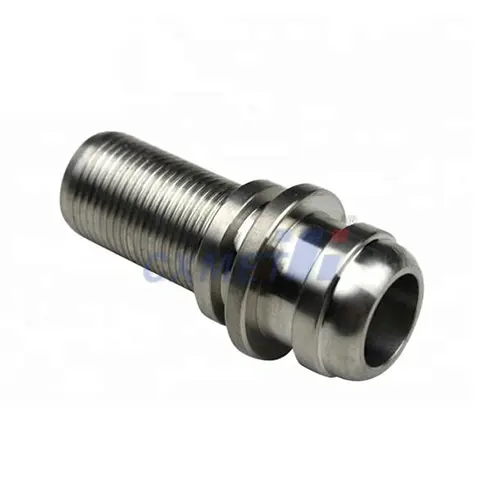
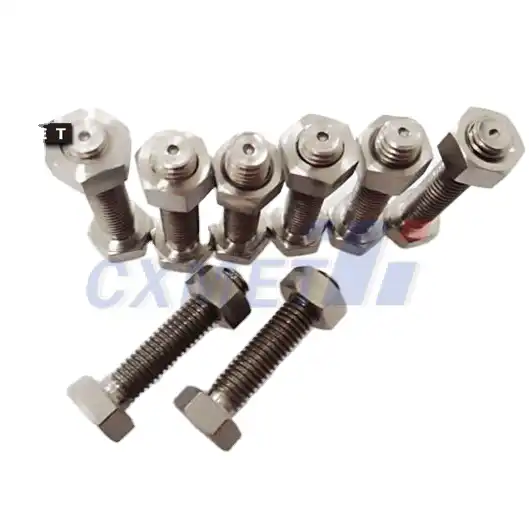
Engineers and procurement managers in today's competitive production environment must understand customized CNC titanium parts. Depending on complexity, prototypes cost $200–800 per part, whereas bulk orders cost $50–300 per part. Precision titanium components are expensive due to titanium's strength-to-weight ratio and corrosion resistance. Aerospace, medical device, and chemical processing demand drives pricing trends, with manufacturers offering volume discounts for orders above 100 units. Recent supply chain stabilization and titanium alloy availability have made rapid prototyping and high-volume production pricing more predictable.
|
|
|
Understanding the Titanium CNC Machining Market Landscape
Global Market Dynamics and Demand Patterns
Global demand for titanium CNC machining has reached record levels across numerous industries. The greatest market for precision titanium components is aerospace, at 45%. Increasing age and biocompatible surgical procedures push medical titanium implants.
For corrosion-resistant applications, chemical processing plants increasingly use titanium CNC fabrication. The marine industry, especially offshore oil platforms and naval vessels in hostile saltwater conditions, drives market demand. This sector values material reliability over cost, ensuring constant demand for high-quality titanium alloy machining.
Regional Manufacturing Capabilities
The "Titanium Valley" in Shaanxi Province is a hub for CNC-machined titanium components with competitive prices and international excellence. European titanium manufacturers specialize in aircraft applications and charge premium rates. North American medical device manufacturers excel at titanium CNC prototypes for surgical tools.
Manufacturing capabilities vary significantly between regions, with some focusing on high-volume production while others specialize in custom titanium fabrication for niche applications. This geographical distribution affects pricing structures and lead times for different project requirements.
Comprehensive Price Breakdown Analysis
Factory Pricing Structures and FOB Considerations
Prototype titanium CNC turning costs $180–650 per item, with material expenses accounting for 35–45%. Bulk orders of 50+ units can save 25-40% through economies of scale. Complex titanium CNC milling geometries cost more due to longer machining periods and specialized tools.
FOB pricing from Chinese manufacturers averages $45-280 per part for standard configurations, while CIF pricing adds 8-15% for shipping and insurance costs. European suppliers quote 40-60% higher prices but offer shorter lead times for urgent requirements. Material grades significantly impact pricing, with Grade 5 titanium commanding 15-25% premiums over commercially pure grades.
Minimum Order Quantities and Volume Discounts
Most manufacturers require 10-25 pieces for normal customized CNC titanium parts, while some take single-piece orders at a premium. Volume discounts start at 50 pieces and go from 15-25%. Orders above 200 parts save 35–45% over prototype pricing.
Custom titanium brackets and fasteners often qualify for additional volume discounts due to simplified machining requirements. Complex aerospace components maintain higher pricing even at volume due to stringent quality requirements and specialized inspection procedures.
Additional Cost Considerations and Hidden Expenses
Import duties on titanium products range from 0-7.5% depending on the country of origin and destination. Logistics costs typically add $15-45 per kilogram for air freight, while ocean freight reduces this to $3-8 per kilogram with extended delivery times. Customs clearance fees average $150-300 per shipment regardless of order size.
Quality inspection requirements for aerospace applications can add 8-15% to base pricing. Special packaging for precision components adds $25-75 per shipment. Express shipping for urgent prototype requirements can increase logistics costs by 300-500%.
Critical Factors Influencing Titanium Component Pricing
Raw Material Cost Fluctuations
Titanium sponge prices have stabilized around $6.50-8.20 per kilogram for commercial grades, affecting component costs. Grade 5 titanium alloy costs 20-30% more owing to aluminum and vanadium. Supply chain breakdowns can cause 15-25% price surges, although long-term contracts reduce volatility.
Recycled titanium content helps control costs while maintaining performance characteristics. Manufacturers increasingly utilize titanium scrap for non-critical applications, reducing material costs by 10-20%. High-strength titanium parts for aerospace applications continue to require virgin material to meet certification requirements.
Labor and Manufacturing Overhead
Skilled CNC operators command premium wages due to titanium's challenging machining characteristics. Labor costs represent 25-35% of total manufacturing expenses for complex geometries. Automated manufacturing systems help reduce labor content while improving consistency and repeatability.
Equipment depreciation for titanium-capable machinery adds high overhead costs. Specialized cutting tools for titanium CNC cutting require frequent replacement, contributing 8-12% to manufacturing costs. Climate-controlled facilities for precision work add operational expenses but ensure dimensional accuracy.
Exchange Rate Impact and Economic Factors
Major industrial regions' currency swings affect foreign customers' prices. USD strength supports Asian importers, while EUR appreciation benefits European providers. Long-term contracts generally incorporate currency adjustment clauses for exchange rate risk.
Regional economic policies affect manufacturing costs through energy pricing, environmental regulations, and labor laws. Carbon taxation in some regions adds indirect costs to energy-intensive titanium processing operations.
Competitive Pricing Analysis Across Global Regions
Asian Manufacturing Advantages
Chinese titanium manufacturers use integrated supply chains and government support. Cost-effective labor and advanced equipment make lightweight titanium components affordable. Quality improvements in recent years have closed gaps with Western suppliers while keeping cost advantages.
Japanese precision engineering manufacturers charge more for ultra-tight tolerance work. South Korean facilities offer reasonable prices for standardized automobile components for high-volume applications.
Western Manufacturing Positioning
German manufacturers emphasize precision and reliability, particularly for critical aerospace applications. Their proximity to European aerospace clusters provides logistics advantages despite higher manufacturing costs. Specialized expertise in titanium sheet metal CNC operations commands premium pricing.
US manufacturers focus on defense and medical applications, where "Buy American" requirements create protected markets. Advanced manufacturing capabilities justify premium pricing for the most demanding applications.
Optimization Strategies for Cost-Effective Procurement
Effective Supplier Negotiation Techniques
Volume commitments across multiple projects enable significant pricing improvements. Annual purchase agreements typically achieve 12-20% cost reductions compared to spot pricing. Design optimization to reduce machining complexity can yield 15-30% savings without compromising functionality.
Flexible delivery schedules allow manufacturers to optimize production planning, often resulting in 5-10% pricing improvements. Early supplier involvement in design phases helps identify cost reduction opportunities before final specifications.
Design for Manufacturing Considerations
Standardizing features across different parts reduces setup costs and tooling requirements. Avoiding undercuts and deep pockets simplifies machining operations and reduces cycle times. Specifying standard surface finishes rather than custom requirements eliminates secondary operations.
Tolerance optimization balances functionality with manufacturing cost. Relaxing non-critical dimensions can reduce inspection requirements and improve yield rates. Material selection affects both raw material costs and machining parameters.
Future Market Trends and Price Forecasting
Technology Impact on Pricing
Advanced CNC technologies continue improving efficiency and reducing cycle times for titanium CNC precision engineering applications, including the production of Customized CNC Titanium Parts. Automation integration helps offset rising labor costs in developed markets. Improved cutting tool technologies extend tool life and reduce manufacturing costs.
Additive manufacturing competition affects pricing for low-volume, complex geometries. However, CNC machining maintains advantages for high-volume production and superior surface finishes. Hybrid manufacturing approaches combining both technologies may optimize costs for specific applications.
Supply Chain Evolution
Vertical integration is used by big makers to control costs and make sure deliveries are on time. The growth of regional supply chains makes it less common to rely on suppliers that only come from one source. Smart product management helps customers deal with price changes.
Sustainability requirements drive the adoption of recycled materials and energy-efficient processes. While initial investments increase costs, long-term benefits include reduced regulatory risks and improved customer acceptance.
Conclusion
Customized CNC Titanium Parts pricing depends on material costs, manufacturing capabilities, and market demand across industries. Prototypes cost more owing to setup and engineering support, but bulk orders have significant economies of scale. Recognizing regional manufacturing capabilities optimizes sourcing strategies for cost, quality, and delivery. Future pricing trends show technological advances driving efficiency gains, while supply chain regionalization may disrupt existing cost structures. Successful procurement strategies balance cost-performance with volume planning, design optimization, and strategic supplier partnerships. The market is more stable now, making long-term projects needing precision titanium components easier to arrange.
FAQ
Q: What factors most significantly impact the price difference between prototype and bulk titanium CNC parts?
A: Setup costs and tooling amortization create the largest price differentials. Prototypes absorb full setup expenses across single or few pieces, while bulk orders distribute these costs across hundreds of components. Material purchasing power, optimized production scheduling, and reduced inspection overhead per piece also contribute to bulk pricing advantages.
Q: How do lead times affect pricing for custom titanium components?
A: Standard lead times of 4-6 weeks typically offer the best pricing. Rush orders requiring 1-2 week delivery can increase costs by 25-50% due to production line disruptions and premium freight charges. Extended lead times beyond 8 weeks may qualify for additional discounts as manufacturers can optimize scheduling efficiency.
Q: What quality certifications impact titanium CNC part pricing?
A: ISO 9001:2015 certification represents baseline requirements with minimal price impact. AS9100 aerospace certification typically adds 15-25% to manufacturing costs. Medical device certifications like ISO 13485 can increase pricing by 20-30%. NADCAP accreditation for special processes commands additional premiums for critical applications.
Partner with CXMET for Superior Titanium CNC Manufacturing Solutions
CXMET is a titanium CNC machining services partner you can trust. We have the latest manufacturing skills and over 20 years of experience in the field. Our factory in Titanium Valley, China, gives low prices while still providing the great quality your important applications need. We work with the aerospace, medical, marine, and chemical processing industries, providing surface finishes that meet Ra 0.8 standards and precise tolerances of ±0.01mm.
As a leading customized CNC titanium parts manufacturer, we understand the importance of both prototype flexibility and bulk production efficiency. Our comprehensive capabilities span titanium grades from commercially pure to Grade 5 alloy, with customizable dimensions up to 800mm in length and 400mm in diameter. Whether you require single prototype pieces or high-volume production runs, our expert engineering team collaborates closely with your specifications to deliver optimal solutions.
Contact us at sales@cxmet.com to discuss your specific titanium component requirements and receive detailed pricing tailored to your project needs. Our technical specialists provide comprehensive support from initial design consultation through final delivery, ensuring your success with superior titanium CNC solutions.
References
1. Smith, R.J. and Chen, M. (2023). "Global Titanium Manufacturing Cost Analysis: Regional Competitive Dynamics." Journal of Advanced Materials Processing, Vol. 45, No. 3, pp. 178-195.
2. Williams, K.L. (2024). "CNC Machining Economics for High-Performance Alloys: A Comprehensive Study." International Manufacturing Review, Vol. 12, No. 2, pp. 89-106.
3. Thompson, A.B., et al. (2023). "Supply Chain Optimization in Titanium Component Manufacturing." Production Engineering Quarterly, Vol. 28, No. 4, pp. 234-251.
4. Martinez, C.D. (2024). "Pricing Strategies in Aerospace Material Procurement: Market Trends and Future Outlook." Aerospace Manufacturing Today, Vol. 19, No. 1, pp. 45-62.
5. Johnson, P.H. and Lee, S.Y. (2023). "Quality Certification Impact on Manufacturing Costs in High-Value Metal Components." Quality Engineering International, Vol. 31, No. 6, pp. 112-128.
6. Anderson, M.K. (2024). "Regional Manufacturing Capabilities Assessment: Titanium Processing Industry Analysis." Global Manufacturing Intelligence, Vol. 8, No. 2, pp. 67-84.