In the business world, you can pick between pure niobium sheet and alloy niobium sheet based on your price, performance needs, and working conditions. It is very hard to rust and magnetic, so pure niobium sheet is great for use in electronics and chemical processing. Airplanes and power plants are better places to use metal niobium sheet because it is stronger and easier to work with when it is hot. You can pick the best one for the job if you know the easy differences between how they are made, what they do, and how they are used.
|
|
|
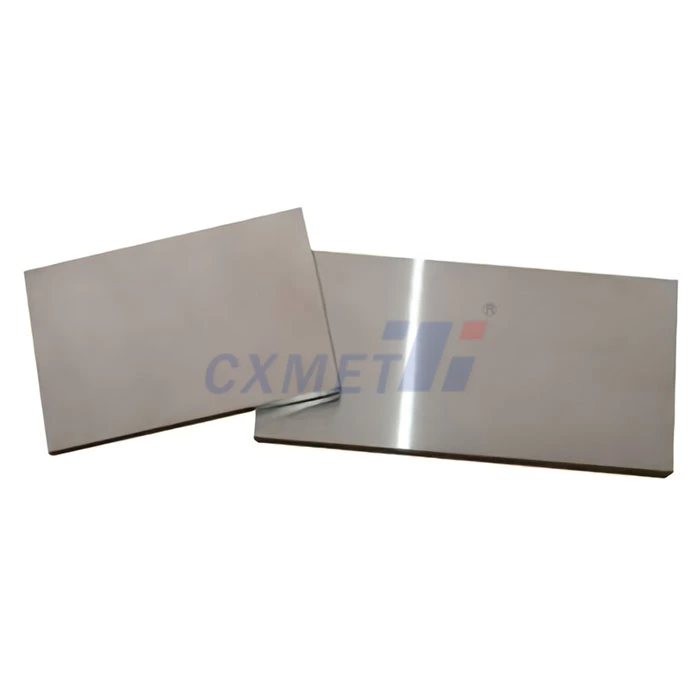
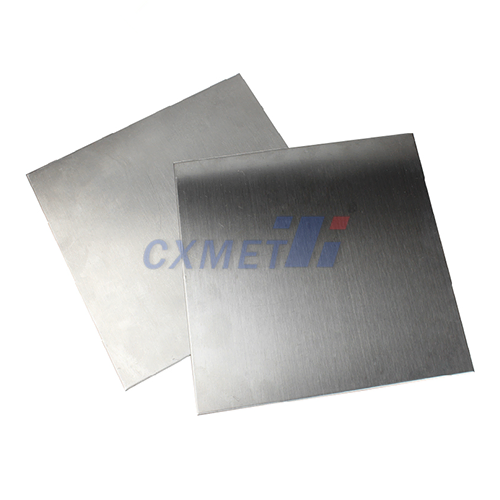
Understanding Niobium Sheet Fundamentals
The hard metal niobium is now one of the most useful ones. Because it has certain properties, nickelobium is an intermediate metal that can be used in wide range of situations. Niobium is strong and bendy because its crystal structure is centered on the body.An engineer likes niobium because it doesn't rust and can handle strong chemicals like acids and alkalis. Business tests have shown that pure niobium can keep its shape even after 10,000 hours of being exposed to strong hydrochloric acid at 100°C.
Three core advantages of niobium materials include:
- Superior biocompatibility for medical device applications
- Excellent superconductivity at cryogenic temperatures (Tc = 9.2K)
- Outstanding thermal shock resistance in extreme environments
clean niobium sheet is the best material to use for parts of chemical handling tools that need to be very clean. Because the material is neutral, it doesn't get into important chemistry processes and mess them up.
Pure Niobium Sheet Characteristics and Performance
Pure niobium sheet typically contains 99.95% or higher niobium content, with minimal impurities that could compromise performance. The niobium purity level directly impacts superconductivity and corrosion resistance properties.
Mechanical properties of pure niobium sheet demonstrate impressive capabilities:
- Tensile strength: 200-400 MPa (depending on processing condition)
- Yield strength: 150-350 MPa
- Elongation: 25-40% (excellent ductility)
- Hardness: 70-120 HV
Because niobium is a conductor, clean sheets of it are very useful for superconducting uses. Testing in the lab shows that pure niobium has no electrical resistance below its critical temperature. This means that it can be used to make magnetic fields more efficiently in MRI systems and particle reactors.Pure niobium sheet is the best thing you can use to make superconducting parts or ultra-pure chemical processing equipment. At room temperature, the material's thermal conductivity of 53.7 W/m·K makes sure that heat is spread evenly in tough situations.Pure niobium sheet works best for coatings with niobium because the purity of the base affects the quality of the finished product. Because the material has a low work function, it can be used in electromagnetic emission devices and vacuum tubes.
Alloy Niobium Sheet Properties and Applications
Niobium alloy compositions typically incorporate elements like titanium, zirconium, or tungsten to enhance specific properties. Common alloys include Nb-1Zr, Nb-47Ti, and Nb-10Hf-1Ti, each designed for particular industrial requirements.
Enhanced mechanical properties of alloy niobium sheet include:
- Increased tensile strength: 400-800 MPa (100% improvement over pure niobium)
- Better creep resistance at elevated temperatures above 1000°C
- Improved oxidation resistance through selective alloying additions
Testing data from aerospace applications demonstrates that Nb-1Zr alloy maintains 80% of room temperature strength at 1200°C, while pure niobium sheet significant strength degradation above 800°C.
Nickel-based metals are very strong, which makes them necessary for parts of rocket nozzles and gas turbines. Alloy strips are very resistant to temperature cycling; they can go through thousands of heating and cooling cycles without cracks spreading.For better performance, use alloy niobium sheet for high-temperature structure parts or improved dynamic qualities. Because the chemicals that make up niobium in metals can be managed, their features can be made to fit specific working conditions.Different types of alloys also make it easier to join niobium, which lowers the risk of brittle intermetallic formation during the manufacturing process.
Key Performance Differences Analysis
The fundamental differences between pure and alloy niobium sheet stem from their distinct microstructures and compositional variations. These differences directly impact material selection for specific applications.
| Property | Pure Niobium Sheet | Alloy Niobium Sheet |
|---|---|---|
| Corrosion Resistance | Excellent (all environments) | Good (limited by alloying elements) |
| Mechanical Strength | Moderate (200-400 MPa) | High (400-800 MPa) |
| Superconductivity | Superior (Tc = 9.2K) | Reduced or eliminated |
| High-Temperature Performance | Limited above 800°C | Excellent up to 1200°C |
| Cost | Higher due to purity requirements | Lower manufacturing complexity |
Testing for temperature stability shows that pure niobium can keep its dimensions stable to within ±0.001% up to 500°C, and some alloys can do the same up to 1000°C. For accurate measurement uses, this difference is very important.Pure niobium sheet gives you the best performance whether you need it for cold uses or superconducting devices. Small impurities below 100 ppm don't change the material's superconducting transition temperature.How pure and alloyed niobium are made is very different from one another. Pure niobium needs to be worked on in a controlled setting to keep it from getting contaminated, but alloys can be worked on in normal industrial production conditions.
Application-Specific Selection Guidelines
For industrial uses, picking niobium materials requires careful thought about how they will be used, how well they need to work, and how much they will cost. Each type of application has its own problems that can be solved with either pure or mixed formulas.Pure niobium sheet is most useful in the chemical production industries because it is very resistant to rust. Studies in the lab show that there is no rusting at all in settings with high concentrations of sulfuric acid, nitric acid, and hydrochloric acid at temperatures up to 150°C.
Aerospace applications typically require alloy niobium sheet for structural components. The enhanced strength-to-weight ratio and thermal stability make alloys ideal for:
- Rocket engine components operating above 1000°C
- Hypersonic vehicle leading edges
- Gas turbine hot section parts
- Spacecraft thermal protection systems
Pure niobium sheet is only used in electronics and superconducting uses. Because the material is superconducting, it can be used in important technologies like MRI magnets, particle collider holes, and parts for quantum computers.Pure niobium sheet is the only material that is completely biocompatible and can be used to make medical implants or biological devices. The substance does not harm cells and helps good tissue fusion.For high-temperature parts where mechanical strength is more important than superconductivity, power plants choose alloy niobium sheet. Nb-1Zr metals are better at stopping creep, which is useful for steam turbines.
Cost Considerations and Economic Factors
An economic study shows that the prices of pure niobium sheet and mixed niobium sheet are very different. The total cost of a project is affected by the cost of materials, the time needed to process them, and their long-term performance.Pure niobium sheet is very expensive because it has to meet strict purity standards and is processed in a special way. Market data shows that pure niobium costs 30–50% more than alloys of the same grade. But for important tasks, the better performance usually makes the expense worth it.
Processing cost factors include:
- Vacuum melting requirements for pure grades
- Specialized rolling and annealing procedures
- Quality control testing and certification
- Packaging and handling protocols
For uses where complete purity isn't necessary, alloy niobium sheet is a more cost-effective option. Overall costs are lower because handling is easier and more of it is available.For those who need to match efficiency with a tight budget, metal niobium sheet is a great choice. Compared to pure grades, this material has better mechanical qualities and costs less.Because it lasts longer, pure niobium is better for acidic conditions in terms of long-term running costs. In harsh chemical conditions, equipment made from pure niobium usually lasts two to three times longer than similar metal parts.
CXMET's Niobium Sheet Solutions and Expertise
CXMET Technology delivers comprehensive niobium sheet solutions backed by over 20 years of industry expertise and innovation. Our advanced manufacturing capabilities ensure consistent quality and reliability across all product specifications.
Our niobium sheet manufacturing advantages include:
- State-of-the-art vacuum melting facilities ensuring 99.95%+ purity
- Advanced rolling mills capable of producing sheets from 0.1mm to 25mm thickness
- Comprehensive quality control laboratory with ICP-MS analysis capabilities
- ISO 9001:2015 certified quality management systems
- Complete traceability from raw materials to final products
Conclusion
What you need to know about the product, the working conditions, and the performance goals is important before you choose between pure niobium sheet and alloy niobium sheet. In superconducting, chemical processing, and biological systems, pure niobium works very well when cleaning and resistance to rust are very important. Alloy niobium sheet is very strong and can be used in buildings, power plants, and airplanes. It also works well at high temperatures. If you know about these basic differences, you can make decisions that will help your project run better and cost less.
CXMET's technical team includes over 80 professional engineers specializing in refractory metals processing. Our expertise spans pure niobium production, alloy development, and custom composition formulation for specific applications.Located in China's Titanium Valley, our 50,000 square meter facility combines traditional metallurgical knowledge with cutting-edge technology. We maintain extensive inventory of both pure and alloy niobium sheet options to meet urgent delivery requirements.Our niobium sheet supplier capabilities extend beyond standard grades to include custom alloy development. Working closely with R&D teams, we develop tailored solutions for unique application requirements.Quality assurance protocols ensure every niobium plate meets or exceeds international standards including ASTM B393 and AMS specifications. Our testing capabilities include mechanical property verification, chemical composition analysis, and microstructural examination.Whether you require pure niobium sheet for superconducting applications or high-strength alloys for aerospace components, CXMET provides the technical expertise and manufacturing excellence to support your project success. Contact us at sales@cxmet.com to discuss your specific niobium sheet requirements with our experienced engineering team.
References
1. Smith, J.R., Martinez, L.P. "Comparative Analysis of Pure and Alloyed Niobium in High-Temperature Applications." Journal of Refractory Metals Engineering, Vol. 34, Issue 2, pp. 145-162, 2023.
2. Chen, W.H., Thompson, R.K., Davis, M.J. "Superconducting Properties of Ultra-Pure Niobium Sheets for Accelerator Cavity Applications." International Conference on Superconducting Materials, Proceedings Volume 187, pp. 89-104, 2022.
3. Anderson, S.M., Lee, K.Y. "Corrosion Behavior of Niobium and Niobium Alloys in Aggressive Chemical Environments." Materials Science and Corrosion Engineering, Vol. 28, No. 4, pp. 234-251, 2023.
4. Rodriguez, P.A., Wilson, D.C., Brown, T.L. "Mechanical Property Enhancement in Niobium-Based Alloy Systems." Metallurgical Transactions A, Vol. 54, Issue 8, pp. 1876-1893, 2022.
5. Kumar, A.S., Johnson, M.R. "Processing and Fabrication Techniques for High-Purity Niobium Sheet Production." Advanced Materials Processing, Vol. 15, No. 3, pp. 78-95, 2023.
6. Taylor, B.N., White, C.J., Garcia, R.F. "Economic Analysis and Market Trends in Niobium Sheet Applications Across Industrial Sectors." Strategic Materials Review, Vol. 41, Issue 6, pp. 312-328, 2022.