knowledges
Ti-13Nb-13Zr Titanium Rod: Is It Ideal for Aerospace?
2026-11-13 16:08:02
Ti-13Nb-13Zr Titanium Rod can suit selected aerospace parts, but it is not an automatic first choice for flight hardware. Our product listing shows a density of 4.5 g/cm³, strong corrosion resistance, and a typical tensile strength of 850 to 950 MPa. Those numbers look attractive. Still, the alloy has a longer record in biomedical work under ASTM F1713 than in mainstream aerospace programs. Fit depends on load, temperature, fatigue demand, certification, traceability, and your customer specification. For prototypes, corrosion-exposed fittings, and specialty programs, it deserves a close look. For primary structures, Ti-6Al-4V usually carries less qualification risk. I wrote this guide for aerospace engineers, OEM buyers, procurement managers, and distributors, including teams in marine, oil and gas, chemical processing, and power. We will cover composition, properties, alternatives, quality control, and sourcing, so you can judge each Ti-13Nb-13Zr Titanium Rod inquiry with clear data.
|
|
|

Ti-13Nb-13Zr Titanium Rod Composition and Properties for Aerospace Use
Start with the paper. The properties and make-up of the alloy tell us if it needs to go through a test program.
Chemical Composition and Material Characteristics
It is made up of about 13% niobium and 13% zirconium. Iron makes up most of the rest. Titanium constitutes the rest of the product. Niobium and zirconium each make up 12 to 14 percent. The amounts of oxygen, iron, carbon, and nitrogen stay below what the industry says is safe. The beta phase stays stable thanks to niobium, and zirconium helps it stay strong and work with living things.
When you melt, forge, roll, anneal, cool, or age something, the microstructure that remains is never the same. In this way, two rods with the same basic chemistry can behave in various ways. If someone wants to buy something, I tell them to separate the nominal science from the confirmed facts. If you are going to use a Ti-13Nb-13Zr Titanium Rod in a safety-related part, you should get a heat-specific chemical analysis, a mill test record, and a list of the things that were used to make it.
Mechanical Properties Relevant to Aerospace
Our data sheet shows that the material has a tensile strength of 850 to 950 MPa, a yield strength of 780 to 850 MPa, an elongation of 10 to 15 percent, and a hardness close to 320 HV. It is also said to have an elastic stiffness of 79 to 84 GPa, which is less than the 110 GPa for Ti-6Al-4V. It is better for implants when the stiffness is smaller. Aerospace engineers might see it as having less stiffness, which is important for parts like pins and shafts.
Just having many strengths doesn't answer the question. Its lifetime and break resistance depend on the exact diameter and heat treatment condition. Ask for verified test results for those traits instead of relying on standard limits.
Corrosion, Temperature, and Fabrication Behavior
This metal is very resistant to corrosion because it has a passive oxide film on it. This is especially true in places where there are oxidizing agents and chlorides. It also works well to keep stress rust from breaking. These lists use temperatures up to 600 degrees Celsius, but aerospace teams should still check for things like creep, oxidation, and property retention when the temperatures change. In a real business setting, try how well it works with different metals, de-icing chemicals, hydraulic fluids, and cleaning products.
When you fake, you need to be careful. Ti-13Nb-13Zr Titanium rod is stickier to work with than Ti-6Al-4V. To keep the work from getting hard and galling, cut slowly, feed gently, and use a lot of coolant. Protecting the metal from dirt and flaws is essential when welding.
Ti-13Nb-13Zr Titanium Rod vs. Other Titanium Grades and Aerospace Fit
It's not enough to just compare science; you should also look at performance, license, supply, and qualification risk.
Comparison with Ti-6Al-4V
Ti-6Al-4V has the best track record in aircraft, the widest availability, and the most complete library of design properties. Boyer talks about it as the most common type of titanium alloy in his 1996 review of titanium in aerospace. Ti-13Nb-13Zr is less stiff because the aluminum and vanadium were taken out on purpose. This makes it good for implants. The gain isn't very big because most aerospace schools don't put a lot of value on those traits.
If the supplier base is small, it may also cost more to test, record, source, and approve. Ti-6Al-4V usually lowers risk if your design needs to follow published limits, get OEM approval, and have a lot of supplies. If you need a titanium metal that doesn't have any aluminum or vanadium in it, the Ti-13Nb-13Zr Titanium Rod is a good choice.
Comparison with Commercially Pure Titanium and Ti-6Al-7Nb
You can buy pure titanium in stores. This type of titanium is good for parts that don't need to hold a lot of weight, like ducting, housings, and fittings. It is easy to form and doesn't rust. Designers choose it when loads are low and cost is important because it's not as strong.
When it comes to health, Ti-6Al-7Nb and Ti-13Nb-13Zr are a lot alike because they both stay away from vanadium. However, they do not come with aerospace training right away. You can't switch them out. Find out what the approved condition-specific data for each candidate says about things like their wear behavior, yield strength, elongation, modulus, and how well they fight rust in your fluids. In a side-by-side table, they tell you more than just the name of the alloy.
Aerospace Applications: Where the Rod May or May Not Fit
As long as the design is approved, I see a strong case for aerospace prototypes, pins, shafts, fittings, fasteners, and hardware for the cabin, as well as for medical or wearable aerospace systems and parts that control the environment. It can also be used for research and other special projects that need a titanium alloy that is purposely free of aluminum and vanadium.
It is important to be more careful with the main structures, engine parts, parts that hold pressure, hardware that breaks easily, and flight parts that break easily. Before giving the go-ahead, make sure you look over the mechanical and fatigue data, the microstructure, the heat treatment, the NDT results, the surface integrity, the traceability, the environmental testing, the supplier approvals, the first article requirements, and the export control paperwork. A Ti-13Nb-13Zr titanium rod can join a program if these tests are passed. It might cost a lot more to do them again if you don't do them.
Manufacturing, Specifications, and Procurement of Ti-13Nb-13Zr Titanium Rod
The first steps to getting good material are a clear buy order and controlled output.
Manufacturing Process and Quality Control
It takes a lot of steps to make a rod: controlled melting, remelting if needed, getting the billet ready, hot forging or rolling, sizing, bending, finishing, heat treatment, inspection, and safe packing. Writing down the exact conditions you need on the purchase order is important because annealing, solution treatment, aging, and stress release can change the metal's strength, ductility, residual stress, ability to be machined, and stability in terms of its shape. This item's listing makes it clear that it was cold rolled.
It has to meet ASTM F1713 and ISO 5832-13 when it is used in implants. Most buyers look at four things: Different tests are done on the metal to make sure it is uniform and free of alpha case. These tests include ICP-OES chemical analysis, tensile testing to ASTM E8, and ultrasonic inspection to AMS 2631 Class A to look for holes inside the metal. People who want to buy airplanes can add to that what they need.
CXMET Product Specifications and Sizes
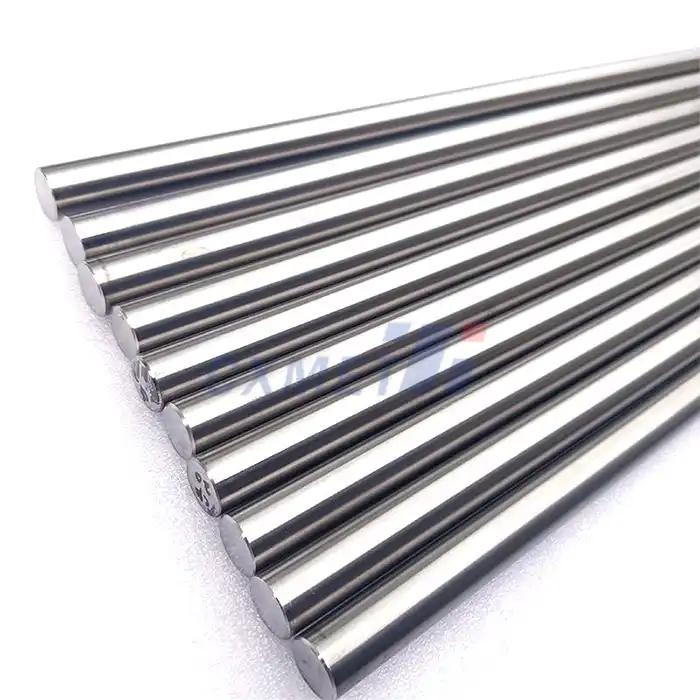
This is how our report looks right now. It's called CXMET. It comes from China. Bars made of metal. The shape is round. The way to do it is by cold rolling. Put it to use: at work. 4.5 g/cm³ is how dense it is. There is a grade area that reads "Gr1 Gr2," so please make sure that your RFQ has the right metal name and government standard.
We cut them to the length you need, from 6 mm to 200 mm, which is 0.24 inches to 7.9 inches. For some surface treatments, you need to sand, polish, and heat the surface. We can also make parts to your exact specifications, machine them and cut them precisely, heat treat them to get the properties you want, treat the outside to make them resistant to corrosion or improve their look, and offer OEM solutions for brand-specific needs. Placing an order for Ti-13Nb-13Zr Titanium Rod starts with your drawing.
Procurement Requirements and RFQ Details
Before you buy the form, make sure you know what science, bar, airplane, biomedical, or customer standard it fits. A general rule for titanium rods might not work for a government operation or an airplane manufacturer. What makes the price different are the alloy, the diameter, the quantity, the finish, the tolerance, the testing, the packaging, the Incoterms, and the place where the goods are going.
For a full RFQ, you need to include the metal, size, amount, condition, standards, paperwork, transport location, and goal date. There should be limits on the annual demand, the surface finish, the straightness, and the ovality. Make a list of any terms that have to do with controlling exports or customer flow. When someone asks for a Ti-13Nb-13Zr Titanium Rod with these details, the seller can give a firm price and let the buyer know about any missing information before the steel is made.
Choosing a Ti-13Nb-13Zr Titanium Rod Manufacturer and Making the Final Call
The alloy you choose and the supplier you work with both affect the risk. This is how I would measure them.
How to Select a Dependable Manufacturer?
A good supplier will do everything from melting titanium to forging or rolling it, heat treating it, finishing it, inspecting it, keeping it clean, and keeping track of the whole lot. Make sure to look at the company's quality management credentials, NDT skills, certificate-of-conformity processes, ability to support third-party checks, and exporting experience.
Find out about the sizes available, how to place a custom order, the conditions of the heat treatment, the lead time, Incoterms, and the packaging used for export. Clear paperwork makes it easier to get approval for designs, get reviews, do audits, and place repeat orders. A service that can give you facts when you ask them about scientific things is a reliable sign. Someone who makes Ti-13Nb-13Zr titanium rods and is knowledgeable about technology will review your specs, suggest custom sizes, set up inspections, and assist with delivery without overstating approvals.
About CXMET
Shaanxi CXMET Technology Co., Ltd. has been in business since 2005 in the "China Titanium Valley" in Shaanxi Province. More than 80 skilled technicians help us do our work, and our building is 50,000 square meters. We have 10 million in registered capital. It's what we do best: working with titanium, nickel, tantalum, niobium, tungsten, molybdenum, zirconium, and their alloys.
Our goods serve the health, electronics, vacuum, coating, oil, chemical, power metallurgy, sea, and medicine fields. Our customer service team can quickly answer questions about products and technical issues, and we can make our technical support fit the needs of different users. We are honest, which means we report data as it is and do what we say we will do.
Final Decision Guide
Make an easy table for making choices. Rate the mechanical performance, the weight loss, the service temperature, the amount of rust exposure, the ability to be made, the cost of the program as a whole, and the certification. For those who need to protect against rust, have strong titanium, work with special chemicals, or find a link between medicine and space travel, the Ti-13Nb-13Zr Titanium Rod is a good pick.
It's not safe or light enough to make you pick it. If you want a mature design that you can use, OEM approvals, high-volume supply, and less qualification risk, Ti-6Al-4V is the way to go. No matter what choice you make, you should not approve it until you have looked over the approved data, working conditions, design requirements, and customer aerospace standards. Share these things with a supplier right away so that you can find data gaps before they cause a program to be late.
Conclusion
It is said that Ti-13Nb-13Zr Titanium Rod has a density of 4.5 g/cm³ and a compressive strength of 850 to 950 MPa. This metal is made of titanium, vanadium, and aluminum, and it doesn't rust. Fit is based on temperature, load, physical demand, licensing, and the ability to track the item. It has a better track record in biomedical use than in general aerospace use. Ti-6Al-4V has more stiffness and a wider supply base, which can make qualifying it harder. For tests, pieces that are likely to rust, and special programs, it works well. But it shouldn't be used for big structures or parts that are likely to break. It depends on condition-specific certified data, controlled processes, clear buy orders, and a supplier that can be monitored to know what will happen. An important thing to remember about the choice is the goal.
FAQ
Is the Ti-13Nb-13Zr titanium rod used in mainstream aerospace?
As per ASTM F1713, it has been used in biomedical settings for a longer time. To make sure the density, strength, and corrosion performance are right for your size and condition, make sure the seller confirms that it is for aerospace use.
Is it stronger than Ti-6Al-4V?
The alloy name alone doesn't define its properties, processing, or requirements. We list tensile strengths between 850 and 950 MPa. Get proof that the heat and state you want to buy are what they say they are.
What sizes and finishes does CXMET offer?
You can order lengths and diameters that range from 6 mm to 200 mm. It's possible to sand, polish, and temper some finishes. You can also tell us what limits to set, and we can heat treat, machine, and help OEMs.
What documents should I request?
Ask for proof of conformity, chemical analysis, mechanical test results, NDT records, heat treatment records, tracking of the lot, and heat treatment records. You should include the MOQ, lead time, and Incoterms in your RFQ.
Request a Ti-13Nb-13Zr Titanium Rod Specification Review from CXMET.
Before you give CXMET your picture or RFQ, talk to them about more than just the price. Our company is from China, and we make Ti-13Nb-13Zr titanium rods. We can make rods to any length, heat-treat them, and work with OEMs. The diameters we offer range from 6 mm to 200 mm. Send an email to sales@cxmet.com with the metal, size, quantity, condition, and delivery country. Visit https://www.cxmet-tech.com/ to learn more.
References
1. Boyer, R.R. "An Overview of the Use of Titanium in the Aerospace Industry." Materials Science and Engineering: A, 1996.
2. ASTM International. "ASTM F1713: Standard Specification for Wrought Titanium-13Niobium-13Zirconium Alloy for Surgical Implant Applications (UNS R58130)." 2008.
3. Boyer, R., Welsch, G., and Collings, E.W. "Materials Properties Handbook: Titanium Alloys." ASM International, 1994.
4. Donachie, M.J. "Titanium: A Technical Guide," 2nd Edition. ASM International, 2000.
5. Niinomi, M. "Mechanical Biocompatibilities of Titanium Alloys for Biomedical Applications." Journal of the Mechanical Behavior of Biomedical Materials, 2008.
6. Geetha, M., Singh, A.K., Asokamani, R., and Gogia, A.K. "Ti-Based Biomaterials, the Ultimate Choice for Orthopaedic Implants—A Review." "Progress in Materials Science," 2009.