knowledges
Titanium Alloy Camping Tent Pegs vs Steel: Which Is Best?
2026-10-29 16:40:44
Titanium Alloy Camping Tent Pegs are the ideal choice when low weight, corrosion resistance, and long service life are needed. Steel stakes are the best in terms of cost and impact tolerance. Titanium has a density of 4.43 g/cm³, which is roughly 44% less than carbon steel at around 7.85 g/cm³. Titanium has a surface oxide covering that protects the metal from rusting in damp and salty areas. For heavy family tents, rental fleets, and hammer-driven installations, I choose titanium and steel for budget or high-duty applications. For trekking, coastal use, and luxury product lines, I favor titanium. In the following chapters, I’ll walk you through how I came up with that solution and how you may choose one for your own project.
|
|
|
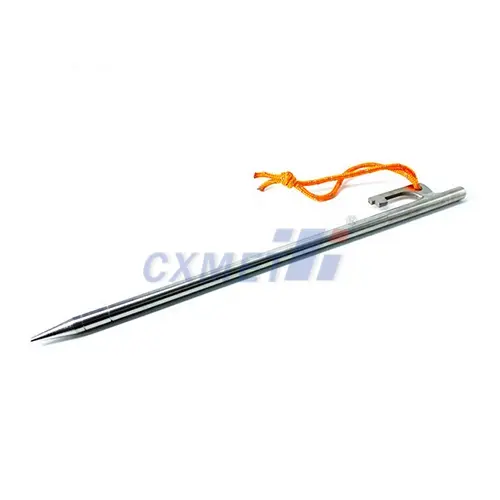

Titanium Alloy Camping Tent Pegs vs Steel Tent Stakes: Key Differences at a Glance
What Are Titanium Alloy Camping Tent Pegs?
Titanium alloy camping tent pegs are ground anchors that are constructed from titanium alloy rod or molded stock. Common shapes include shepherd hooks, straight stakes, V-beam and Y-beam shapes, and nail-style stakes. They are used by campers and field staff with hiking tents, tarps, bivy shelters, awnings, and event umbrellas. When I consider options, I consider metal quality, diameter, length, tip form, head design, surface treatment, and packaging. Ti-6Al-4V is known as Grade 5 titanium and is a commonly used alloy owing to its high strength and low density. It’s this combination that enables you to see the metal in aviation and marine systems and that you are seeing it more and more in premium outdoor gear.
Weight, Strength, and Corrosion: Where Titanium Leads
The most apparent advantage is weight. Titanium has a density of 4.43 g/cm³ compared to carbon steel’s 7.85 g/cm³; therefore, a titanium object of the same size will be around 44% lighter. The second advantage is resistance to corrosion. Titanium is protected by a thin, tough oxide covering in rain, wet soil, and salt air. The only thing that makes a steel stake nice is the coating. Scratch and rust the bare metal. If your teams work near beaches or chemical sites, you already know how corrosion shortens equipment life. The same material thinking is applied to camp gear with Titanium Alloy Camping Tent Pegs, and the weight savings really add up when one kit holds six to eight stakes.
Rigidity, Impact Tolerance, and Cost: Where Steel Leads
“Steel has real strengths, and I want to be fair to them. That makes it cheaper per stake, which is good for rental fleets, entry-level kits, and huge event buys. Steel is also stiffer (elastic modulus of 200 GPa compared to 114 GPa for Grade 5 titanium); therefore, a thick steel stake will resist bending under high-tension guy lines. A good steel post doesn’t mind hard hammering. Big Y-beam and V-beam steel profiles can contain more soil, which is advantageous in loose terrain and heavy wind. The trade-off is weight and size. The buyer has to decide if a lower unit price or less carrying weight is of more advantage to the end user.
Titanium Tent Pegs vs Steel Tent Stakes: Performance Comparison
Holding Power and Wind Performance
Material strength and ground-holding capabilities are not the same. The metal is as crucial as the length, form, angle of installation, and direction of the guy-line, which is held by friction and soil resistance from a stake, like a tent. Longer stakes penetrate tougher soil layers more deeply, and wider profiles prevent them from pulling out in sand and loam. The designers can keep the diameter and weight low because titanium alloy camping pegs have a tensile strength of 950 MPa. Thick steel gives you greater room for heavy use. For both metals, I used pegs angled away from the tent and in line with the draw. Test a stake by hand before trusting it overnight.
Shepherd Hook Titanium Pegs vs Y-Beam Steel Stakes
The geometry could be as important to the result as the material. Titanium shepherd hooks and straight stakes are light and compact and make a suitable option for hiking tents, tarps and minimalist shelters, although they have less lateral resistance in loose soil. Y-beam and V-beam steel posts sink in deeper and stay firm under guy lines at high tension, helping family tents in wind, but they add weight and bulk. Nail-type stakes are good for hard or compacted soil, provided you can drive them in a controlled way. Having a brand with different profiles, without restricting every customer to have one design, may suit each terrain and shelter size. This is the simplest way I can think of to broaden the choice of goods.
Test Data to Request Before You Buy
Marketing claims seldom solve technical issues, so I ask for numbers. Procurement teams should ask for tensile and yield data, results of three-point bending, corrosion testing records, and pull-out tests in a certain soil type. Check the chemical composition, too. Grade 5 titanium and softer commercially pure grades are visually indistinguishable; however, they behave differently when strained. Quality of the sample carries over to mass production; material certificates, batch records, and dimensional reports will tell you. ASTM B348 is a standard for titanium and titanium alloy bars and billets, providing a consistent reference point for material in stock for customers. Accurate information about Titanium Alloy Camping Tent Pegs protects your brand and your warranty responsibility.
CXMET Titanium Alloy Camping Tent Pegs: Specifications and Properties
Product Specifications
Titanium Alloy Camping Tent Pegs CXMET listing is as below: Titanium Tent Pegs 30cm These tent pegs are made from Grade 5 titanium alloy, polished silver and packaged in a bag. Made in China. For tent anchoring. The 30cm model is 8mm across. The spec table includes lengths 150 mm, 200 mm and 250 mm, widths 6 mm and 8 mm, and weights 15 g, 20 g and 25 g. Tensile strength: 950 MPa; hardness: HRC 36-40; temperature range: -40°C to +150°C. Please confirm with our staff what exact configuration you require, since the listing comes with a choice of 30cm model and millimeter range.
Material Properties of Grade 5 Titanium
Titanium Alloy Camping Tent Pegs have a specified set of physical properties of Grade 5 Titanium. Density 4.43 g/cm 3. Melting point: 1660 o C. Elastic modulus: 114 GPa. Thermal conductivity: 6.7 W/m.K. The metal has low heat conductivity. This means it takes heat from your hand more slowly than steel; thus, the pegs are not as cold to the touch in winter. The attributes give the functionality that buyers demand. High strength equals high holding force. Corrosion resistance equals longer service life. Low weight equals easy carrying. All-season use is given in the recommended temperature range of -40°C to 150°C.
Manufacturing Process and Quality Control
CXMET has a Titanium Alloy Camping Tent Pegs production order. We use Grade 5 titanium alloy, produce it to length with precision, and then mold the pegs to the correct shape and standard. Then heat treatment is used for increased strength and durability, followed by surface finishing for increased corrosion resistance and beauty. Each peg is then quality-controlled and tested before delivery. Engineers prefer this method since repeating processes gives you repeatable results, which is the same notion behind our titanium goods for marine, chemical, and power applications. If your project needs special inspections, our technical experts would be pleased to discuss them with you.
How to Choose, Use, and Maintain Titanium Tent Pegs
How to Choose the Right Size for Titanium Alloy Camping Tent Pegs
Start with the shelter, the dirt, the wind. Ultralight tents conserve weight on hard ground with short, thin pegs. Three-season trip tents and varied terrain do well with medium lengths. Tarps, huge shelters and loose soil need longer posts, wider diameters or broader profiles to resist pull-out. "I also measure the density of the soil, its moisture, how much gravel there is, the height of the shelter, and the expected wind speed. CXMET provides a choice of 6 and 8 mm diameters and three lengths so users may vary peg size to the application. When you request samples or quotes, please provide these details so our team can help you narrow down the options.
How to Use Titanium Tent Pegs in Hard Ground
A proper technique will prevent the stakes from bending. Choose solid ground and drive the peg at an angle away from the shelter in the direction of the pull on the guy-line. Press down hard on the peg. In compacted earth, hit the skull with a small mallet or striking surface instead of a heavy metal instrument. Pull the peg out straight — no twisting or levering. Common mistakes include driving a stake straight down, using the wrong length, pounding too hard, and using one design on every terrain. Titanium Alloy Camping Tent Pegs can work on firm ground if users follow these guidelines; however, pebbles and frozen soil still demand patience.
Maintenance, Cleaning, and Storage of Titanium Tent Stakes
Titanium doesn’t need much upkeep, but a simple regimen will keep him safe. After each cruise, brush off dirt and sand, rinse with clean water, and dry the pegs before storing them. Store them in a dry bag or a breezy container. Cover the tips so they don’t scratch other things. Check for bends, fractures, burrs, or deformation on each peg and replace any that are not keeping their shape. Titanium Alloy Camping Tent Pegs don’t need to be oiled and protected against corrosion. Check steel stakes for degradation of coating, bare metal, and early corrosion. This little habit keeps field gear ready for the following hunt.
Are Titanium Tent Stakes Worth It? Buying and Sourcing Guide
Are Titanium Tent Stakes Worth It?
Titanium Alloy Camping Tent Pegs are more costly initially, but in certain cases, the expense is justified. This makes them very useful for weight-sensitive applications such as hiking, trekking, and climbing. Wet and coastal areas, such as beach tents, windbreaks in sand, etc., need corrosion resistance. Event crews setting up canopies and marquees also appreciate durable gear that can withstand regular use. Steel is still the better choice for entry-level lines, larger shelters, hammer-driven installations, and rental fleets. Fair cost verification includes unit price, replacement rates, shipping weight, packaging, warranty exposure, and retail positioning. Many firms have a premium titanium line and a budget steel variety.
How to Source Titanium Alloy Camping Tent Pegs for B2B Procurement
But the unit price is just part of the story. I check titanium grade, material traceability, dimensional consistency, bending performance, surface quality, packaging, minimum order quantity, lead time, and export experience. Material certificates, designs, samples, and inspection techniques should be asked for before you sign off on mass manufacturing. Shaanxi CXMET Technology Co., Ltd. was created in 2005 and is situated in China Titanium Valley, Shaanxi Province, covering an area of 50,000 square meters with more than 80 competent technical experts. We work with titanium, nickel, tantalum, niobium, tungsten, molybdenum, zirconium, and their alloys. Our workforce understands metal better than camping gear. Our products are utilized in marine, petroleum, chemical, power metallurgy, medical, vacuum, and coating industries.
Recommended Buying Decision: Titanium or Steel?
If low weight, corrosion resistance, compact stowage, and long-distance transportation matter to you, go for titanium. Steel is the material of choice when impact resistance, rigidity, or lowest price are more essential than weight. The final selection should be based on shelter size, soil type, wind exposure, frequency of use, desired retail price, and warranty goals. A two-layer design typically works well: Camping Titanium Alloy Tent Premium and backpacker customers get pegs, while family camping, budget, and rental lines get stronger steel stakes. With a selection of lengths, profiles, and pack formats available, you can cover more of the market and avoid forcing a single compromise on every customer. Try a small sample order and test both strategies in your own circumstances.
Conclusion
Steel and Titanium both win in different scenarios. Depending on the task, the best tent peg is different. Camping Titanium Alloy Camping Tent Pegs are low density, high strength, and have exceptional corrosion resistance, making them perfect for hiking, coastal use, and luxury product lines. Steel offers lower cost, stiffness, and resilience to harsh pounding, ideal for large shelters, rental fleets, and budget lines. The holding strength depends as much on the length of the stake as the profile, the soil, the angle of installation and the metal. The best thing customers can do is to compare test results, sizes, and total cost rather than just material claims. The most consistent result is that the size of the stake should be appropriate to the size of the shelter, the ground, the wind, and the frequency of usage. A two-tier range would suit both groups.
FAQ
Are titanium tent pegs stronger than steel stakes?
Not always. Strength depends on alloy grade, diameter, length, and geometry. Grade 5 titanium offers high strength for its weight, while thick steel stakes can be stiffer and tolerate harder impact. Request test data to compare them fairly.
Can I use titanium tent pegs in hard or rocky ground?
Yes, with care. Choose a nail-style shape, set it at an angle, and tap it with a small mallet instead of striking it hard. Rocks and frozen soil can still bend or damage any thin stake.
Do titanium tent pegs need special maintenance?
Very little. Brush off soil, rinse with clean water, and dry them before storage. Titanium needs no oiling or rust protection, but you should still check for bends and burrs.
Can CXMET support special project requirements?
Yes, we offer customized technical support. Email sales@cxmet.com with your length, diameter, quantity, and application, and our team will review the details and reply with suitable options.
Request Titanium Alloy Camping Tent Pegs Samples or a Wholesale Quote from CXMET
CXMET is a titanium alloy camping tent pegs supplier with more than 20 years of experience in titanium and other non-ferrous metals. Our Grade 5 pegs offer 950 MPa tensile strength and high corrosion resistance. Email sales@cxmet.com with your length, diameter, application, and order quantity, and our team will send specifications, samples, and wholesale pricing. You can also visit https://www.cxmet-tech.com/ for more product details.
References
1. Titanium: A Technical Guide (ASM International), 2000
2. Titanium and Titanium Alloys: Fundamentals and Applications (Wiley-VCH), 2003
3. Materials Properties Handbook: Titanium Alloys (ASM International), 1994
4. ASTM B348 Standard Specification for Titanium and Titanium Alloy Bars and Billets (ASTM International), 2019
5. Corrosion: Understanding the Basics (ASM International), 2000
6. ASM Handbook, Volume 13B: Corrosion: Materials (ASM International), 2005