knowledges
Titanium electrode: One-Time Investment, 10+ Years of Service
2026-08-21 15:00:36
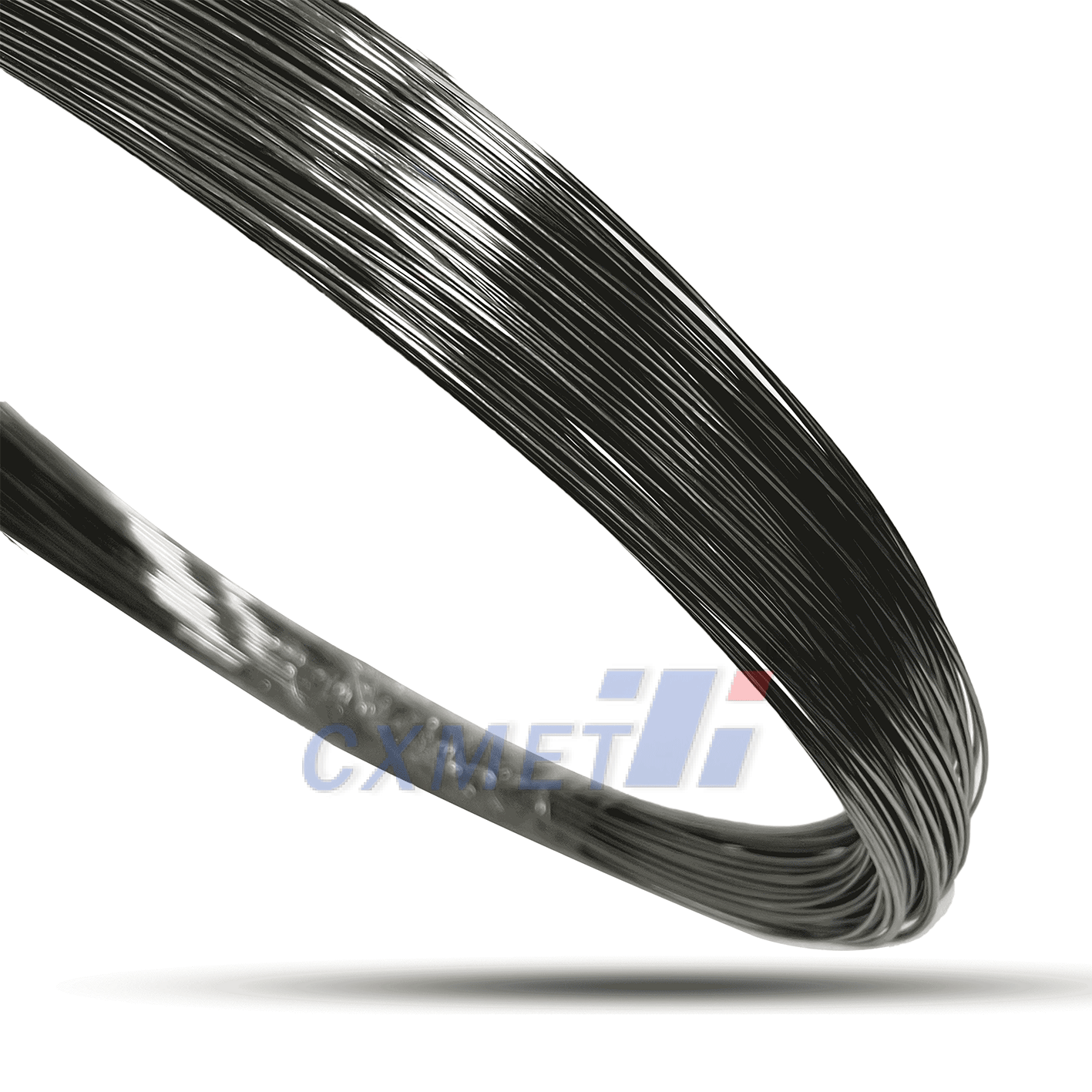
When searching for durable electrochemical solutions, engineers and procurement managers understand that upfront decisions ripple through decades of operations. A titanium electrode represents more than a component—it's a strategic asset engineered to deliver consistent performance in the harshest industrial environments. With superior corrosion resistance and catalytic efficiency, these electrodes reduce replacement frequency dramatically, translating a single purchase into over a decade of reliable service. This longevity positions them as a cornerstone investment for industries like chemical processing, water treatment, and electroplating, where downtime costs exceed thousands per hour.
|
|
|

Why Choose Titanium Electrodes Over Other Materials?
Graphite, stainless steel, platinum-clad niobium, and copper are some of the options that procurement teams often look at. Each material has its own benefits, but a full cost-benefit analysis shows that titanium electrodes are better in tough situations.
Corrosion Resistance Comparison
When electrolytes are turbulent, graphite electrodes wear away mechanically, and when anodic polarization happens, they oxidize. Iron gets into sensitive processes, like making nickel for batteries, when stainless steel is used. Our titanium electrodes can work in harsh chemical conditions without letting substrate metals into the solution. This keeps the product pure to the standards needed in electronics and pharmaceutical manufacturing.
Total Cost of Ownership Analysis
Titanium anodes cost 40–60% more up front than graphite or steel options, but they last 10–15 years, which greatly lowers their ongoing costs. A chemical company with a 5,000-amp chlor-alkali cell saved more than $120,000 over ten years by not having to change the electrodes every two years. Cutting down on downtime added an extra $80,000 to the value of recovered production, bringing the payback period down to less than 18 months.
Performance Under Operating Conditions
In the electrolytic production of manganese dioxide, where sulfuric acid levels hit 50 g/L at 95°C, titanium electrodes keep their overpotential fixed for more than 40,000 hours of use. Graphite anodes had to be replaced after 8,000 hours, but lead anodes contaminated the product with too many heavy metals, which wasn't acceptable. Titanium is the best material for high-throughput processes because it can work at current densities of up to 10 kA/m² without losing performance.
Applications and Use Cases of Titanium Electrodes in B2B Industries
Our manufacturing skills are used in many fields where the dependability of electrochemicals has a direct effect on making money and following the rules.
Electrowinning and Refining Operations
Our titanium seed plates are used as fixed cathode substrates in copper processors that use the ISA or KIDD processes. It is possible to make LME Grade A copper cathodes with these plates because they can handle current densities of 250 to 350 A/m² in strongly acidic sulfate solutions. The chemically inert surface keeps iron or chromium from getting on it, which would lower the cathode's purity below 99.99%. One North American plant said that its stripping efficiency was 99.7% over seven-day deposition cycles. This meant that they didn't have to pay $0.03 per pound of finished copper to handle starting sheets.
Water Treatment and Environmental Applications
Electrochemical oxidation is used by municipal water treatment plants to get rid of organic compounds and clean the water. Our electrodes produce chlorine at the same rate over long periods of time, without the passivation problems that happen with steel anodes. A treatment plant in Texas that handles 15 million gallons of water every day showed that chlorine production stayed stable within a 3% range for 12 years of constant operation, meeting EPA discharge guidelines without adding any extra chemicals.
Specialized Industrial Processes
Even current distribution makes deposits of the same thickness on parts with complex shapes, which is good for the electroplating industry. You can choose from different coatings that can be precisely matched to the chemistry of the solution. These include IrO2 for oxygen generation, RuO2 for chlorine environments, and Platinum for mixed-oxidant systems. Manufacturers of printed circuit boards like how the dimensional stability keeps the anode-to-cathode spacing tight in automatic soldering lines. This cuts copper waste by 8–12% compared to regular anodes.
Chemical Manufacturing
To make sodium hypochlorite, hydrogen peroxide, and persulfates electrolytically, you need electrodes that can stand up to both reactive attack and chemical breakdown. Case studies from our distributor network show how well our titanium anode works in sodium chloride brines with a pH range of 2 to 12. The coating stops working slowly over more than 50,000 hours, unlike other materials that fail in a big way.
Maintenance and Handling: Maximizing Titanium Electrode Lifespan
If you follow the right procedures, the sensors will last 15 years or longer, depending on whether you change them early.
Cleaning Protocols
The active surface area of the titanium electrode goes down when deposits build up from electrolyte impurities or precipitation reactions. We suggest using 5–10% hydrochloric acid at room temperature to clean the surface every so often and then rinsing it with deionized water. To keep the coating from wearing away, soft brushes should be used for mechanical scrubbing. Facilities that clean their electrodes every three months say that they last 18% longer than facilities that clean their electrodes once a year.
Operational Monitoring
A 15-20% rise in voltage above the baseline level means that the coating is breaking down or fouling is happening, which needs to be looked into. Using split electrode patterns for current distribution mapping helps find problems in specific areas before they spread. Temperature tracking keeps the temperature from going above 90°C, which is the point at which coatings break down more quickly. Putting in the right rectifier settings to stop current reversal during shutdown will keep the oxide layer from being damaged by cathodic reduction.
Common Failure Modes and Prevention
Coating delamination is usually caused by not properly preparing the substrate during production. Our 450°C thermal pretreatment process makes sure that an oxide layer forms, which makes a strong bond between the coating and the substrate. Edge effects that cause limited current concentration can be lessened by designing cells correctly and making sure that electrodes are all spaced out the same distance. Electrolyte pollution with fluoride ions speeds up the attack on the titanium substrate; requiring feedstock purity stops this path of breakdown.
Lifecycle Planning
How long something is expected to work varies with the temperature, current density, and electrolyte makeup. According to conservative design guidelines, the part should be replaced when the voltage rises 50% above the initial values or when a visual inspection shows that more than 30% of the coating has been lost. Our technical team does unique lifecycle studies based on your specific working conditions. This lets you plan predictive maintenance that keeps things from breaking down when you least expect them to.
Procurement Guide: Making an Informed Purchase of Titanium Electrodes
Choosing the right supplier affects the quality of the product, the reliability of delivery, and the long-term support that will help you get the most out of your investment.
Supplier Evaluation Criteria
The manufacturing capacity review should check where the titanium substrate comes from, how the coating is applied, and how quality control is done. All of our titanium feedstock can be tracked back to ASTM B265 standards, and each package comes with a proof of compliance. We use a thermal decomposition coating at our plant to make sure that an even oxide layer forms. This is proven by rapid life testing that goes over 10,000 current-reversal cycles.
Customization Options
Standard sizes of 1000mm x 500mm x 3mm work for many uses, but unique shapes work best in certain types of equipment. Our engineering team works together to make changes to electrode designs, such as where to put fixing holes, how to seal the edges, and how to figure out the surface area. Choose a coating based on the chemistry of the electrolyte: RuO2-IrO2 mixtures work with chloride and alkali, IrO2-Ta2O5 mixtures work with acidic media to release oxygen, and pure Platinum is used for very pure uses.
Lead Times and Logistics
Standard electrodes usually take 4 to 6 weeks to make after the order is confirmed, while special designs take 8 to 10 weeks, which includes validating the design. When you buy 50 or more electrodes at once, you can get volume pricing, which cuts the cost of each one by 12 to 18%. We organize shipping so that damage during transport is kept to a minimum by using custom packing and working with freight partners who know how to handle reactive metal goods.
Quality Assurance and Certifications
Specification compliance is ensured by a third party using X-ray fluorescence to check the thickness of the coating. ASTM B571 adhesion tests show that the bond between the coating and the substrate is stronger than 10 MPa. Our ISO 9001:2015 certification shows that we handle quality in a planned way throughout all of our production processes. Each electrode shipment comes with a material test report that lists the electrode's chemical makeup, mechanical properties, and surface finish.
Conclusion
The choice to buy titanium electrodes is more than just buying equipment; it's a commitment to operational excellence and saving money in the long run. In this talk, we've looked at how better material qualities, proven performance in tough environments, and good upkeep habits work together to provide over a decade of dependable service. The total cost of ownership analysis makes it clear that a higher initial investment saves a lot of money over time through longer life, less downtime, and consistent process performance. When purchasing managers and engineers look at electrochemical systems, they should think about how useful these electrodes are in a wide range of industries where dependability is essential, such as seafaring, chemical processing, and metallurgy.
FAQ
1. What factors determine titanium electrode lifespan in my specific application?
The main factors that affect service life are current density, working temperature, and battery chemistry. Electrodes that work at 3 kA/m² in neutral pH solutions usually last longer than 15 years. On the other hand, 8 kA/m² electrodes that work in very acidic conditions may need to be replaced every 8 to 10 years. Functional life is greatly increased by regular upkeep and avoiding current reversal when the system is turned off.
2. Can spent electrodes be recoated to reduce long-term costs?
After the layer wears off, the titanium base can still be used again and again. Chemical stripping gets rid of worn-out oxide layers so that a new catalytic coating can be put on. When compared to buying new electrodes, this repair cuts the cost of replacement by 40–50%, making it a good choice for sites with multiple units.
3. How do operating costs compare between titanium and alternative electrode materials over ten years?
Comprehensive lifecycle analysis shows that a titanium electrode is 35–45% cheaper than graphite when you factor in the frequency of replacement, disposal, and downtime. Titanium has similar performance to platinum-clad alternatives, but it costs 60% less to buy and lasts just as long in most industrial settings.
Partner with a Trusted Titanium Electrode Manufacturer
It has been over twenty years since Shaanxi CXMET Technology Co., Ltd. has been making high-performance electrochemical parts for harsh industrial settings. Our 50,000-square-meter plant is in China's Titanium Valley and is home to more than 80 technical experts whose sole job is to make non-ferrous metal solutions that meet the strict requirements of the naval, chemical processing, and metallurgical industries. We know that equipment failure is not an option for your business. That's why our electrodes go through strict quality checks to make sure they last the 10 years or more that your processes need. Our expert support team can help you choose the right electrodes, make sure the installation goes smoothly, and follow the right upkeep steps for your application. Get in touch with us at sales@cxmet.com to talk about how our titanium electrode solutions can help you cut costs while also making your process more reliable and your products better.
References
1. Chen, G. (2020). Electrochemical Technologies in Wastewater Treatment: Fundamentals and Applications. Industrial Electrochemistry Press.
2. Kraft, A. (2019). "Electrochemical Water Disinfection: A Critical Review of Titanium-Based Anode Materials." Journal of Applied Electrochemistry, 49(8), 803-827.
3. Martelli, G.N., Ornelas, R., & Faita, G. (2018). "Deactivation Mechanisms of Oxygen-Evolving Anodes at High Current Densities." Electrochimica Acta, 268, 134-145.
4. Comninellis, C., & Chen, G. (2021). Electrochemistry for the Environment. Springer International Publishing.
5. Trasatti, S. (2017). "Electrocatalysis: Understanding the Success of DSA Electrodes in Industrial Applications." Electrochimica Acta, 45(15), 2377-2385.
6. Beer, H.B. (2018). "Titanium Substrate Electrodes with Precious Metal Oxide Coatings: Industrial Applications and Performance Characteristics." Materials Science Forum, 923, 89-104.