knowledges
Titanium Welding Rod vs Wire: Which Is Right for Welding?
2026-11-13 16:07:49
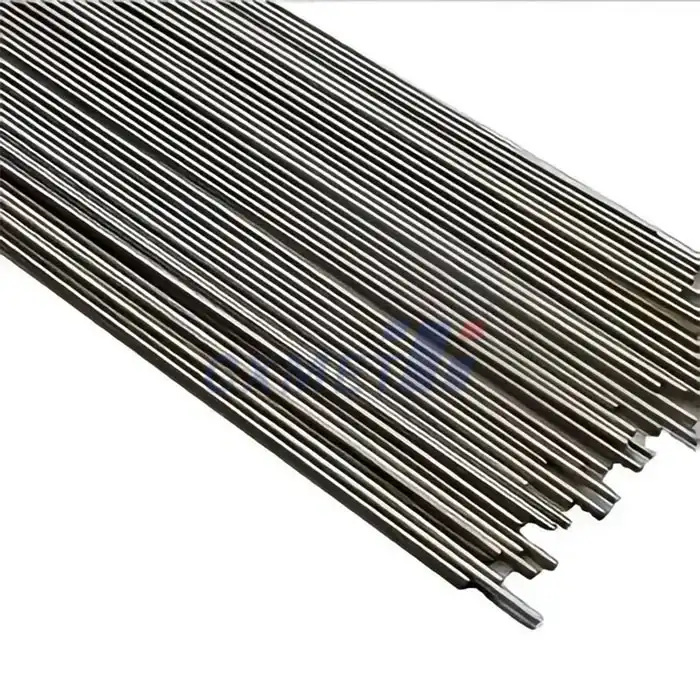
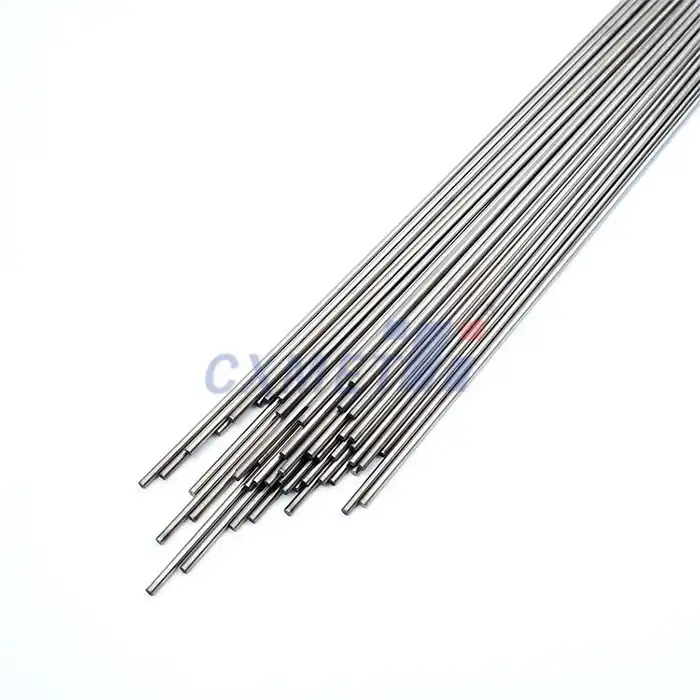
Due to their straight lengths, titanium welding rods provide the welder with perfect hand control, making them ideal for small-batch fabrication, manual TIG welding, and repair work. Spools of titanium welding wire are ideal for robotic, orbital, and high-volume manufacturing because of the importance of constant feeding in these contexts. Since the alloy and grade might be identical in both formats, the only deciding factors are the welding technique and the number of joints made. This article explains the difference, demonstrates how to match your project's format, grade, and documentation, and describes the products that CXMET sells to US-based industrial buyers.
|
|
|
Titanium Welding Rod vs. Wire: Understanding the Difference
What Each Term Means
The quote process is harder to understand because suppliers use the words "rod" and "wire" in a vague way. Titanium filler rods, which are also called Titanium Welding Rods, usually come in straight, cut lengths that a welder inserts by hand into a TIG weld pool. Titanium welding wire comes in several different types. For use with orbital heads, robotic cells, and automatic feeds, it can be bought in coils, on spools, or in straight lengths. Both times, the filler metal is an alloy from the same group. What the supply looks like and how the filler gets to the arc change. People who want to buy something should always read the entire description, not just the title, before placing an order.
Side-by-Side Comparison
The table below summarizes the practical differences I see most often.
| Factor | Titanium welding rod (straight) | Titanium welding wire (spool or coil) |
|---|---|---|
| Typical process | Manual TIG | Orbital, robotic, or automated TIG and plasma |
| Feeding | By hand | Wire feeder |
| Best fit | Repair, maintenance, small batches | Repeat, high-volume production |
| The buyer checks. | Length, straightness, cleanliness | Spool size, winding, feed compatibility |
Format only changes how it's used, not how it's made. It's still possible for price per pound, wait time, and packing to be different, so you should offer each version on its own.
What Buyers Should Verify Instead of Product Names?
A name alone won't protect your weld. Before you accept either format, check the grade, the AWS classification, the diameter, the cut length or spool size, the packing, the surface condition, and the grade. Also, make sure that your equipment can handle the feed. A titanium welding rod can get holes even if it is the right grade, but the surface is dirty. The spool can become stuck in the liner if it is the right width but not wound well. These should be in the purchase order so the supplier and your quality team can read them. This habit also cuts down on the time it takes to check out new buildings because your team knows what to measure.
How to Select the Right Titanium Filler Format?
Match Format to Welding Method?
Start the process. If you want to do TIG welding by hand, a straight Titanium Welding Rod is best because you can control how much filler you add by dipping it into the pool between cuts. Making lines, fixing exhaust systems, and doing repairs in the field are all things that usually fall into this group. Spools of titanium welding wire work best for orbital and robotic welding because a feeder provides filling at a set rate. This means that the results are the same from one joint to the next. For plasma arc setups that have a feeder, wire can also be used. If your store does more than one thing, you can keep both types in stock. To keep the grades straight, I believe each package should have a clear marking.
Production Volume and Joint Design
The amount changes the math. A stick can be bent and set up quickly for a few joints each day. A spool reduces the number of stops needed to change the filler in hundreds of identical joints. It also means less handling, which lowers the chance of getting something dirty. The shape of the joint is also important. Because it gives you more control, a hand-fed Titanium Welding Rod is often better for thin sheets and tight corners. But wire is better for long gaps and joining pipes more than once. Think about how thick the material is, how long the weld is, how many workers are available, and how easy it is to keep track of the work. There are the same number of welds as spools, and each one has its own lot number. Shortcut rods need to be carefully marked with a heat or lot number on each piece.
Decision Guide: Rod or Wire?
I tell all of my clients this as a general rule. For TIG repairs that need to be done by hand, short or occasional welds, outdoor upkeep, and making small amounts, a straight Titanium Welding Rod works best. For robotic, circular, automatic, high-volume work that needs to be fed all the time, spool wire is the best choice. You might want to look into a custom filler if your project needs a diameter that isn't standard, a length that is cut just right, private-label packaging, or more licenses. Write them down so that you can find a format and grade that works for your process, machinery, annual volume, and quality needs. Use a test ticket to make a small order before you place a big order if two options look pretty much the same.
Titanium Grades, Standards, and Specifications
Grades and ERTi Classifications
What's the filler? It needs to be right for the base metal, the work area, and the way you're welding. Grade 1, which is commercially pure, can be used in the most ways. It works best for parts that have already been formed and will be used in chemically milder places. Grade 2 is mostly used for lines, military gear, and chemical gear. When palladium is added to Grade 7, it makes it stronger against corrosion in cracks caused by reducing acids. Grade 5, which is also called Ti-6Al-4V, is stronger but needs more careful handling of the heat and process. These fillers in AWS A5.16 are known as ERTi-1, ERTi-2, ERTi-7, and ERTi-5. The titanium welding rod that works with your base metal and meets your project's needs is the best one.
Titanium Welding Rod Specifications Buyers Should Confirm
Price and grade don't always show everything. This number should be based on the thickness of the base metal, the welding current, the joint's design, and the process that has been accepted by you. Most fillers come in sizes between 0.8 mm and 2.4 mm, but some stores also sell bigger sizes. List the cut length or spool format, as well as the packaging, straightness, tolerance, and cleanliness of the surface. The chemical and mechanical values can be checked against standards set by the customer, AWS, ASTM, ASME, or EN. If the work needs to be regulated, you should ask for mill certificates, heat or lot numbers, certificates of conformity, inspection records, and papers that show where the goods came from. Getting these papers at the quote stage speeds up the receiving process.
CXMET Titanium Welding Rod Product Data
Shaanxi CXMET Technology Co., Ltd. sells Titanium Welding Rod in Gr1, Gr2, Gr7, and Gr5. ASTM B863 standards are used to make it in China, and ISO 9001:2015 proves it. It says that 99.6% of the titanium is present and that the strength of the result is between 345 MPa and 435 MPa. The edges are pickled and polished, and it comes in spool, coil, and straight lengths. In other words, one provider can meet the needs of both people who work by hand and computers. The item is meant to be used in business. Please let our team know the exact grade-to-strength match and any AWS A5.16 rating you need before you place your order. You can be sure that the certificates meet your needs this way.
Welding Practice and Material Comparisons?
How to Weld Titanium with a Rod or Wire?
Stopping contamination is important for success. Titanium is easily broken down by oxygen, nitrogen, and hydrogen when it comes in contact with heat. To clean the joint and each Titanium Welding Rod, use a safe solvent and the right tools. Also, make sure your gloves are clean, since skin oils can let hydrogen into the system. For certain tasks, use pure argon with a torch shield, a trailing shield, and a back purge. Also, make sure that the tip of the hot filler stays inside the gas envelope. Keep the circle short and steady, and watch out for the heat coming in. To quickly check, look at the weld color. Light or silver straw is usually fine, but blue, purple, or white means air is getting in. Important work still needs to be officially inspected, and the right steps need to be taken.
Why Stainless Steel and Aluminum Fillers Do Not Substitute?
Some buyers want to know if they could join titanium with a cheaper bar made of aluminum or stainless steel. It can't. Titanium welding rod needs different protection than other metals because of its different chemistry, increased sensitivity to pollution, and increased need for protection. A stainless steel filler is used to join metals that don't go together well and can break or not do its job. Aluminum takes on various forms depending on the power setting, the metal layer it has, and how well it conducts heat. Titanium weighs about 4.5 grams per cubic centimeter, aluminum weighs about 2.7 grams per cubic centimeter, and stainless steel weighs about 7.9 grams per cubic centimeter. Things aren't always best when they're big. Base metal compatibility, weldability, service setting, and process approval should be used to make the choice, not diameter or supply.
Common Selection Mistakes
The same mistakes happen over and over again. Buyers can choose a filler based only on its diameter, choose a different metal, skip the steps of shielding and purging, or place an order that can't be tracked. Size alone doesn't show that two metals can be joined. It's not enough to just replace something; it can get contaminated, break, or rust, and the filling quality can't fix a bad welding job. If you do controlled work and don't have your heat numbers or certificates on hand, it can mess up your warranties and reports. I go over the whole cost, not just the price per unit, when I compare what different suppliers have to offer. It often costs more than a small price difference per pound to turn down welds, do extra work, lose paperwork, or deliver late.
Application Selection and Titanium Welding Rod Supplier Guide
Matching Applications to Filler
For each field, you need a different grade, format, and kind of paper. People often choose Grade 2 and Grade 7 for heat exchangers, pipes, tanks, and sewage systems because they don't rust and are made from clean, well-known materials. Heavy-duty uses in oil and gas and power generation may add temperature and strength requirements that point to Titanium Welding Rod Grade 5. For pipe welding, you might need accurate measurements, argon cleaning on the inside, orbital compatibility, and a strong way to keep track of each lot. Pharmaceutical, computer, vacuum, and coating equipment now has to follow strict cleaning rules. A skilled provider can help you make sure that the grade fits the base metal and your needs.
What to Include in a Titanium Welding Rod Quote Request?
If you are clear about what you want, the quote process will go faster and be more accurate. Explain the type of base metal, how it will be welded, the filler format, the diameter, the cut length or spool size, the standard, the amount, the use, the location, the delivery date, the Incoterms, and the checks that need to be done. The price per pound depends on the size, the type of alloy, the certification, the custom length, the packaging, the freight, the order volume, and the state of the titanium raw material. Get the full landing cost, as freight and paperwork can change the final amount. Then, compare providers based on how quickly they answer technical questions, how well they test, how well they keep track of quality, how adaptable they are, and how much experience they have with selling. Most of the time, a provider who asks clear questions already knows what the job is.
Why Buyers Work with CXMET
Shaanxi CXMET Technology Co., Ltd. has been in business since 2005 in China Titanium Valley in Shaanxi Province. The business is on a 50,000-square-meter plot of land. More than 80 experts are working on titanium, nickel, tantalum, niobium, tungsten, molybdenum, zirconium, and different mixes of these metals. Our goods are used by people in the vacuum, coating, medical, power metals, oil, chemical, sea, and oil industries. After you order Titanium Welding Rod, our team answers any questions you have about it, goes over any technical details, and gives you personalized technical support for how you plan to use it. We have a lot of different non-ferrous metals, so you can talk to us about your needs for titanium filler and other materials all at once.
Conclusion
Since both titanium welding rod and titanium welding wire are made of the same material, which one to use depends on the type of welding, the amount of work that needs to be done, and the tools that will be used. You can use straight rods for hand-held TIG, repair, and small-batch work. Spool wire, on the other hand, works best for robotic, circular, and repeat sets. What grade of filler should be used with what grade of base metal? That's what the project needs. These are ERTi-2 and ERTi-5, which go with Grades 2 and 5. Before you buy, you should check the diameter, cleanliness, paperwork, and the ability to keep track of it. Using clean tools and full gas protection will protect the quality of the weld. Titanium filler can't be switched out for aluminum or stainless steel filler. Cost as a whole, not just price per unit, is a better way to compare risk and value.
FAQ
Can titanium welding rod and wire share the same grade?
Yes. They could use the same alloy and AWS class. The kind of stuff and how it is given make a difference.
Does ERTi-2 match Grade 2 and ERTi-5 match Grade 5?
In fact, these are the usual pairs. What makes the difference is the quality of the base metal and what the project needs.
How do I pick the size?
It depends on the width of the metal, the welding current, how the joint is designed, and the process you know how to do. The sizes range from about 0.8 mm to 2.4 mm.
Which is better, Grade 5 or Grade 2?
Grade 2 is better at not rusting and makes it easy to weld. In Grade 5, being strong is important. The base metal and the filler should be the same color.
How should I store titanium filler?
Put a lid on it and store it somewhere dry, away from oil and dust. When you touch it, put on clean gloves.
Can stainless steel or aluminum filler replace titanium filler?
No, the toxins don't go well with each other and can damage the joints.
Request a Titanium Welding Rod Quote from CXMET.
Please send your grade, thickness, format, number, and where you want the rod sent to sales@cxmet.com so that they can help you choose the right titanium welding rod for your process. We have been selling titanium welding rods for a long time. Our production is ISO 9001:2015 certified, and we offer technical support that is tailored to your needs. We also offer spool, coil, and straight formats. Please visit https://www.cxmet-tech.com/ to see our goods and ask a question right away.
References
1. AWS A5.16/A5.16M, Specification for Titanium and Titanium-Alloy Welding Electrodes and Rods, 2013
2. ASTM B863, Standard Specification for Titanium and Titanium Alloy Wire, 2014
3. Donachie, M. J., Titanium: A Technical Guide, ASM International, 2000
4. Kou, S., Welding Metallurgy, Wiley, 2003
5. ASM Handbook, Volume 6: Welding, Brazing, and Soldering, ASM International, 1993
6. Leyens, C. and Peters, M., Titanium and Titanium Alloys: Fundamentals and Applications, Wiley-VCH, 2003