knowledges
Titanium Welding Rod: What Is It and Where Is It Used?
2026-11-11 16:54:17
When joining titanium or titanium alloy components, a titanium welding rod acts as a filler metal, typically used in TIG welding. The completed junction retains the strength, corrosion resistance, and low weight of the base material because matched metal is added to the weld pool. Systems in the maritime industry, the oil and gas industry, chemical plants, power plants, pharmaceutical lines, electronics, vacuum or coating systems, and power generation all make use of titanium welding rods. Several grades of these rods are available from Shaanxi CXMET Technology Co., Ltd. Grades, welding procedures, uses, and purchasing choices are all addressed in this manual.
|
|
|

Understanding the Titanium Welding Rod
What Is a Titanium Welding Rod?
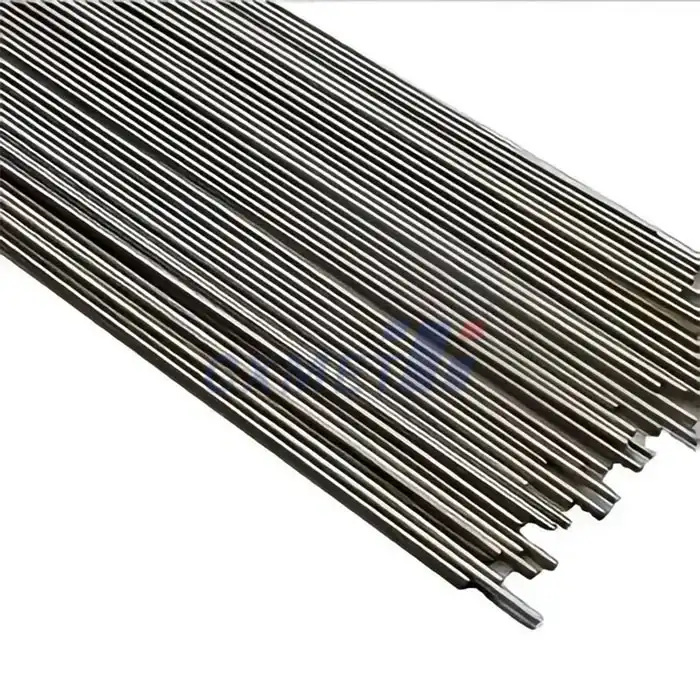
There are long, straight pieces of filler metal that are known as titanium welding rods. Each one is manually inserted into the arc by the welder. Additionally, in many shops, it is referred to as a titanium TIG filler rod. This is an effective method for maintaining welding wire on spools or coils, which is useful for both tools and automation systems. When titanium is heated to a high temperature, it easily absorbs nitrogen, oxygen, hydrogen, and moisture. It is essential that the filler be spotless and that it match the base metal exactly. In AWS A5.16, the names of titanium filler metals are designated with the ERTi designation, while ASTM B863 is the standard that covers titanium wire. More important than size, packaging, or price per unit are the accurate description, accepted method, and documented proof of quality.
Titanium Welding Rod Grades: Gr1, Gr2, Gr7, and Gr5
For the Titanium Welding Rod, the base metal is the same sort of metal that is used in its construction. Both ERTi-1 and ERTi-2 are identical to titanium that is manufactured in a commercial setting. ERTi-1 is the more adaptable of the two. When it comes to general corrosion-resistant manufacturing, ERTi-2 is the material that is considered to be the best. Palladium is one of the elements that is added to ERTi-7 to strengthen it against acids that cause crevice corrosion and wear away metal. ERTi-5 is the same as Ti-6Al-4V and is used in the production of the titanium alloy that is used most frequently. The components of the structure become more robust as a result. The pure grades are more adaptable to shaping, and they offer improved resistance to corrosion; however, the alloy grades are more robust. There are occasions when both are equivalent in terms of quality. You run the risk of failing the certification if you switch to a filler that is less expensive without first reviewing the mill certificate, the welding procedure, or the requirements expressed by the customer.
CXMET Titanium Welding Rod Specifications
CXMET is the brand name of our Titanium Welding Rod, which is manufactured in China and sold to customers. There are Gr1, Gr2, Gr7, and Gr5 available for purchase. We adhere to the standards set out by ASTM B863 and apply the ISO 9001:2015 quality management system. The level of titanium must be at least 99.6 percent to satisfy the standards. You have the option of purchasing them in straight lengths, coil lengths, or spool lengths, and the surface can be polished or pickled. Values for strength are 345 MPa and 435 MPa, respectively. It is imperative that you verify that the number on your certificate corresponds to the grade. Our professionals will examine the base metal and your welding method before advising you on the appropriate grade.
How a Titanium Welding Rod Performs and Welds
Titanium Welding Rod Properties and Temperature Range
With a density of 4.5 grams per cubic centimeter, titanium is approximately sixty percent as dense as steel. It melts at a temperature of around 1,668 degrees Celsius. Because of these characteristics, it is robust in comparison to its weight and is effectively protected from seawater and a wide variety of chemicals that are known to damage metals. However, there is no single temperature suitable for all situations when welding titanium rods. The arc, weld pool, interpass, and service temperatures are the most critical parameters. When an excessive amount of heat is applied, it is more likely to form a bend or oxidize. In the event if the material takes in oxygen, nitrogen, hydrogen, oil, or fingerprints, it may lose its ductility and become brittle during the process. Once you are ready to weld, your qualified process should inform you how much heat to use and how long to use it while welding.
Titanium Welding Rod Welding Process
First things first, clean the rod and the joint. Once that is complete, put on some clean gloves and get ready to begin the purging. It is recommended that you utilize argon that is at least 99.995 percent pure while you are using the torch, a trailing shield, and a back purge. At the edge of the pool, attach the rod to the edge that is leading outward. Maintain the hot tip inside the argon cover at all times. It is necessary to cover the weld with a shield until it reaches a temperature of less than 425 degrees Celsius (800 degrees Fahrenheit). There is a shielding check that is performed using the weld color in AWS D1.9. A straw that is silver or pale in color is welcome. A symptom of contamination is the presence of an oxide that is blue, purple, gray, or flaky white in color.
Common Defects and Practical Fixes
The majority of problems are caused by either contamination or improper regulation of heat. One of the most common causes of porosity is the presence of hydrocarbons, moisture, or a dirty rod. The joint should be cleaned continuously, and titanium welding rods should be stored in their original package. There are indications of inadequate protection, such as changes in color and oxidation of the roots. Ensure that the gas flow, leaks, and back purge are all checked. The most common cause of a lack of fusion is either an incorrect angle of the torch or an insufficient amount of electricity. Keep in mind that the distortion grows more severe with longer dwell times; therefore, make use of fixtures and reduce the amount of heat input. In the event that hydrogen or oxygen is absorbed, cracks are likely to occur; thus, it is important to examine the filler chemistry and shielding agents. For the purpose of assisting the subsequent production run, add each fix to the procedure file.
Titanium Welding Rod Uses and Industrial Applications
Marine, Oil & Gas, and Chemical Processing
Aggressive chemicals and seawater can damage many metals, but titanium is strong enough to handle them. Mariners use Titanium Welding Rod grades that match the base tube or plate to connect heat exchangers, desalination systems, and seawater piping. Tanks, piping, and reactors that chemical processors build to handle acids and chlorides often use Gr2 and Gr7. People who work with oil and gas use titanium where weight and corrosion resistance matter, including offshore equipment. In these sectors, procurement teams usually need to see certificates, lot traceability, and procedure qualification, because a plant can shut down because of a leak or a failure that happens too soon.
Power, Metallurgy, Pharmaceutical, and Electronics
Titanium is utilized in the production of heat exchangers and condenser tubes, which are used in power plants to cool water and steam. In metallurgical facilities, the corrosive process equipment is treated with titanium. Titanium is particularly valuable to pharmaceutical manufacturers because of its resistance to corrosion, which prevents contamination from entering the process vessels and pipes. Titanium can also be used to make electronic components that are lightweight and capable of withstanding toxic substances. In every instance, the weld must be in accordance with the cleanliness and corrosion behavior of the base metal. There are times when strength is not the main priority; surface finish, chemical control, and inspection records all bear exactly the same amount of weight. As a result of this consideration, pickled and polished surface options are available to you.
Vacuum, Coating, Aerospace, and Medical Fabrication
Welds on vacuum and coating equipment must be clean since impurities have the potential to disrupt the quality of the process. Aerospace fabricators frequently use Gr5 to join airplane frames, engine parts, and landing gear because it can withstand high temperatures. Manufacturers of medical devices have a responsibility to ensure that their instruments and prostheses are biocompatible and can withstand sterilization without deteriorating. Additionally, manufacturers use this metal to produce lightweight golf clubs and bicycle frames. To ensure that the grade, certification, and lot control are appropriate for the application, buyers in these fields match the elements. A member of our staff will assist you in checking those particulars before you submit your order.
Selecting the Right Titanium Welding Rod
Titanium Welding Rod Diameter Comparison
People use 1/16 inch, 3/32 inch, and 1/8 inch diameters most of the time. For thin sheets, precision work, or low-heat designs, smaller rods work better. Thicker joints suit bigger rods because they can deposit more metal. The choice depends on the type of joint, operator technique, amperage, and welding position. Most of the time, you should use the smallest rod that lets you add filler steadily and get the weld size you need. Do procedure trials before you do critical work. Please contact us to find out what sizes and lengths are available before you place your order. We have straight, spool, and coil forms.
Titanium Welding Rod vs. Other Welding Rods
Stainless steel or aluminum rods cannot replace titanium because they have different weights and corrosion behavior. Titanium is less dense than steel, has a tight oxide film, conducts heat poorly compared with aluminum, and needs strict argon shielding. Filler made of iron or aluminum can form brittle intermetallic compounds and weaken a titanium joint. Among titanium grades, ERTi-2 favors ductility and corrosion resistance, while ERTi-5 favors strength. Base metal and service conditions determine which one wins.
Six-Step Selection Process and Quick Matrix
Use six steps. First, use drawings and certificates to find the base grade. The second step is to define the rules for temperature, load, and corrosion demands. Third, make sure the filler classification matches the base metal and the approved procedure. Fourth, pick the diameter, shape, and length. Fifth, request chemical and mechanical records. Sixth, confirm supplier capability. The table below gives starting points only.
| Requirement | Starting point |
|---|---|
| General corrosion-resistant fabrication | Gr2 / ERTi-2 |
| High-strength structures | Gr5 / ERTi-5 |
| Thin sheet | 1/16-inch rod |
| Medium-thickness parts | 3/32-inch rod |
Treat this matrix as a screening tool. Your qualified procedure and customer specification make the final call.
Buying Titanium Welding Rod for Industrial Projects
Price and Total Landed Cost
Certification, packaging, grade, chemistry, diameter, and inspection all play a role in determining the price of titanium welding rods. Shipping and export documentation incur additional fees. While placing a large order could help you save money on logistics and per-unit costs, it might also stifle your cash flow. Get multiple prices for testing, shipping, packaging, and customs costs before you buy. Compare each line by line. Rework can drive up the price of an initial, low-ball offer that doesn't account for certifications or packaging. Get all the details straight before sending that purchase order: the minimum order quantity, batch consistency, delivery date, acceptance criteria, and necessary paperwork.
Manufacturer, Supplier, or Trader?
Small pricing differences are less common than technical mismatches, which cause the most expensive blunders. Ordering ERTi-2 without first checking the base metal, selecting ERTi-5 over ERTi-6, or selecting the incorrect diameter are all common mistakes. Others disregard issues with traceability, packaging, or ambiguous credentials in favor of unit pricing. Also, remember to store the rods in a dry, airtight container. When handling them, please ensure you wear clean hands. Because spools and coils require feeders that are compatible with one another, keep constantly fed wire and manual TIG rods apart. Please double-check all dimensions and paperwork before submitting your order.
Common Mistakes to Avoid
Technical mismatches cause most costly blunders, not pricing differences. Many people order ERTi-2 without examining the base metal, ERTi-5 when ductility or corrosion resistance is more necessary, or the improper diameter. Others neglect traceability, packaging, and unclear credentials in favor of unit price. Rods should be sealed and stored dry. Handle them with clean gloves. Spools and coils need compatible feeders; thus, separate manual TIG rods from continuous-fed wire. Recheck all sizes and documentation before ordering.
Conclusion
Titanium welding rods with filler metal that is of the same grade as the base metal are required in order to successfully connect titanium components together. It is necessary to exercise control over this because hot titanium has the ability to absorb oxygen, nitrogen, and hydrogen. Gr1, Gr2, and Gr7 are most suitable for work that focuses on corrosion, while Gr5 is more suitable for assemblies requiring increased strength. It is possible to maintain ductility and eliminate porosity in your welds by employing controlled heat input, high-purity argon, trailing and back shielding, and other techniques. These rods find applications in various fields, including oceanic, oil and gas, chemical, power, pharmaceutical, electronic, and vacuum applications. There is a final decision that is made based on the documents, the form, and the diameter. Neither aluminum nor stainless steel can serve as a suitable replacement. A comparison of the overall landed cost and the capabilities of the supplier is used to make safe judgments rather than relying solely on the unit price.
FAQ
What is a titanium welding rod used for?
It is mostly used for TIG welding to add matching filler metal to titanium joints in gear used in marine, chemical, oil and gas, power, and aerospace equipment.
Can I use stainless steel filler on titanium?
No. Iron contamination from alloys makes the joint brittle and less able to resist corrosion. Use a titanium filler that matches the base grade and your welding procedure.
What is the difference between Gr2 and Gr5?
Gr2 is commercially pure, with better ductility and corrosion resistance. Gr5 is Ti-6Al-4V, which provides higher strength. Base metal and service needs decide the choice.
How should I store titanium welding rods?
Keep them in sealed, dry packaging and handle them with clean gloves to avoid contamination from moisture or oil.
What should I send to request a quote?
Send the grade, diameter, length, quantity, standard, certificate needs, destination, and delivery schedule.
Request a Titanium Welding Rod Quote from CXMET
Looking for a Titanium Welding Rod manufacturer that answers technical questions quickly? Send CXMET your grade, diameter, length, quantity, application, standard, certification needs, destination, and delivery schedule. Our team will reply with a specification-matched quotation for Gr1, Gr2, Gr7, or Gr5 Titanium Welding Rod supply. Email sales@cxmet.com or visit https://www.cxmet-tech.com/ for details.
References
1. AWS A5.16/A5.16M: Specification for Titanium and Titanium-Alloy Welding Electrodes and Rods, American Welding Society (2013)
2. ASTM B863: Standard Specification for Titanium and Titanium Alloy Wire, ASTM International (2014)
3. AWS D1.9/D1.9M: Structural Welding Code – Titanium, American Welding Society (2015)
4. Titanium: A Technical Guide, 2nd Edition, ASM International (2000)
5. Materials Properties Handbook: Titanium Alloys, ASM International (1994)
6. Welding Metallurgy, 2nd Edition, Wiley (2003)