knowledges
Top Gr7 Titanium Rod Benefits for Chemical Processing
2026-11-11 16:54:27
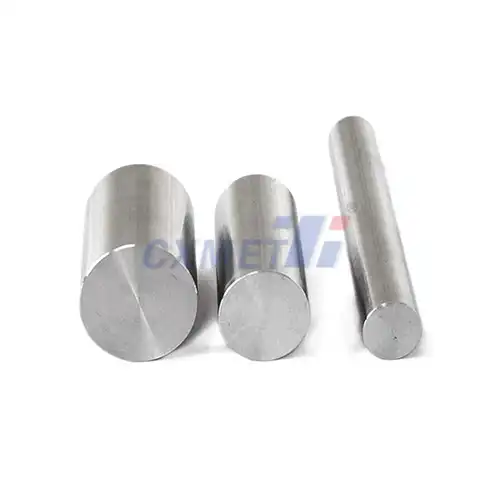
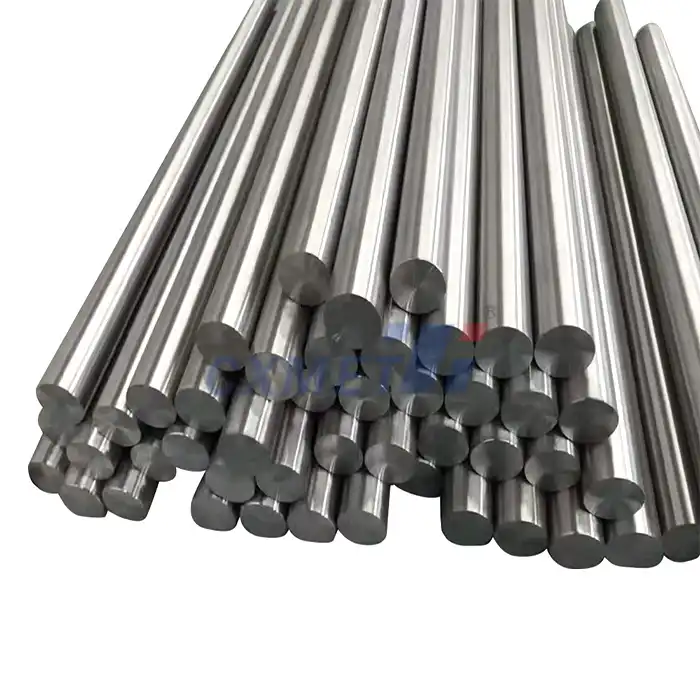
Gr7 Titanium Rod is commercially pure titanium with 0.12% to 0.25% palladium worked into the melt, and that one deliberate addition explains why chemical plants keep it on the approved-materials list. Palladium stabilizes the passive oxide film in reducing acids—hydrochloric, sulfuric, and phosphoric—where unalloyed titanium loses its protection and begins to corrode. For pump shafts, valve stems, reactor internals, and heat-exchanger tie rods, a Gr7 Titanium Rod gives you Grade 2 mechanical behavior with corrosion performance in a different class. We forge and roll this material at Shaanxi CXMET Technology Co., Ltd., and most of the questions we field come from engineers who already know titanium works. What they need is the right grade, the right tolerance, and the right paperwork.
|
|
|
Benefit 1: Corrosion Resistance in Aggressive Chemical Media
How Palladium Keeps the Passive Film Intact?
Titanium forms a titanium dioxide film a few nanometers thick in milliseconds when it is in a place that oxidizes titanium. When hydrogen acts on the surface of a reducing acid, it breaks down the film and lets the metal dissolve. There is a change in the electrochemistry when palladium is on top as a cathodic phase with low hydrogen overvoltage. This means that hydrogen ions join with the metal and then leave as gas. It moves to the area that isn't working and stays there. The film stays in place. Not really; a Grade 7 titanium rod doesn't rust in weak hydrochloric acid at room temperature. But Grade 2 does dissolve at millimeter-per-year rates.
General Attack, Pitting, and Crevice Corrosion
It is easiest to plan for uniform wall loss to happen, and titanium equipment doesn't fail because of it very often. There is damage in the area, like when deposits form pits, when gasketed or flanged joints experience crevice corrosion, or when speed wears away the film faster than it can grow back. Because of crevice corrosion, most of the time, a plant moves up from a Grade 2 titanium rod to a Grade 7 titanium rod. This is especially true when chloride is used at temperatures above 70°C. Since shape, temperature, pH, chloride level, concentration, and pH all change over time, blanket rules are not useful. It's better to test coupons on your real process stream than to use a generic chart.
Where does Gr7 outperform Grade 2 and Grade 5?
Because it is an oxidizer, Grade 2 works well with nitric acid, hypochlorite, wet chlorine, and most saltwater. It costs less too since it doesn't have gold in it. It's worth spending more money on a Gr7 Titanium Rod for mixed and reducing acid streams and other places where cracks can't be designed out. But because it has aluminum and vanadium in it, Grade 5 (Ti-6Al-4V) is less resistant to corrosion in some acids and harder to shape and weld. Its tensile strength is about 895 MPa. Grade 2 is good for light oxidizing work, Gr7 Titanium Rod is good for heavy reducing work, and Grade 5 is good when the load calls for it and the chemistry allows it.
Benefit 2: Mechanical Behavior That Fits Process Equipment
The Property Numbers to Check on the Certificate
As per ASTM B348 Gr7, the titanium rod must have a tensile strength of at least 345 MPa (50 ksi), a yield strength of at least 275 MPa (40 ksi), and an elongation of at least 20% in 4D. There may be some small variations based on the width. Its density is 4.51 g/cm³, its tensile strength is about 105 GPa, and its melting point is around 1660°C. Oxygen can't be more than 0.25%, iron can't be more than 0.30%, nitrogen can't be more than 0.03%, hydrogen can't be more than 0.015%, carbon can't be more than 0.08%, and palladium can't be more than 0.12 to 0.25%. Things that have oxygen and iron in them are stronger but less flexible, so a bar that says 400 MPa might not machine well. You should not ask for a conformance statement but for the actual measurement of heat.
Matching Strength to Load Without Over-Specifying
There are different kinds of rods used in a chemical plant. One type holds a bundle in place, while another twists and turns like a valve stem. The 275 MPa yield of a Gr7 titanium rod is more than enough to cover those, and the 20% stretch lets you roll, bend, and machine threads without cracking them. The design talk moves up to Grade 5 when the part in question has to carry a lot of weight, like a stirrer shaft in a big reactor. With the new chemistry in mind, the corrosion review starts all over again. When it comes to parts that rust, giving them too much strength usually doesn't help and makes them harder to manufacture.
Why the Stronger Grade Is Not Always the Better Choice?
Ti-6Al-4V is there to hold things up, not to attack them. It is possible for alloying elements to gather in the beta phase of reducing media. This phase is where a limited attack could begin. It is also harder to cold form grade 5, and welding needs to be done with more care. Strength is not as important when designing a heat exchanger tie rod or a pump shaft that will work with weak HCl at 80°C. Rust clearance is. Engineers often make parts that are too strong but not safe enough when they only compare grades based on tensile strength. On the other side of that trade-off is the Gr7 Titanium Rod.
Benefit 3: Steady Performance in Heat Exchangers and Process Systems
Where Rod Appears in a Thermal System?
Tube bundles, tubesheets, baffles, and headers can all show signs of rust. Rod parts, such as tie rods that squeeze the bundle, spacer rods, baffle bolts, hanger hardware, and instrument stands, do all the hard work behind the scenes. The shape of these parts is often worse than that of the tubes because a threaded link is supposed to have a gap. That's why a plant that only uses Grade 2 tubes might still need a Gr7 Titanium Rod for tie rods and fixings. The fasteners won't need to be changed as long as the small parts match the metal used on the tube.
Galvanic Effects at Dissimilar Joints
Titanium doesn't react well with steels made of carbon, copper alloys, or stainless steel. A titanium rod is put in an electrolyte and connected to a steel bracket. The steel becomes the anode and rusts faster than it would on its own. How serious the rust is depends on how big the cathode area is compared to the anode area. In real life, you can either use insulating seals and covers to keep different joints out of the wet path, or you can make the whole joint out of titanium, bolts, and washers and all. Many people think that painting the cathode will help, but it doesn't really. If there is a scratch in the paint, the attack will focus on that spot. The review team should make a map of every time two metals touch.
Codes, NDT, and Weld Qualification
There is a section in the building rules called ASME Section VIII that covers parts that hold pressure. This section says that the materials used must be fully certified to SB-348. People who want to weld Gr7 Titanium Rod must use an inert gas shield and follow a process that is allowed under Section IX. ER Ti-7 is often used as the filler metal to keep the palladium level in the bond within the acceptable range. Inspectors often check the color of the weld, along with penetrant or X-ray tests at key joints, to see if it has turned rusty. You can ask for ultrasound or eddy current tests on the bar. For shafts and high-stress nuts, this is a good idea in general.
Benefit 4: Less Maintenance and Longer Equipment Life
The Failure Modes That Stop a Line
When something fails because of rust, it usually doesn't show. Galling is when the threads of a fastener get stuck. This part of a pump shaft wears out. A heat exchanger tie rod bends down at a crack, which lets the bundle move. You can get weak acid on the insulation if a flange leaks. The acid stays there until it is checked. After a release, there is a lot of paperwork that needs to be filled out and production that is lost. This costs a lot more than the price of the part. These types of failures can be fixed with a Gr7 Titanium Rod, which takes care of the chemical side. Correct fitting takes care of the mechanical side.
Handling, Storage, and Contamination Control
Titanium doesn't rust as well if the surface is clean. Iron can damage carbon-steel benches, wire brushes, or shared grinding wheels, leaving holes in the passive film that can't be filled. This makes it look like there are pits even though they aren't caused by chemicals. Be sure to use the right tools and store the rods on wood or plastic. Furthermore, check that the cutting fluid doesn't contain chlorine or sulfur. Pickling and passivation are the right ways to restore an ASTM B600 surface. Our Gr7 Titanium Rod comes from CXMET with a shiny finish and is ready to be put in place. The shop floor still needs to keep that surface clean, though.
Total Cost of Ownership: The Arithmetic Buyers Run
There is a direct link between the price of the metal and the price of the rod. When bought by the kilogram, there is a price difference between Gr7 Titanium Rod and Grade 2. Based on the price of palladium, this gap can be anywhere from half again to several times the price of the base metal. A Grade 2 or stainless steel part breaks after eighteen months, but a titanium part lasts for ten years. This changes the picture. For continuous chemical service, the model is based on how much it costs to shut down, not how much it costs to make the chemicals. One sheet should have the cost to buy, the time to make, the time to install, the time lost, and the estimated life.
Benefit 5: Flexible Fabrication for Custom Components
Stock, Cut-to-Length, and Minimum Order
When CXMET forges and rolls the Gr7 Titanium Rod, it can be longer than 6000 mm and wider than 6 mm. Most shaft and bolt blanks are made from a single piece that doesn't have a circular weld. People can order full-length bars, sections that are cut to length, machining blanks, or many prototypes. They can write down the diameter, length tolerance, straightness, and surface condition on the purchase order. It's important to think about the width. A rod that is close to the size of the finished part saves time and paper. If you need bars made to ASTM F136, AMS4928, or ASTM F1295 for other types of titanium, we have them. These are used in vacuum finishing, medicine, aircraft, and electroplating.
Machining and Cutting Controls
Titanium is soft and hardens slowly. It also doesn't conduct heat well, so the edge of the tool wears down faster than the tip. Take a positive rake, a slow surface speed, and a lot of feed to get under the layer that has been work-hardened, and aim high-pressure coolant at the cutting zone to get sharp carbide that isn't covered. Titanium on rigid bases works well for climb grinding. Use of chlorine cutting fluids can lead to stress-corrosion cracks, so stay away from them. The band speed needs to be slow enough so that chips don't change color when they are being sawn. These rules apply to all types of titanium. As for Gr7 Titanium Rod, a clean coolant also keeps the material from rusting, which is why it was created.
Inspection, PMI, and Batch Traceability
If there is a bar in the box that doesn't match the license, it is called positive material identification. This checks for mistakes before the part gets to a reactor. In the measurement review, you check the diameter, ovality, straightness, and cut length. When you examine the surface, look for grinder marks, seams, and laps. Each heat number keeps track of the material from the time it melts until it's sent out. This way, a failed test can be linked to a certain lot and the parts that were made from it. Materials that are mixed together are like rust that is about to fail when they are used with chemicals. When you get the item, ask for PMI if your quality system needs it.
Benefits 6 and 7: Documentation Strength and Supply-Chain Confidence
The Certificate Package Behind ASTM B348
ASTM B348 requires a record that includes chemical analysis and mechanical properties linked to the heat. Really, people who buy something should see an EN 10204 3.1 certificate, the heat number, the palladium analysis, tensile and yield results, elongation, and a note that the product meets the needs that were bought. When the part is within a pressure limit, certain ASME SB-348 forms and a different verifying body are used. There are extra ultrasonic tests, qualification for a specific customer, and third-party inspection that are not part of a mill certificate. It takes less time to read the certificate before the box is opened.
Reading a Quote: Palladium Content, Tolerance, and Lead Time
Two quotes for the same diameter can be completely unique for reasons that have nothing to do with edges. Palladium levels run from 0.12 to 0.25%, and companies that use the lower end of that range spend less on raw materials. The diameter range, which can be H9, H11, or a mill standard, tells the buyer how much cutting they need to do. When it comes to yield, both surface brightness, whether ground or peeled, and straightness matter. The delivery terms and the way the box is packed will determine who pays for the box and the freight. A quote that shows the grade, standard, tolerance, certificate type, number base, and wait time lets the buyer compare similar items.
The RFQ Checklist That Earns Accurate Quotes
A request for a quote that includes both the chemistry and the paperwork gets a response that can be used right away. This is what it's all about:
- Material and standard: Under "Material and Standard," write "Gr7 Titanium Rod," along with the palladium range, the type of seal, and the ASTM or ASME revision you build to. Write down if a third-party inspection is needed and who will be watching the tests, since that will change the plan.
- Dimensions and finish: Write down the length, width, cut error, straightness, and condition of the surface. Please let us know whether the rod goes into a mill-turn cell or a screw machine. It changes both yield and lead time based on the blank size.
- Service and volume: On the line that says "service and volume," write down the acid type, its concentration, temperature, and chloride level. Then, write down how much acid will be needed each year and where it will be sent. They can warn you about grade risks before you place the order if they know about the tax.
Send that, and we'll be able to price the material, cutting, and approval on their lines. In this way, deals from various businesses will be more alike.
Conclusion
People work with chemicals on the Gr7 Titanium Rod, which has 0.12 to 0.25% palladium added to it. The addition makes the inactive oxide sheet stronger, which is something that free titanium doesn't have. This article lists seven good things about this material. It can resist crack corrosion in hot chlorides and weak reducing acids, be strong at the Grade 2 level with 20% elongation, make heat exchanger hardware more stable, and stop working less often without warning. You can also make it with a cut-to-length bar up to 6000 mm. Being certified under ASTM B348 and being able to see where the heat came from are the last two things you need to know before you buy. This doesn't change the fact that concentration, temperature, speed, and shape need to be checked out first. It's still a science question first and a price question second about which grades to give.
FAQ
What separates Grade 2 from 7 titanium rods?
What rust is and how it works. Both grades have the same mechanical minimums, but Gr7 Titanium Rod has 0.12 to 0.25% palladium in it, which keeps the passive film in place and lowers acids and cracks. Grade 2 works well and costs less in the oxidizing service. It's not the list of strengths on the bottle that should help you decide.
Which standard should I order against?
Bars and billets fall under ASTM B348 for use in industry. ASME SB-348 talks about parts that are near a pressure boundary. CXMET has other types in ASTM F136, AMS4928, and ASTM F1295, and many aircraft projects need AMS specs. Please explain the change and the type of certificate you need.
How is a Gr7 titanium rod priced?
Nickel is the base metal. The next things that are added are cutting, testing, packaging, shipping, and the diameter and tolerance. Ask for more than just a number. Small lots cost more to handle, and a different schedule is generally needed for yearly volumes that are sent over and over again.
Request a Gr7 Titanium Rod Quote from CXMET
Before you agree, our team will review our stock, cutting choices, and licensing. Please send us the size, length, quantity, service chemistry, and standard you are using. The factory that CXMET gets its Gr7 Titanium Rod from is in Shaanxi, China. Forged or rolled, the rod can be made in lengths up to 6000 mm and widths greater than 6 mm. It has a smooth, shiny surface. Email your drawing or request for a quote to sales@cxmet.com. It will be looked over by a professional, not a line.
References
1. ASTM B348, Standard Specification for Titanium and Titanium Alloy Bars and Billets, ASTM International, 2013.
2. ASM Handbook, Volume 13B, Corrosion: Materials, ASM International, 2005.
3. Donachie, M. J., Titanium: A Technical Guide, 2nd Edition, ASM International, 2000.
4. Lütjering, G. and Williams, J. C., Titanium, 2nd Edition, Springer, 2007.
5. Leyens, C. and Peters, M., Titanium and Titanium Alloys: Fundamentals and Applications, Wiley-VCH, 2003.
6. ASME Boiler and Pressure Vessel Code, Section II, Part B, Nonferrous Material Specifications, ASME, 2021.