knowledges
What Certifications Matter for Customized CNC Titanium Parts?
2026-11-18 16:57:10
The certificates needed for Customized CNC Titanium Parts will vary on the end application, but there is a fundamental set of credentials that will apply to most orders. ISO 9001:2015 verifies that the supplier has a documented quality system. AS9100 is the applicable aerospace standard. ISO 13485 is good for medical equipment. The mill certificate is heat-to-lot traceable, and the dimensions are confirmed with calibrated inspection records. Finally, the file is finished with a Certificate of Conformance and final records. The approach is designed to let U.S. engineers and purchasers match each document to genuine risk and assess it appropriately and avoid paying for papers a project doesn’t require.
|
|
|
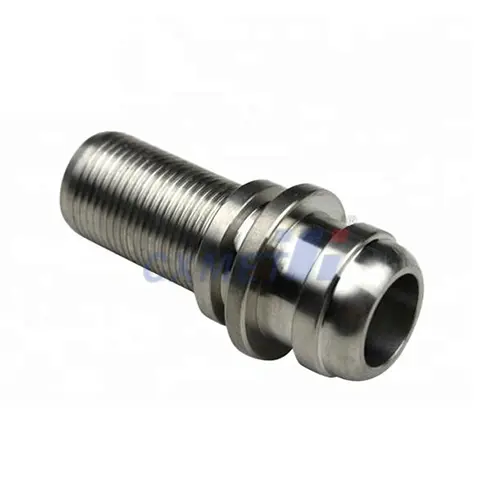

Why Certifications Matter When Buying Customized CNC Titanium Parts
What a Certificate Proves and What It Does Not
A certificate shows that an independent body has audited a supplier’s management system. Tells you that the firm retains records of its acquisition, inspection and remedial actions. It does not warn you that you will see a certain image. See the certificate and material reports for Customized CNC Titanium Parts, inspection data, and samples of related work. The website logo is the start of the journey. Ask for the certificate number, scope, and issuing body, and cross-verify them with the manufacturer who will be machining your order. This examination takes minutes and saves you from costly shocks after delivery.
Why Titanium Demands Tighter Control
Titanium is a poor conductor of heat; therefore, the heat builds up along the cutting edge. Excessive heat may rapidly wear down tools, harden the surface, and develop alpha case, a brittle oxygen-rich coating that can limit fatigue life. Titanium will react with some of the impurities during processing. The density of Grade 5 (Ti-6Al-4V) is about 4.43 g/cm^3, or roughly 45 % less than steel. It may achieve tensile strengths above 1,000 MPa (with heat treatment). This combination of traits makes Custom CNC Titanium Parts both rewarding and challenging. “So process control, tool management, and inspection records are as important as the certificate.
Matching Requirements to Risk Level
Different orders, different documentation." A mill cert and basic inspection report may be required for the prototype bracket. A maritime fitting or chemical processing component may need comprehensive heat-lot traceability and special material testing for corrosion. You’ll commonly find Validation, First Article Reports, and Change Control in use in aeronautical and medical equipment. Before you start asking for pricing, I would recommend that buyers rank each part by application, volume, and failure effect. That grading keeps the useful documentation and cost-effectiveness aligned. Custom CNC Titanium Parts for oil and gas, electricity, or electronics are based on the same basis.
Quality System and Industry Certifications for Customized CNC Titanium Parts
ISO 9001:2015 as the Baseline
As a standard, ISO 9001:2015 ISO 9001:2015 will be the typical starting point for titanium parts manufacturing. It needs established procedures for procurement, contract review, production planning, inspection, management of nonconforming goods, and remedial action. That approach removes variability in production between prototype, low-volume, and repeat orders. CXMET has ISO 9001:2015 certification. Buyers should examine the verification, coverage, issuer, and proven location of the certificate. The standard does not test whether titanium is competent or if the part is compatible with a design. Material reports and inspection data are still essential for Customized CNC Titanium Parts. It's a show of discipline, not a proof of skill.
AS9100 and ISO 13485 for Regulated Work
AS9100 is based on ISO 9001 and applies to military, aviation, and space. It establishes rules for configuration management, product safety, risk, traceability, and counterfeit parts prevention. ISO 13485 is specialized for the medical device industry and covers risk management, cleanliness, process validation, and change control. If you are intending to use your titanium item in an airplane construction or surgical equipment, then you could need one of these standards to satisfy your customer's requirements. Custom CNC Titanium Parts frequently include optional marine or chemical processes. Understand the standard required in your quality agreement. Before sending your designs, check the supplier’s status.
IATF 16949 and ISO 14001 in Context
ISO 14001 & IATF 16949 Background: IATF 16949 is targeting the automotive supply chain. It relates to process capacity and consistency of production and preventing mistakes and is normally linked with APQP, PPAP, FMEA, MSA, and SPC. ISO 14001 is an environmental management standard that may be valuable to purchasers monitoring environmental performance, but has no relevance to machining precision. It’s a procurement choice, not a technical showcase. Filter certifications by End Use. Titanium CNC Machined Custom Parts. This might raise your quotation costs without decreasing risk if you require a standard your part will never need.
Material, Inspection, and Special-Process Documentation
Material Certificates and Heat-Lot Traceability
The mill test certificate must include grade of alloy, heat or lot number, chemical composition, mechanical qualities, and material standard. Typical specs for bars and billets are ASTM B348, aerospace Ti-6Al-4V stock is AMS 4928, and medical ELI grade is ASTM F136. Traceability of work is typically required for EN 10204 3.1 publications. Grade 2 is used for corrosion resistance and for applications requiring ductility, such as chemical equipment. Grade 5 is for high-strength applications. The heat-lot number should be specified on the Work Order, Inspection Report, and Certificate of Conformance. Custom CNC Titanium Parts are second-tested with positive material identification using an XRF gun.
Inspection, Calibration, and Process Control
Inspection data demonstrated whether the pieces conformed to the design. Before manufacturing, define critical dimensions, geometric tolerances, threads, hole locations, and surface profiles. Typical instruments include CMMs, optical comparators, height gages, thread gages, and roughness testers. Traceability to competent labs should be established, and the addition of ISO/IEC 17025 certification provides further trust in those findings. Aerospace projects may need First Article Inspection AS9102. Production plans may need Cp, Cpk, and SPC data. Dye penetrant testing in accordance with ASTM E1417 may be used for the detection of surface flaws, if necessary for the application. Custom CNC Titanium Parts, machined to ±0.01mm tolerances with Ra 0.8 finish. We pick the measuring methodologies right from the start.
Surface Finishing and Special Processes
The ending is handled. Titanium components may be anodized, brushed, bead blasted, coated, passivated, or laser marked. All these treatments impact the look, roughness, size, and performance. Develop criteria for approval. Define masking regions. Set color standards and inspection procedures. The color of titanium is due to the thickness of the oxide layer, not due to dyes. We offer parts in natural or gold hue. We may also provide heat treatment upon request. Aerospace clients may need NADCAP-certified or customer-authorized subcontractors to perform heat treatment, chemical processing, coatings, and non-destructive testing. CNC Titanium Parts Customized Coating Thickness and Roughness Info Still Remain.
Compliance and Supplier Evaluation for Customized CNC Titanium Parts
Documents for Global B2B Procurement
For orders that cross borders, you need to document acceptance and shipping. A Certificate of Conformance must include part number, drawing revision, quantity, batch, specifications, and an approved signature. Depending on your assembly, you may additionally need RoHS and REACH declarations for materials, coatings, lubricants and packaging. Commercial invoices, packing lists, country of origin information and export classifications must all be consistent. Titanium packaging must be resistant to abrasion, contamination, corrosion, and distortion. Your design data is protected by CAD transmission security and confidentiality agreements. Ask your Custom CNC Titanium Parts provider to specify these things before purchase.
How to Verify a Certification Package
4 checks for verification. First, read the certificate number, date of expiry, issuing organization, and place certified. Second, ensure that the paperwork comes from the place that creates your parts, not just a trade organization or parent corporation. 3rd, imagine CNC equipment, multi-axis capabilities, titanium know-how, inspection resources and tool management. Fourth, require a documentation strategy that must consist of material certificates, process flow, inspection plans, sample reports, and COCs. For regulated work, inquire whether the quotation for Customized CNC Titanium Parts includes FAI, PPAP, risk assessments, validation and change-control documents.
Comparing Suppliers by Volume and Risk
Volume and risk are the drivers of priorities. For prototype and low-volume jobs, engineering input, variable quantities, and reliable inspection records are helpful. CXMET allows R&D teams to test their innovations with a MOQ of 1 piece. Bulk manufacturing requires capacity, robust processes, tool life management, and preventative maintenance. Aerospace purchasers need AS9100, FAI capabilities, and approved specific procedures. Medical programs are requesting ISO 13485 and cleanliness controls. When contemplating custom CNC titanium parts, OEMs and distributors have to examine not only the unit price, but also communication, logistics, support for repeat orders, and overall landing cost.
Mistakes to Avoid, a Practical Checklist, and the Right Machining Partner
Mistakes That Raise Cost and Risk
The worst thing is to associate titanium competence with ISO 9001. Another is to choose the lowest bid and not define the documents needed, which might lead to rework, rejected items, missing papers, or delays in customs clearance. Some customers request credentials that don’t apply and violate safety standards. And others forget you have to deal with subcontracted procedures and modifications in designs. Question each supplier on how they handle external processes, engineering changes, and non-conformances. So, a straightforward strategy for a customized CNC titanium parts mature solution.
Certification Checklist by Part Risk
Agree on these parameters before quoting. Use as a starting point for Custom CNC Titanium Parts.
- General Industrial Parts ISO 9001 Certified Titanium Material Certifications Heat Lot Traceability Dimensional Inspection Proof of Calibration Certificate of Conformance The range is suitable for a broad range of harsh service applications in maritime, oil and gas, chemical, power, electronics, and vacuum industries where formal regulatory approval is not necessary.
- Aerospace parts: all of the above plus AS9100, AS9102 first article reports, certified special procedures, counterfeit part controls, configuration management, and thorough traceability. The records allow the buyer to trace each material lot, process modification, and inspection result to its origin to help audits and failure investigations.
- Medical and automotive parts: Medical work might involve: ISO 13485, documented risk management, cleanliness controls, validated procedures, regulated packaging. The automotive programs might include topics like IATF 16949, APQP, PPAP, FMEA, MSA, SPC, and capacity planning. All lists should be based on your customer’s contract, not assumptions.
Quotes are similar, and agreeing on the list in advance eliminates last-minute document demands.
How a Qualified Machining Partner Supports Procurement
A good partner provides value before, during, and after production. CXMET takes into account CAD files, drawings, metal grades, quantities, tolerances, and finishes when quoting. Problems mentioned include thin walls, deep chambers, heat buildup, and restricted access to the instrument. A clear quotation is made for machining, material, finishing, inspection, tooling, packaging, and certification. Founded in 2005 in the Titanium Valley of China, Shaanxi CXMET Technology Co., Ltd. has more than 20 years of expertise, 50,000 square meters of space, and more than 80 technicians. We provide OEM/ODM services. We can make machine parts from 2mm to 800mm long and from 2mm to 400mm in diameter.
Conclusion: Choosing the Right Certification Level for Customized CNC Titanium Parts
For Customized CNC Titanium Parts certifications, it's not the longest list that matters, but about matching controls to risk. Practices are recorded and based on ISO 9001:2015. We are AS9100, ISO 13485, and IATF 16949 compliant as required by our aerospace, medical, and automotive clients. Material certifications provide heat lot traceability back to the alloy. Dimensions are verified using calibrated inspection data. Reports, specific process approvals, and a Certificate of Conformance complete the package. Besides the certificate, scope, location, and validity should also be checked. The place that creates the parts needs to be an authorized place. The greatest faults that produce problems: dependence on ISO 9001 solely and pricing-driven choice. A pre-quotation risk-based checklist agreed upon by both parties eliminates overspending and compliance gaps.
FAQ
Is ISO 9001 enough for Customized CNC Titanium Parts?
ISO 9001 is a baseline. It shows a controlled quality system, but it does not prove aerospace, medical, or titanium-specific skill. Many industrial parts need it, plus material certificates and inspection reports. AS9100 or ISO 13485 applies only when your customer requires it.
Which documents are usually requested for Grade 5 titanium?
Buyers commonly ask for a mill certificate showing grade, heat number, chemistry, and mechanical properties, plus inspection reports and a Certificate of Conformance. Some projects add PMI results, first article reports, or finishing records.
How do I verify a supplier's certificate?
Check the scope, certified location, expiration date, and issuing registrar. Then confirm that the certified site is the factory machining your parts.
Do prototype orders still need certification?
Yes. Even one prototype benefits from a material certificate and inspection report, because they confirm the alloy and dimensions before you scale up. CXMET accepts an MOQ of 1 piece.
Request a Quote for Customized CNC Titanium Parts from CXMET
Looking for a Customized CNC Titanium Parts manufacturer that understands documentation as well as machining? CXMET produces Grade 5 parts with ±0.01 mm tolerance, Ra 0.8 finish, and ISO 9001:2015 certification, starting at one piece. Send your drawings, quantities, and required certificates to sales@cxmet.com, and our team will review manufacturability and confirm the documents we can provide. Visit https://www.cxmet-tech.com/ for more details.
References
1. ISO 9001:2015 Quality Management Systems – Requirements, International Organization for Standardization, 2015
2. AS9100D Quality Management Systems – Requirements for Aviation, Space and Defense Organizations, SAE International, 2016
3. ISO 13485:2016 Medical Devices – Quality Management Systems – Requirements for Regulatory Purposes, International Organization for Standardization, 2016
4. ISO/IEC 17025:2017 General Requirements for the Competence of Testing and Calibration Laboratories, International Organization for Standardization, 2017
5. EN 10204:2004 Metallic Products – Types of Inspection Documents, European Committee for Standardization, 2004
6. Titanium and Titanium Alloys: Fundamentals and Applications, Wiley-VCH, 2003