knowledges
What Design Factors Affect a Titanium Lap Joint Flange’s Strength?
2026-04-20 15:25:30
The Titanium Lap Joint Flange's strength is affected by a number of linked design factors, such as the choice of material grade, the shape of the part, and how well it is integrated. The tensile strength and rust resistance are directly affected by the type of material used, such as Grade 2 or Grade 5 titanium alloy. How the loads are spread out in the assembly is based on geometric factors like the width of the flange, the diameter of the bore, and the profile of the hub. Furthermore, the accuracy with which bolt torque is applied, the compatibility of gaskets, and surface finishing methods such as pickling or sandblasting all have an impact on stress concentration and long-term fatigue resistance, all of which are important for operating reliability.
|
|
|
Understanding Titanium Lap Joint Flanges and Their Performance Bottlenecks
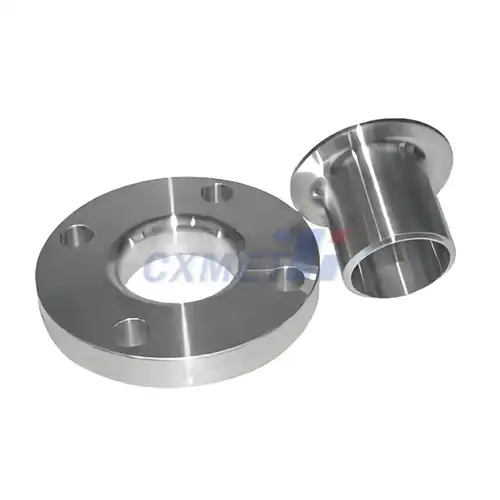
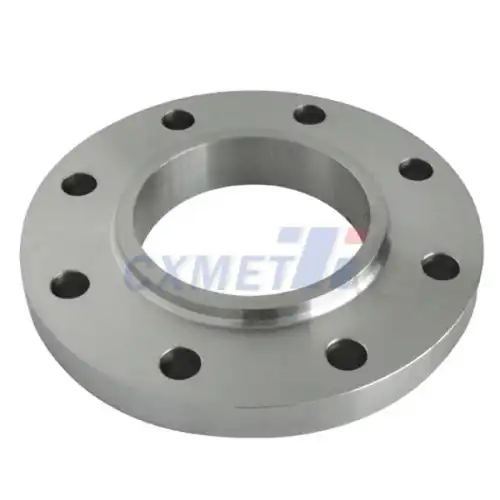
Titanium lap joint flanges are a one-of-a-kind two-part pipe assembly that is widely used in fields that need both chemical protection and mechanical reliability. This design is different from most solid flanges because it has a titanium stub end that is welded directly to the pipe and a loose backing flange that can move around it. The stub end touches the process fluid and benefits from titanium's natural resistance to rust. The backing flange, on the other hand, applies structural bolting pressure without coming into contact with corrosive media. This separation of tasks lets engineers use high-grade titanium only when it's really needed, which saves money on projects without sacrificing safety.
Typical Strength Challenges in Flange Assemblies
Several structural vulnerabilities commonly appear in lap joint flange configurations. Stress concentration points emerge at the weld zone where the stub end meets the pipe, particularly when installation tolerances are not strictly maintained. Cyclic loading from thermal expansion, pressure fluctuations, or vibration introduces fatigue stress that accumulates over thousands of operating cycles. Unlike static loading, fatigue damage progresses invisibly until sudden crack propagation occurs, making early detection difficult during standard inspections.
Common Failure Modes and Their Impact
Most of the time, cracks start at the border radius of the stub end or along areas that have been heated during welding. Titanium metals can become brittle if they are heated incorrectly or get dirty while being made, which makes them less able to absorb impact energy. In chemical processing or offshore sites, these types of failure directly lead to unplanned downtime, emergency repairs, and the chance of safety incidents. When replacing flanges requires depressurising the system and taking it apart in a small space, maintenance costs go up quickly. Procurement teams can select more durable designs from the start when they are aware of these performance bottlenecks early on. When engineers work with CXMET's technical staff to plan a project, they can find risk factors that are specific to the application and choose the right flange sizes and material grades based on operating stress profiles. This proactive method increases the time between services and lowers the total cost of ownership over the lifecycle of an asset.
Key Design Factors Affecting the Strength of Titanium Lap Joint Flanges
The mechanical integrity of these specialized Titanium Lap Joint Flange's components emerges from careful attention to multiple design variables that interact in complex ways during real-world operation.
Material Grade Selection and Alloy Properties
There are different titanium metals that are strong, flexible, and resistant to corrosion in ways that make them useful in different industrial settings. It is commercially pure grade 2 titanium, which is easy to shape and weld and has a mild tensile strength of about 50 ksi. This makes it perfect for use in moderately corrosive seawater and brine. It is called Grade 5 titanium alloy (Ti-6Al-4V), and it has aluminium and vanadium added to it. It has a much higher tensile strength than 130 ksi and is good for high-pressure systems in aerospace and power generation, where mechanical loads are the most important factor in choosing a material. Grade 7 and Grade 12 alloys have palladium or molybdenum added to them, which makes them more resistant to reducing acids like sulphuric and hydrochloric acid at high temperatures. To choose the best metal, you have to weigh the risk of corrosion against the need for mechanical stress. CXMET keeps detailed records of all the tests that were done on each batch of materials, which lets engineers compare the mechanical qualities to published ASTM standards before installing.
Critical Geometric Parameters
The twisting resistance when bolts are loaded is directly related to the thickness of the flange. Not enough thickness causes too much deflection, which makes it hard for the gasket to sit properly, and too much material adds weight and cost that aren't needed. The hub diameter and taper angle change how compressive loads move from the bolts to the stub end face through the flange body. A properly sized hub geometry spreads loads out evenly, stopping localised stress peaks that cause cracks. To keep eccentricity to a minimum during assembly, bore diameter tolerances must match pipe outer diameter standards within tight limits. Even small misalignments cause the stub end to bend, which speeds up the damage from wear and tear. Care must be taken when machining the radius changes between the stub end face and the barrel section so that there are no sharp points that can cause stress to build up when the pressure is applied and removed repeatedly.
Bolt and Gasket Integration
If you choose the right fasteners, the gripping force will be the same all the way around the flange. The material used for bolts needs to be able to fight corrosion from the environment and still have enough yield strength to keep them from coming loose when they are vibrated. Titanium bolts have benefits in terms of material compatibility, but they need to be carefully torque-controlled because they tend to loosen. Stainless steel or nickel alloy bolts are stronger, but they need to be isolated to stop galvanic corrosion at metal-to-metal surfaces that are not the same. The material and profile of the gasket have a big effect on how well it seals and how the stress is distributed on the flange. Spiral-wound gaskets with graphite filler can handle small flaws on the surface while keeping the compressive load constant during heat cycles. Elastomeric gaskets work well in low-pressure situations where parts need to be taken apart often. The compression modulus of the gasket changes how bolt loads move through the joint, which changes the stress patterns on the stub end face.
Surface Treatment and Finishing Techniques
Pickling processes get rid of surface oxides and other contaminants that come from machining. This leaves a chemically clean surface that is better at resisting rust. When extra protection layers are needed, sandblasting makes the surface rougher in a controlled way, which helps the coating stick. These surface conditions also stop fatigue cracks from starting by getting rid of tiny flaws that act as stress concentration sites. Precise cutting tolerances make sure that the face is flat and straight, which meets the standards for dimensions that support gasket performance. In order to stop leak tracks, surface finish standards usually call for Ra values below 125 microinches on sealing faces. Before parts leave CXMET's factory, they go through several stages of inspections to make sure they are the right size and have a good finish. These design factors together decide whether a lap joint flange assembly will work reliably for its whole intended service life or need to be replaced early because of structural degradation. When engineers are choosing these parts, they should talk to experienced suppliers who know how these factors affect each other in different working situations.
Practical Installation and Maintenance Tips to Maximize Strength and Longevity
Proper installation techniques lay the foundation for long-term flange reliability, while systematic maintenance practices preserve structural integrity throughout the operational lifetime.
Precision Alignment and Torque Application
First, make sure that the sides of the two flanges that fit together are parallel within a certain range of tolerances, which are usually 0.5 mm across the diameter. Misalignment causes bending stresses to build up at bolt sites, which speeds up fatigue damage. For consistent bolt tension around the flange perimeter, calibrated pneumatic or hydraulic Titanium Lap Joint Flange torque wrenches are used. These tools tighten the bolts in a star pattern that equalises the compressive loading. Torque values must take into account the type of bolt material, the condition of the thread lubrication, and the flange class rating. When you don't tighten something enough, the gasket can lose its compression during pressure cycles. This can lead to leaks and an uneven spread of stress. Over-torquing can cause bolts to bend or flange faces to deform, which can damage sealing surfaces forever. Recording the torque values used during the initial installation gives repair workers a starting point for re-torquing tasks.
Routine Inspection Protocols
Visual checks that are done every three months find early signs of surface rust, gasket extrusion, or bolt loosening before they become major problems that stop the machine from working. Inspectors who know about the properties of titanium can spot patterns of discolouration that mean the material has been exposed to too much heat or chemicals. Ultrasonic thickness measurements show how much material is being lost in stub-end sections that are subjected to erosive service conditions, which helps plan when to replace them. Leak detection studies using soap solutions or electronic sniffers show how the gasket seal is breaking down while the system is running. Small leaks are often caused by bolts that aren't tight enough. This can be fixed by carefully re-torquing the bolts without taking the whole thing apart. Thermographic imaging shows temperature differences around flanges that point to problems with internal wear or blockages that need more research.
Maintenance Activities for Extended Service Life
Periodic re-torquing compensates for gasket creep relaxation and thermal cycling effects that gradually reduce clamping force. This activity typically occurs annually or after significant thermal upsets, following the same torque values and sequence used during initial installation. Flange faces require cleaning to remove process residue buildup that interferes with gasket seating during reassembly after maintenance activities. Bolt threads and nut bearing surfaces need lubrication replacement to maintain accurate torque-to-tension relationships and prevent galling damage during removal. Damaged bolts showing corrosion, thread wear, or yielding must be replaced rather than reused, as their load-bearing capacity has been permanently compromised. Maintaining detailed maintenance records helps identify problematic installations where environmental conditions exceed original design assumptions.
Troubleshooting Common Operational Issues
Persistent leaking despite proper torque application often indicates flange face warping from excessive bolt loads or thermal distortion. Surface inspection with precision straightedges reveals deviations from flatness that require machining correction or component replacement. Bolt breakage points to either material defects or stress concentrations from misalignment that must be resolved before reassembly. Corrosion appearing on the stub end exterior suggests process fluid escape past the gasket or environmental exposure beyond the material's resistance capability. This condition may require upgrading to a more resistant titanium alloy or implementing additional protective coatings. Unusual noise or vibration emanating from flange locations can indicate loose bolting, erosive internal flow patterns, or structural cracking that demands immediate investigation. These practical measures protect the substantial capital investment represented by titanium piping systems while maintaining the safety and reliability that industrial operations depend upon. Technical support from CXMET's engineering team helps troubleshoot challenging installations and develop customized maintenance protocols tailored to specific operating environments.
Comparing Titanium Lap Joint Flanges with Other Materials for Strength and Durability
Material selection profoundly influences flange performance across different industrial applications, with each option presenting distinct advantages and limitations.
Titanium Versus Stainless Steel Performance
Titanium alloys deliver strength-to-weight ratios approximately 40% better than austenitic stainless steels, reducing structural loading on supporting equipment and piping systems. This weight advantage becomes critical in offshore platforms where every kilogram affects installation costs and structural capacity. Corrosion resistance in chloride-rich environments strongly favors titanium, which maintains passive film stability in seawater and hypochlorite solutions where stainless steel grades suffer pitting and crevice attack. Stainless steel flanges demonstrate higher elastic modulus values that provide greater rigidity under equivalent loading conditions, an advantage in applications prioritizing dimensional stability over weight savings. Material costs favor stainless steel for moderate corrosion environments where its performance proves adequate. The lap joint configuration allows cost optimization by specifying titanium only for the stub end while using stainless steel for the backing flange, combining corrosion resistance where needed with economical structural components.
Carbon Steel Alternatives and Their Limitations
Carbon steel flanges excel in high-pressure steam systems and hydrocarbon service, where corrosion rates remain manageable through protective coatings and inhibitor programs. Their material costs represent a fraction of titanium prices, making them attractive for large-diameter piping in power generation and refining applications. However, frequent coating maintenance and eventual replacement due to corrosion accumulation increase lifecycle costs substantially compared to corrosion-immune titanium installations. Temperature limitations restrict carbon steel to approximately 400°F in oxidizing service before scaling accelerates material loss. Titanium maintains structural properties and corrosion resistance approaching 600°F, extending its operational envelope in thermal oxidizers and high-temperature chemical reactors. Weight penalties from carbon steel's lower strength require heavier wall sections that complicate handling and installation in confined spaces common to retrofit projects.
Industry-Specific Case Insights
Seawater desalination plants operating in the Middle East have documented 20-year service records with titanium lap joint flanges showing negligible corrosion in concentrate brine streams, while original stainless steel components required replacement within five years. Chlor-alkali producers report zero flange failures in wet chlorine service using Grade 7 titanium assemblies over 15-year intervals, compared to 3-year replacement cycles with nickel alloy alternatives. Offshore oil platforms in the North Sea specify titanium for firewater deluge systems where reliability during emergency activation proves critical after years of seawater exposure. Pharmaceutical manufacturers value titanium's validation advantages for clean-in-place systems where corrosion products from other materials create contamination risks in sterile processing environments. These comparisons demonstrate how material selection aligns with specific operational priorities, including corrosion exposure severity, weight constraints, temperature requirements, Titanium Lap Joint Flanges, and total cost of ownership calculations. Engineers evaluating options benefit from supplier expertise that matches material properties to application demands, ensuring optimal performance without unnecessary specification costs.
How to Choose the Best Titanium Lap Joint Flange Supplier for Quality and Reliability
Supplier selection decisions significantly impact project outcomes, affecting product quality, delivery reliability, and long-term technical support availability.
Essential Certifications and Manufacturing Capabilities
Reputable manufacturers maintain ISO 9001 quality management certification, demonstrating systematic process controls throughout production operations. ASME B16.5 and B16.47 compliance ensures dimensional conformance with industry-standard flange specifications recognized globally. Material certifications traceable to heat-specific mill test reports verify chemical composition and mechanical properties for each production lot, essential documentation for pressure vessel code compliance. Advanced manufacturing capabilities, including CNC machining centers with multi-axis positioning, deliver the tight tolerances required for proper flange performance. Metallurgical testing laboratories equipped with spectrometers, tensile testers, and hardness instruments validate material properties independent of supplier certifications. Welding procedure qualifications demonstrate expertise in joining titanium components without contamination or defects that compromise structural integrity.
Customization Services and Technical Collaboration
OEM customization capabilities allow tailoring flange specifications to unique project requirements, including non-standard dimensions, special alloy grades, or modified pressure ratings. Experienced engineering teams collaborate during design development, providing technical guidance on material selection, stress analysis, and installation procedures. This partnership approach helps avoid specification errors that lead to field modifications and schedule delays. Three-dimensional modeling support integrates flange assemblies into piping system designs, verifying spatial interferences and bolt accessibility before fabrication begins. Prototype production capabilities enable physical testing and validation of custom designs before committing to full production quantities, reducing technical risk in critical applications.
Procurement Considerations and Logistics
Transparent pricing structures with detailed cost breakdowns allow accurate budget forecasting and value engineering analysis. Volume discount programs benefit large projects requiring multiple flange assemblies while maintaining consistent quality across all deliveries. Flexible minimum order quantities accommodate both initial installations and long-term spare parts inventory strategies. Global shipping logistics expertise ensures proper packaging, documentation, and routing for international deliveries, complying with import regulations. Expedited production capabilities support emergency replacement needs that minimize unplanned downtime costs. Inventory stocking programs for common sizes provide rapid fulfillment for standard components while custom items follow established lead times.CXMET demonstrates these supplier qualities through two decades of specialized experience in non-ferrous metal fabrication, supporting industries worldwide with reliable titanium components engineered for demanding service conditions. Our technical staff collaborates with procurement teams and design engineers to specify optimal solutions that balance performance requirements with project budgets and delivery schedules.
Conclusion
The strength of titanium lap joint flanges emerges from careful integration of material properties, geometric design, and manufacturing precision. Engineers specifying these critical components must evaluate alloy grades matching corrosion exposure and mechanical loading conditions while ensuring geometric parameters distribute stresses evenly. Proper installation techniques and systematic maintenance preserve structural integrity throughout extended service intervals, maximizing return on investment. Comparative analysis against alternative materials reveals titanium's advantages in corrosive environments where its strength-to-weight ratio and durability reduce lifecycle costs. Selecting qualified suppliers with proven manufacturing capabilities and technical expertise ensures project success from specification through decades of reliable operation.
FAQ
1. What titanium grade provides the best strength for high-pressure applications?
Grade 5 titanium alloy (Ti-6Al-4V) offers superior tensile strength exceeding 130 ksi, making it the optimal choice for high-pressure systems where mechanical loads dominate design criteria. This alloy maintains excellent fatigue resistance under cyclic loading conditions common in power generation and aerospace applications. Grade 2 serves moderate-pressure installations where corrosion resistance outweighs absolute strength requirements.
2. How does flange thickness affect overall strength performance?
Flange thickness directly determines bending resistance under bolt loading and influences stress distribution across the assembly. Inadequate thickness allows deflection that compromises gasket sealing, while proper dimensioning based on pressure class ratings ensures uniform load transfer. Engineering standards like ASME B16.5 specify minimum thickness values correlated with pressure ratings to guarantee structural adequacy throughout the operational envelope.
3. Can surface treatments improve fatigue life?
Advanced surface treatments, including pickling and controlled sandblasting, remove microscopic defects that initiate fatigue cracks, extending service life in cyclic loading applications. These processes create chemically clean surfaces that maximize corrosion resistance while achieving specified roughness profiles for optimal gasket seating. Specialized coatings further enhance protection in severely corrosive environments where even titanium's natural passivity benefits from additional barriers.
Partner with CXMET for Superior Titanium Lap Joint Flange Solutions
Selecting the right titanium lap joint flange supplier determines whether your critical piping systems deliver decades of reliable service or require costly premature replacements. At SHAANXI CXMET TECHNOLOGY CO., LTD., we combine advanced manufacturing capabilities with deep metallurgical expertise developed over 20 years serving demanding industries worldwide. Our engineering team provides technical collaboration throughout your project lifecycle, from initial material selection through installation support and long-term maintenance consultation. With comprehensive OEM customization services, we tailor flange specifications to your exact requirements, including non-standard dimensions, special alloy grades, and application-specific surface treatments. Our quality Titanium Lap Joint Flange assurance protocols ensure every component meets international standards with full material traceability documentation. Contact our technical specialists at sales@cxmet.com to discuss your project requirements and discover how CXMET's titanium lap joint flange solutions deliver measurable value through enhanced reliability and reduced lifecycle costs.
References
1. Boyer, R., Welsch, G., and Collings, E.W., "Materials Properties Handbook: Titanium Alloys," ASM International, Materials Park, Ohio, 1994.
2. American Society of Mechanical Engineers, "ASME B16.5: Pipe Flanges and Flanged Fittings: NPS 1/2 through NPS 24 Metric/Inch Standard," ASME International, New York, 2020.
3. Schutz, R.W., "Titanium in the Chemical Process Industry: Recent Advances in Design, Materials Selection, and Service Experience," Advanced Materials and Processes, Vol. 158, No. 4, 2000, pp. 25-30.
4. Donachie, M.J., "Titanium: A Technical Guide, 2nd Edition," ASM International, Materials Park, Ohio, 2000.
5. American Petroleum Institute, "API 6A: Wellhead and Christmas Tree Equipment, 20th Edition," API Publishing Services, Washington, D.C., 2018.
6. Bickford, J.H., "Gaskets and Gasketed Joints, 2nd Edition," CRC Press, Boca Raton, Florida, 2008.