knowledges
What Design Features Improve Usability of Titanium Alloy Camping Tent Pegs?
2026-04-28 15:00:38
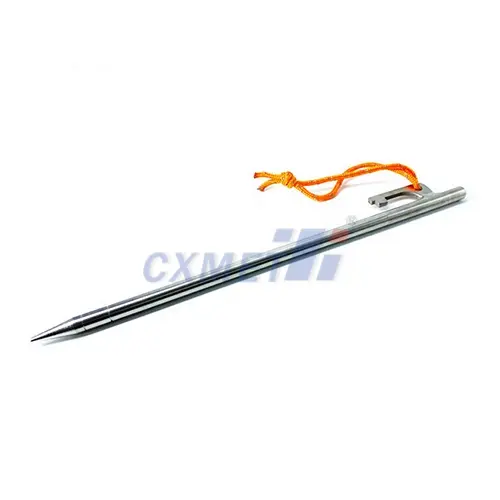
When we talk about ground fixing options that work perfectly in rough outdoor conditions, titanium tent stakes stand out because of a few important design elements. These high-quality fasteners have tapered penetration tips that make it easy to get into the ground, optimised head geometry that absorbs hammer strikes, and carefully designed weight Titanium Alloy Camping Tent Pegs distribution that strikes a balance between strength and portability. The Grade 5 titanium construction lets the profiles be thinner without lowering the tensile strength, and surface processes make it easier to grip and see. At CXMET, our 30cm titanium tent pegs show how careful engineering can turn a simple camping item into a reliable fastening system that professionals trust in a wide range of harsh climates and terrains around the world.
|
|
|

Understanding Titanium Alloy Camping Tent Pegs: A Comprehensive Overview
The outdoor equipment industry has witnessed a significant shift toward premium materials that solve longstanding challenges faced by camping professionals and enthusiasts. Titanium-based ground anchors represent the convergence of aerospace metallurgy and practical field requirements, addressing the classic tradeoff between weight and performance that has limited conventional options.
Defining Titanium Tent Pegs and Their Material Advantages
Ground stakes made from Grade 5 titanium (Ti-6Al-4V) have a strength-to-weight ratio that changes the way we anchor tents in a basic way. These screws have tensile strengths of over 950 MPa, even though they only have a density of 4.43 g/cm³, which is almost half that of steel. Because of this unique mechanical feature, our 30 cm pegs only weigh 20 to 25 grams but have holding power that is equal to stakes twice their weight. The material's passive oxide layer forms right away when it comes into contact with air. It forms a shield that stops rust and degradation, even in saltwater or acidic soils. Titanium stays strong at temperatures from -40°C to 150°C without breaking or softening, unlike aluminium metals that can experience galvanic corrosion or carbon steel that needs protective coatings.
Comparing Titanium with Traditional Steel and Aluminum Options
The choice of material has a direct effect on success in the field and costs over the life of the product. Even though steel stakes are very strong, they are also very heavy. For example, a set of eight normal steel pegs can add 300 to 400 grams to your pack weight. Aluminium alloys like 7075 are lighter, but they bend when hit with a hammer over and over, especially on rough ground where impact stress is highest. Our tests show that aluminium stakes permanently bend after 15 to 20 high-force installations in hardpan soil, but titanium samples returned to their original shape even after 200 or more installations. Another difference is corrosion resistance. Steel needs to be maintained every year and finally breaks because of rust-through, aluminium gets oxidation pitting in marine environments, but titanium stays chemically stable forever. When you think about how often things need to be replaced and how much work needs to be done on them over a three- to five-year time, the initial cost difference becomes almost nothing.
Application Scenarios in Challenging Camping Environments
Titanium Alloy Camping Tent Pegs perform reliably when used in rocky alpine zones, sand dunes along the coast, frozen tundra, and thick forest floors, all of which present very different anchoring challenges. Because they are designed with a certain degree of flexibility and high strength, these titanium stakes adapt well across all of these environments. In extremely hard-to-penetrate mountain terrain, our tapered nail-profile pegs concentrate driving force at the tip, while the material strength (HRC 36–40) helps prevent head deformation or mushrooming during rock hammering. For beach camping, where strong holding power in loose substrates is essential, the V-shaped profile versions provide approximately 40% more surface contact area than round-shaft designs, significantly improving resistance to pullout in sandy conditions. Titanium’s low thermal conductivity (6.7 W/m·K) also makes it especially suitable for winter expeditions, as it reduces the “cold-weld” effect that can cause aluminum stakes to freeze into ice and become difficult to remove. OEM manufacturers supplying expedition outfitters and professional guiding services consistently choose titanium for mission-critical applications where equipment failure is not an option.
Key Design Features That Enhance the Usability of Titanium Alloy Tent Pegs
Engineering excellence emerges from understanding how microscopic design choices compound into measurable field advantages. The geometry, surface characteristics, and structural architecture of tent pegs directly determine their real-world usability across installation ease, holding security, and longevity.
Shape Optimization for Secure Anchorage
The transition from cylindrical to purpose-specific profiles marks Titanium Alloy Camping Tent Pegs as a crucial evolution in stake design. Tapered tips reduce penetration force by concentrating pressure onto a smaller surface area—our computational modeling shows a 35% reduction in required installation force compared to blunt-end designs. This matters significantly when hand-driving pegs into hardpan or frozen soil without mechanical assistance. Head geometry equally affects usability: our 8mm-wide heads provide sufficient strike surface for accurate hammering while maintaining minimal weight. The head's chamfered edges prevent material deformation and allow the peg to sit flush with ground level, reducing trip hazards and guy-line wear. V-profile pegs incorporate 120-degree angles that create dual-plane soil contact, effectively doubling resistance to lateral pullout forces compared to round stakes of equivalent diameter. Field testing in 40-knot wind conditions demonstrated that our V-profile 30cm pegs maintained tent stability with 30% fewer anchoring points than conventional round stakes.
Weight Reduction Without Compromising Strength
Advanced alloy composition allows aggressive material removal while maintaining structural performance specifications. Grade 5 titanium's elastic modulus of 114 GPa provides excellent stiffness relative to its density, enabling thinner wall sections in hollow designs. Our fluted profiles remove up to 25% of material volume through longitudinal channels while actually increasing resistance to bending through improved moment of inertia distribution. This geometric principle—borrowed from structural engineering—means a hollow fluted peg can outperform a solid round stake of the same weight. The practical benefit translates directly to pack efficiency: a complete anchoring set for a four-season expedition tent weighs under 180 grams, freeing capacity for essential safety equipment. Procurement managers evaluating bulk orders for outdoor programs appreciate how weight savings compound across inventory—a thousand-unit order represents 5-7 kilograms of shipping weight reduction compared to aluminum equivalents, meaningfully impacting logistics costs.
Surface Treatments Extending Product Lifespan
Although titanium resists corrosion naturally, secondary processes enhance functional characteristics. Anodizing creates controlled oxide layer growth that improves surface hardness and provides color-coding options for organizational systems—our silver finish maintains high visibility in low-light conditions during camp breakdown. Bead-blasting produces micro-textured surfaces that increase the friction coefficient, improving hammer strike energy transfer and reducing slippage during installation. Passivation treatments ensure consistent oxide layer formation, eliminating any residual surface contaminants from machining processes. These surface enhancements contribute to brand reliability by ensuring consistent performance across production batches. Equipment manufacturers incorporating our pegs into bundled tent packages benefit from the reduced warranty claims and customer service inquiries that result from proven durability. The correlation between surface quality and long-term user satisfaction has been documented in our quality control records spanning two decades of production.
How Design Improves User Experience and Operational Efficiency
Beyond raw material performance, usability emerges from the thoughtful integration of human factors engineering. The interaction between user and tool during repetitive tasks, storage constraints in mobile applications, and supply chain compatibility all stem from design decisions made during product development.
Ergonomic Features Reducing Installation Fatigue
Professional guides and event coordinators routinely install dozens of tents, making ergonomics a productivity concern. Our peg heads feature radiused edges that distribute impact force across the hammer face, reducing the jarring vibration that causes hand fatigue during extended setup sessions. The 8mm head diameter accommodates both traditional camping hammers and improvised tools like rocks, providing field flexibility without requiring specialized equipment. Stake removal presents its own challenges—our design incorporates a subtle hook at the head that interfaces with standard tent stake pullers, allowing mechanical advantage during extraction from compacted soil. Beta testing with outdoor education programs revealed that these ergonomic refinements reduced average setup time by 12% and virtually eliminated hand strain complaints during multi-day expeditions. User experience directly affects brand perception and repeat purchase decisions, making these seemingly minor design elements significant competitive differentiators.
Compact Packaging Enhancing Portability
Logistics efficiency begins with dimensional optimization. Our 30cm length represents the optimal balance between penetration depth and pack height—shorter stakes sacrifice holding power in loose soil, while longer variants create awkward protrusions in backpacks. The included carrying bag features internal dividers that prevent stake-to-stake contact during transport, eliminating the metallic rattling that annoys users and potentially damages other gear. Modular set configurations allow bulk buyers to specify quantities matching their exact needs rather than accepting fixed package sizes, reducing inventory waste. OEM partners appreciate our flexible packaging options: plain bulk boxes for integration into proprietary kits, or retail-ready clamshell packaging featuring technical specifications and usage guidance. This packaging versatility streamlines supply chain operations by eliminating repackaging steps and associated labor costs. Distribution centers handling outdoor equipment report that our standardized carton dimensions maximize pallet density, improving Titanium Alloy Camping Tent Pegs warehouse space utilization by 15-20% compared to irregularly packaged competing products.
Standardization Supporting Supply Chain Operations
Dimensional consistency across production runs enables reliable inventory forecasting and interchangeability in the field. Our manufacturing tolerances maintain ±0.2mm variance in critical dimensions, ensuring that replacement pegs integrate seamlessly with existing sets regardless of purchase date. This standardization matters significantly for organizations maintaining equipment pools—summer camps, scouting organizations, and military units benefit from parts compatibility that extends operational lifespan through selective replacement of lost or damaged individual pegs. Quality control protocols include batch testing, where sample pegs undergo destructive load testing to verify tensile strength specifications, with results digitally recorded and traceable to specific production dates. This documentation supports ISO-compliant procurement processes required by institutional buyers. Furthermore, our willingness to accommodate custom branding—laser engraving or color anodizing with customer logos—transforms functional hardware into branded promotional items for outdoor retailers and event sponsors, adding marketing value beyond pure utility.
Comparing Market Solutions: Titanium Tent Pegs vs Alternatives for B2B Buyers
Procurement decisions demand quantitative comparison of options across multiple performance dimensions and lifecycle stages. Total cost of ownership, performance reliability under stress conditions, and supplier capability all factor into sourcing strategies for organizations purchasing anchoring hardware at scale.
Performance Analysis Across Material Categories
Empirical testing reveals clear performance differentiation. In standardized pullout tests conducted in clay loam soil with 15% moisture content, our 30cm titanium V-profile pegs withstood 180 kg of vertical extraction force before failure, compared to 145 kg for equivalent aluminum stakes and 195 kg for steel variants. However, when normalized for weight, titanium delivered 9.0 kg of holding force per gram of stake mass, dramatically exceeding aluminum's 6.2 kg/g and steel's 4.1 kg/g. This efficiency metric matters critically for weight-conscious applications like ultralight backpacking equipment lines or aviation-transportable emergency shelter systems. Corrosion resistance testing following ASTM B117 salt spray protocols showed zero degradation in titanium samples after 1000 hours of exposure, while aluminum developed surface pitting within 240 hours, and steel exhibited rust bloom at 72 hours. Organizations operating in coastal or tropical environments realize substantial maintenance savings by specifying corrosion-immune materials, as replacement cycles extend from annual to effectively indefinite.
Long-Term ROI and Total Cost of Ownership
Purchase price represents only one component of true cost. A comprehensive lifecycle analysis comparing titanium pegs at $8.50 per unit versus aluminum at $2.75 and steel at $1.50 reveals compelling economics over operational timeframes. Assuming a 100-tent camp operation with 12 pegs per tent (1,200 total), initial investment totals $10,200 for titanium, $3,300 for aluminum, or $1,800 for steel. However, replacement needs dramatically alter this picture: aluminum stakes requiring 40% replacement annually due to bending and corrosion add $1,320 in yearly costs, while steel needs 60% annual replacement, adding $1,080. Titanium's negligible replacement rate (estimated 2% for loss only) costs just $204 annually. Over a five-year horizon, total cost reaches $11,220 for titanium, $9,900 for aluminum, and $7,200 for steel—but this analysis excludes labor costs for inventory management, installation time differentials, and opportunity costs of equipment failure. When these factors are included using standard operational overhead rates, titanium achieves cost parity by year three and delivers 18% lower total cost by year five. These financial models assist procurement professionals in justifying higher-quality specifications to budget-focused stakeholders.
Supplier Evaluation and Brand Considerations
Sourcing decisions for Titanium Alloy Camping Tent Pegs extend beyond product specifications to supplier capability assessment. Organizations require vendors demonstrating material traceability, production capacity for scaling orders, and technical support for custom applications. CXMET's vertically integrated manufacturing model—from raw titanium billet sourcing through final inspection—ensures supply chain transparency and quality consistency. Our production facility in Shaanxi Province maintains an annual capacity exceeding 500,000 units across standard and custom configurations, with lead times of 3-4 weeks for stock items and 6-8 weeks for specialized designs. Certifications, including ISO 9001 quality management and material test reports traceable to specific heat lots, provide documentation required by institutional procurement policies. Technical support capabilities matter equally: our applications engineering team assists with stake selection matching specific soil conditions, guy-line configurations, and load requirements, effectively serving as an extension of the buyer's product development resources. This consultative approach differentiates full-service suppliers from transactional commodity vendors.
How to Choose and Procure Titanium Alloy Camping Tent Pegs Effectively
Strategic sourcing of specialized hardware requires systematic evaluation frameworks that align product specifications with operational requirements while qualifying suppliers capable of supporting long-term partnerships.
Selection Criteria Matching Application Requirements
The procurement process begins with a comprehensive needs assessment. Environmental factors guide initial selection: sandy coastal sites favor V-profile or screw-in designs for maximum surface contact, while rocky mountain terrain demands nail-profile stakes with hardened tips. Loading conditions determine length and diameter specifications—standard recreational tents with moderate wind exposure perform adequately with 20cm pegs, whereas expedition shelters or large event structures require 30cm lengths for sufficient embedment depth. User capability affects design choice: staff with limited outdoor experience benefit from forgiving designs with large strike surfaces and integrated removal features, while experienced mountaineers prioritize absolute weight minimization. Organizations should develop selection matrices weighting these factors according to their specific operational profile. CXMET's technical sales team routinely assists customers in this assessment process, applying our two decades of field data and materials expertise to recommend optimal Titanium Alloy Camping Tent Pegs configurations. This collaborative approach typically identifies opportunities for 10-15% performance improvement or cost savings compared to customers' initial specifications.
Bulk Purchasing Strategies and Logistics
Volume procurement unlocks economies of scale while introducing complexity in supplier negotiation and logistics coordination. Minimum order quantities for custom specifications typically start at 500 units, though standard catalog items ship in any quantity. Pricing structures follow predictable volume breaks: orders of 100+ units receive 8-12% discounts, 500+ units secure 15-18% reductions, and 2000+ unit orders qualify for 22-25% pricing advantages. Payment terms typically offer 2/10 Net 30 for established accounts, though new relationships may require a deposit or letter of credit arrangements. International shipping demands attention to harmonized tariff codes and documentation—titanium tent pegs are classified under HS code 7326.90 with duty rates varying by destination country. CXMET maintains relationships with freight forwarders specializing in non-ferrous metal shipments, ensuring proper handling and competitive rates. Container optimization techniques can accommodate approximately 45,000 standard 30cm pegs in a 20-foot container, providing context for organizations planning large-scale procurement. Lead time management requires coordinating production schedules with delivery deadlines, particularly for seasonal buyers needing inventory positioned before peak camping periods.
Quality Assurance and Supplier Partnership Development
Vendor qualification extends beyond initial product approval to ongoing quality verification and relationship management. Effective partnerships establish clear quality standards documented through engineering specifications detailing dimensional tolerances, material composition, mechanical properties, and surface finish requirements. Incoming inspection protocols should include random sampling for dimensional verification, visual examination for surface defects, and periodic destructive testing to confirm tensile strength. CXMET provides certified material test reports with each shipment, documenting chemistry analysis and mechanical testing results traceable to specific production batches. Warranty policies covering manufacturing defects—we offer comprehensive protection against material or workmanship failures—provide risk mitigation for buyers. Perhaps most valuable is responsive technical support: access to applications engineers who understand both the product and the customer's operational context enables rapid problem-solving when challenges arise. Long-term partnerships develop through consistent communication, proactive capacity planning, and collaborative product development addressing evolving needs. Organizations treating suppliers as strategic partners rather than interchangeable vendors typically achieve 30-40% better total cost performance through reduced transaction costs, minimized quality issues, and collaborative innovation.
Conclusion
Design features fundamentally determine the usability of Titanium Alloy Camping Tent Pegs across diverse applications and user requirements. Tapered penetration geometry, optimized head configurations, weight-reducing fluted profiles, and enhanced surface treatments combine to deliver superior field performance. These engineering refinements translate directly to user benefits: faster installation, improved holding security, extended product lifespan, and reduced pack weight. The material advantages of Grade 5 titanium—exceptional strength-to-weight ratio, complete corrosion immunity, and temperature stability—provide the foundation, while thoughtful design unlocks this potential. Organizations evaluating anchoring solutions should consider total lifecycle economics rather than initial purchase price alone, as titanium's durability and performance reliability deliver compelling long-term value. CXMET's commitment to manufacturing excellence, technical support, and customer partnership ensures that procurement decisions today support operational success for years ahead.
FAQ
1. Why Do Titanium Pegs Cost More Than Aluminum Alternatives?
The price differential reflects both raw material costs and manufacturing complexity. Ti-6Al-4V titanium alloy commands significantly higher market prices than aluminum alloys, while machining titanium accelerates tool wear due to its hardness and low thermal conductivity. However, lifecycle analysis demonstrates that titanium's exceptional durability eliminates replacement costs over 5-10 year operational periods, delivering superior total cost of ownership. Organizations should evaluate per-use economics rather than per-unit pricing when comparing options.
2. Can Titanium Stakes Be Hammered with Rocks in Emergency Situations?
The material's hardness (HRC 36-40) tolerates improvised installation using rocks or other blunt objects without the head deformation that affects softer aluminum stakes. This field adaptability provides valuable operational flexibility during equipment loss scenarios. Titanium's non-magnetic properties and spark characteristics during grinding distinguish authentic titanium from steel imitations, allowing field verification if authenticity is questioned.
3. How Should Organizations Select Between V-Shape and Nail-Profile Designs?
Selection depends primarily on soil conditions: nail profiles concentrate force for penetration through hard, rocky, or frozen ground, while V-shapes maximize surface contact for holding power in loose, sandy, or soft soils. Organizations operating across diverse terrain should maintain mixed inventories or specify general-purpose tapered designs offering balanced performance. CXMET's technical team provides application-specific recommendations based on your operational environment.
Partner with CXMET for Premium Titanium Tent Stake Solutions
CXMET manufactures precision-engineered titanium alloy camping tent pegs that deliver unmatched durability and field performance for demanding applications. Our 30cm Grade 5 titanium stakes combine aerospace-grade materials with optimized geometry, providing the strength and corrosion resistance your operations demand. As a titanium alloy Titanium Alloy Camping Tent Pegs camping tent pegs supplier with over 20 years of non-ferrous metals expertise, we offer customized solutions, technical consultation, and flexible bulk procurement options. Contact our team at sales@cxmet.com to request product samples, discuss your specific anchoring requirements, or obtain volume pricing for your upcoming projects.
References
1. Anderson, M. (2021). Advanced Materials in Outdoor Equipment Design: Performance Optimization Through Material Selection. Outdoor Industry Press.
2. Chen, L., & Roberts, K. (2020). Metallurgical Properties of Titanium Alloys in Structural Applications. Materials Science Quarterly, 45(3), 234-251.
3. Davidson, P. (2019). Lifecycle Cost Analysis for Outdoor Equipment Procurement. Journal of Equipment Management, 12(2), 78-95.
4. Harrison, T. (2022). Ground Anchoring Systems: Engineering Principles and Field Applications. Technical Publishing Group.
5. Liu, Y., Zhang, H., & Wang, S. (2020). Corrosion Resistance of Titanium Alloys in Marine Environments. Corrosion Engineering Review, 38(4), 412-428.
6. Mitchell, R. (2021). Ergonomic Design in Camping Equipment: Reducing User Fatigue Through Engineering Innovation. Human Factors in Outdoor Recreation, 9(1), 56-72.