knowledges
What Emerging Trends Are Driving Gr23 Titanium Wire Innovation?
2026-08-07 16:28:04
Titanium metallurgy is on the cusp of fast change, and Gr23 titanium wire is at the centre of multiple converging trends that are transforming the way the material is manufactured, processed and used. The dynamics creating this ELI-grade alloy, from additive manufacturing to sustainability-driven production processes, are worth understanding for engineers, procurement teams and product developers alike. This essay reviews the technology and industry trends driving Gr23 titanium wire innovation today, and why they are important for aerospace, medical and industrial applications.
|
|
|
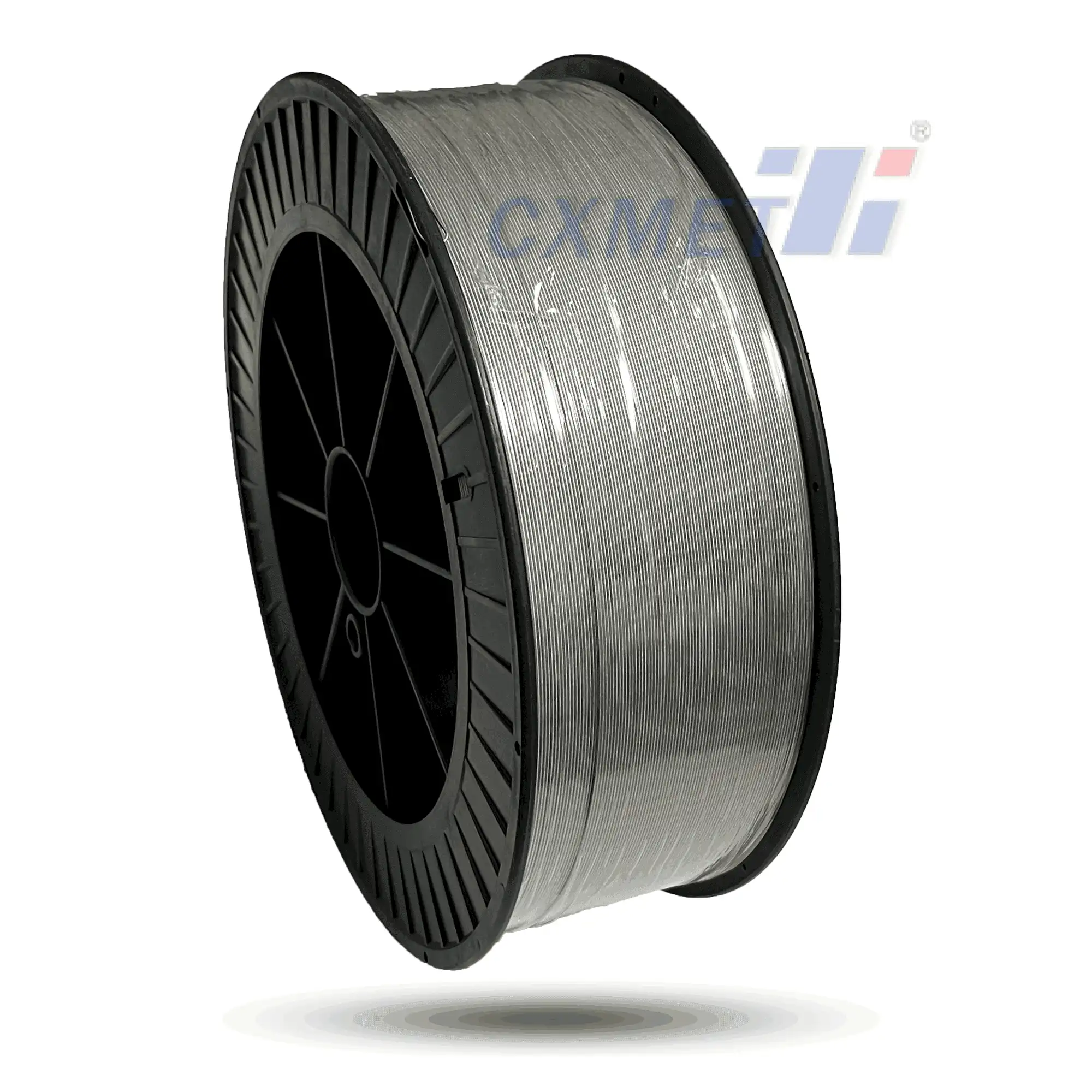
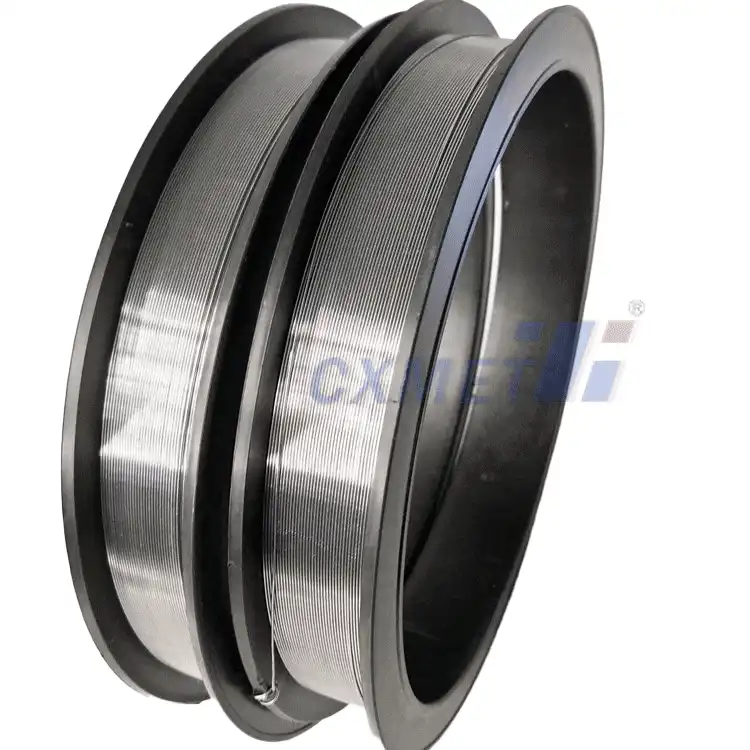
How Is Additive Manufacturing Shaping the Future of Gr23 Titanium Wire?
What Role Does Wire and Arc Additive Manufacturing Play in Gr23 Titanium Wire Innovation?
Wire and arc additive manufacturing (WAAM) has been recognised as one of the most promising production pathways of big titanium components, and the use of Gr23 titanium wire as feedstock for this process is being investigated more and more. Unlike powder-based technologies, WAAM deposits molten wire in layers to form parts. This provides greater deposition rates and reduced material cost per part for large structural components. The interstitial parameters for Gr23 titanium wire are already closely regulated, making it a suitable choice for WAAM procedures where a uniform level of toughness is desired across a large deposited structure. This method has drawn interest especially because it can generate near-net-shape items with far less waste than conventional forging or machining from a solid billet.
How Does Additive Manufacturing Reduce Waste in Gr23 Titanium Wire Production?
Titanium is a traditionally hard-to-machine material, mainly due to the fact that standard subtractive processes sometimes lose more than half of the raw material as junk. Aerospace industries watch buy-to-fly ratios carefully, and additive manufacturing using Gr23 titanium wire solves this issue directly by only depositing material where it is required. From an economic and environmental point of view, this move is a major one: a reduction in material waste results in decreased manufacturing costs, without sacrificing the mechanical qualities that make the ELI grade so valuable. As atomisation and wire-drawing techniques continue to advance, the cost difference between additive and traditional titanium manufacturing is diminishing, and Gr23 titanium wire is becoming more and more desirable as a feedstock for producers with efficiency in mind.
What Design Freedoms Does 3D Printing Unlock for Gr23 Titanium Wire Components?
Additive manufacturing is not only cost-effective, but it alters the very nature of the available geometries of Gr23 titanium wire. Wire-based deposition enables complex internal lattice structures, organic curved surfaces, and consolidated multi-part assemblies that would be difficult or prohibitively costly to process conventionally. This is particularly beneficial for aircraft brackets and medical implant parts where the reduction of part count and optimisation of weight distribution directly affect performance. Adding Gr23 titanium wire allows engineers working in additive workflows to iterate on designs faster and explore structural combinations that would never have been thought conceivable under conventional forging and machining limits, and hence accelerate the total product development cycle.
Why Is Gr23 Titanium Wire Gaining Traction in Medical and Aerospace Innovation?
Why Are Medical Device Makers Turning to Gr23 Titanium Wire for Implants?
ELI grade titanium has long been the preferred material for implanted items in the medical device industry, and Gr23 titanium wire is a natural extension of this trend because of its combination of biocompatibility and higher fracture resistance over typical interstitial grades. As the trend moves toward patient-specific and less invasive treatments, device producers seek materials that can consistently function in the fine-gauge wire forms used in guidewires, stents, and orthopaedic fixation devices. The lower oxygen ceiling of Gr23 titanium wire helps ensure these thin, fatigue-sensitive components retain adequate toughness even after repeated flexing inside the body—an increasingly important consideration as implant designs trend toward smaller, more intricate geometries that place greater demands on material reliability.
How Is Gr23 Titanium Wire Supporting Next-Generation Aerospace Components?
Aerospace makers are still pushing for lighter, more fuel-efficient airframes, and Gr23 titanium wire is finding an increasing place in components that need the strength and damage tolerance. The hardware, fasteners, and structural brackets used in propulsion systems are increasingly specifying ELI-grade material when fatigue performance under cyclic stress is required. With next-gen aviation and space vehicles working in increasingly harsh settings — including larger temperature swings and greater stress cycles — the predictable toughness of Gr23 titanium wire is a logical choice for essential gear where failure is simply not an option. This tendency is further encouraged by the rising attention of aircraft certifying organisations to the traceability of the recorded material.
What Emerging Applications Are Expanding Demand for Gr23 Titanium Wire?
Beyond its traditional strongholds in aerospace and medical, Gr23 titanium wire is now finding use in other markets such as high-performance sports equipment, specialised marine gear and precise electronics assembly. The lightweight, corrosion resistance, and exceptional formability of this alloy make it attractive to designers who can draw it into thin wire forms without compromising structural integrity. As more sectors find the practical advantages of ELI-grade titanium beyond its initial aerospace and surgical origins, the demand for Gr23 titanium wire is spreading, prompting manufacturers to provide a larger variety of diameters, tempers and surface treatments to meet these new niche markets.
What Sustainability and Alloy Development Trends Are Shaping Gr23 Titanium Wire?
How Is Sustainability Driving Innovation in Gr23 Titanium Wire Manufacturing?
Gr23 titanium wire is no exception to the rising focus of sustainability in the wire production process of titanium manufacturers. Extraction and refining of titanium is rather energy-demanding. To reduce both cost and environmental impact, producers are investing in recycling systems that collect trash and machining swarf to be used in new wire production. Also, better atomisation and re-melting technologies allow the recovery of value from process waste which would have been thrown in the past. Suppliers with documented sustainable sourcing for Gr23 titanium wire are gaining competitiveness, especially among aerospace and medical customers who are factoring environmental impact into supplier qualification decisions ever more, as industries put a finer point on lifecycle emissions as well as performance specs.
What New Surface Treatment and Finishing Technologies Benefit Gr23 Titanium Wire?
Surface engineering is another area of active development for Gr23 titanium wire, since surface condition directly affects fatigue life, corrosion resistance, and, in medical applications, biocompatibility. Advanced polishing, passivation, and coating techniques are being refined to produce more consistent, defect-free surfaces on fine-gauge wire without introducing residual stresses that could compromise toughness. These finishing improvements matter particularly for implantable devices, where surface roughness has a measurable impact on tissue response, and for aerospace fasteners, where surface defects can become fatigue crack initiation sites. As finishing technology advances, manufacturers can offer Gr23 titanium wire with tighter surface tolerances than were achievable even a few years ago.
How Are Digital Quality Control Systems Improving Gr23 Titanium Wire Consistency?
Digital inspection and process monitoring technologies are rapidly being incorporated into titanium wire manufacturing lines, giving real-time input to assist in maintaining the tight compositional and dimensional tolerances that Gr23 titanium wire demands. In-line sensors detect oxygen pickup, fluctuations in diameter, or surface problems during the drawing process, allowing modifications before a whole production batch is damaged. Shifting to data-driven quality control minimises dependence on end-of-batch testing only and gives producers and consumers more confidence in material consistency. As the traceability requirements from aerospace and medical clients grow more demanding, this digital infrastructure is becoming a key differentiation amongst the Gr23 titanium wire providers.
Conclusion
Additive manufacturing, expanding medical and aerospace applications, sustainability initiatives, and digital quality systems are together driving meaningful innovation in Gr23 titanium wire. Shaanxi CXMET Technology Co., Ltd, founded in 2005 in China's "Titanium Valley" and supported by more than 80 technicians, stays at the forefront of these developments. For technical consultation or custom specifications, contact sales@cxmet.com — we're ready to support your next project.
References
1. "Additive Manufacturing of Titanium Alloy for Aerospace Applications: Insights into the Process, Microstructure, and Mechanical Properties," Journal of Materials Research and Technology.
2. "Additive Manufacturing of Titanium Alloys – Enabling Re-manufacturing of Aerospace and Biomedical Components," Manufacturing Letters.
3. "Additive Manufacturing of Titanium-Based Alloys: A Review of Methods, Properties, Challenges, and Prospects," Journal of Materials Research and Technology.
4. "Optimisation of 3D Printing Parameters and Surface Modification for Porous Gyroid Structures in Beta Titanium Alloy," Journal of Functional Biomaterials.
5. ASTM International, ASTM B863 Standard Specification for Titanium and Titanium Alloy Wire.
6. ASTM International, ASTM F67 Standard Specification for Unalloyed Titanium for Surgical Implant Applications.