knowledges
What Industries Use Titanium 6Al-4V Grade 5 Round Bar Most Often?
2026-04-23 15:13:13
Titanium 6Al-4V Grade 5 round bars are mostly used in the aircraft, medical, marine, oil and gas, chemical processing, and automotive industries around the world. These alpha-beta titanium alloys are known as the workhorses of the industry because they have a high tensile strength of up to 895 MPa, a low density of 4.43 g/cm³, and great resistance to corrosion in harsh conditions. More and more, engineers and procurement professionals are looking for materials that are reliable without sacrificing performance. This type of titanium continues to be the standard in critical applications where failure is not an option.
|
|
|
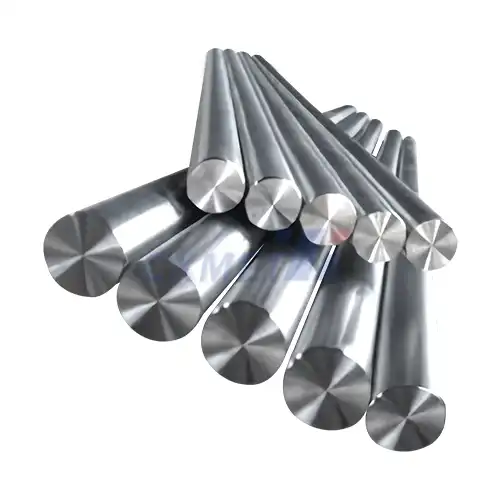

Understanding Titanium 6Al-4V Grade 5 Round Bar – Properties and Benefits
Ti-6Al-4V Grade 5 round bar stands as the most extensively deployed titanium alloy in modern manufacturing, accounting for roughly half of all titanium usage worldwide. Its composition—approximately 6% aluminum acting as an alpha stabiliser and 4% vanadium as a beta stabiliser—creates a dual-phase microstructure that delivers an optimal balance between mechanical performance and fabrication flexibility.
Mechanical Excellence Through Alloying
Aluminium makes the material much stronger while also making it less dense overall. Vanadium, on the other hand, makes it stronger at room temperature and more stable at high temperatures. When the metal is annealed, this intentional alloying gives it an ultimate tensile strength of at least 895 MPa and a yield strength of at least 828 MPa. Solution treating and ageing (STA) heat treatment can improve these mechanical properties by another 20–30%. This makes the material ideal for load-bearing parts that are put through a lot of stress cycles. The elongation values are usually between 10 and 14 per cent, which is enough flexibility for cold forming operations while still keeping the structure's integrity under conditions of wear loading.
Corrosion Resistance in Harsh Environments
One thing that makes this alloy unique is that when it is exposed to air, it forms a strong titanium dioxide (TiO₂) passive film on its own. This very small barrier stays stable in pH levels from 3 to 12 and grows back right away if it gets broken. It protects against seawater, chlorides, oxidising acids, and industrial chemicals better than anything else. Unlike stainless steels that rust in chloride-rich environments, Grade 5 keeps its surface integrity even after decades of constant exposure. This means that protective coatings are not needed, and the cost of upkeep over the lifetime of the product is lower.
Thermal Capability and Weight Advantages
The alloy keeps its mechanical qualities at high temperatures of up to 400°C, which means it can be used in situations where it will be heated and cooled many times. Its low thermal expansion coefficient of 8.6 × 10⁻⁶/K is similar to that of some ceramics and composites, which makes hybrid structures less stressed by heat. It has a densityabout 40% lower than steel and 60% higher than aluminium, which makes it ideal for uses that need both strength and weight reduction. All of these qualities add up to less fuel use for movement, more cargo space, and less structural mass in machines that spin.
Key Industries That Use Titanium 6Al-4V Grade 5 Round Bars
The versatility of this titanium variant has made it indispensable across sectors where performance, safety, and longevity directly impact operational success and regulatory compliance.
Aerospace and Aviation Dominance
The biggest users of Grade 5 round bars are aerospace companies, such as Titanium 6Al-4V Grade 5 round bars, who use them to make landing gear parts, engine mounts, hydraulic system fittings, and structural screws. Commercial planes like the Boeing 787 and the Airbus A350 use thousands of titanium parts to meet strict FAA and EASA certification standards while also lowering their weight. Because the material doesn't crack under stress, it's important for parts that are exposed to de-icing products and moisture in the air. It is used in military aircraft for things like compressor blades for jet engines, rotor assemblies, and airframe reinforcements. The edge in strength-to-weight directly improves combat performance and fuel economy.
Medical Device Manufacturing and Biocompatibility
Biocompatibility Grade 5 is used in the medical field for orthopaedic implants like hip stems, knee replacements, spine fusion cages, and dental implant abutments. Its modulus of elasticity (about 114 GPa) is more like human bone than that of stainless steel or cobalt-chrome metals. This means that it doesn't protect against stress as well, which can cause the bones to break down. Regulatory bodies like the FDA and CE Mark officials know that this alloy is biologically inert for a long time. In fact, clinical data from over 10 years show that over 95% of cases of osseointegration succeed. Manufacturers of surgical instruments also require round bar stock for retractors, forceps, and arthroscopic tools that need to be sterilised many times without breaking down.
Marine Engineering and Offshore Applications
For propeller shafts, marine valve stems, offshore platform gear, and desalination plant parts, companies that make subsea equipment need this material. When mixed with different metals, the alloy's resistance to galvanic corrosion makes design limits easier to meet in complicated assemblies. Manufacturers of ROVs (Remotely Operated Vehicles) shape Grade 5 round bars into control arms and pressure housing parts that can withstand water pressures higher than 3,000 meters and still stay stable in size. It is used by naval engineers for hull penetrations, seawater cooling system pipes, and parts of submarine structures that need to be reliable in saltwater.
Oil and Gas Sector Demands
Upstream exploration companies use Grade 5 for parts of drilling tools, wellhead valves, and blowout preventer (BOP) elements that are exposed to hydrogen sulfide-containing sour gas environments. Based on NACE MR0175 compliance tests, the material is more resistant to sulphide stress cracking than precipitation-hardened stainless steels. Offshore platform workers use titanium riser systems and production tubing in deepwater fields where high pressures, corrosive fluids, and extreme temperatures would quickly break down other materials. The longer service life means lower costs for repairs and higher safety gaps in risky extraction operations.
Chemical Processing and Industrial Systems
Engineers at chemical plants use this metal for parts inside reactors, heat exchangers, pumps, and agitator blades that have to deal with corrosive process streams. Its safety in making chlorine, nitric acid, and organic chemicals gets rid of the contamination risks that come with metal ions leaching. It is used in bioreactors and sterile processing equipment in the pharmaceutical business, where standards for product purity don't allow material to move. Compared to austenitic stainless steels, this type can handle repeated thermal shock during cleaning and sterilisation cycles, which cuts down on downtime and the need for upkeep.
Automotive and Motorsport Performance
Manufacturers of high-performance cars use Grade 5 parts in race engines, suspension systems, and exhaust systems, where lowering mass has a direct effect on how fast the car goes and how it handles. Formula 1 teams make turbine parts, valve retainers and connecting rods out of round bar stock so that they are as light as possible while still being able to handle high RPMs and combustion pressures. More and more, people who make electric cars are asking for titanium fasteners and structure reinforcements to help balance out the weight of the battery pack and increase the range. Because the material doesn't wear down easily, parts will last through millions of load cycles during race seasons.
Comparing Titanium 6Al-4V Grade 5 to Other Metals and Grades
Understanding performance differentials between Grade 5 and alternative materials helps procurement teams make informed sourcing decisions aligned with technical requirements and budget constraints.
Grade 5 Versus Grade 2 Pure Titanium
Commercially pure Grade 2 titanium is better at resisting corrosion and can be shaped, but its tensile strength of about 345 MPa makes it less useful for structural tasks. Grade 5 is 2.6 times as strong as Grade 4, which is why it costs 15–25% more for uses that need it to hold weight. However, Grade 2 is still better for thin-wall tubes, sheet metal fabrications, and uses that value maximum resistance to corrosion over mechanical strength. The decision matrix is usually based on the results of the stress analysis and how bad the working environment is.
Titanium Alloy Versus Stainless Steel
Compared to precipitation-hardened stainless steels like 17-4PH, Grade 5 is 60% lighter while still having the same level of strength. This has big benefits in aerospace and transportation uses. Stainless steels work well in cryogenic temperatures below -100°C, where titanium becomes less flexible. This means they can be used in tools for processing LNG. Titanium usually costs three to five times as much per kilogram, so the difference in price needs to be weighed against the money that Titanium 6Al-4V Grade 5 round bars can save over their lifetime through less maintenance, longer service intervals, and lower energy use in uses that care about weight.
Performance Against Aluminum Alloys
High-strength aluminium alloys, such as 7075-T6, have a smaller density but can only withstand tensile stresses of 570 MPa and can't be used above 150°C. Because Grade 5 is stable at high temperatures and doesn't wear down easily, it can't be replaced in hot parts of engines and exhaust systems where aluminium would soften or creep. The ways they can be machined are very different. Aluminium can be machined quickly with regular tools, but titanium needs special carbide or ceramic bits, slower cutting speeds, and a lot of coolant flow to keep the work from getting too hard.
Grade 5 Versus Grade 23 Extra Low Interstitial
Grade 23 (Ti-6Al-4V ELI) has the same nominal makeup as Grade 22, but it has stricter limits on the amount of oxygen and iron in the interstitial spaces. This makes it more flexible and harder to break. Medical implant makers like Grade 23 for important load-bearing implants, where stopping cracks from spreading is very important. The price of ELI material is 10–20% more than normal Grade 5. This is necessary when the requirements for impact resistance and cold forming are higher than the standard requirements. ELI's excellent low-temperature features are also useful in aerospace uses that use cryogenic propellant systems.
Procurement Guide for Titanium 6Al-4V Grade 5 Round Bars
Navigating the global titanium supply chain requires understanding material specifications, supplier qualifications, and value-added service capabilities that differentiate reliable partners from commodity vendors.
Specification Standards and Certification Requirements
For chemical composition and size tolerances, procurement specifications should look to ASTM B348. This will make sure that all batches are the same. AMS 4928 (annealed bar) or AMS 4965 (solution treated and aged) compliance is usually needed for aerospace applications. There must be full traceability documents, such as mill test reports (MTRs) and material certifications. Manufacturers of medical devices need products to meet ASTM F1472 and ISO 5832-3 standards, and biocompatibility testing must follow ISO 10993 guidelines. For mission-critical applications, asking for third-party verification through independent testing labs adds to the quality assurance.
Minimum Order Quantities and Customisation Options
Standard mill runs usually require at least 500 to 1,000 kilograms of each diameter. However, wholesalers like Shaanxi CXMET Technology keep a lot of stock in popular sizes from 10 mm to 300 mm in diameter, so smaller lots can be bought. For custom diameter tolerances that are tighter than standard h9 or h11 grades, centerless grinding operations are needed. This adds 3–5 weeks to the lead time but makes sure that key assemblies fit perfectly. Customising the length, end preparation (chamfered, faced, or threaded), and surface finish specs (pickled, polished, or peeled) should all be made clear during the quotation process so that no extra work needs to be done after delivery.
Pricing Variables and Cost Optimisation Strategies
The prices of materials change depending on how much sponge titanium is available around the world, how long it takes to make aircraft parts, and how much aluminium and vanadium cost as raw materials. Fixed-price agreements that protect against market volatility can be negotiated when there are volume contracts that last between 6 and 12 months. It is cheaper to make things when you choose standard diameters instead of unusual sizes and standard length bars (usually 3 to 6 meters) instead of cut-to-length needs. Blanket purchase orders with scheduled releases help suppliers plan their production more efficiently and give buyers more control over their inventory and better prices.
Value-Added Services That Enhance Supply Chain Efficiency
Leading providers set themselves apart by offering services that go beyond just supplying goods. Cutting precisely to the lengths required by the customer within ±1mm limits gets rid of waste and lowers the cost of handling. Timelines for downstream production are sped up by pre-machining tasks like turning, milling, envelope preparation, and heat treatment to reach hardness ranges defined by the customer. Some manufacturers offer vendor-managed inventory programs where material stocks stay at customer sites owned by the supplier until they are used. This makes managing cash flow easier. Technical support teams that can suggest the best conditions for materials for specific uses are very helpful, and commodity sellers can't match them.
Building Trust: Choosing the Right Titanium 6Al-4V Grade 5 Round Bar Supplier
Supplier selection criteria extend beyond price considerations to encompass quality systems, technical capabilities, Titanium 6Al-4V Grade 5 round bars and long-term partnership potential that mitigate supply chain risks.
Certification and Quality Management Systems
Manufacturers with a good reputation keep their ISO 9001:2015 license as proof that their quality management system is mature. Aerospace suppliers need to get AS9100D approval, which shows they meet aviation-specific standards for processes like corrective action, configuration management, and traceability. Medical equipment suppliers must have ISO 13485 certification, which meets the specific regulatory needs of healthcare applications. Asking for copies of up-to-date certificates and audit reports during the supplier qualification process makes the organisation's quality mindset and efforts to keep improving clear.
Manufacturing Capabilities and Technology Investment
Looking at a supplier's production skills shows how well they can meet current and future needs. Today, companies that make titanium use vacuum arc remelting (VAR) or electron beam cold hearth refining (EBCHR) to get rid of impurities and make sure that the microstructure is uniform. With spectrometers, tension testers, and metallographic analysis tools in-house testing labs, quality checks can be done quickly without having to rely on outside services. Suppliers who invest in Industry 4.0 technologies like digital process monitoring, automated inspection systems, and predictive maintenance show that they are dedicated to consistent quality and operational success.
Technical Support and Collaborative Problem-Solving
Suppliers with a lot of experience don't just take orders; they also give advice on things like choosing the right metal, getting the best heat treatment, and setting the right parameters for machining. Having access to metallurgical experts who understand the needs of the end application is helpful during the whole process of developing a product. Response times and the level of detail in answers to technical questions are good ways to tell how committed a company is to providing good customer service. Suppliers who are ready to work with others on new applications show that they are more interested in building partnerships than in making deals.
Geographic Presence and Logistics Capabilities
Shaanxi CXMET Technology Co., Ltd is in China's Titanium Valley, which makes it easy to get raw materials and connect with established transportation networks that serve markets around the world. The company has been in business for 20 years and has an 80-person technical team with a lot of knowledge in aerospace, medical, marine, and industrial settings. Their 50,000-square-meter production centre lets them make schedule changes and respond quickly to delivery requests. Understanding how to go through customs, what paperwork is needed for export, and the different types of foreign shipping reduces the changes in landed costs and transit times. Suppliers that offer consolidation services for orders with multiple items make getting orders easier and lower the cost of goods.
Conclusion
Titanium 6Al-4V Grade 5 round bars are used a lot in the aerospace, medical, marine, oil and gas, chemical processing, and automobile industries because they are the strongest, most resistant to corrosion, and most stable at high temperatures. As regulations and performance standards get stricter, procurement workers must work with suppliers who can show they have quality systems that can be checked, technical know-how, and quick service. The longer service life, lower maintenance costs, and better safety margins always make up for the higher initial cost of the material. Choosing experienced makers with a wide range of certifications and value-added services will protect the supply chain and lower the total cost of ownership over the lifecycle of an asset.
FAQ
1. What makes Grade 5 different from other titanium alloys?
Grade 5 contains 6% aluminum and 4% vanadium alloying elements that create an alpha-beta phase structure, delivering tensile strength up to 895 MPa—approximately 2.6 times stronger than commercially pure titanium grades. This strength advantage, combined with excellent fatigue resistance and moderate cost, makes it the most widely specified titanium alloy globally.
2. Can Grade 5 round bars be welded reliably?
Yes, but welding requires inert gas shielding (argon or helium) to prevent atmospheric contamination that causes embrittlement. TIG, MIG, electron beam, and laser welding methods are commonly employed. Post-weld heat treatment may be specified to relieve residual stresses and restore optimal mechanical properties in critical structural joints.
3. How does surface finish affect performance?
Centerless ground finishes provide superior fatigue resistance by eliminating surface imperfections that initiate crack propagation. Pickled or chemically milled surfaces offer adequate corrosion resistance for most applications. Applications involving rotating contact or precision fits typically specify ground surfaces with Ra values below 1.6 micrometres to ensure dimensional consistency and extended component life.
Partner with CXMET for Reliable Titanium 6Al-4V Grade 5 Round Bar Supply
Shaanxi CXMET Technology Co., Ltd has served global aerospace, medical, marine, Titanium 6Al-4V Grade 5 round bars and industrial manufacturers since 2005 with certified Ti-6Al-4V Grade 5 round bars meeting ASTM B348, AMS 4928, and international standards. Our engineering team provides technical consultation on alloy selection, heat treatment specifications, and machining parameters tailored to your application requirements. We maintain an extensive inventory across diameters from 10mm to 300mm with custom cutting, surface finishing, and expedited shipping available to meet urgent project timelines. As a trusted titanium 6Al-4V Grade 5 round bar manufacturer located in China's Titanium Valley, we combine competitive pricing with rigorous quality control and responsive customer service. Contact our procurement specialists at sales@cxmet.com to discuss your material requirements, request test reports, or obtain a detailed quotation aligned with your project specifications and delivery schedule.
References
1. Boyer, R., Welsch, G., & Collings, E.W. (1994). Materials Properties Handbook: Titanium Alloys. ASM International, Materials Park, Ohio.
2. Lutjering, G., & Williams, J.C. (2007). Titanium: Engineering Materials and Processes (Second Edition). Springer-Verlag, Berlin.
3. Donachie, M.J. (2000). Titanium: A Technical Guide (Second Edition). ASM International, Materials Park, Ohio.
4. Peters, M., Kumpfert, J., Ward, C.H., & Leyens, C. (2003). Titanium Alloys for Aerospace Applications. Advanced Engineering Materials, Volume 5, Issue 6.
5. Rack, H.J., & Qazi, J.I. (2006). Titanium Alloys for Biomedical Applications. Materials Science and Engineering C, Volume 26, Issues 8.
6. Veiga, C., Davim, J.P., & Loureiro, A.J.R. (2012). Properties and Applications of Titanium Alloys: A Brief Review. Reviews on Advanced Materials Science, Volume 32, Number 2.