knowledges
What Is a Titanium Welding Rod Used For in Critical Repairs?
2026-11-18 16:57:11
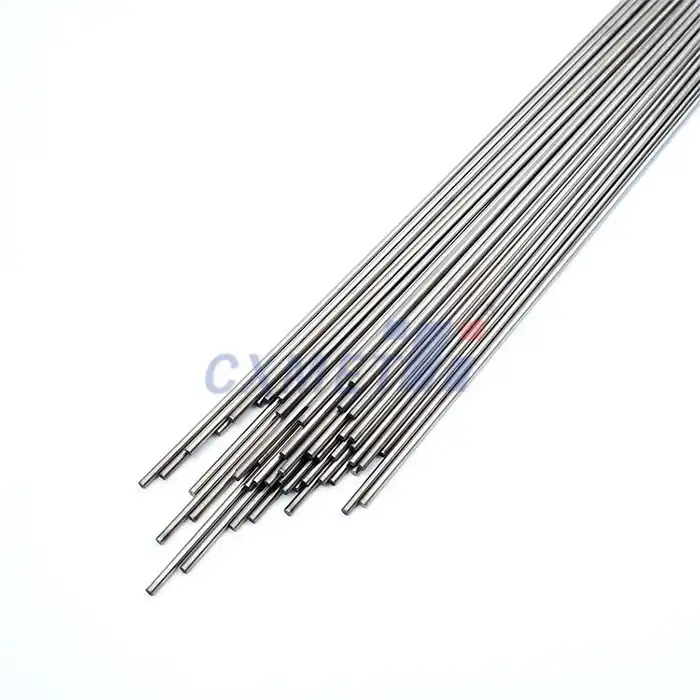
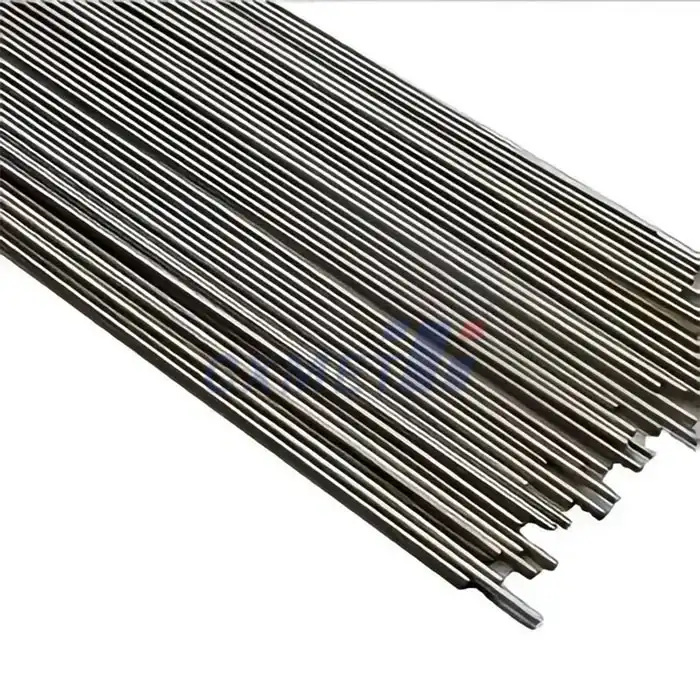
Titanium Welding Rod A filler wire made of commercially pure titanium or titanium alloy. Welders utilize titanium rods primarily in TIG applications for joining or repairing titanium parts. And I conceive of it as the factor that permits a repair to keep the features of the original component. Saltwater resistance. Low weight and strength, which is maintained at temperature. The rod provides chemistry to the joint, torch and gas shield keep the air out. Choosing the filler is one link in the chain of vital repairs. The longevity of the repair will be determined by the base metal grade, joint design, shield gas, surface preparation, technique qualification, and inspection.
|
|
|
How a Titanium Filler Metal Works
The arc melts the base metal and the tip of the rod . The filler is metal and chemistry-contributing. It fills a worn edge, feeds fresh metal into a fracture groove, or builds a cap over a thinning wall. To me the rod is the part of the repair still showing in the documentation because the heat number on the package ties the final weld to a chemical report. Behavior of dia changes. The 1.6 mm titanium welding rod requires less current than the 3.2 mm rod, which controls the heat input, the distortion and the depth of the heat-affected zone.
Why Titanium Earns Its Place in Hard Service
Titanium has a density of around 4.43 g/cm 3, which is about 57% that of steel and a tensile strength from 345 MPa for soft CP types to over 900 MPa for alloy grades. Scratch it and the oxide covering re-forms in milliseconds. Therefore seawater pipelines, chloride heat exchangers, and bleach tanks endure for decades. A repaired tube sheet moves less than austenitic stainless when it cools because thermal expansion is smaller. Those numbers tell you why you are cautious and why the content is justified." The same coating that protects a part in service becomes brittle when exposed to oxygen and nitrogen in the melting pool.
What Filler Selection Alone Cannot Fix
Badly formed joint will still fail, even with a nicely crafted rod. I have seen modifications that passed a visual examination and failed in service because someone cleaned the bevel with a carbon steel brush. Joint design access torch and gas coverage. The ductility of the weld depends on the cleanliness discipline, the travel speed, the interpass temperature and the quality of the shield. Documentation is the glue that holds the pieces together. If there is a repair record that gives the filler grade and heat number and procedure and welder and inspection result, then years later when the part comes back for the next turnaround the engineer has something to defend.
What Is a Titanium Welding Rod Used For?
Repair Welding Differs From New Fabrication
Fabrication starts with clean known material. The restoration starts with a portion that has a history: chlorides absorbed on the surface, a prior weld with an unknown filler, iron picked up by steel tools. Repair work is quite different from shop work. It needs a little more area for the groove, a bit more cleaning and a shield that runs back to the rear of the joint. Many pressure components need a certified repair procedure and trained welder before anybody strikes an arc. Skips that step saves a day and risks the whole component.
Damage Types That Titanium Filler Restores
Most occupations have just a handful of damage modes. Cracks start at a weld toe exposed to vibration or at a tube rolled too aggressively into a tubesheet. Pitting happens when the passive film is damaged and can not be re-built in a chloride service. Pump casings and impeller edges are worn and thin. Crevice attack is hidden by gaskets and lap joints. Leaks are often from tube-to-tubesheet seals. Filler rebuilds the size of worn sealing faces on flanges and valve bodies. The damage mode dictates the choice of titanium welding rod, not the other way around. A crack in a casting needs a different approach than a fracture in rolled plate.
Industries That Depend on Titanium Filler Metal
“We still receive orders for titanium welding rods from six industries. They are employed in chemical processing on reactors, pipelines and heat exchangers dealing with wet chlorine, hypochlorite or organic acids. They are utilized in brine warmers and evaporator shells in desalination plants. Titanium is utilized in power generation in condenser tubes and cooling-water systems. They do seawater pipeline, exchanger and propeller gear for offshore and marine enterprises. Pharmaceutical manufacturing touch surfaces must be clean and corrosion resistant. The most severe traceability is in aeronautical and medical work, when a filler certificate accompanies the end product. Cost is valued differently in different areas, yet a failed repair is a matter of safety and scheduling in all sectors.
Titanium Welding Rod Types, Composition, and Specifications
Commercially Pure Fillers: Gr1, Gr2, and Gr7
CP grade contains no deliberate alloying ingredient. Grade 1 has the least oxygen content and creates the softest and most workable weld, perfect for thin sheet and complex joints. Grade 2 contains somewhat more oxygen and crosses the 345 MPa tensile barrier needed for most industrial repairs. Grade 7 is Grade 2 with 0.12 to 0.25 percent palladium. This enhancement increases the passive range of acid reduction. CXMET provide Gr1, Gr2, Gr7, Gr5 of titanium welding rod series, titanium content up to 99.6% minimum, pickled and polished surface. But the grade name is as crucial as the intervening constraints. Toughness is affected by oxygen, nitrogen, hydrogen, carbon, and iron.
Alloy Fillers Such as ERTi-5 for Grade 5 Repairs
Grade 5, or Ti-6Al-4V, adds aluminum and vanadium to the composition and significantly increases tensile strength above CP levels, although with some loss of ductility. The appropriate filler for a Grade 5 base metal is a titanium welding rod ERTi-5. Aluminum boosts strength and stabilizes the alpha phase . Vanadium stabilizes beta and improves hot workability . Segregation in the weld might cause soft or brittle bands and both elements have to be regulated firmly. I wouldn’t place an ERTi-5 on a Grade 2 pipe without an approved procedure, or an ERTi-2 on a structural Grade 5 bracket. The ELI version is grade 23, utilized in medical and cryogenic work.
Standards, Certificates, and Supply Formats
AWS A5.16 Titanium Filler Metal: ERTi classifications. The international buyer's equivalent is ISO 24034. Wire standard is ASTM B863. The mill test certificate should state the heat number, chemical, mechanical characteristics and the standard it corresponds to. Ask whether the certificate is the mill original or a supplier re-issue as that answer will tell you who is in control of the procedure. Titanium welding rod is provided straight in meter lengths or as continuous wire on spools and coils. Manual TIG, straight rod. Wire spooled for orbital systems. These systems must be produced to a tight diameter tolerance to avoid feed issues and surface damage.
How to Choose the Best Titanium Welding Rod for Critical Repairs
Confirm the Base Metal and Service Environment
Never trust paint marks. I start with the nameplate, mill cert, purchase docs and valid material ID scan on the item. Color and spark tests are of limited value in ascertaining titanium grade. Once the grade is set, the selection of the filler is limited by the service needs. These include kind of acid, amount of chloride, operating temperature, pressure and whether the joint is subjected to cyclic stress. Grade 2 pipe on a brine line could require ERTi-2. For a reducing-acid vessel, the palladium grade is commonly specified. Titanium more rapidly absorbs oxygen at around 315 °C (600 °F) therefore shielding must be considered.
Match Rod Diameter to Thickness and Heat Input
Diameter, then thickness, joint geometry, position and current. Match rod diameter with thickness and heat input 1.6 mm rod is ideal for thin sheet metal, small filets and root passes where the welder must have careful control at low amperage. For day to day TIG repair work on plate from roughly 3mm to 6mm a 2.4mm rod will be acceptable. The 3.2-mm rod will fill the bigger areas and cap faster, but it will also suck more heat into the component. I think I'd rather run a 1.6 mm thin wall exchanger tube at lower current than push a 2.4 mm rod and risk burn through. The diameter is the easiest lever to maintain below the ceiling of the heat input constraint.
Control Cleanliness, Gas Shielding, and Inspection
foremost things foremost. Cleanliness. Clean the joint and the rod with acetone. Remove oxides with pickle or a stainless brush. Carbon steel is not permitted in the work area. The pool is coated with argon of 99.995% or better purity. Once the arc has moved on , the hot metal is shielded by the back purge and a trailing shield . Follow proper amperage, polarity, travel speed, interpass temperature, and gas flow. From here on, the examination builds up - a visual check for color, dye penetrant for surface fractures, radiography or ultrasonic testing for inner flaws and a leak test for pressure sections.
Titanium Welding Rod vs. Stainless Steel Welding Rod
Different Chemistry and Melting Behavior
Titanium melts at roughly 1,668 °C , whereas 308L stainless melts at about 1,400 °C . " The bigger difference is reactivity, titanium will acquire oxygen and nitrogen from the air above around 600 °C, but stainless can take a lot more exposure. The common grades 304 and 308 include 18 to 20 percent chromium and 8 to 12 percent nickel, neither of which should be present in a titanium pool at any level. Heat conductivity is different, thus heat will spread differently . A method created for stainless runs too hot on titanium . The two metals interact and form brittle intermetallics, therefore a stainless rod in a titanium joint is a crack starter, not a shortcut.
Corrosion Performance Is Not Interchangeable
316L can weld in a range of chloride conditions, but will pit in stagnant seawater when chlorides concentrate and oxygen levels drop. Titanium has a self-healing oxide covering that makes it resistant to flowing seawater, wet chlorine, hypochlorite and many oxidizing acids. The differences get greater in crevices and under deposits where stainless grades lose their protection while titanium keeps it. Cost reduction is a two way street. Titanium welding rod costs more per kilogram than stainless filler. But on a seawater exchanger, a repair that fails after eighteen months wipes out the saving and the expense of the downtime is borne by maintenance.
Contamination Starts in Storage and Handling
Trace amounts of iron, carbon, copper and aluminum are detrimental to a titanium weld. Until the process starts, rods are stored in tight packaging in a dry, temperature-controlled environment without grinding dust and carbon steel stock. I offer stainless brushes, files, gloves and containers dedicated to titanium. If any tearing, wetness, discoloration, oil or missing lot label is noted on the bag, quarantine the bag. Now the word devoted means something here. A brush that came in touch with carbon steel an hour ago might carry particles that become the seeds for corrosion pits or fracture origins in a hot chloride line.
Buying Titanium Welding Rods: Supplier and Procurement Guide
Build a Complete RFQ
A short, complete request will save you a week of emails. titanium welding rod grade or AWS classification, diameter, length or spool format, quantity, the standard you desire (AWS A5.16, ISO 24034 or ASTM B863), chemical limits, certificate type, packaging, destination port, Incoterms and any OEM or private-label branding. What kind of service environment do you have? A supplier that knows the part and understands chlorides would recognize a grade mismatch before the quote left their office. I also want the heat number range and lead time, since a certificate is worthless if the lot comes in after the shutdown window closes.
Compare Suppliers on Quality Risk
Before you start looking at price comparisons there are three factors every buyer should check and they are more significant than a few bucks a kilogram:
- Traceability from melt to package: Supplier is to identify each spool or straight length with a heat number, chemical report and mechanical test record so quality workers may audit the lot after delivery without pursuing a third party for documentation.
- Diameter tolerance, ovality and a bright pickled finish are critical dimensional and surface consistency for orbital feeding and for contamination control. A supplier who is tracking these numbers on every batch is showing process discipline, not luck.
- Packaging and export experience: sealed, desiccant packaging, proper labeling and a record of delivering titanium to the target nation add more to total cost than a low production price that hides rework.
These three tests transform a price list into a risk profile. The second order goes to the supplier who answers all of them easily. A supplier will usually react to two of them. He doesn't.
A Decision Checklist for Critical Repairs
When purchasing the titanium welding rod, four inputs will need to match: base-metal grade, filler classification, service environment, and rod diameter. ERTi-2 would normally be utilized for grade 2 pipes. ERTi-5 would normally be utilized for a grade 5 flange. Subject to approved method. 1.6 mm sheet will be thin. General TIG work will generally be 2.4 mm. Heavier sections could need 3.2 mm. Then Check Identification, Standard, Documents, Cleanliness, Inspection Plan, Quantity & Delivery Date. I deliberately made this list short. A leak is returned for a repair that is one line short, usually the base metal check.
Conclusion
Titanium welding rods don’t only fill a gap. They transfer the original metal’s chemistry, corrosion resistance and strength to a repair, which is why chemical, marine, power, pharmaceutical and aerospace teams keep them on hand. In this piece we addressed the restoration of the filler’s damage type, the CP and alloy grades behind the ERTi classifications, the size range of 1.6 mm to 3.2 mm and the criteria that govern the certifications. It also shows why stainless filler can’t be substituted for titanium, and why cleaning, shielding, storage, and inspection are critical to performance. Procurement also matters – a complete RFQ, and a source that gives traceability, will maintain the repair long after the welder is gone.
FAQ
Which grade should I order for Grade 2 titanium?
ERTi-2 is the usual match for Grade 2 base metal, and ERTi-7 fits Grade 7 parts. Confirm the parent grade from the mill certificate or a PMI scan first, then check the welding procedure and any customer specification before you commit to a lot.
Can a stainless steel rod repair a titanium part?
No. Dilution between the two metals forms brittle intermetallic phases, and the joint loses the corrosion resistance that justified titanium in the first place. Use filler that matches the base alloy and keep stainless tooling away from the joint.
How do I pick between 1.6 mm, 2.4 mm, and 3.2 mm rods?
Thin sheet and root passes take 1.6 mm, general TIG repair work usually suits 2.4 mm, and thicker sections take 3.2 mm. Current, welding position, and heat input limits decide the final call on site.
What should I verify before approving a supplier?
Ask for chemistry and mechanical certificates with heat numbers, dimensional data, packaging details, and references from similar industries. For aerospace or medical work, require documented compliance and customer approval before the first shipment.
Request a Titanium Welding Rod Specification or Bulk Quote From CXMET
Send CXMET the base-metal grade, filler classification, diameter, quantity, and destination; our engineers confirm the grade match before quoting. We produce titanium welding rod in Gr1, Gr2, Gr7, and Gr5 to ASTM B863 under ISO 9001:2015, with pickled surfaces, mill certificates, and export-ready packaging. Ask about 1.6 mm, 2.4 mm, or 3.2 mm stock and private-label options. Email sales@cxmet.com or visit https://www.cxmet-tech.com/ to open your RFQ with a Titanium Welding Rod manufacturer.
References
1. American Welding Society — AWS A5.16/A5.16M: Specification for Titanium and Titanium-Alloy Welding Electrodes and Rods (2013)
2. ASTM International — ASTM B863: Standard Specification for Titanium and Titanium Alloy Wire (2017)
3. International Organization for Standardization — ISO 24034: Welding Consumables — Solid Wire Electrodes, Solid Wires and Rods for Fusion Welding of Titanium and Titanium Alloys — Classification (2020)
4. ASM International — ASM Handbook, Volume 6: Welding, Brazing, and Soldering (1993)
5. ASM International — M. J. Donachie, Titanium: A Technical Guide, 2nd Edition (2000)
6. Springer — G. Lütjering and J. C. Williams, Titanium, 2nd Edition (2007)