knowledges
What Pressure Ratings Are Common for Titanium Lap Joint Flange?
2026-05-08 15:21:33
It is very important to know how much pressure titanium lap joint flanges can handle when choosing pipe parts for dangerous industrial settings. ANSI/ASME Class 150, 300, 600, 900, 1500, and 2500 are some common pressure grades. These levels show the highest pressures that can be used safely, which are between 270 and 6,170 psi at room temperature. These ratings make sure that process fluids are kept safe in chemical processing, offshore marine, and aerospace settings where titanium's ability to fight corrosion and maintain its shape is essential. To choose the right pressure class, you need to carefully consider how the system works, how temperatures affect the class, and foreign standards.
|
|
|
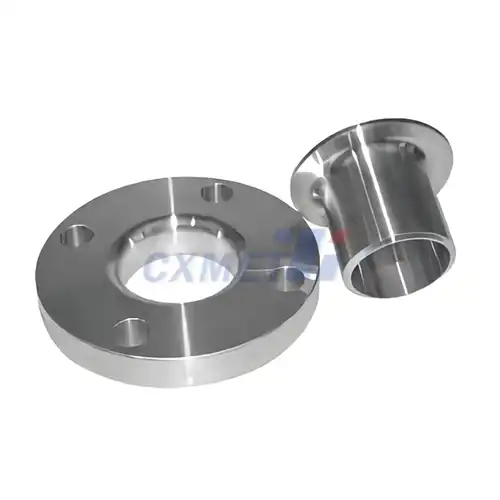
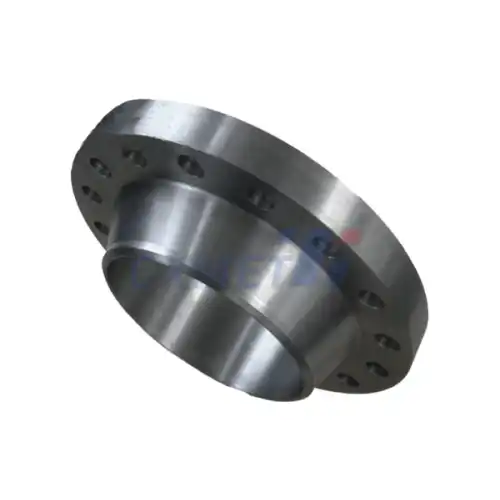
Understanding Titanium Lap Joint Flanges and Their Pressure Ratings
Lap joint kits are different from regular integral flanges because they are made of two smartly designed parts. At SHAANXI CXMET TECHNOLOGY CO., LTD., we make these assemblies with a titanium stub end butt-welded directly to the pipe. This is the side that is wet and exposed to corrosive media, and a loose backing flange, which is often made from cheaper materials, supports the structure with bolts. This arrangement saves a lot of money on materials because expensive titanium is only used on surfaces that will be in contact with harsh chemicals.
Structural Characteristics Influencing Pressure Capacity
Standards like ASME B16.9 tell us how big the short end should be. In terms of how well they hold pressure, the hub thickness, fillet radius, and facing width are some of the most important parts. The pressure number for a lap joint is different from that of a weld neck or a slip-on design. This is because it depends on both the grade of the material at the stub end and the class of the support flange. Following the rules in ASTM B363/B381, our titanium stub ends are made from Grades 2, 5, 7, or 12. The estimates for the highest stress that can be put on each grade are different because each grade has a different yield strength and corrosion performance. The back plate that can be rotated makes it easy to line up the bolt holes when installing. This helps with complex piping isometrics, where fixed flanges can make it hard to line up parts and delay installation.
Material Properties and Pressure Performance
Because it is stronger than it is heavy, titanium is better in tough environments than stainless steel and carbon steel. It takes 120 ksi to yield Grade 5 (Ti-6Al-4V), which is the purest grade of titanium available on the market. Only 40 ksi is needed to give Grade 2. It means that wall pieces that are thinner can be used without lowering the pressures. When it comes to chloride-rich saltwater, wet chlorine gas, and hot nitric acid, which are all places where stainless steels quickly split and crack from stress corrosion, no other metal can beat it. This means it will last longer and need less maintenance, which are both important things to think about when finding out the total cost of ownership for places like chemical reactors or platforms that are always under pressure at sea.
International Standards Governing Pressure Classifications
For global procurement to work, many standards must be followed. For North American markets, ASME B16.5 sets the dimensions and pressure-temperature values, while EN 1092 is the main standard for Europe. At CXMET, we follow ASTM B363 for forged titanium fittings and ISO 15156 for sour service uses in oil and gas extraction when we make our products. Pressure class designations in ASME directly relate to the flange's ability to hold internal pressure at certain temperatures. For example, Class 150 flanges can handle lower pressures that are good for transferring chemicals, while Class 2500 assemblies can handle harsh conditions in high-pressure hydrometallurgy autoclaves. Understanding these standards is important for making sure that multinational projects run smoothly titanium lap joint flanges and that businesses that follow API, NACE, and ASME codes follow the rules.
Common Pressure Ratings and Their Applications
Engineers and procurement managers frequently encounter standardized pressure classes that define operational boundaries for piping systems. These classifications balance safety margins against material costs and fabrication complexity.
ANSI/ASME Pressure Class Designations
The ANSI/ASME B16.5 standard categorizes flanges into six primary classes, each representing maximum allowable non-shock pressure at ambient temperature. Understanding these classifications helps match components to system requirements:
- Class 150 flanges suit low-pressure applications such as cooling water circuits and atmospheric vent lines in pharmaceutical facilities. With ratings around 270 psi at ambient conditions, these assemblies excel in non-critical transfer systems where corrosion resistance outweighs extreme pressure demands.
- Class 300 components bridge moderate-pressure needs in chemical processing plants handling acids, bases, and organic solvents. Rated to approximately 720 psi at room temperature, these flanges appear frequently in reactor feed lines and distillation column connections where titanium prevents contamination from metallic corrosion products.
- Class 600 designs serve high-pressure steam systems, hydrocarbon processing, and seawater injection lines on offshore platforms. Capable of withstanding 1,440 psi, these assemblies demand precise machining tolerances and rigorous material certification to ensure leak-free performance under cyclic loading.
- Class 900, 1500, and 2500 ratings address extreme conditions in high-pressure acid leach circuits, supercritical fluid systems, and specialized aerospace testing rigs. These heavyweight assemblies require enhanced hub dimensions and premium-grade titanium alloys to maintain structural integrity under pressures exceeding 6,000 psi. At CXMET, we provide full material traceability and third-party testing certifications for these critical applications.
Temperature Derating Principles
Pressure ratings decrease as operating temperatures rise, a phenomenon governed by the reduction in material yield strength at elevated temperatures. ASME B16.5 publishes pressure-temperature tables showing allowable working pressures across a temperature spectrum. Titanium maintains superior mechanical properties compared to austenitic stainless steels at temperatures up to 600°F (315°C), exhibiting less dramatic strength degradation. This thermal stability makes our titanium lap joint flanges particularly valuable in hot chemical processes and power generation heat exchangers, where maintaining pressure integrity under thermal cycling prevents catastrophic failures and unplanned shutdowns.
Aligning Ratings with System Requirements
Proper specification requires analyzing maximum operating pressure, surge pressures from pump starts or valve closures, and safety factors mandated by jurisdictional codes. We recommend selecting flange classes providing at least 25% margin above the calculated maximum working pressure to accommodate transient spikes and future process modifications. Our technical team assists clients in performing detailed stress analysis, considering factors like external loadings from thermal expansion, vibration, and seismic events that compound internal pressure stresses.
Comparison of Titanium Lap Joint Flanges with Other Flange Types and Materials
Material selection profoundly impacts system reliability, lifecycle costs, and operational safety. While stainless steel and carbon steel dominate piping markets due to lower material costs, titanium delivers unmatched performance in corrosive high-pressure environments.
Material Performance Analysis
Stainless steel metals like 316L don't rust too badly in mildly acidic and saline environments, but they get pitted in places where chloride levels are higher than 1,000 ppm or temperatures rise above 140°F. Carbon steel needs either cathodic protection or thick corrosion limits, which makes it heavier and more difficult to maintain. When scratched, titanium's inactive oxide layer grows back right away, protecting the metal without any coatings or inhibitors. Titanium stub ends show corrosion rates in nanometres per year compared to millimetres per year for stainless and carbon steels in hot brine service. This is a hundredfold improvement that increases asset life from 5–10 years to 30+ years in offshore uses.
Flange Type Comparisons
Besides the choice of material, the configuration of the flanges affects how well they fit and how much pressure they can handle. Weld neck flanges are the best at keeping pressure inside because they have a tapered hub that makes them stronger, but they need to be properly prepared for welding and follow certified methods. Slip-on designs make fitting easier in the field, but they create stress points at the fillet weld. The CXMET lap joint design is a middle ground: the titanium stub end gets a single butt weld for full-penetration strength, and the loose backing flange gets rid of problems with bolt hole alignment during assembly. This modularity is very helpful during maintenance turnarounds, when parts need to be taken apart quickly and inspected to keep production running as smoothly as possible.
Cost-Benefit Evaluation
Titanium's higher initial material cost—typically 3-5 times stainless steel—causes procurement hesitation for titanium lap joint flanges until lifecycle analysis reveals true value. In a high-pressure chlor-alkali plant, replacing stainless Class 300 flanges every 3-5 years due to crevice corrosion costs $12,000 per replacement cycle, including labor, downtime, and disposal. Our Grade 7 titanium assemblies, priced at $4,500 each, deliver 25+ year service with zero replacements, saving $31,500 per flange over a 25-year plant lifecycle. Additionally, titanium's 40% weight reduction compared to stainless steel decreases structural support requirements and seismic bracing costs in large installations.
Choosing the Right Titanium Lap Joint Flange Pressure Rating for Your Project
Specification decisions demand a comprehensive analysis of operational parameters, regulatory requirements, and long-term reliability objectives. Our engineering team at CXMET guides clients through this multi-dimensional selection process.
Critical Selection Parameters
Operating pressure represents the foundation of flange class selection, but several additional factors influence proper rating determination. Fluid composition affects material compatibility—oxidizing acids may require Grade 7 titanium with palladium additions for enhanced resistance. Temperature profiles throughout operational cycles must account for startup transients, process upsets, and steam-out procedures that temporarily exceed normal conditions. External loads from thermal expansion, wind, and seismic events compound internal pressure stresses, necessitating finite element analysis for complex piping geometries. Our technical support team evaluates these variables using industry-standard pipe stress analysis software, ensuring selections meet ASME B31.3 process piping code requirements.
Standards Compliance and Certification
Global projects demand documentation proving material pedigree and dimensional conformance. We provide mill test reports certifying chemical composition per ASTM B265 for titanium plate and ASTM B381 for forged fittings. Dimensional inspection reports verify compliance with ASME B16.5 tolerances for facing diameter, bolt circle, and hub thickness. Third-party witnessing through Lloyd's Register, Bureau Veritas, or DNV provides independent verification for offshore and pressure vessel applications governed by API 6A or ASME Section VIII codes. Our quality management system maintains ISO 9001:2015 certification, ensuring consistent manufacturing processes and traceability from raw material receipt through final shipment.
Customization Capabilities
Standard catalog offerings cover common size-pressure-grade combinations, but specialized applications often require engineered solutions. CXMET manufactures custom stub ends matching non-standard pipe schedules, metric dimensions per DIN/EN standards, and exotic alloy backing flanges for dissimilar metal joining. Our metallurgical laboratory develops tailored heat treatment procedures, optimizing mechanical properties for specific service conditions. These customization capabilities address unique challenges like ultra-high-purity pharmaceutical systems requiring electropolished surfaces or subsea applications demanding corrosion-resistant alloy overlay on backing flanges for enhanced sealing.
Procurement Strategy Optimization
Strategic sourcing balances lead times, inventory costs, and supplier reliability. We recommend establishing framework agreements for repetitive projects, locking in favorable pricing while maintaining flexibility for call-off quantities. Consignment inventory programs place commonly used sizes at client facilities, eliminating emergency freight charges and project delays. Our global logistics network ships from Shaanxi province to major ports worldwide within 3-4 weeks, with expedited 10-day delivery available for urgent shutdowns. Payment terms accommodate project cash flow requirements, with milestone billing aligned to fabrication, inspection, and shipment phases.
Maintenance and Risk Management of Titanium Lap Joint Flanges Under Pressure
Even superior materials require systematic maintenance protocols for titanium lap joint flanges to achieve design life expectations. We advocate proactive inspection regimes tailored to operating severity.
Operational Risk Identification
There are several ways that pressure-rated systems can fail. Leaks happen when the gasket wears down from chemical attack or compression set, so it needs to be retorqued and replaced as recommended by the maker. Over time, bolt stress reduction lowers clamping force. This is especially true for carbon steel fasteners. We use titanium bolts for important jobs because they don't cause galvanic corrosion and have the same thermal expansion factors. Over thousands of pressure cycles, fatigue damage is caused by mechanical shocks like water hammer or fast valve closing. Rotating equipment sends vibrations through pipes, which loosen fixed connections. Our risk assessments find these processes and come up with ways to reduce their effects, such as using pulsation dampeners, vibration isolators, and torque verification schedules.
Preventive Maintenance Protocols
Based on how bad the problem is, the time between inspections changes. Turnaround times can be up to 5 years for good services with stable pressure-temperature patterns. But tests should be done every year for high-pressure uses that are toxic. We recommend that you visually check the sides of the flanges for harm like wear and tear, corrosion pits, and broken parts. Ultrasonic tests can find ends that aren't straight and have wall loss. With a dye penetrant test, cracks in the surface that you can't see with the naked eye are found. Making sure clamping loads stay within the limits is done with measured hydraulic tensioners that check bolt pressure. Taking these steps doesn't cost nearly as much as fixing things in an emergency, and it keeps people and the world safe from huge releases.
Material Certification and Quality Assurance
Supply lines around the world are at risk from materials that aren't real. When you buy from unreliable sources, the cheaper alloys they use don't have the right mechanical or corrosion protection, so they break down quickly. At CXMET, the material is real all the way through the process, from getting the titanium sponge to ending the job. To make sure the chemistry is right for titanium and to identify the right material, we use X-ray fluorescence analysers. Tests of tensile strength show that the minimum ASTM numbers for final strength and yield are met. Corrosion tests done in fake service settings back up claims of performance. There are no risks when buying because of this strict quality control. Also, client assets are safe from low-quality parts that look like they are made of high-quality materials.
Conclusion
To give pressure grades for Titanium Lap Joint Flange, you have to balance how well Titanium Lap Joint Flange assemblies work technically with how much they cost. Common classes 150 to 2500 cover a wide range of uses, from processing pharmaceuticals to making energy abroad. Each rating level translates to a specific range of pressure and temperature. Titanium's resistance to corrosion and great strength make it more valuable over time than stainless steel and carbon steel alternatives, even though it costs more at first. To make the right choice, you need to look at the working conditions, compliance requirements, and long-term reliability goals with the help of technical partners with a lot of experience. With 20 years of experience in non-ferrous metals, SHAANXI CXMET TECHNOLOGY CO., LTD. makes sure that our customers get engineered solutions that meet strict performance standards and minimise total ownership costs.
FAQ
1. What determines the maximum pressure rating for titanium lap joint flanges?
Pressure ratings stem from material yield strength, flange class dimensional reinforcement, and temperature derating factors. ASME B16.5 establishes pressure-temperature tables correlating flange class to allowable working pressure across temperature ranges. Titanium grades exhibit varying yield strengths—Grade 2 at 40 ksi versus Grade 5 at 120 ksi—directly influencing maximum containment capability. Backing flange hub thickness and stub end wall dimensions provide structural reinforcement governing burst resistance.
2. Can titanium flanges handle pressure cycling and thermal shock?
Titanium demonstrates excellent fatigue resistance under cyclic loading, outperforming stainless steels in high-cycle applications. Low thermal expansion coefficient—roughly half that of austenitic stainless—reduces thermal stress during rapid temperature swings. Ductility prevents brittle fracture even after thousands of pressure cycles, making titanium ideal for systems experiencing frequent startups and shutdowns.
3. How do I verify pressure rating authenticity from suppliers?
Demand mill test reports certified to ASTM B363/B381 specifications, dimensional inspection certificates confirming ASME B16.5 compliance, and third-party witness documentation. Reputable manufacturers like CXMET provide full material traceability, including heat numbers linking flanges to original titanium smelter batches, enabling independent verification of chemistry and mechanical properties.
Partner with CXMET for Reliable Titanium Lap Joint Flange Solutions
Navigating the complexities of high-pressure piping systems demands a titanium lap joint flange supplier with proven technical depth and manufacturing excellence. SHAANXI CXMET TECHNOLOGY CO., LTD. combines over 20 years of non-ferrous metal expertise with state-of-the-art production facilities spanning 50,000 square meters in China's Titanium Valley. Our ISO 9001:2015 certified processes deliver precision-machined flanges meeting ASME, ASTM, DIN, and JIS standards across Class 150 through 2500 pressure ratings. We support engineers and procurement teams with customized solutions, comprehensive material certifications, titanium lap joint flanges, and responsive technical guidance, ensuring project success. Contact our specialist team at sales@cxmet.com to discuss your specific pressure rating requirements and receive detailed quotations backed by our commitment to quality, traceability, and on-time delivery.
References
1. American Society of Mechanical Engineers. (2021). ASME B16.5: Pipe Flanges and Flanged Fittings NPS 1/2 Through NPS 24 Metric/Inch Standard. New York: ASME Press.
2. ASTM International. (2022). ASTM B363: Standard Specification for Seamless and Welded Unalloyed Titanium and Titanium Alloy Welding Fittings. West Conshohocken: ASTM International.
3. Boyer, R., Welsch, G., & Collings, E.W. (1994). Materials Properties Handbook: Titanium Alloys. Materials Park: ASM International.
4. European Committee for Standardization. (2018). EN 1092-1: Flanges and Their Joints - Circular Flanges for Pipes, Valves, Fittings and Accessories, PN Designated - Part 1: Steel Flanges. Brussels: CEN.
5. Schweitzer, P.A. (2010). Fundamentals of Metallic Corrosion: Atmospheric and Media Corrosion of Metals (2nd ed.). Boca Raton: CRC Press.
6. National Association of Corrosion Engineers. (2020). NACE MR0175/ISO 15156: Petroleum and Natural Gas Industries - Materials for Use in H2S-Containing Environments in Oil and Gas Production. Houston: NACE International.