knowledges
What Sizes Are Offered for gr2 titanium seamless tube?
2026-04-29 15:06:36
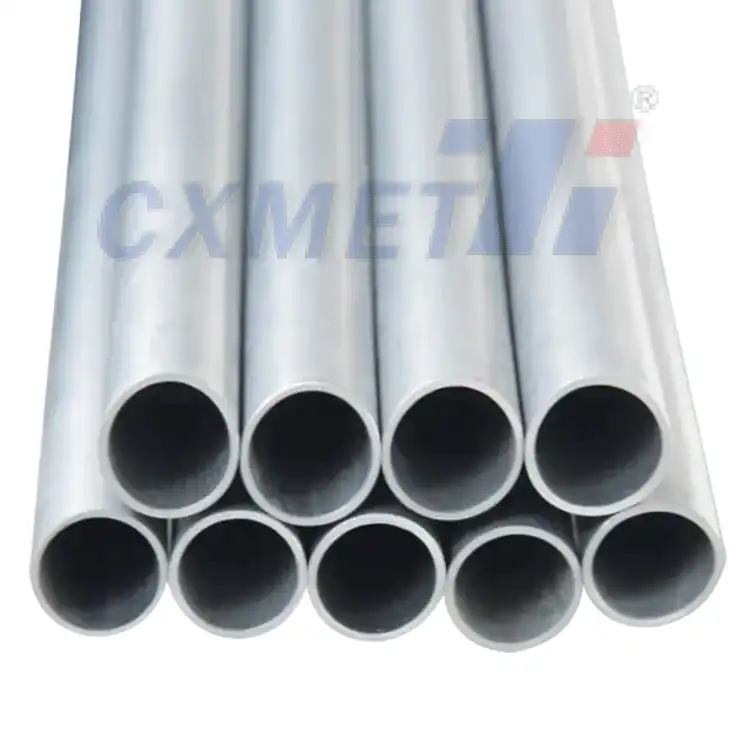
Understanding the available dimensional specifications is very important when looking for high-performance materials for important industry uses. There is a wide range of shapes available for the gr2 titanium seamless tube to meet the needs of different industries. Typical outer diameter (OD) sizes range from 6mm to 114mm, and wall thicknesses range from 0.5mm to 10mm. However, special sizes outside of these ranges are often made. Standard production lengths are usually between 3,000 mm and 6,000 mm, but longer continuous pieces can be made to order. These size ranges closely follow ASTM B338 and ASTM B861 standards. This makes sure that global procurement is aligned and that performance is consistent in harsh environments like chemical processing, marine, aerospace, and power generation.
|
|
|
_1740124678886.webp?size=500x0 "blog-1-1")
Understanding GR2 Titanium Seamless Tube Dimensions
The dimensional architecture of commercially pure titanium tubing directly influences both its mechanical performance and suitability for specific operational environments. Understanding these parameters enables procurement teams and engineering departments to make informed selections that balance cost efficiency with technical requirements.
Standard Outer Diameter Ranges and Industry Specifications
A wide range of outer diameter needs can be met by the production process for titanium seamless tubes. A small-bore tube with an outside diameter of 6 mm is used in pharmaceutical and analytical instrumentation where space is limited and precise flow control is needed. In power plants and desalination plants, most heat exchangers and condensers are installed with medium-sized measures between 25mm and 50mm OD. Options with diameters up to and including 114 mm meet the main process piping needs of petrochemical sites and offshore platforms. These size standards are in line with ASTM B338 for heat exchanger applications and ASTM B861 for general industrial piping. By following these widely recognised standards, you can be sure that the material can be tracked, that the measurements are correct, and that the mechanical properties are guaranteed. Standardisation helps buyers by making the supply chain more predictable and lowering the costs of becoming certified when switching between certified providers.
Wall Thickness Options and Structural Considerations
Choosing the right wall width has a big impact on pressure ratings, weight optimisation, and how well heat moves through a structure. In condenser uses, thin-walled tubes starting at 0.5 mm thick improve heat transfer coefficients. Because Grade 2 titanium is so resistant to corrosion, there is no need for corrosion allowances that are usually needed with other materials. Because of this property, engineers can specify thinner walls than would be possible with stainless steel or copper-nickel alloys. This saves a lot of weight and money on materials. On the other hand, tubes with walls closer to 10 mm are needed for high-pressure hydraulic systems in aerospace and subsea equipment. The process of making something seamless gets rid of lengthwise weld seams that build up stress, which lets higher design pressures be used than with welded options. When figuring out pressure, engineers use well-known rules like ASME B31.3 for process pipes, where the lack of weld joints makes things safer.
Length Specifications and Customization Capabilities
Production lengths for seamless titanium tubes balance how quickly they can be made with how easy they are to handle and place for the end user. Standard mill lengths are usually between 3,000 mm and 6,000 mm, which is the right length for shipping containers and cuts down on waste during manufacturing. These lengths work for most heat exchanger tube bundles and moderate-length pipe runs. Lengths that are longer than the standard ranges are available for certain projects, especially in offshore Gr2 titanium seamless tube and marine construction, where orbital welds are less common because they are more likely to fail in saltwater. Custom length options rely on the specifications of the manufacturing equipment and usually need to be coordinated with suppliers ahead of time to make sure that production schedules are aligned. At Shaanxi CXMET Technology, our smooth cold drawing process includes strict dimensional control throughout production. This lets us deliver tubes that are the exact length you need while keeping diameter and wall thickness within tight ranges.
Dimensional Tolerances and Quality Control Standards
In the titanium tube market, the difference between premium providers and commodity makers is their ability to maintain consistent dimensional tolerances. As per ASTM standards, there are acceptable amounts for outer diameter, wall thickness, and straightness. OD limits are usually ±0.4mm for tubes smaller than 25mm and ±0.8mm for tubes bigger than that. Tolerances for wall thickness usually stay within ±10% of the nominal specification, but tighter control is possible with better manufacturing processes. These tolerances have a direct effect on how well tubes work in serious situations. Heat exchanger tubes need precise OD control to make sure they fit correctly inside tube sheets and to get the most out of rolling or explosive expansion processes when the bundles are put together. To keep pressure-related failures from happening and to keep uniform burst ratings across production lots, hydraulic system tubes need walls that are all the same thickness.
Industrial Applications and Size Requirements for GR2 Titanium Tubes
Different industries impose unique dimensional requirements driven by operational parameters, regulatory standards, and performance expectations. Understanding these application-specific needs helps procurement professionals align material specifications with project success criteria.
Chemical Processing and Petrochemical Industry Requirements
Commercially pure titanium pipes are used a lot in chemical plants that work with acidic materials like wet chlorine, hydrochloric acid, and organic acids. Tubes in chlor-alkali plants that make caustic soda and chlorine gas usually have an outside diameter (OD) of 15mm to 50mm and walls that are 1.5mm to 3mm thick. These measurements make sure that the structure stays strong even when the vacuum and positive pressure change during the process cycles. Purified Terephthalic Acid (PTA) production facilities are another tough job where organic acid corrosion at high temperatures rules out stainless steel as a material option. In these settings, tubes are usually 25 mm to 75 mm in outside diameter, and their walls are thicker, up to 5 mm, so they can fit high-pressure oxidation reactors that are running at temperatures above 200°C. In these conditions, the seamless structure is very important because heat-affected areas around welded seams show faster corrosion rates that threaten the integrity of the system.
Power Generation and Desalination System Specifications
Most titanium seamless tubes are used in surface condensers in coastal power plants and saline evaporators around the world. The standard sizes for condenser tubes are based on what the industry has come to agree on over many years of use. The most common size is 25.4mm (1 inch) OD and 0.7mm to 1.0mm wall thickness. This size provides the best heat transfer efficiency while still being strong enough for tube pulling and installation. Multi-Stage Flash (MSF) desalination plants use similar size rules, but tube lengths are longer to accommodate larger evaporator vessel configurations. The structure that doesn't have any joints stops catastrophic failures that could happen if tubes leak and seawater gets into the steam cycle, damaging boilers and turbine blades. This lowers the risk, which is why this metal costs more than other metals used in important power infrastructure.
Aerospace and Marine Engineering Applications
In aerospace hydraulic systems, where a broken part could kill someone, Gr2 titanium seamless tube the highest standards of dependability are needed. Titanium tubes used in these situations usually have an outside diameter (OD) of 6mm to 25mm and walls that are pretty thick, so they can handle burst pressures of more than 5,000 psi. Titanium is very light—it has about 56% the density of steel, which saves a lot of weight in airframe systems, where every kilogram affects fuel efficiency and payload capacity. Offshore platforms and subsea equipment use larger diameter tubes (40mm to 100mm OD) for important hydraulic control systems and seawater service piping. In the marine climate, corrosion is a big problem because normal materials break down very quickly. Titanium doesn't rust in seawater and can handle flow-induced erosion-corrosion at speeds of up to 30 meters per second. This means that it can last longer without needing upkeep, which can't be done on subsea installations.
Comparison of GR2 Titanium Seamless Tube Sizes with Other Grades and Materials
Material selection decisions require comprehensive analysis comparing dimensional availability, mechanical properties, corrosion performance, and total ownership costs. Understanding how Grade 2 positions within the broader materials landscape enables optimized procurement strategies.
Grade 2 Versus Other Titanium Grades
The titanium grade system established by ASTM classifications ranges from Grade 1 (softest, highest purity) through Grade 5 (Ti-6Al-4V alloy with highest strength). Grade 2 occupies the optimal middle ground, offering a minimum yield strength of 275 MPa compared to Grade 1's 170 MPa, while maintaining excellent ductility and formability lost in Grade 5 material. This balance makes Grade 2 the workhorse of industrial titanium applications. Dimensional availability favors Grade 2 over other grades due to its market dominance and established manufacturing infrastructure. While Grade 5 tubes serve specialized aerospace structural applications requiring superior strength-to-weight ratios, their cost premium and reduced corrosion resistance limit adoption in chemical processing environments. Grade 7, incorporating palladium for enhanced resistance to reducing acids, sees limited use in extremely corrosive environments but suffers from restricted size availability and significantly higher material costs.
Titanium Versus Stainless Steel Size Compatibility
Stainless steel tubing dominates moderate corrosion environments through a combination of lower material cost and extensive size availability. Standard stainless grades like 316L offer dimensional ranges from miniature capillary tubes through large-bore pipe exceeding 600mm diameter. This availability advantage creates procurement familiarity and supply chain depth that is difficult for titanium producers to match. However, dimensional comparisons must account for material performance differences. The superior corrosion resistance of titanium eliminates corrosion allowances required in stainless steel designs, enabling thinner walls for equivalent service life. A 1.5mm wall titanium tube may replace a 3mm wall stainless steel tube in seawater service, delivering comparable pressure ratings with reduced weight and material consumption. This performance differential narrows the apparent cost gap when evaluated on a lifecycle basis rather than the initial material purchase price.
Procurement Considerations Related to GR2 Titanium Seamless Tube Sizes
Successful procurement extends beyond technical specifications to encompass supply chain management, cost optimization, and supplier relationship development. Understanding these commercial factors ensures project schedules and budgets remain achievable.
Minimum Order Quantities and Custom Size Flexibility
Titanium tube manufacturing economics favor production runs that justify setup costs and material commitments. Standard sizes from established suppliers typically carry lower minimum order quantities, ranging from 100kg to 500kg, depending on dimension and supplier capacity. These volumes suit maintenance and repair operations or pilot installations where material requirements remain modest. Custom dimensions command higher MOQs, reflecting the additional coordination and tooling adjustments required. Buyers should anticipate minimum orders between 500kg and 1,000kg for non-standard specifications. Strategic buyers mitigate these requirements through partnerships with suppliers offering inventory programs or by coordinating procurement across multiple projects to consolidate demand. At CXMET, our 50,000 square meter production facility and extensive technical staff enable us to accommodate both standard and custom orders while maintaining flexibility for varying project scales.
Lead Time Factors and Logistics Planning
Production scheduling for gr2 titanium seamless tube depends heavily on raw material availability, manufacturing capacity utilization, and the complexity of size specifications. Standard dimensions from inventory ship within days, while custom production cycles extend from 6 to 12 weeks from order confirmation to factory completion. These timelines assume normal market conditions and established supplier relationships. International shipping adds further time considerations based on transportation mode selection. Sea freight from major titanium production regions to end-use markets requires a 3 to 6 week transit time but offers economical rates for larger shipments. Air freight compresses delivery timelines to days rather than weeks, though cost premiums limit viability to urgent requirements or high-value small-volume orders. Experienced procurement teams build these lead times into project schedules and maintain safety stock levels for critical spare parts applications.
Pricing Dynamics and Budget Forecasting
Titanium tube pricing reflects multiple variables, including raw material costs, production complexity, market demand, and size specifications. Smaller diameter thin-walled tubes command price premiums per kilogram due to increased manufacturing difficulty and higher scrap rates during production. Conversely, large-diameter heavy-walled tubes benefit from economies of scale in material utilization and production efficiency. Market pricing for commercially pure titanium fluctuates based on global supply-demand balances and titanium sponge feedstock costs. Strategic buyers monitor these trends through industry publications and supplier relationships to time purchases advantageously. Long-term supply agreements stabilize pricing for multi-year projects while sacrificing opportunistic spot market purchases during price downturns. Transparent supplier relationships built on mutual trust enable collaborative cost management approaches benefiting both parties.
Trusted Suppliers and Certification for GR2 Titanium Seamless Tubes
Supplier selection represents perhaps the most critical Gr2 titanium seamless tube procurement decision affecting project success, quality assurance, and long-term operational reliability. Partnering with reputable manufacturers ensures material integrity and technical support throughout equipment lifecycles.
Global Manufacturing Landscape and Regional Strengths
The titanium tube manufacturing industry concentrates in regions with established non-ferrous metal processing infrastructure and technical expertise. Production capacity clusters in areas with access to titanium sponge feedstock, skilled labor pools, and proximity to end-use markets. These regional ecosystems develop specialized capabilities serving local industry concentrations while competing in global export markets. Shaanxi province in China has emerged as a dominant titanium processing hub, earning recognition as "China's Titanium Valley" through decades of investment in research facilities, manufacturing infrastructure, and workforce development. This regional concentration enables suppliers to access specialized equipment, metallurgical expertise, and supply chain efficiencies unavailable in dispersed locations. Companies operating within these established ecosystems demonstrate enhanced capabilities for custom development, rapid prototype production, and technical problem-solving.
Quality Certifications and Compliance Verification
Material approvals and third-party testing confirmation are important ways to make sure that a product meets the requirements. Suppliers with a good reputation use ISO 9001 quality management systems to make sure that their production processes and documents are always the same. For example, PED compliance for European markets or ASME Code stamps for North American installations may be needed for pressure equipment applications. Material test reports (MTRs) that come with every production lot show the chemical composition analysis, mechanical property testing, and size verification. These certificates show the history of a material, from the heat numbers of the raw materials to the finished goods. Buyers should check the authenticity of MTRs by comparing them to source quality systems and keeping the paperwork for asset lifecycle management, and to show that they are following the rules. When quality assurance is important for high-stakes applications where failure could have major effects, third-party inspection services add extra layers of checking.
Building Strategic Supplier Partnerships
Transactional buying methods that only focus on lowering unit costs often miss out on chances to create long-term value. Strategic relationships with suppliers based on mutual commitment allow for collaborative engineering support, priority allocation during supply constraints, and continuous improvement initiatives that benefit both organisations. To make partnerships work, it's important to be clear about technical requirements, application constraints, and project timelines. Suppliers who know a lot about the places where their products will be used can make proactive suggestions about choosing the right materials, optimising dimensions, and using different manufacturing methods. This consultative involvement finds ways to cut costs while also making performance more reliable. At Shaanxi CXMET Technology, our team of more than 80 technical experts has worked with titanium for 20 years and can help customers in the aircraft, oil and gas, chemical processing, and marine industries. Our dedication to honesty, new ideas, and top-notch customer service leads to long-lasting relationships that create value throughout the lifecycle of equipment.
Conclusion
Dimensional specifications for gr2 titanium seamless tube and commercially pure titanium seamless tubes reflect decades of industrial evolution, balancing manufacturing capabilities with application requirements across diverse sectors. Understanding the available size ranges, tolerance expectations, and application-specific needs enables procurement professionals and engineering teams to optimize material selection decisions. The dimensional flexibility spanning small-bore instrumentation tubes through large-diameter process piping accommodates nearly any industrial requirement, while seamless construction eliminates failure modes inherent in welded alternatives. Strategic sourcing partnerships with certified manufacturers ensure material quality, technical support access, and supply chain reliability essential for project success in demanding operational environments.
FAQ
1. What are the most common tube sizes for heat exchanger applications?
Heat exchanger installations predominantly utilize 25.4mm (1 inch) outer diameter tubes with wall thicknesses between 0.7mm and 1.0mm. This dimensional standard evolved through industry experience optimizing heat transfer efficiency, structural integrity, and manufacturing economics. Alternative sizes, including 19mm and 32mm OD, address specific thermal design requirements or retrofit compatibility with existing tube sheet configurations.
2. Can suppliers produce non-standard custom dimensions?
Manufacturers accommodate custom dimensional specifications beyond standard catalogs, though minimum order quantities increase to justify production setup costs. Custom orders typically require 500kg to 1,000kg minimums with lead times extending 8 to 12 weeks. Early supplier engagement during design phases enables dimensional optimization, balancing performance requirements with manufacturing practicality and cost efficiency.
3. How do dimensional tolerances affect installation procedures?
Tight dimensional control proves essential for heat exchanger tube-to-tubesheet joints and hydraulic fitting connections. Outer diameter tolerances within ±0.4mm enable reliable rolling or hydraulic expansion processes, creating leak-tight joints. Wall thickness consistency ensures predictable flaring and bending operations during piping fabrication while maintaining design pressure ratings across the entire tube length.
Partner with CXMET for Your GR2 Titanium Seamless Tube Requirements
Shaanxi CXMET Technology stands ready to support your titanium tube procurement needs with comprehensive dimensional capabilities and technical expertise spanning two decades. As a Gr2 titanium seamless tube manufacturer operating from China's Titanium Valley, we combine advanced manufacturing infrastructure with deep metallurgical knowledge, serving customers across the marine, chemical processing, aerospace, and power generation industries. Our 50,000 square meter production facility utilizes high-purity titanium sponge, precision rolling, and vacuum annealing to deliver tubes meeting the most demanding international standards. Whether your project requires standard dimensions from inventory or custom specifications engineered for specialized applications, our technical team provides responsive support from initial inquiry through delivery and beyond. Contact our experienced professionals at sales@cxmet.com to discuss your specific requirements and discover how our commitment to quality, innovation, and customer partnership creates value for your critical applications.
References
1. American Society for Testing and Materials. (2021). ASTM B338-21: Standard Specification for Seamless and Welded Titanium and Titanium Alloy Tubes for Condensers and Heat Exchangers. West Conshohocken, PA: ASTM International.
2. American Society of Mechanical Engineers. (2020). ASME B31.3-2020: Process Piping - ASME Code for Pressure Piping, B31. New York, NY: American Society of Mechanical Engineers.
3. Schutz, R.W., & Watkins, H.B. (2018). Recent Developments in Titanium Alloy Application in the Chemical Process Industry. Materials Performance Journal, 57(4), 58-69.
4. Donachie, M.J. (2000). Titanium: A Technical Guide, 2nd Edition. Materials Park, OH: ASM International.
5. International Organization for Standardization. (2019). ISO 9001:2015 Quality Management Systems - Requirements. Geneva, Switzerland: ISO Central Secretariat.
6. Peters, M., Kumpfert, J., Ward, C.H., & Leyens, C. (2003). Titanium Alloys for Aerospace Applications. Advanced Engineering Materials, 5(6), 419-427.