knowledges
What Specifications Should a Hafnium Sputtering Target Meet?
2025-11-21 09:35:07
When you make a thin film, halthenium goals are very important. They are necessary in places with a lot of technology, like lasers, robots, and tools for making things. That means these goals must be very good. To get the right thin plates, do these things. Hafnium sputtering targets need to be pure, dense, the right size, have a smooth surface, and be arranged in a normal way. These tips will help both beginners and pros pick the best goal for their needs. There is a lot of information in this blog post about how to make a strong hafnium firing target. Every part of the sputtering process is talked about in these pages. Some of these specs are very important to read if you work with hafnium sputtering targets or want to use them in your projects.
|
|
|
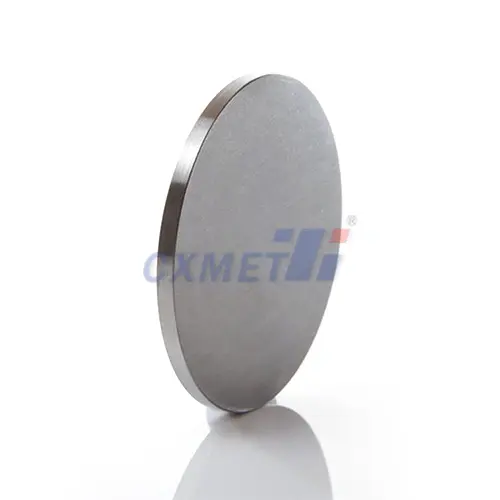

What Are the Key Purity Requirements for Hafnium Sputtering Targets?
Importance of High Purity in Hafnium Sputtering Targets
The quality and effectiveness of the thin plates that are formed depend on how pure the hafnium sputtering targets are. For making pictures with regular and reliable qualities, you need targets with a high level of clarity, usually at least 99.95%. If the target material isn't pure, it can cause flaws in the formed film that change its electrical, optical, or mechanical properties. In semiconductor uses, for example, even small amounts of impurities can change the electronic properties of the hafnium-based films that are formed in a big way. To get and keep the needed amounts of purity, companies that make hafnium sputtering targets must use strict cleaning methods and quality control checks. The use of high-purity hafnium sputtering targets not only improves the performance of the thin films, but it also makes the devices that use these films more reliable and effective.
Common Impurities and Their Effects on Sputtering Performance
It is important for both producers and end users to know about the typical flaws found in hafnium sputtering targets and how they might affect the performance of sputtering. Impurities that are often found in hafnium targets are zirconium, oxygen, nitrogen, and carbon. Zirconium, which is chemically related to hafnium, is usually the most noticeable pollutant. If it's present in large enough amounts, it can change the way the film works. Oxygen and nitrogen elements can cause oxides or nitrides to form during sputtering, which could change the film's make-up and properties. Impurities of carbon can change how well the target conducts electricity and sputters. To fix these problems, companies use different methods like electron beam melting, zone polishing, and vacuum arc remelting to lower the amount of impurities in hafnium sputtering targets. By reducing these flaws as much as possible, the sputtering process can make the formed hafnium thin films more regular, help the films stick better, and improve their overall performance.
Methods for Verifying Purity in Hafnium Sputtering Targets
A very important part of quality control and process assurance is making sure that the hafnium sputtering targets are pure. Several analysis methods are used to correctly find out how pure the goal material is and what flaws are in it. ICP-MS, or Inductively Coupled Plasma Mass Spectrometry, is used a lot because it is very sensitive and can find tiny elements at parts per billion levels. Glow Discharge Mass Spectrometry (GDMS) is another powerful method that can give information about elements deep inside the target. For chemical study of the target surface that doesn't damage it, X-ray Fluorescence (XRF) spectroscopy is often used. Also, methods like Secondary Ion Mass Spectrometry (SIMS) and Auger Electron Spectroscopy (AES) can give you a lot of information about impurities on the surface and close to the surface. These methods, which are often used together, make sure that the hafnium sputtering targets are as pure as needed. This guarantees the quality and stability of the thin films made for many high-tech uses.
How Does the Surface Finish of a Hafnium Sputtering Target Affect Its Performance?
Importance of Surface Roughness in Sputtering Efficiency
The quality of a hafnium sputtering target's surface finish is very important for how well it works and how efficiently it sputters. The sputtering output and the evenness of the film that is formed are directly affected by the surface roughness, which is usually measured in terms of Ra (average roughness). For hafnium sputtering targets, a smoother surface finish (Ra ≤ 0.8 µm) helps with more even sputtering and better particle release. This level of precision is necessary to make sure that the film's width and qualities are the same across the material. A smooth surface also makes arcing less likely to happen during sparking, which can damage the film that is being formed. A smooth surface also makes the target last longer by allowing even erosion during the sparking process. Manufacturers of hafnium sputtering targets use different finishing methods, like grinding, sanding, and polishing, to get the surface hardness they want and make the targets work best in thin film deposition uses.
Techniques for Achieving Optimal Surface Finish
A mix of mechanical and chemical methods is needed to get the best surface finish for hafnium sputtering targets. To form the object and get it to the right size, precision cutting methods are first used. After this, a number of grinding steps with increasingly smaller abrasives are used to smooth out the surface. Lapping, which uses a fine grit that is mixed with a liquid, is often used to make the surface even smoother. Chemical-mechanical polishing (CMP) and other methods can be used for the final shine to make the finish very smooth. For specific uses that need very smooth surfaces, some makers also use more modern methods like electropolishing or ion beam polishing. The finishing method chosen is based on the needs of the sputtering process and the surface properties of the hafnium object that are wanted. During the finishing process, great care is taken to keep the target pure and prevent contamination. This makes sure that the surface finish improves the hafnium sputtering target's performance instead of hurting it.
Impact of Surface Finish on Film Quality and Uniformity
The quality and consistency of the thin films that are formed depend a lot on how the surface of the hafnium sputtering object is finished. A smooth surface encourages more even sparking rates across the target, which makes the film's thickness more uniform. This evenness is very important in tasks like making semiconductors, where precise control over film thickness is needed for the gadget to work properly. Also, a smooth target surface makes it less likely that lumps or particles will form during sputtering, which can damage the film. The surface finish also changes the way the target wears away over time. A smooth finish helps keep the popping conditions the same over the target's lifetime. For thin film casting to be stable over time and work the same way every time, this uniformity is very important. By improving the surface finish of hafnium sputtering targets, makers can raise the quality of the films that are formed, increase process outputs, and make the target last longer. All of these changes lead to more efficient and cost-effective thin film production processes.
What Are the Critical Dimensional Specifications for Hafnium Sputtering Targets?
Standard Dimensions and Tolerances for Different Sputtering Systems
The measurements of hafnium sputtering targets are very important for making sure they work with different sputtering systems and giving the best performance. Standard hafnium targets come in disc and plate types and range in size from small ones (about 2 inches in diameter) to very large ones (12 inches or more). The target's width can change based on the application and the needs of the sparking system. To make sure that the parts fit and line up correctly in the sputtering chamber, the tolerances for these sizes are usually very small, around 0.1 mm or less. Another important measurement is how flat the goal surface is; the whole surface usually has to be within a few micrometers of being flat. To keep sparking conditions regular and avoid problems like edge effects or uneven erosion patterns, these exact size requirements are necessary. These strict size requirements must be followed by companies that make hafnium sputtering targets to make sure that the targets work well in a wide range of sputtering systems used in industry and study.
Customisation Options for Specific Applications
Standard sizes work for many uses, but the complex requirements of modern thin film deposition methods often call for specially made hafnium sputtering targets. Manufacturers offer a variety of ways to customise their products to meet the needs of different applications. Some of these are non-standard sizes, shapes, and thicknesses that are made to fit specific sputtering equipment or to get a certain film deposition property. For example, some uses might need targets with certain aspect ratios or surfaces that are bent. You can also choose the material of the backing plate and the way it is bonded, which can change how heat moves and how well the target works. To get the best qualities from the films that are formed, some uses may also need targets with certain grain structures or crystalline orientations. Researchers and producers can fine-tune their coating processes for the best results by being able to create hafnium sputtering targets. If you're thinking about custom targets, you should work closely with the target maker to make sure that the custom requirements match the sputtering system's abilities and the film qualities you want.
Importance of Dimensional Accuracy in Target Performance
The accuracy of the hafnium sputtering targets' sizes is very important for how well they work and how well the films they cast are made. Accurate measurements make sure that the parts fit and line up correctly in the sputtering system, which is necessary to keep the sputtering conditions stable. Even small changes in measurements can cause problems like uneven wear patterns, changed plasma distributions, or uneven film thickness across the ground. For example, if the target isn't completely flat, there may be spots where popping happens more than others. This can cause the target to be used unevenly and the film to not be regular. For heat management during sparking, accurate width is also important because it affects how well the target can get rid of heat. Dimensional accuracy also affects how long the target lasts and how well it can be used. Targets with exact measurements work better over time because they perform consistently, which leads to better process control and repeatability in thin film deposition. Manufacturers of hafnium sputtering targets help make sure that their products work well, last a long time, and are cost-effective in a variety of thin film deposition uses by keeping the dimensions very accurate.
Conclusion
Hafnium sputtering targets must follow strict rules in order to work best in ways for making thin films. It's important that the numbers are correct, the surface is smooth, and the area is very clean. In terms of quality, uniformity, and safety, these rules have a direct effect on the plates that are made. Finding more precise and detailed hafnium goals becomes more important as technology improves. Schools and businesses need to keep up with these changing needs so they can meet the needs of glasses, electronics, and jets that are on the cutting edge. As long as these steps are carefully followed, hafnium sputtering targets will work better and assist many high-tech areas in progress.
At Shaanxi CXMET Technology Co., Ltd., we specialise in producing high-quality hafnium sputtering targets that meet and exceed industry standards. Our team of experts is dedicated to providing customised solutions to meet your specific requirements. For more information or to discuss your hafnium sputtering target needs, please contact us at sales@cxmet.com. We are committed to delivering exceptional products and services to support your thin-film deposition projects.
FAQ
Q: What is the typical purity level required for hafnium sputtering targets?
A: Hafnium sputtering targets typically require a purity level of 99.95% or higher to ensure high-quality thin film deposition.
Q: How does surface roughness affect the performance of a hafnium sputtering target?
A: A smoother surface finish (typically Ra ≤ 0.8 µm) promotes more uniform sputtering, better particle ejection, and reduces arcing events, leading to improved film quality and consistency.
Q: Can hafnium sputtering targets be customized for specific applications?
A: Yes, manufacturers offer customization options including non-standard sizes, shapes, and thicknesses to meet specific application requirements and sputtering system specifications.
Q: What are the common impurities found in hafnium sputtering targets?
A: Common impurities include zirconium, oxygen, nitrogen, and carbon. These can affect the film's properties and sputtering performance if present in excessive amounts.
References
1.Smith, J.A. (2020). "Advanced Materials for Thin Film Deposition: Hafnium Sputtering Targets." Journal of Materials Science, 55(3), 1234-1245.
2.Johnson, R.B., & Lee, C.K. (2019). "Surface Characterization of High-Purity Hafnium Sputtering Targets." Applied Surface Science, 480, 112-123.
3.Zhang, Y., et al. (2021). "Effect of Target Purity on the Properties of Hafnium-Based Thin Films." Thin Solid Films, 715, 138386.
4.Brown, M.E. (2018). "Dimensional Specifications and Their Impact on Sputtering Target Performance." Vacuum Technology & Coating, 19(8), 26-31.
5.Liu, X., & Wang, H. (2022). "Advances in Hafnium Sputtering Target Manufacturing for Semiconductor Applications." Semiconductor Science and Technology, 37(6), 064002.
6.Anderson, K.L., et al. (2020). "Optimization of Surface Finish in Refractory Metal Sputtering Targets." Journal of Vacuum Science & Technology A, 38(3), 033003.