knowledges
What Standards Apply to a Titanium Lap Joint Flange?
2025-11-27 15:27:16
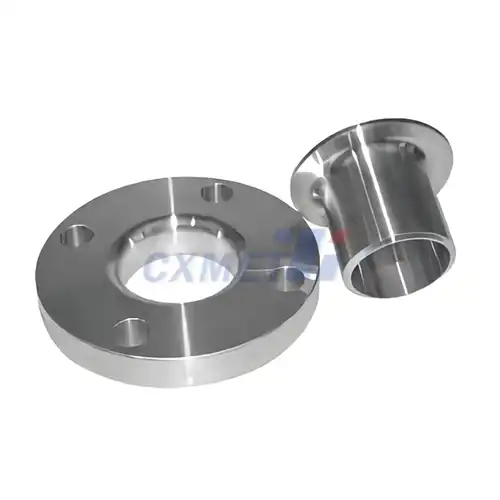
A lot of industries use titanium lap joint flanges because they are strong, light, and don't rust. Without these flanges, you can't connect lines and tools in harsh places like chemical processing, aeroplane engineering, and marine engineering. To make sure that titanium lap joint flanges are safe, work well, and meet quality standards, you need to know what those standards are. These guides have rules about how to plan, use resources, make things, and try them. Titanium lap joint flanges will last a long time and work well if people who make them and people who use them follow these rules. You can learn a lot about how to make and use titanium lap joint flanges from this article. It is very helpful for people who work with them.
|
|
|

What are the Material Standards for Titanium Lap Joint Flanges?
ASTM Standards for Titanium Materials
The American Society for Testing and Materials (ASTM) has set a number of rules for the titanium that is used in lap joint plates. The main standard for titanium forgings, which are often used to make flanges, is ASTM B381. This standard describes the chemical makeup, mechanical qualities, and heat treatment needs for different grades of titanium, such as Grade 2 and Grade 5 (Ti-6Al-4V). A lot of titanium lap joint plates are made from these types because they are strong, don't rust, and are easy to weld. Sheets, strips, and plates made of titanium and titanium alloys are also covered by ASTM B265. These materials can be used in some flange designs. To make sure that their products are of good quality and work well, companies that make titanium lap joint plates need to make sure that the materials they use meet these ASTM standards.
ISO Standards for Titanium Materials
For titanium materials used in Titanium Lap Joint Flange, the International Organisation for Standardisation (ISO) also sets guidelines. Specifically, ISO 5832-2 and ISO 5832-3 apply, covering pure titanium and Ti-6Al-4V metal, respectively. Titanium materials used in devices and other industrial settings must meet certain chemical makeup, mechanical properties, and microstructure criteria. Within these ISO guidelines, the quality of the materials used for titanium lap joint plates stays the same in all foreign markets. Compliance with ISO standards by manufacturers shows their dedication to global quality standards, which makes their Titanium Lap Joint Flange more marketable in many businesses around the world.
JIS Standards for Titanium Materials
Another set of rules for titanium materials used in lap joint plates can be found in the Japanese Industrial Standards (JIS). Forgings made of titanium and titanium alloy are covered by JIS H 4600. Plates, sheets, and strips made of titanium and titanium alloy are covered by JIS H 4650. These guidelines are especially important for companies that make titanium lap joint plates for businesses in Japan and other Asian countries. The JIS standards describe the chemical makeup, mechanical features, and testing methods for different types of titanium. This makes sure that Japanese businesses' strict quality standards are met by titanium lap joint flanges. Manufacturing companies that want to grow their business in Asia may find that following JIS guidelines is very helpful.
What Design Standards Apply to Titanium Lap Joint Flanges?
ASME B16.5 Standard for Pipe Flanges
There is a lot of agreement that the ASME B16.5 standard is the best way to learn about pipe flanges, such as titanium lap joint flanges. Pressure-temperature values, materials, measurements, limits, marking, testing, and inspection rules are all covered by this standard. Although ASME B16.5 is mostly about steel flanges, its ideas are often used for titanium lap joint flanges with the right changes. The standard gives rules for flange face types, bolt patterns, and pressure classes, all of which are important for making sure that titanium lap joint flanges fit and work properly in different pipe systems. When making titanium lap joint flanges, companies need to make sure they follow the rules in ASME B16.5 so that their goods can work with standard pipe parts.
DIN Standards for Flange Design
DIN, the German Institute for Standardisation, has a number of rules that can be used to create titanium lap joint plates. The measurements of the flanges, the pressure values, and the bolt designs are all spelt out in DIN 2501 and DIN 2576. These rules are very important for titanium lap joint plates that are sold in Europe or used in projects that follow German engineering methods. When it comes to some types of flanges, DIN standards often go into more detail than ASME standards. They are useful for people who want to make the best plans for titanium lap joint flanges because of this. Following DIN standards can make titanium lap joint flanges more useful and easier to sell, especially in fields with strong ties to German engineering practices.
EN 1092 European Standard for Flanges
As a full plan for flange design, the European Standard EN 1092 has a lot of information about titanium lap joint flanges. This standard talks about the different types of flanges, including their sizes, shapes, materials, and how much pressure they can hold. It is very important for companies that make titanium lap joint plates for projects or markets in Europe to follow EN 1092 when they make their plates. The types of flange faces, finishes for the sealing surfaces, and fixing holes that are needed to make sure that titanium lap joint flanges work well and close properly are all spelt out in a standard. A company must follow EN 1092 to show that they are committed to meeting European quality and safety standards. This could help them get new customers for their titanium lap joint plate goods.
What Manufacturing and Testing Standards are Applicable to Titanium Lap Joint Flanges?
ASME Section IX Welding and Brazing Qualifications
Section IX of the Boiler and Pressure Vessel Code from ASME gives important rules for welding and brazing standards, which are very important when making titanium lap joint flanges. To make sure that the welding methods used in making flanges meet strict quality standards, this standard lays out the steps that must be taken to qualify welding processes and workers. Because titanium is aggressive, it is especially important to follow ASME Section IX when welding titanium lap joint flanges, which often need precise welding methods. Manufacturers must make sure that their welding processes and workers are trained according to this standard. This ensures that the joints in titanium lap joint flanges are strong and reliable. Following the rules in ASME Section IX makes the final product safer and better overall, giving people peace of mind in important situations.
ASTM E1417 Standard for Liquid Penetrant Testing
A very important standard for liquid penetrant testing is ASTM E1417. This is a non-destructive testing method that is often used to check the quality of titanium lap joint plates. In this standard, there are instructions on how to do liquid penetrant tests correctly. These tests are necessary to find surface flaws like cracks, holes, or other breaks in titanium parts. Following ASTM E1417 makes sure that any problems with titanium lap joint flanges are found and fixed before the product gets to the customer. These flanges need to be very strong and reliable. The standard covers many parts of the testing process, such as getting the surface ready, using the penetrant, using the developer, and figuring out what the results mean. Manufacturers can show that they are dedicated to making high-quality titanium lap joint plates that meet strict safety and performance standards by following ASTM E1417.
ISO 9001 Quality Management System
The ISO 9001 standard for quality management systems is very important for making sure that industrial methods are always the same and that the quality of the products is always high. This widely accepted standard lays out the steps needed to set up and keep up a good quality control system during the whole process of making titanium lap joint plates. Manufacturers who follow ISO 9001 show that they care about keeping customers happy, improving all the time, and making sure the standard of their products stays high. When it comes to titanium lap joint flanges, ISO 9001 approval makes sure that every step of the production process is carefully controlled and recorded, from getting the materials to checking them one last time. This organised way of managing quality cuts down on mistakes, makes it easier to find problems, and makes the whole product more reliable. This is why ISO 9001 approval is so useful for companies that make titanium lap joint flanges in today's competitive global markets.
Conclusion
Additionally, titanium lap joint plates are created and utilised in a specific manner that is governed by a large set of rules that guarantee they are safe, of high quality, and perform effectively. Following these rules will help you make flanges that you can rely on. The ingredients needed, construction rules, and testing methods are all covered. In addition to making sure the product is honest, following these rules also makes it easier to sell in more places and businesses. Titanium lap joint flange users and makers should keep these standards up to date as technology and business needs change to keep the highest levels of quality and safety.
At Shaanxi CXMET Technology Co., Ltd., we pride ourselves on our commitment to meeting and exceeding these industry standards in our titanium lap joint flange production. Our team of experienced professionals ensures that every product meets the stringent requirements of international standards while also catering to specific customer needs. With our state-of-the-art facilities and dedication to quality, we continue to be a leading manufacturer in the non-ferrous metals industry. For any inquiries or custom requirements, please don't hesitate to contact us at sales@cxmet.com. Our team is ready to provide you with exceptional service and high-quality titanium lap joint flanges that meet your exact specifications.
FAQ
Q: What are the primary advantages of using titanium lap joint flanges?
A: Titanium lap joint flanges offer exceptional corrosion resistance, high strength-to-weight ratio, and excellent durability, making them ideal for demanding applications in industries such as aerospace, chemical processing, and marine engineering.
Q: Which ASTM standard is most relevant for titanium materials used in lap joint flanges?
A: ASTM B381 is the primary standard for titanium forgings used in flange manufacturing, specifying chemical composition, mechanical properties, and heat treatment requirements for various titanium grades.
Q: How does the ASME B16.5 standard apply to titanium lap joint flanges?
A: While ASME B16.5 primarily focuses on steel flanges, its principles are often applied to titanium lap joint flanges with appropriate modifications, covering aspects such as pressure-temperature ratings, dimensions, and bolt patterns.
Q: Why is ASME Section IX important for titanium lap joint flange manufacturing?
A: ASME Section IX provides guidelines for welding and brazing qualifications, crucial for ensuring the integrity and reliability of welded joints in titanium lap joint flanges, which require precise welding techniques due to titanium's reactive nature.
References
1. ASTM International. (2020). ASTM B381 - Standard Specification for Titanium and Titanium Alloy Forgings. West Conshohocken, PA: ASTM International.
2. American Society of Mechanical Engineers. (2019). ASME B16.5 - Pipe Flanges and Flanged Fittings. New York, NY: ASME.
3. International Organization for Standardization. (2018). ISO 5832-2 - Implants for surgery — Metallic materials — Part 2: Unalloyed titanium. Geneva: ISO.
4. German Institute for Standardisation. (2017). DIN 2501 - Flanges - Connecting dimensions. Berlin: DIN.
5. European Committee for Standardisation. (2018). EN 1092 - Flanges and their joints - Circular flanges for pipes, valves, fittings and accessories, PN designated. Brussels: CEN.
6. American Society of Mechanical Engineers. (2021). ASME Boiler and Pressure Vessel Code, Section IX: Welding, Brazing, and Fusing Qualifications. New York, NY: ASME.